
Your Guide to Transact Integrated Sustainable Dining

March 10, 2026
The rising cost of disposable packaging is a constant pressure on your budget, turning a necessary expense into a significant financial drain. You’re likely spending tens of thousands of dollars annually on containers that are used once and thrown away. While reusable systems promise savings, the fear of lost inventory and operational headaches can make the switch feel risky. This is where a smart, tech-driven approach changes the game. By connecting a reuse program directly to your campus card system, you can achieve major cost reductions without the chaos. This guide explores Transact integrated sustainable dining, a solution designed to cut your packaging and waste expenses by over 30% while delivering an industry-leading 99% container return rate.
Key Takeaways
- Prioritize a seamless tech integration: A successful reusables program should feel like a natural part of your campus, not a clunky add-on. Integrating directly with your existing Transact system makes participation as simple as a card tap for students and simplifies operations for your staff.
- Use automation to ensure high return rates: The biggest challenge of any reuse program is getting containers back. A smart system with automated reminders and accountability solves this problem, protecting your inventory and ensuring financial sustainability without manual staff intervention.
- Design the experience for student adoption: To get campus-wide buy-in, the program must be effortless for students. Focus on a frictionless experience that is free to use, requires no app downloads, and makes choosing to reuse the most convenient option available.
What is Transact-Integrated Sustainable Dining?
Think of Transact-integrated sustainable dining as the bridge between your campus sustainability goals and your existing dining operations. It’s a system that connects a reusable container program directly to the Transact campus card technology you already use every day. Instead of adding a complicated new process for your team and students to learn, this integration makes participating in a reuse program as simple as swiping a student ID to buy a coffee. For students, it means a seamless checkout experience without needing to download another app or create a new account. For your staff, it means no more manual tracking or complicated workarounds.
The goal is to make choosing a reusable container the easiest and most convenient option available. By connecting with Transact, you can automate the entire process, from checking out a container to tracking its return. This not only helps you drastically cut down on single-use packaging waste and its associated costs but also provides a modern, tech-forward dining experience that students appreciate. A well-designed program, supported by a partner who understands campus environments, can transform your dining halls into hubs of sustainability. Finding the right reuse system is the key to making this transition smooth and successful.
How Does the Integration Work?
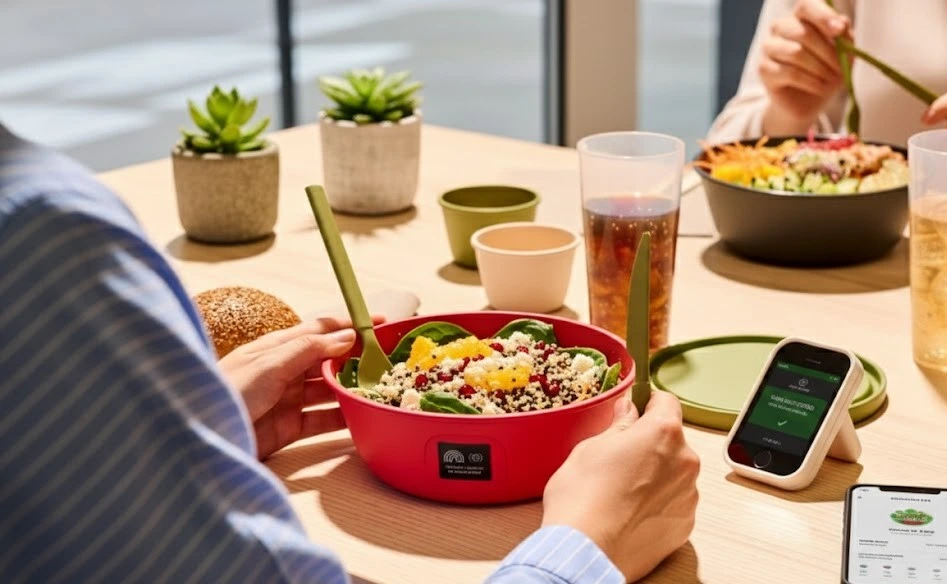
The process is designed to be incredibly straightforward for everyone involved. A student simply picks up their meal in a reusable container and heads to the cashier. At the point of sale, they tap their student ID card or mobile credential, just as they would for any other transaction. The Transact system instantly recognizes the student and associates the unique ID of the reusable container with their account. That’s it. The container is checked out, and the student is on their way.
This seamless flow removes the typical barriers that can make reuse programs feel like a chore. There are no extra steps, no new apps to navigate, and no complicated sign-up processes. By leveraging the technology already embedded in your campus infrastructure, you can offer powerful sustainable dining solutions that fit perfectly into existing student and staff routines.
What Are the Core Components?
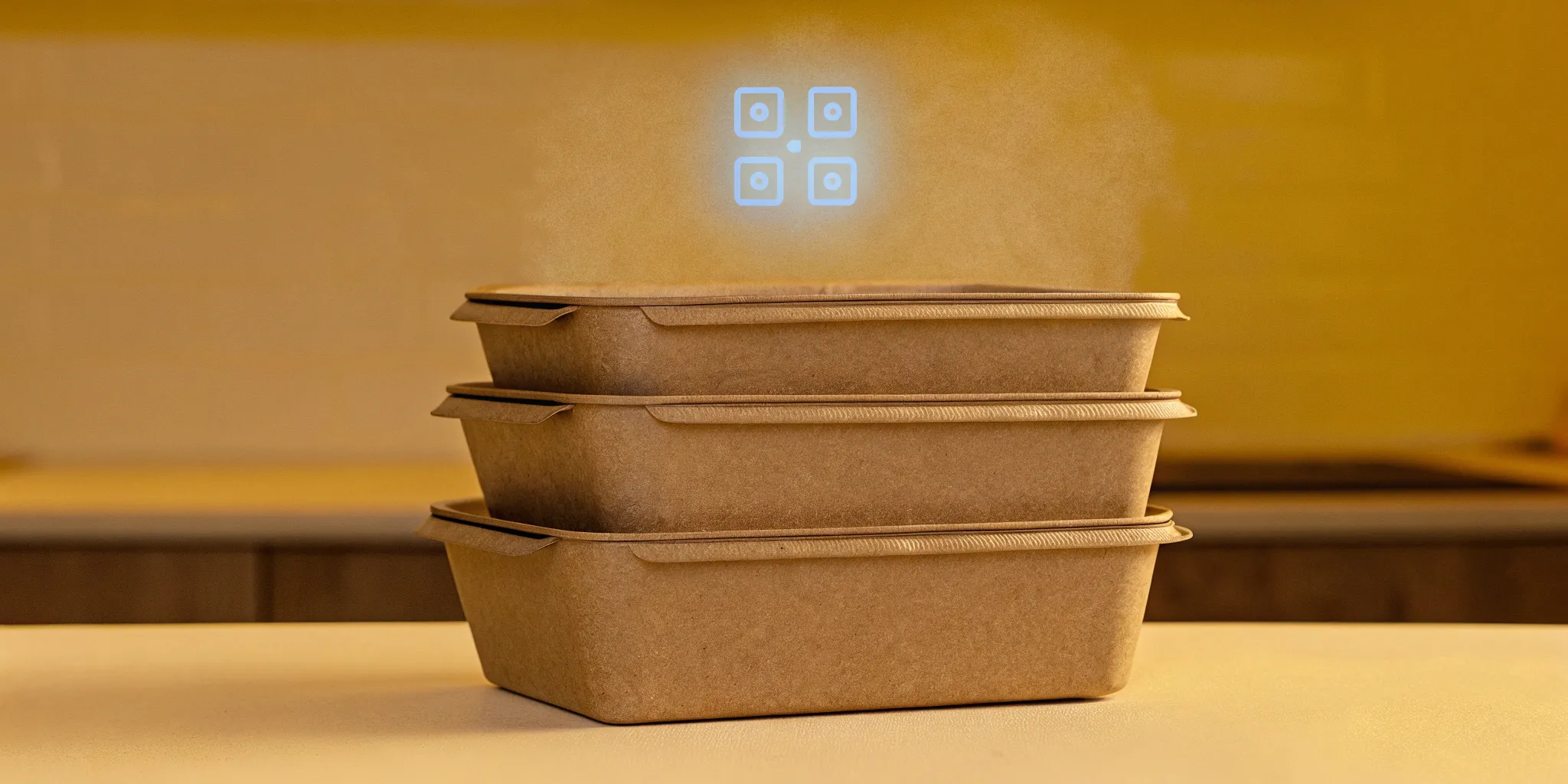
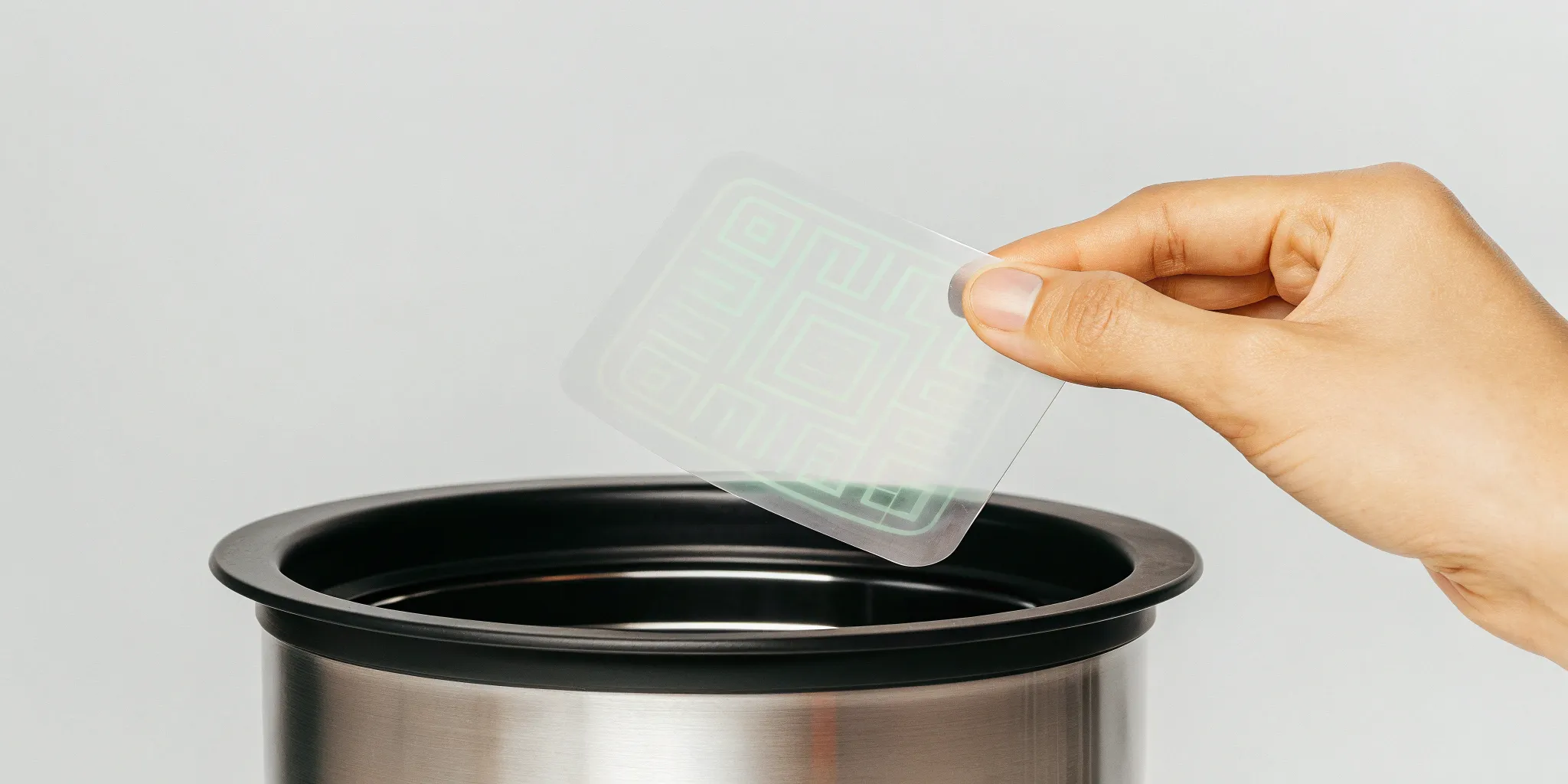
A successful Transact-integrated reuse system is built on a few key pieces of technology working together. First are the smart reusable containers, each equipped with a unique QR code or RFID tag that allows for individual tracking. Next is the point-of-sale integration, which connects the container’s unique ID to a student’s account through your Transact system at checkout.
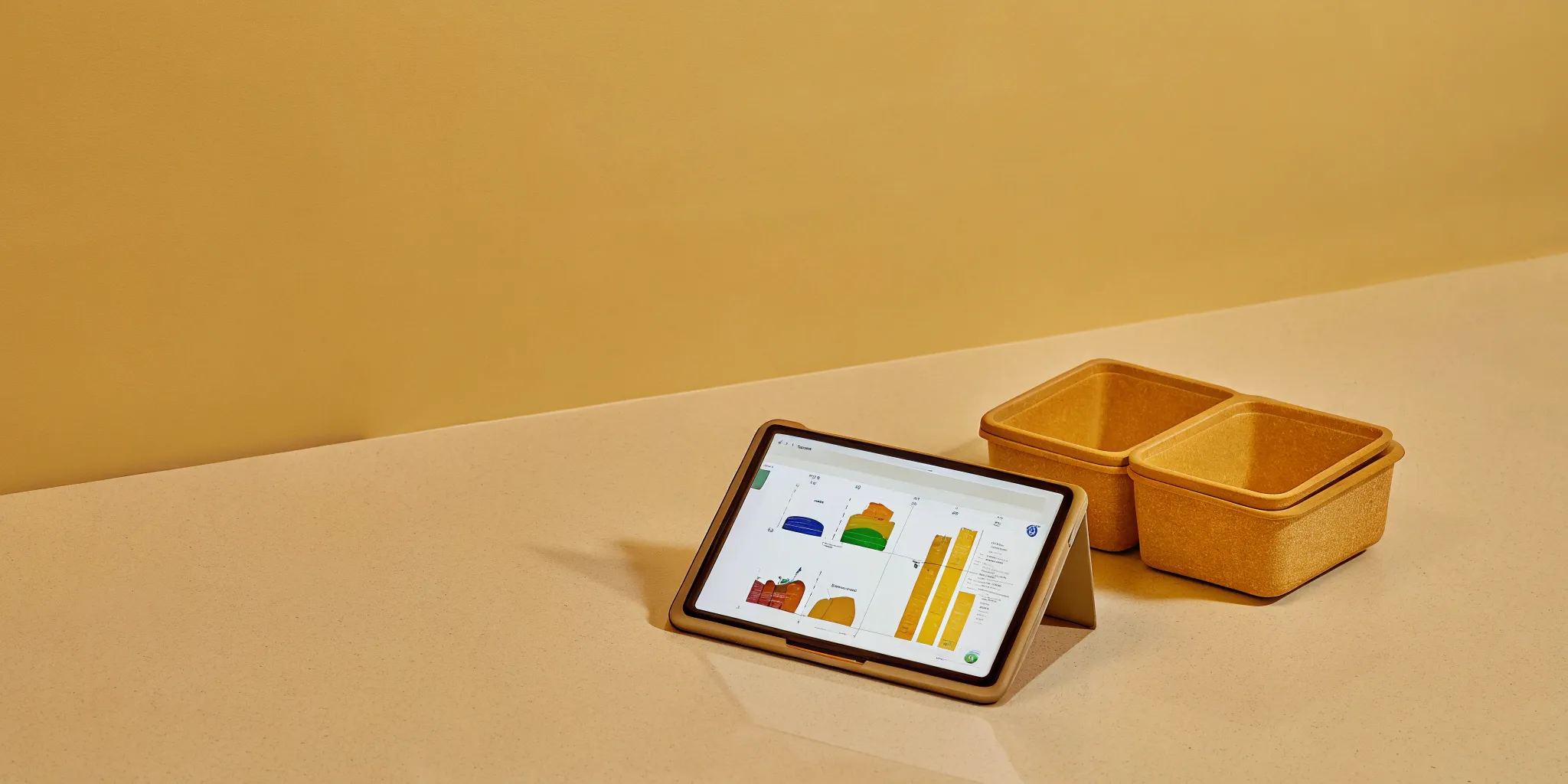
The third critical component is a network of smart return bins and stations, allowing students to return containers 24/7 with a simple scan. Finally, it all ties together in an operator portal. This dashboard gives your team real-time data on inventory levels, return rates, and your program’s environmental impact, giving you the visibility you need to manage the system effectively.
Key Features of a Transact-Integrated Reusables System
A successful reusables program depends on a system that feels effortless for students and simplifies operations for your staff. When integrated with Transact, the right features create a cohesive experience that fits perfectly within your existing campus infrastructure. Instead of adding another complex layer to manage, this system automates tracking, encourages participation, and delivers clear data on your impact. Let's look at the core components that make this possible.
Tap to Reuse™ for Frictionless Checkout
The biggest hurdle for any new campus initiative is getting students to actually use it. Our patented Tap to Reuse™ checkout makes borrowing a container a completely seamless experience. Students simply tap their existing student card, the same one they use for everything from meal plans to library access. There are no apps to download or new accounts to create. This simple action makes choosing a reusable container feel just as easy as grabbing a disposable one. By removing that initial friction, you can drive campus-wide adoption and make sustainability the most convenient choice for everyone.
Smart Bins for 24/7 Returns
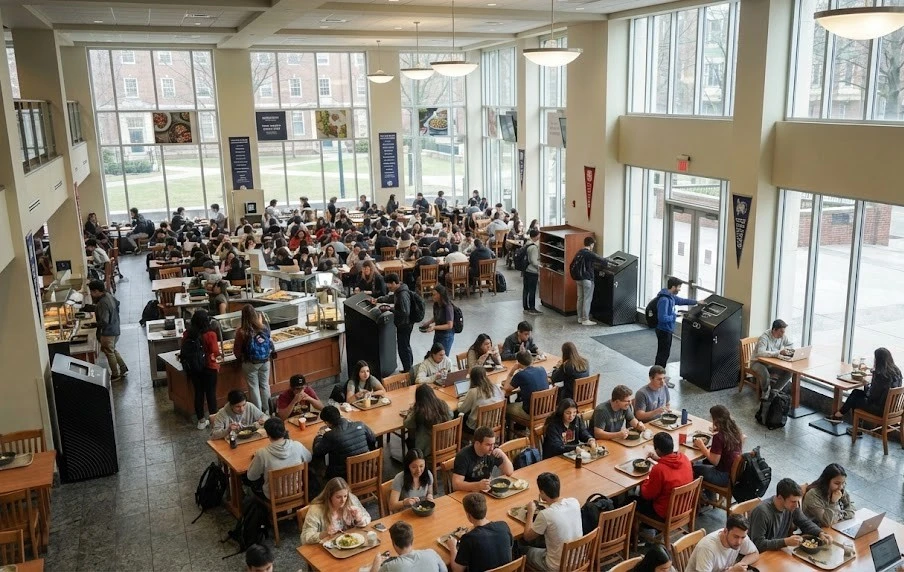
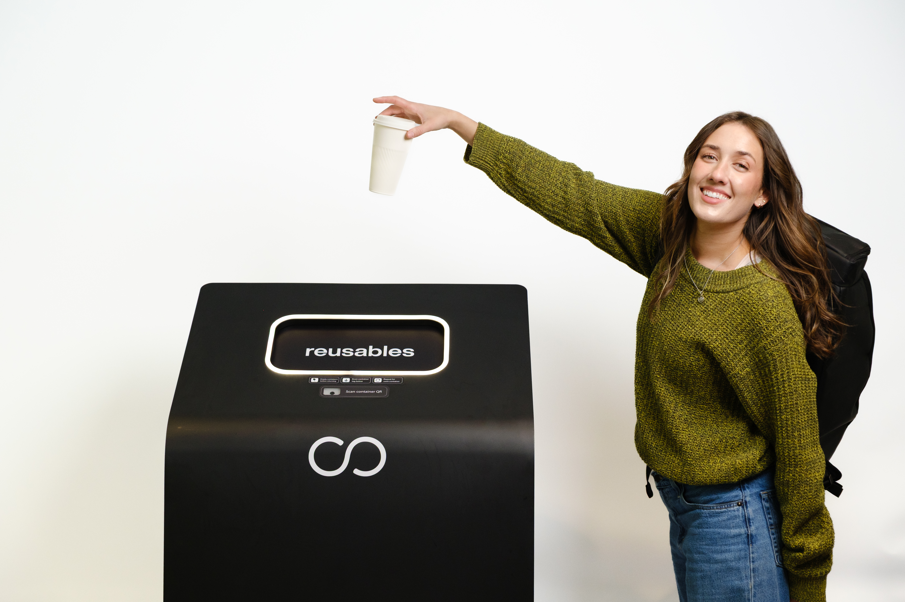
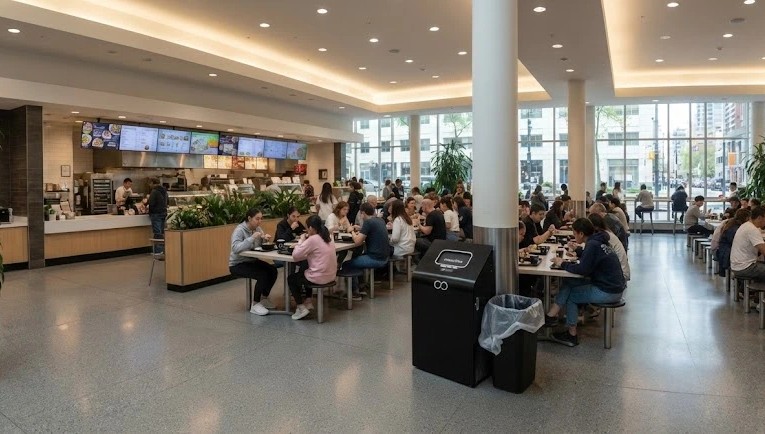
Convenience can't stop at checkout. Students need an equally simple way to return containers on their own schedule. Our Smart Return Bins are designed for high-traffic campus environments and can be placed anywhere students congregate, from residence halls to student centers. They are available 24/7 for touch-free drop-offs, so students aren’t limited by dining hall hours. For your team, these bins send automatic alerts when they’re getting full, which streamlines collection logistics and prevents overflows. This ensures the return process is always clean, accessible, and efficient without adding extra work for your staff.
Dual-Mode QR and RFID Tracking
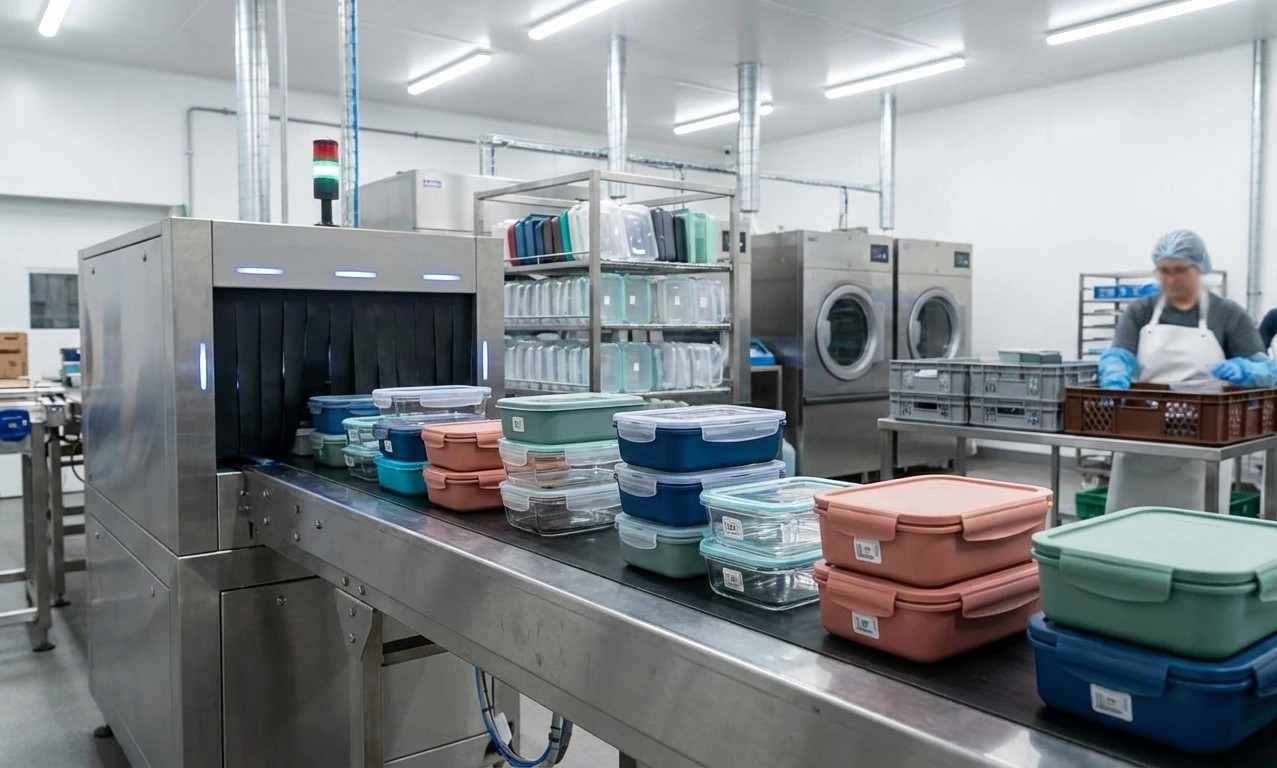
Accountability is essential for maintaining your container inventory and achieving high return rates. Every reusable container in our system is equipped with both a QR code and an RFID tag. This dual-mode tracking provides accurate, automated data from the moment a container is checked out until it's returned, sanitized, and put back into circulation. This technology integrates directly with your POS and ID systems to automate container tracking and generate detailed ESG reports. You get a real-time view of your inventory levels, usage rates, and environmental impact, all without manual counting or guesswork.
How Does Transact Integration Strengthen Your Campus Sustainability Program?
Integrating a reusables program with your existing Transact system is about more than just adding new technology; it’s about making sustainability the easiest choice for everyone on campus. When a reuse system works within the infrastructure you already have, it removes the biggest barriers to success: friction for students and operational headaches for your team. Instead of asking students to download another app or carry a separate card, they can participate using the one thing they never leave their dorm without: their student ID.
This seamless integration transforms your sustainability initiative from a niche program into a campus-wide standard. It allows you to track every container, automate accountability, and gather real-time data without overhauling your daily operations. By connecting directly with Transact, you create a closed-loop system that not only supports your environmental goals but also enhances the student dining experience. It’s a practical approach that delivers measurable results, helping you reduce waste and cut packaging costs while making your campus a leader in sustainable practices.
Seamless Payments with Student Cards
The most effective programs fit into students' existing habits. With Transact integration, students can check out a reusable container simply by tapping their student ID card or mobile credential, just as they would to pay for a meal. There are no new apps to download or accounts to create. This frictionless experience is key to driving high adoption rates. When participating is that easy, students are far more likely to choose the reusable option. This approach makes your campus sustainability program an intuitive part of the campus dining experience, not an extra chore.
Automated Accountability and Fee Management
One of the biggest challenges with any reusable container program is ensuring you get the containers back. Our Transact integration solves this by linking each container to a student’s account. The system tracks every checkout and return automatically. If a container isn’t returned on time, the system sends automated reminders and can apply a refundable late fee directly to the student's account without any manual work from your staff. This automated accountability is what drives our industry-leading 99% return rates and protects your inventory, ensuring your program remains financially sustainable.
Full Compatibility with Existing Campus Tech
Implementing a new campus-wide system can feel daunting, but our platform is designed for full compatibility with your existing technology. Because we integrate directly with Transact, our system works in harmony with the payment and ID solutions you already use every day. This connection allows you to simplify container checkouts and returns, making the entire process smooth for both students and dining staff. You get all the benefits of a smart, data-driven reuse program without the disruption of a major operational change, ensuring an easy and measurable rollout.
What Challenges Can You Expect When Going Reusable?
Making the switch from single-use packaging to a reusable system is a huge step toward your campus sustainability goals. But it’s natural to have questions about what the transition actually looks like. While the benefits are clear, any new operational change comes with its own set of potential hurdles. The good news is that with the right plan and technology, these challenges are entirely manageable.
Successfully launching a reusables program comes down to three key areas: getting students to participate enthusiastically, ensuring the system works smoothly with your existing operations, and, most importantly, getting your containers back. Let's walk through how to approach each of these challenges so you can launch your program with confidence.
Overcoming Student Adoption Hurdles
Today’s students are often the biggest champions for sustainability on campus. They actively seek out institutions that share their values, and they’re eager to participate in green initiatives. However, their enthusiasm depends on convenience. If a program requires them to download another app, pay an upfront deposit, or follow a complicated process, you’ll see participation drop off quickly.
The key to winning students over is to make reusing feel effortless. A system that integrates directly with their existing student ID card removes all the friction. They can simply tap their card to check out a container, just as they would for any other purchase. When participation is that simple, it becomes an easy, natural choice, turning student interest into consistent, campus-wide adoption.
Simplifying Operational Integration
Your dining services team is the backbone of your campus food experience, and the last thing you want is to disrupt their workflow with a clunky, complicated system. A common concern is that a reusables program will add extra steps, require extensive staff training, and cause delays during busy meal times. This is a valid worry, but it’s one that the right technology solves completely.
A truly integrated reusables platform should feel like a natural extension of your current operations. When the system connects directly with your existing campus tech, like Transact, there’s no need for separate devices or manual tracking. Staff can process a reusable container checkout within the same transaction they’re already running. This makes adoption easy for your team and ensures your campus dining program runs just as efficiently as before, without adding extra work for your staff.
Maintaining High Return Rates
Let’s be honest: the biggest fear for any operator is losing containers. A program can’t be financially or environmentally sustainable if you’re constantly replacing lost inventory. Low return rates are the number one reason that campus reuse programs fail. Fortunately, achieving high return rates isn’t about luck; it’s about having a smart and automated system in place.
Success comes from a combination of convenience and accountability. Strategically placed smart bins that offer 24/7, touch-free returns make it easy for students to bring containers back on their own schedule. Pairing this with automated reminders and a simple, refundable late fee system encourages responsibility without creating an administrative burden for your team. As the University of Guelph has shown, this approach works, leading to sustainable dining success with a 99% return rate.
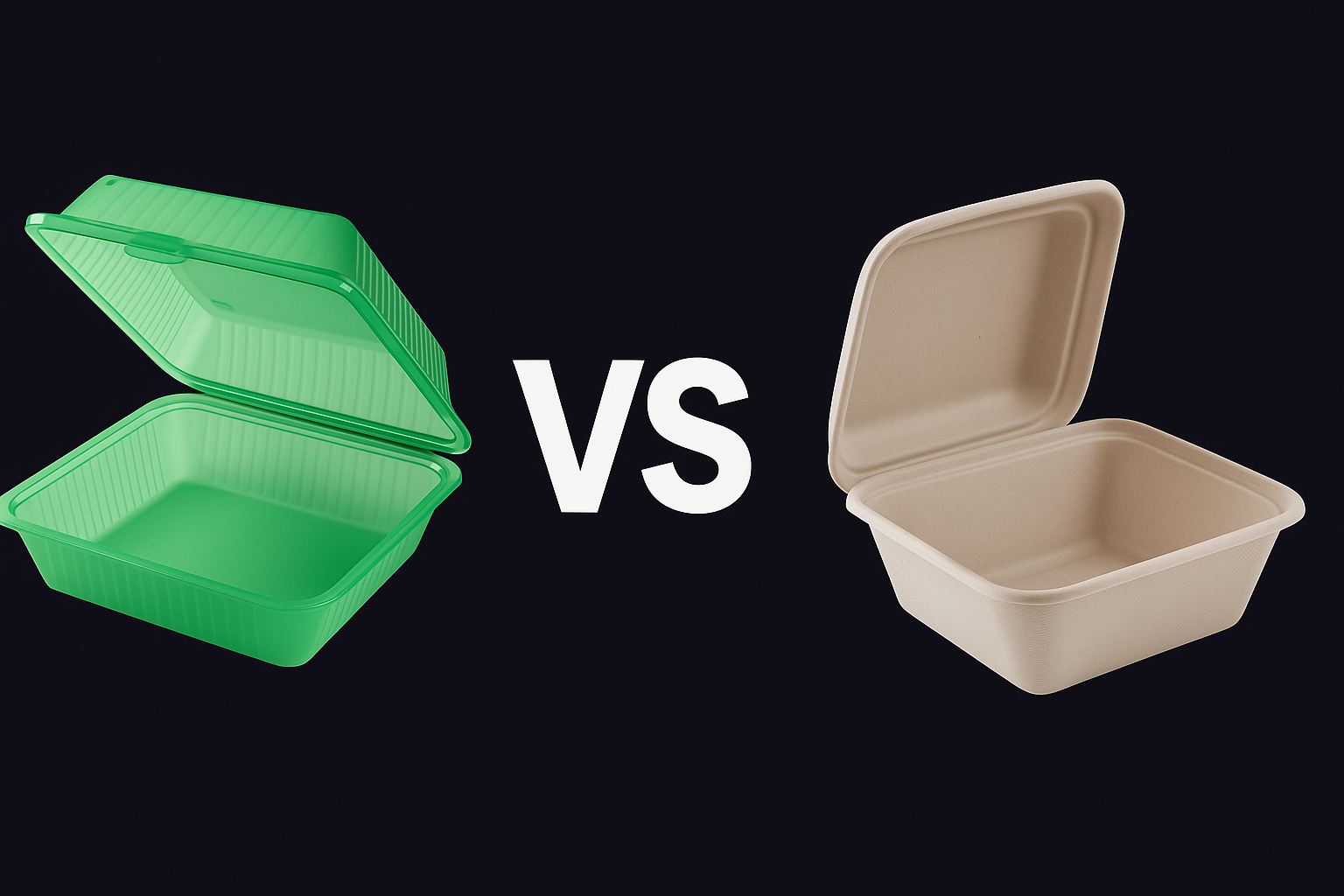
Disposables vs. Reusables: A Clear Cost Comparison
When you're managing a campus dining budget, every line item counts. For years, single-use containers seemed like a necessary, if frustrating, expense. But with the cost of disposable packaging skyrocketing, sticking with the status quo is becoming financially unsustainable. Making the switch to a reusable system isn't just an environmental decision; it's a strategic financial move that can significantly cut your operational spending.
The true cost of disposables goes far beyond the price per unit. You also have to account for storage, supply chain issues, and ever-increasing waste management fees. A reusable container program, on the other hand, transforms a recurring expense into a manageable, long-term asset. By partnering with a tech-enabled system like Reusables.com, you gain control over your inventory and unlock savings that go straight to your bottom line. Let's break down how the numbers really stack up when you compare the two models.
Calculate Your Annual Packaging Savings
The most immediate financial win you'll see is the reduction in your annual packaging budget. Instead of constantly reordering disposable containers, you invest in a durable inventory that can be used hundreds of times. This simple change can have a massive impact. In fact, some schools have saved 25% to 40% on packaging costs just by switching from single-use plastics to a reusable system. Our partners typically see a 30% or greater reduction in annual packaging and waste expenses. These are direct, predictable savings you can reallocate to other areas of your dining program, from improving food quality to investing in your team.
Uncover the Hidden Costs of Single-Use Containers
The price you pay for a disposable container is only the beginning of its cost. Think about the operational expenses tied to single-use packaging. You need significant space to store bulky boxes of containers, and your staff spends valuable time managing that inventory and hauling overflowing trash bags. A reusable system helps you reclaim that space and time. By keeping thousands of disposable boxes out of the trash each semester, you directly lower your waste hauling fees. Our integrated solutions for businesses are designed to streamline your operations, reducing the manual labor tied to waste management and letting your team focus on what they do best: serving students.
Understand the Long-Term ROI
The return on investment for a reusable program extends far beyond the initial cost savings. Using reusable containers helps your campus reduce waste, save water, and lower emissions, all of which are powerful metrics for your institution's environmental, social, and governance (ESG) goals. Because our system is built on trackable containers, you get clear data to report on your sustainability progress. Plus, a well-run program enhances the student dining experience, positioning your campus as a leader in sustainability. This long-term value strengthens your brand, attracts environmentally conscious students, and creates a more efficient, modern dining operation without a large upfront investment.
What Makes Transact Integration Different?
When you’re looking to bring a reusables program to campus, the technology behind it matters. A successful program depends on how easily it fits into your existing operations and how simple it is for students to use. The right integration can be the difference between a program that thrives and one that creates more headaches than it solves. While many systems offer some level of integration, the partnership between Reusables.com and Transact is built to feel like a natural extension of your campus dining services, not a clunky add-on.
This isn't just about adding another piece of software to your tech stack. It’s about creating a seamless experience that removes friction for everyone involved, from your dining staff to the students grabbing a meal between classes. The integration is designed to work with the systems you already have in place, making the transition to reusables smooth and intuitive. Key differentiators include an app-free user experience that encourages high adoption, the ability to generate new revenue streams through the system itself, and the flexibility to use the reusable containers you may already own. These features work together to create a program that’s not only sustainable but also operationally and financially smart.
A Better User Experience with No App Required
One of the biggest hurdles for any new campus initiative is getting students to participate. The Reusables.com system, integrated with Transact, removes a major barrier by eliminating the need for a separate app. Students can simply tap their student ID card or use their mobile credentials to check out a container. This frictionless checkout process is quick, intuitive, and fits right into their daily routine. Because students are already using their campus cards for everything from meal plans to library access, borrowing a reusable container becomes just as easy. This simplicity is key to driving the high participation rates needed for a successful and impactful program, without adding another app for students to download and manage.
Generate Revenue with Integrated Ad Screens
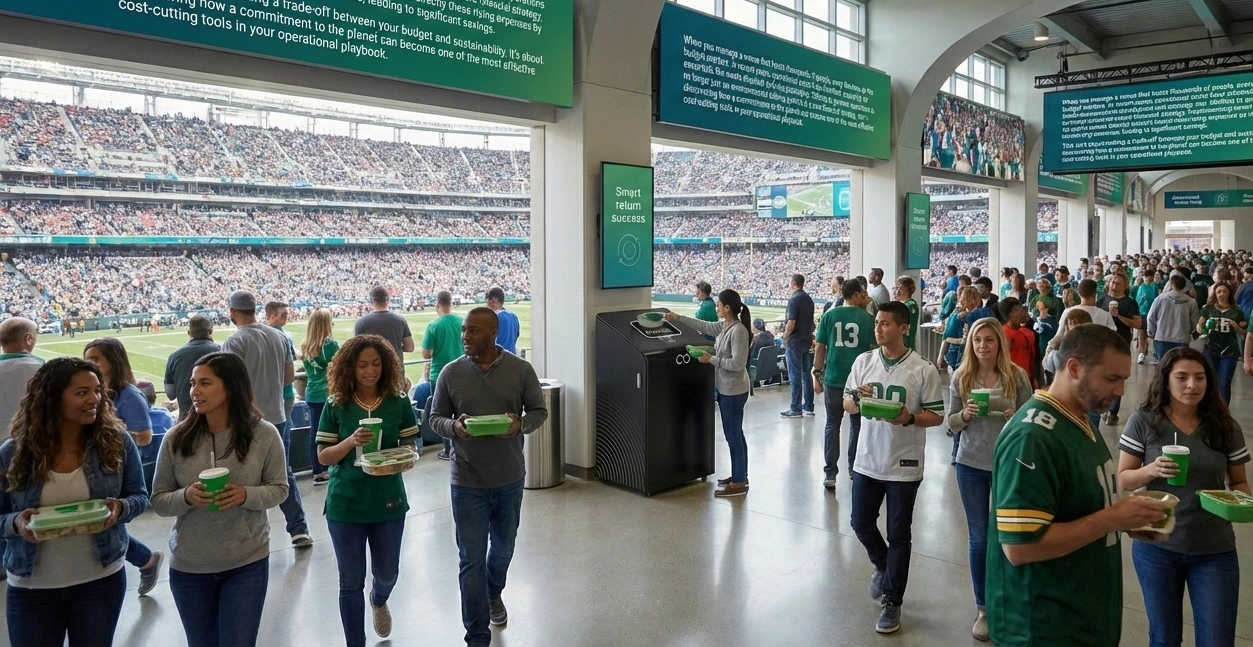
A sustainability program that also creates a new revenue stream is a powerful combination. Our Smart Return Bins are equipped with high-definition ad screens that can be used to display campus announcements, promote events, or feature paid advertisements. This turns your return stations into valuable communication and revenue-generating assets. For many of our partners, these screens can generate thousands of dollars per year without adding any work for your staff. This unique feature, made possible through our Transact Campus partnership, helps offset program costs and can even contribute to your department’s bottom line, making your sustainability initiative a financial win.
Use Your Existing Container Inventory
If you’ve already invested in a supply of reusable containers, you shouldn’t have to start from scratch. Our system is container-agnostic, meaning it’s designed to work with your existing inventory, whether it’s durable plastic or stainless steel. We integrate with your current POS and ID systems to automate container tracking and management, regardless of the container type. This flexibility allows you to leverage your prior investments while gaining the benefits of a fully automated and accountable system. By adapting to your current operational setup, we make it easier and more cost-effective to launch a smart reuse program that reduces waste and enhances your dining services.
How to Measure the Success of Your Reusables Program
Launching a reusables program is a huge step toward your campus sustainability goals, but the real power comes from proving its impact. Clear metrics not only validate your efforts but also help you refine your operations and build a compelling story for stakeholders. When you can show exactly how the program benefits the campus environmentally, operationally, and financially, you create a powerful case for continued investment and expansion. The key is to look beyond simple container counts and focus on the data that truly matters.
Track Waste Reduction and Environmental Impact
Your reusables program is first and foremost an environmental initiative, so its success should be measured in tangible green metrics. Instead of estimating your impact, you can use a dashboard to see exactly how many single-use containers you’ve diverted from the landfill. By integrating sustainability metrics into your operations, you can track your reduced carbon footprint, water savings, and waste reduction in real time. This data is perfect for sharing in campus-wide reports, on digital signage, and with student groups to celebrate your collective progress and keep the momentum going.
Monitor Return Rates and Operational Efficiency
A successful program is one that runs smoothly for both students and your staff. The single most important metric for operational health is your container return rate. A high return rate, ideally 99% or more, shows that the system is convenient, students are engaged, and you’re protecting your inventory. A robust tech platform makes this easy to measure. With real-time data on inventory levels, checkout and return volumes, and even smart bin fullness alerts, your team can manage the system efficiently without constant manual oversight. This ensures you always have clean containers ready to go.
Analyze Cost Savings and Financial Performance
Switching to reusables isn’t just an environmental decision; it’s a smart financial one. To measure success, you need to analyze your total cost savings. Start by calculating how much you’ve saved by eliminating single-use packaging, then factor in the reduced waste-hauling fees. Using data allows you to communicate the impact of your work, showcasing a clear return on investment. A comprehensive dashboard can provide financial reports that compare the cost of your reusables program to your previous spending on disposables, giving you the numbers you need to justify the program to university leadership.
A Director's Guide to a Successful Launch
Launching a campus-wide reusables program is a significant undertaking, and your leadership is key to its success. A smooth rollout is the result of careful planning, proactive problem-solving, and a commitment to continuous improvement. By focusing on a clear strategy from the start, you can prepare your team, anticipate challenges, and set your program up for long-term success that benefits your students, your budget, and the planet.
Plan Your Strategy and Prepare Your Team
A successful launch begins with a solid plan and a well-prepared team. Start by defining clear goals. Are you aiming to eliminate a specific number of single-use containers per semester or reduce packaging costs by a certain percentage? Using data to set these benchmarks helps you communicate the impact of your work and gives your team a shared purpose. Train your staff on the new system, explaining how it works and why it matters. When your team understands the mission, they become your program’s best advocates, ready to guide students and ensure a seamless transition.
Overcome Common Adoption Challenges
Every new initiative faces a few hurdles. Operators often point to cost, messaging, and educating diners as the main barriers to adoption. A fully integrated system helps you clear these obstacles. Since the program is free for students, the cost barrier is removed. Messaging becomes simpler when the process is as easy as tapping a student card. You can also address potential procurement challenges by choosing a system that works with your existing container inventory or offers flexible new options. By anticipating these issues, you can build solutions directly into your launch plan.
Optimize for Ongoing Success
Your work isn’t over once the program is live. Long-term success depends on continuous monitoring and optimization. By integrating key sustainability metrics into your daily operations, you can make informed decisions that keep your program running smoothly. Use your operator dashboard to track return rates, monitor bin fullness, and analyze cost savings in real time. This data allows you to identify what’s working and where adjustments are needed. Regularly reviewing your progress against your goals ensures your reusables program continues to deliver on its environmental and financial promise.
Creating a Student Experience That Drives Adoption
A successful reusables program is more than just great technology; it’s about creating an experience that students genuinely want to be a part of. When participation feels effortless, engaging, and free, you build a campus culture where reuse becomes the default choice. The key is to remove any friction that might stand in the way of adoption. By focusing on convenience and positive reinforcement, you can achieve the high return rates and waste reduction goals you’re aiming for. Let’s look at three core strategies for building a student-centric program that works.
Make It Convenient to Participate
If a program is complicated, students won’t use it. The easiest way to get buy-in is to integrate reusables into their existing daily routines. Since students already use their campus cards for everything from dorm access to meal plans, linking reusable container checkouts to that same card is a natural fit. With a system like Reusables.com, students can simply tap their student ID or mobile credential to borrow a container, no app download required. This frictionless approach removes the learning curve and makes participation as simple as buying a coffee. When choosing to reuse is that easy, it quickly becomes second nature.
Use Gamification and Rewards to Engage Students
A little friendly competition can go a long way in keeping students motivated. Gamification features like campus-wide leaderboards, contests, and giveaways transform participation from a chore into a fun challenge. You can reward students for consistent reuse, creating a positive feedback loop that encourages long-term habits. It’s also powerful to show students the collective impact they’re making. Our data and analytics dashboard allows you to share real-time metrics, like the total number of containers saved from landfills. Communicating this progress helps students feel connected to a larger mission and proud of their contribution to campus sustainability goals.
Offer a Free-to-Use Program
For students, cost is often a major barrier. A successful reusables program should be completely free for them to join and use, without any upfront deposits or fees. This not only encourages widespread adoption but also positions your campus as a leader in sustainability, which can be a deciding factor for prospective students. To ensure containers come back, you can implement an automated accountability system. Instead of charging upfront, the system can send friendly reminders and only apply a refundable late fee if a container isn't returned on time. This approach maintains high return rates without penalizing students or creating extra work for your staff.
Using Data and Analytics to Manage Your Program
Running a successful reusables program isn't about guesswork. It’s about having clear, real-time information at your fingertips. The right data gives you complete visibility into your operations, from container inventory to student engagement, so you know you’re hitting your sustainability and financial goals. A powerful operator portal transforms how you manage your program by providing the insights you need to track performance, prove your impact, and make smart decisions. With a robust dashboard, you can see exactly how your program is performing minute by minute, helping your team work more efficiently and ensuring you’re getting the best possible return on your investment.
Monitor Live Dashboards and Alerts
Imagine knowing exactly when a return bin is getting full or where your container inventory is at any moment. That’s the power of a live dashboard. With a Transact-integrated system, your team gets a real-time view of the entire program, tracking container checkouts via student ID cards and monitoring usage rates across campus. This isn't just about watching numbers; it's about making your team's life easier. Automated alerts notify staff when a bin needs emptying, so they aren’t wasting time on unnecessary checks. This operational efficiency means your staff can focus on providing a great dining experience.
Access Financial and Environmental Reports
How do you show stakeholders the value of your sustainability initiatives? With clear, compelling data. A great reusables program provides the reports to prove its worth. You can easily access financial reports that show exactly how much you’re saving on single-use packaging. At the same time, you can generate environmental impact reports that quantify your success in metrics that matter, like waste diverted from landfills and CO2 emissions reduced. This data is crucial for communicating the positive impact of your work and building a strong case for continued investment in campus sustainability.
Make Data-Driven Decisions
The best programs are the ones that continuously improve, and data is what guides that evolution. By integrating key metrics into your daily workflow, you can make significant strides. For example, if your dashboard shows that return rates are lagging at a particular location, you can investigate the cause and implement a targeted solution, like adding a new return station. If you see one container type is more popular, you can adjust your inventory. This approach allows you to proactively manage your program, address challenges before they become problems, and consistently optimize the student experience.
Related Articles
- 7 Smart Eco-Friendly Initiatives for Campus Food
- A Guide: How to Use Transact Card for Reusables
- Your Guide to Smart Takeout Containers for Universities
Frequently Asked Questions
How will this system fit into our existing dining workflow? This is one of the most important questions, and the answer is simple: the system is designed to be a natural extension of your current operations, not a disruption. Because it integrates directly with Transact, your cashiers use the same point-of-sale system they already know. Checking out a reusable container becomes part of the same transaction as the meal itself, using the student's ID card. This means no new devices at the register, minimal staff training, and no slowdowns during your busiest hours.
What happens if students don't return the containers? This is the number one concern for most dining directors, and we've built our system specifically to solve it. Each container is linked to a student's account at checkout. If a container isn't returned within a set grace period, our system automatically sends friendly reminders. If needed, a fully refundable late fee can be applied to their account without any manual work from your staff. This automated accountability is gentle but effective, which is how our partners achieve industry-leading 99% return rates.
How do we get students to actually participate in the program? Student participation all comes down to convenience. If a program is complicated, they won't use it. We remove the biggest barriers by making the experience completely frictionless. There are no apps to download or new accounts to create. Students simply tap their existing campus card to borrow a container. When choosing to reuse is that easy and free, it becomes the most logical choice. We also find that students are proud to see their campus leading on sustainability, which drives organic adoption.
Can we use our existing reusable containers with your system? Yes, absolutely. Our platform is container-agnostic, which means it can work with the inventory you may already own. We can outfit your current containers, whether they are durable plastic or stainless steel, with our unique tracking tags. This flexibility allows you to leverage your previous investments while gaining all the benefits of a smart, automated tracking and accountability system. It gives you a cost-effective way to launch a more effective program.
What kind of financial return can we expect from switching to reusables? Switching to a reusable system is a strategic financial decision that moves you from a recurring packaging expense to a long-term, manageable asset. Our partners typically see a 30% or greater reduction in their annual spending on single-use packaging and waste hauling fees. The return on investment comes directly from these savings. Plus, our Smart Return Bins can be equipped with ad screens, creating a new revenue stream that can help offset program costs and contribute to your department's budget.
Other stories you may find interesting






















.webp)
.webp)








.webp)



























Watch the Webinar
Learn How to Eliminate Single-Use Waste
Get instant access to our expert webinar and discover how leading institutions reach 99% return rates through smarter reuse systems.

© Reusables™. All rights reserved.