
How Automated Late Fees for Reusable Containers Work

January 26, 2026
Let's be direct: are your reusable containers actually coming back? Many well-intentioned reuse programs struggle with low return rates, which quickly undermines the entire initiative. When containers vanish, your investment is lost, and your environmental impact is diminished. The difference between a program that struggles and one that achieves industry-leading 99% return rates often comes down to one core element: accountability. A fair, consistent, and simple system of automated late fees for reusable containers provides the gentle nudge needed to motivate returns, ensuring your program is not just a temporary project but a permanent, successful part of your campus operations.
Discover how Reusables' automated accountability system handles holds reminders and charges without any manual staff intervention.
Key Takeaways
- Automate Accountability to Guarantee Returns: A small, refundable late fee system is the most effective way to ensure containers come back. This automated approach protects your inventory and drives industry-leading return rates without creating extra work for your staff.
- Make Participation Effortless with Integrated Tech: A successful reuse program runs on a fully connected system. Unique container tags, 24/7 smart return bins, and direct integration with campus payment systems remove friction for customers and simplify management for your team.
- Combine a Fair Policy with Clear Communication: A smooth rollout depends on building student trust. Establish a straightforward return policy and communicate it proactively across campus to ensure everyone understands how—and why—to participate from day one.
What Are Automated Late Fees?
Automated late fees are small, refundable charges applied to a user's account when they don't return a reusable container within a set time. Think of it as a friendly, automated nudge to bring back your cup or container. Instead of relying on manual tracking and awkward conversations, this system handles the entire process for you. It ensures everyone participates in keeping the containers in circulation, which is the key to a successful reuse program. By holding users accountable in a fair and consistent way, you can maintain your inventory, reduce loss, and keep your program running smoothly for everyone on campus.
Why Fees Are Essential for a Reuse Program
Let's be honest: the success of any reuse program hinges on one thing—getting the containers back. This is where a small, refundable fee makes all the difference. It creates a simple incentive for users to return containers promptly, which is essential for keeping your system viable. Programs that implement a fee structure consistently see higher return rates, ensuring you have enough clean inventory on hand for the next person. Without this gentle accountability, containers can easily get lost, forgotten in dorm rooms, or thrown away, undermining your investment and your sustainability goals. A fee system protects your inventory and the long-term health of your program.
How Fees Encourage Container Returns
The psychology is simple: a small financial stake encourages action. When a user knows there's a refundable late fee attached to a container, they're more likely to remember to return it on time. Our Reusables membership is free for users, but an automated, refundable charge is applied if a container isn't returned within the designated timeframe. This isn't about penalizing people; it's about creating a gentle, consistent reminder that the container has value and is needed back in the system. This small nudge has a big impact on user behavior, motivating the entire community to participate and ensuring containers are returned for others to use.
Connecting Fees to Your Sustainability Goals
An automated fee system does more than just improve your operational efficiency—it directly supports your campus's larger sustainability mission. By ensuring high return rates, you drastically reduce the need for single-use packaging and minimize your environmental footprint. This proactive approach helps you meet ambitious zero-waste targets and comply with growing regulations around waste management. Implementing a system that encourages a circular economy not only demonstrates leadership but also protects your institution from potential non-compliance penalties. It's a practical step that aligns your daily dining operations with your long-term vision for a greener campus.
How an Automated Late Fee System Works
An automated late fee system is the engine that powers a successful reuse program, ensuring containers come back without adding work for your staff. Think of it as a friendly, self-running accountability partner that operates quietly in the background, handling everything from tracking checkout times to sending reminders and processing fees if needed. It's designed to be fair to users while protecting your inventory of reusable assets and eliminating the staff overhead that plagues manual programs.
The entire process is built on a simple, logical workflow. A student checks out a container, and a digital timer starts. Before the return deadline, the system sends a helpful reminder. If the container isn't returned on time, a fee is automatically applied through their existing campus account. Once the container is scanned at a return bin, the fee is reversed. This closed-loop process is what drives industry-leading return rates of over 99%. By automating these steps, you can focus on serving great food, not chasing down containers. Our solutions for businesses are designed to make this entire process seamless from start to finish.
This automated approach is core to Reusables' frictionless reuse philosophy - no app needed no manual admin required.
Setting Return Timelines and Grace Periods
A successful program starts with clear and fair rules. You get to decide the ideal borrowing period that works for your campus community. For example, you might set a three-day return window, which gives students plenty of time to bring a container back. You can also build in a grace period—say, an extra 48 hours—before a container is officially marked as late. This flexibility allows you to create a policy that feels reasonable to students and fits the unique rhythm of campus life. The goal is to establish a predictable system that encourages timely returns without feeling overly restrictive, setting clear expectations from the start.
Structuring and Processing Fees
When a container isn't returned on time, the system automatically applies a fee. It's important to frame this not as a penalty, but as a fully refundable deposit that motivates students to return the container. The key word here is automatically. Your staff doesn't have to track down individuals or manually process charges, which frees them up for more important tasks. Once the student returns the container to a smart bin or drop-off station, the fee is instantly refunded to their account. This simple, self-sustaining cycle creates accountability and ensures your container inventory stays in circulation.
Sending Smart Notifications to Users
Clear communication is essential for a positive user experience, and an automated system handles this perfectly. No one likes surprise charges, so the system keeps students informed every step of the way. Before a container is due, it sends a friendly reminder via text or email. This simple nudge is often all that's needed to prompt a return. If a student misses the deadline, another notification lets them know the container is now late and that a fee will be applied if it isn't returned soon. This proactive communication makes the process transparent and helps students avoid fees altogether.
Integrating with Campus Payment Systems
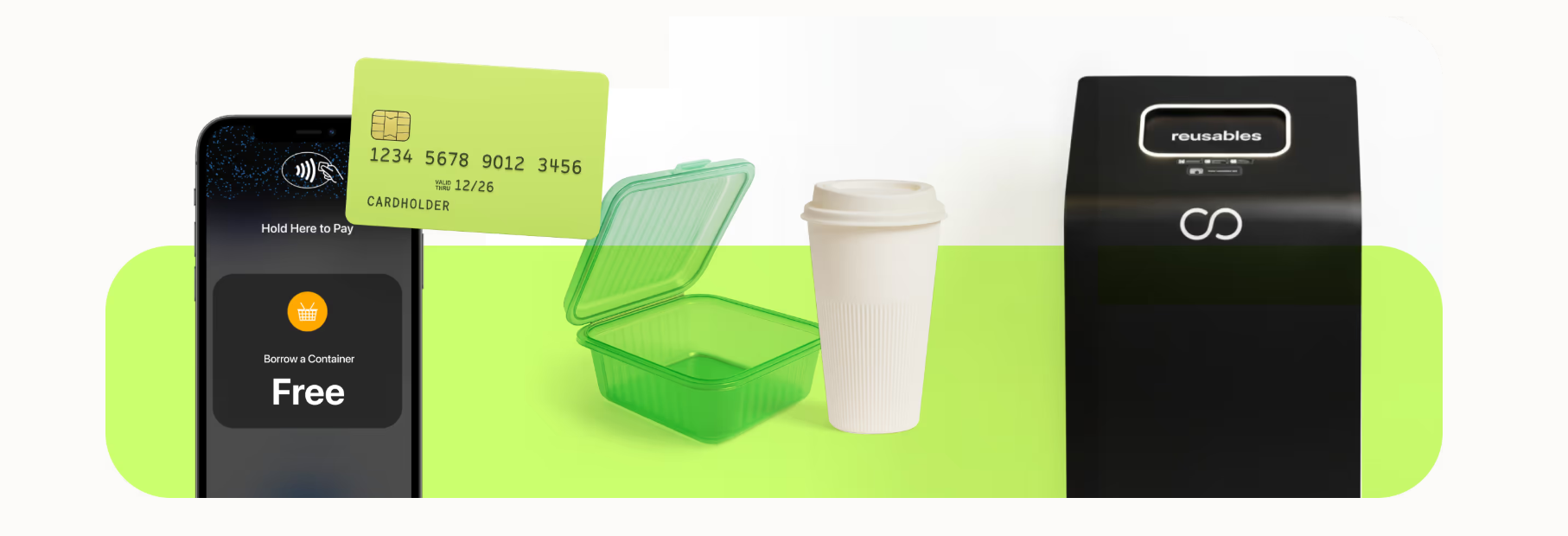
The final piece that makes this system so effective is its seamless integration with the payment platforms you already use. Our technology connects directly with major campus card systems like Transact, CBORD, and TouchNet. This means any late fees can be processed through the same student dining or campus card account they use every day for meals, books, and laundry. There's no need for students to download a separate app or enter credit card information. This deep campus integration creates a completely frictionless experience for students and eliminates any administrative headaches for your team.
How should you structure your fee model?
Deciding how to charge for unreturned containers is one of the most consequential choices in program design. Charge too little, and containers are treated as disposables — the fee becomes an acceptable cost for students who want to keep them. Charge too much, and students hesitate to participate at all, worried about accidentally incurring a penalty. The right approach creates a gentle, consistent nudge toward return without creating a barrier to entry.
Calculate your true replacement cost
Before you set a fee, know what a lost container actually costs you. This is not just the sticker price of the container. Your true replacement cost includes the container itself, plus any shipping and handling from your supplier, the administrative time required to process a replacement order, and the operational disruption caused by a gap in your inventory. When you calculate this all-in figure, it gives you a data-backed baseline for setting a fee that is meaningful without being punitive. It also gives you an honest number to present to students and stakeholders when explaining why the fee exists.
Deposit systems with automatic refunds
The deposit model is the classic approach: students pay a small refundable amount when they check out a container, which is returned to their account when they bring it back. This creates immediate, tangible accountability and is easy for students to understand — they have money in play from the start. The trade-off is friction at checkout. An upfront charge, even a small one, can deter participation, particularly among students who are already hesitant to try a new system. Programs using this model often see lower initial adoption, though return rates among those who do participate tend to be high.
Progressive late fee structures
A late fee model removes the upfront barrier entirely. Students borrow for free, and a fee is only applied if they do not return the container within a set window. Most well-designed versions include a grace period and automated reminders before any charge is processed — a student typically has seven to ten days and several notifications before anything appears on their account. This framing feels more proportionate and less punitive than an upfront deposit, which builds goodwill. The challenge is ensuring the fee level is high enough to motivate a return; if the amount is too low, students may simply pay it and move on.
The no-deposit model: free to borrow, automated accountability
The no-deposit model with automated late fees has become the most effective approach for campus programs at scale. Students borrow containers for free by tapping their campus card, with no upfront payment required. If the container is not returned by the deadline, a fee for the replacement cost is charged automatically to their account. Research from Upstream Solutions consistently shows that the threat of a fee — particularly one that feels like a natural consequence rather than a penalty — is a stronger motivator than an upfront deposit. Crucially, the removal of the initial financial barrier drives participation from the widest possible cross-section of the campus community, including students who would otherwise opt for disposables to avoid the deposit. Programs using this model report return rates of 99%, which is what makes the financial model viable.
The Technology That Powers Container Management
An automated late fee system sounds great in theory, but it only works if you have the right technology to back it up. Without a reliable way to track every container, monitor returns, and see your inventory in real time, accountability falls apart, and you risk creating more work for your team. The goal is to create a seamless experience for both your diners and your staff, not a system that requires constant manual oversight.
This is where a fully integrated, tech-first approach makes all the difference. The right technology is the engine that runs the entire reuse program, turning a complex logistical challenge into a smooth, automated process. It provides the individual container tracking needed for accountability, the convenience needed for high return rates, and the data needed for efficient operations. Let's look at the key components that make a modern reuse program successful.
Tracking Every Container with QR & RFID
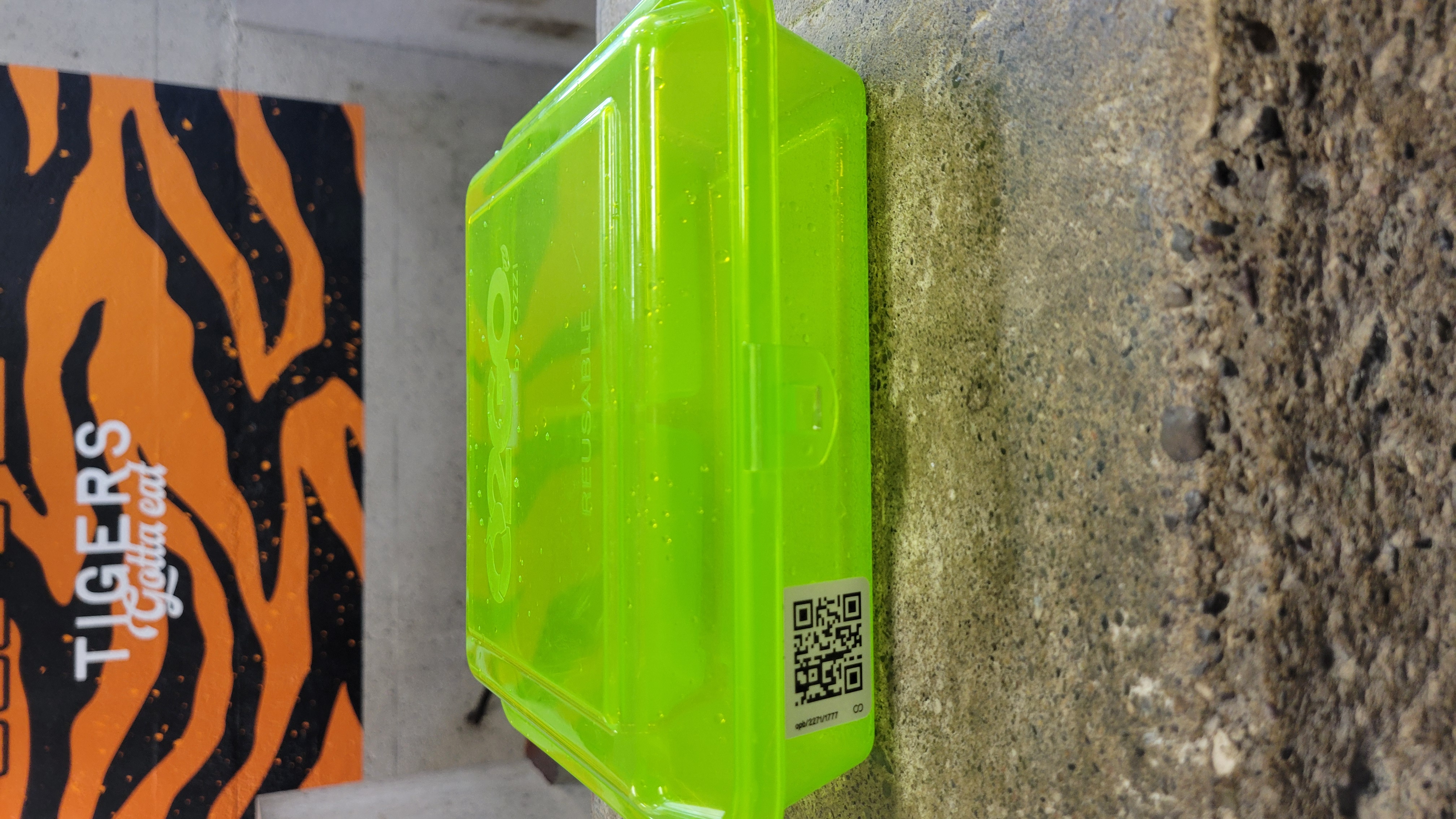
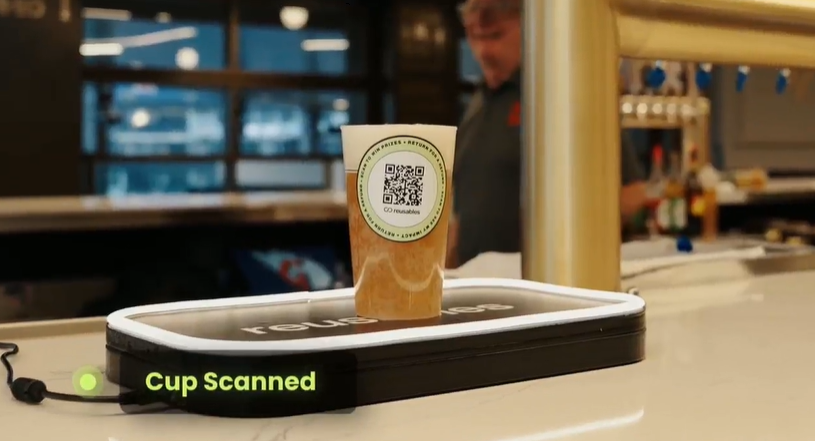
To hold users accountable, you first need to know which container they have. That's why every reusable container in the system is tagged with a unique digital identity, typically a QR code or an RFID tag. This simple but powerful feature is the foundation of the entire program. When a student checks out a container, a quick scan links that specific item to their account, creating a clear record of who has what and when it was taken. This dual-mode digital tracking is reliable and works across different container materials, from durable plastic to stainless steel, eliminating the need for clumsy tokens or paper slips.
Making Returns Easy with Smart Bins
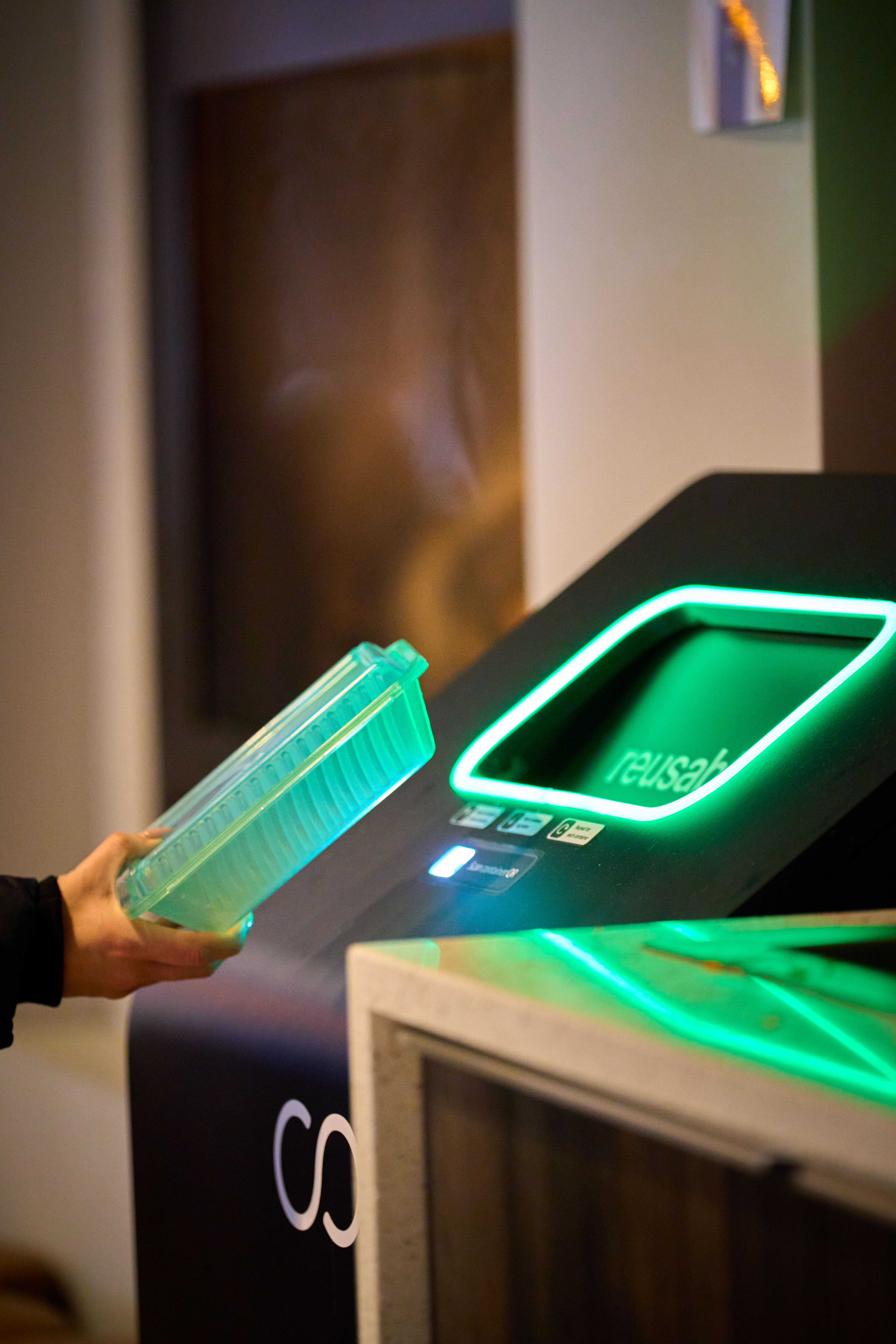
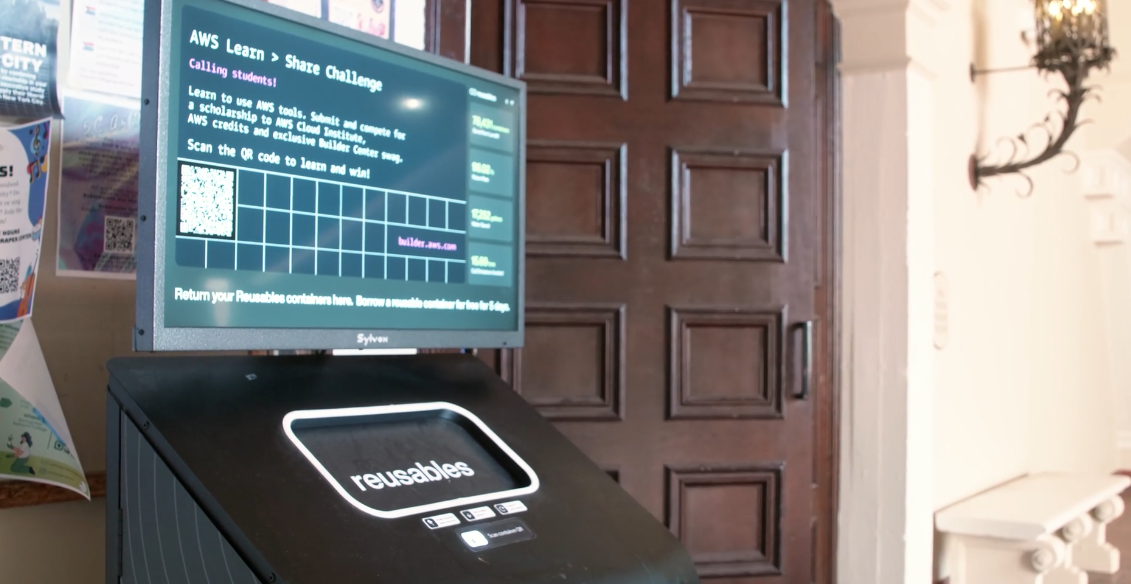
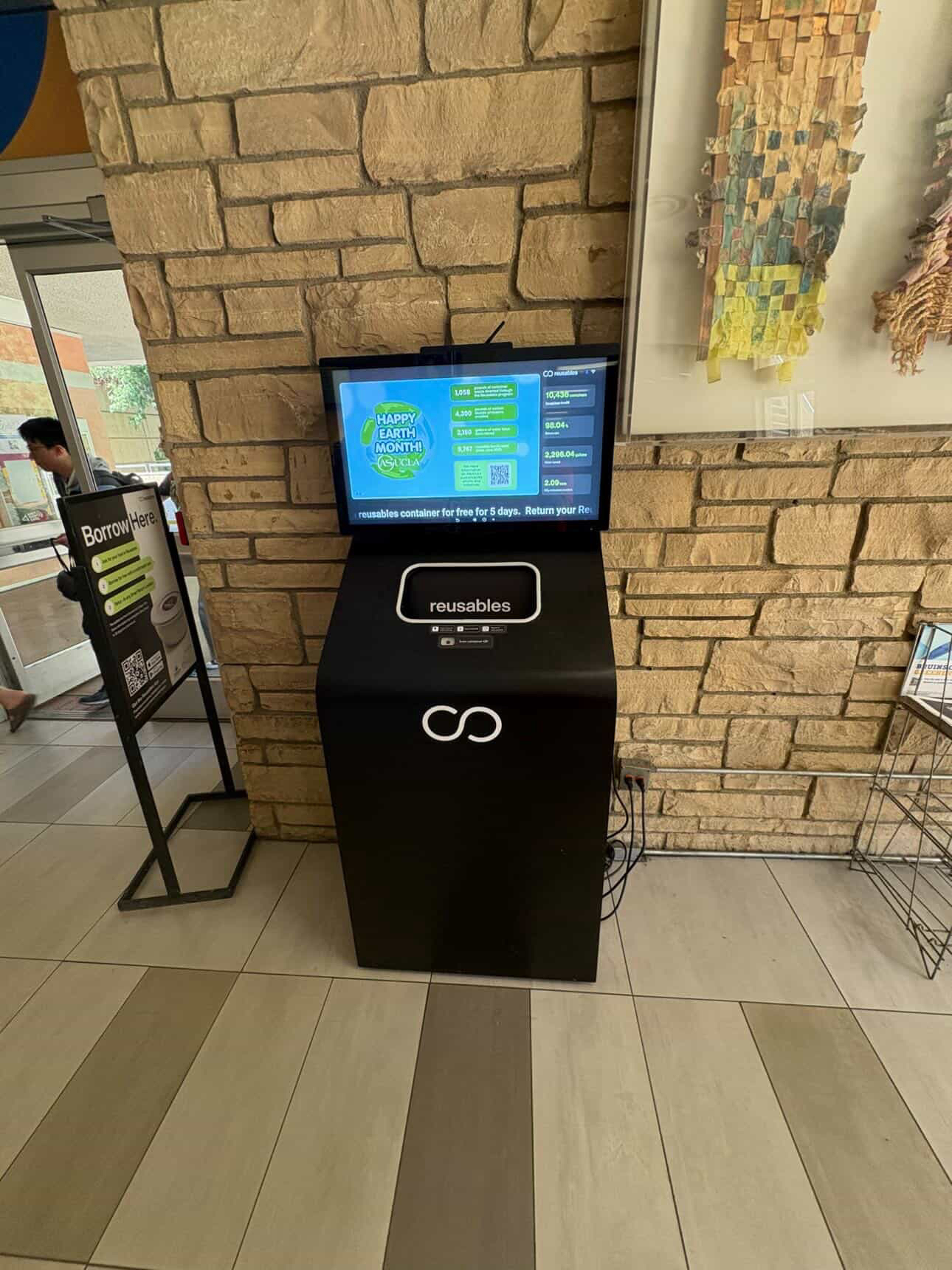
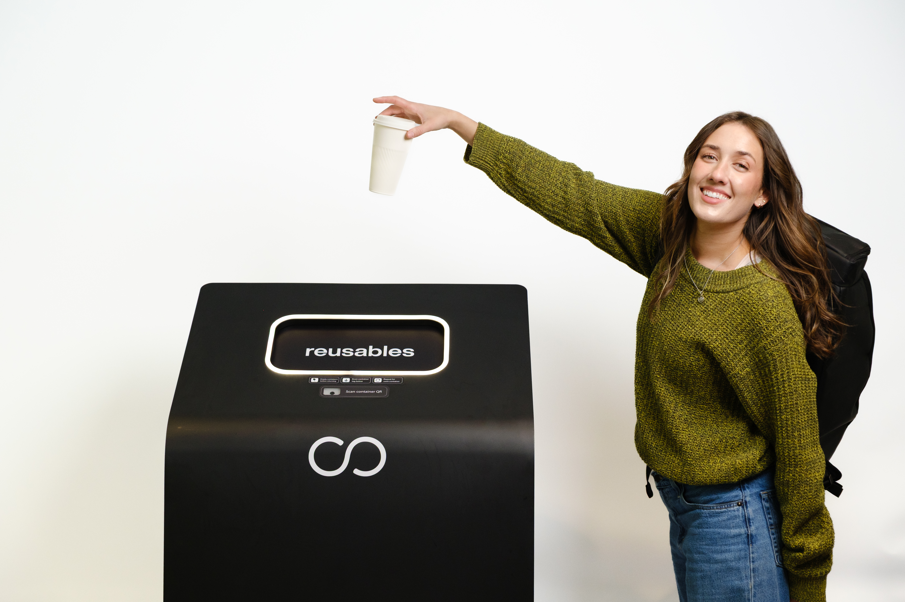
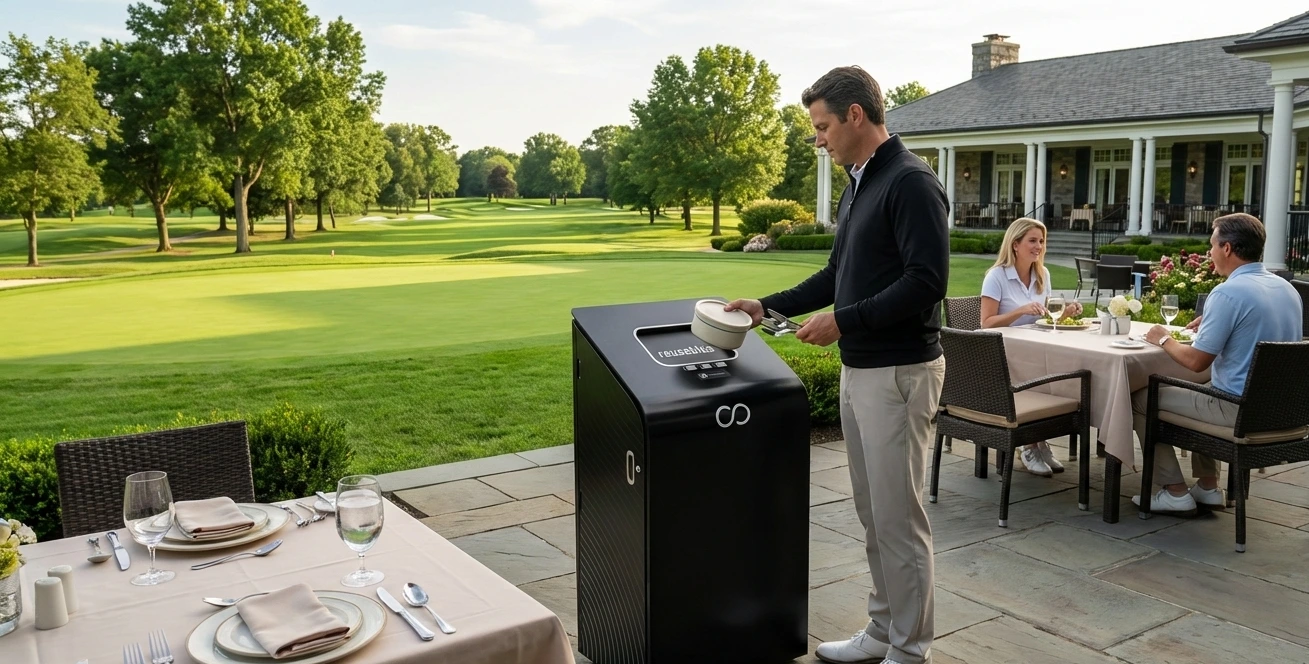
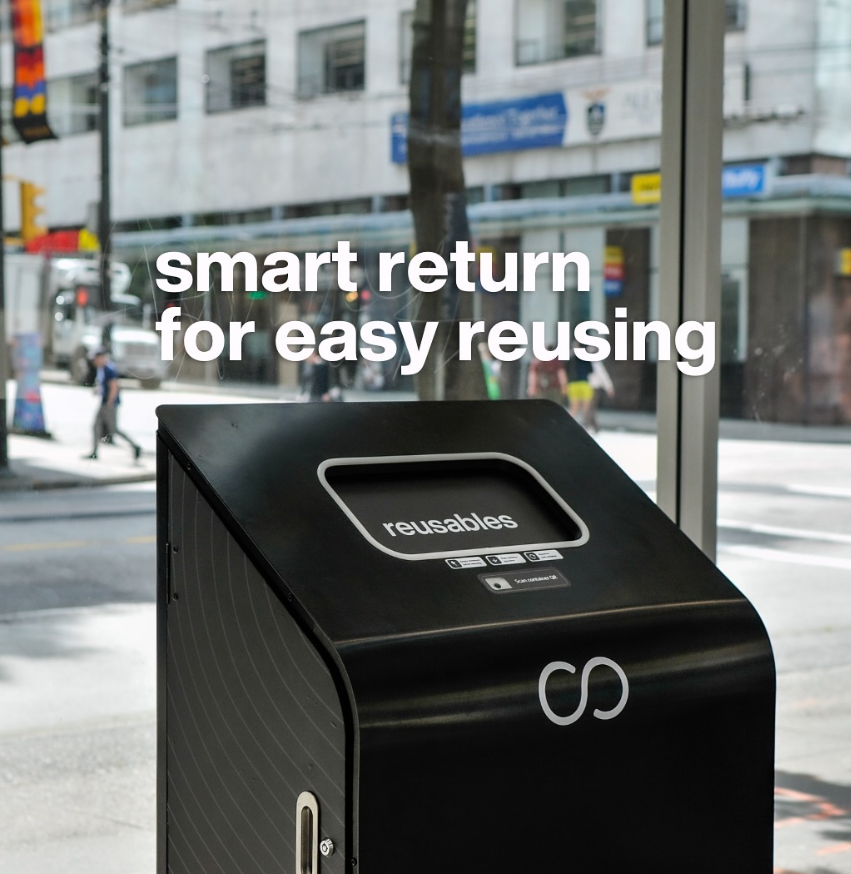
A successful reuse program depends on making returns as easy as possible. If students have to go out of their way or wait for a specific location to be open, containers simply won't come back. Smart Return Bins solve this by offering 24/7, touch-free drop-off points across campus. When a user returns a container, the bin automatically scans its tag, instantly crediting their account and ending the borrowing period. These bins also monitor their own fullness, sending alerts to your staff when they need to be emptied. This removes the burden of manual scanning and ensures the return process is always convenient and available.
Monitoring Your Program in Real Time
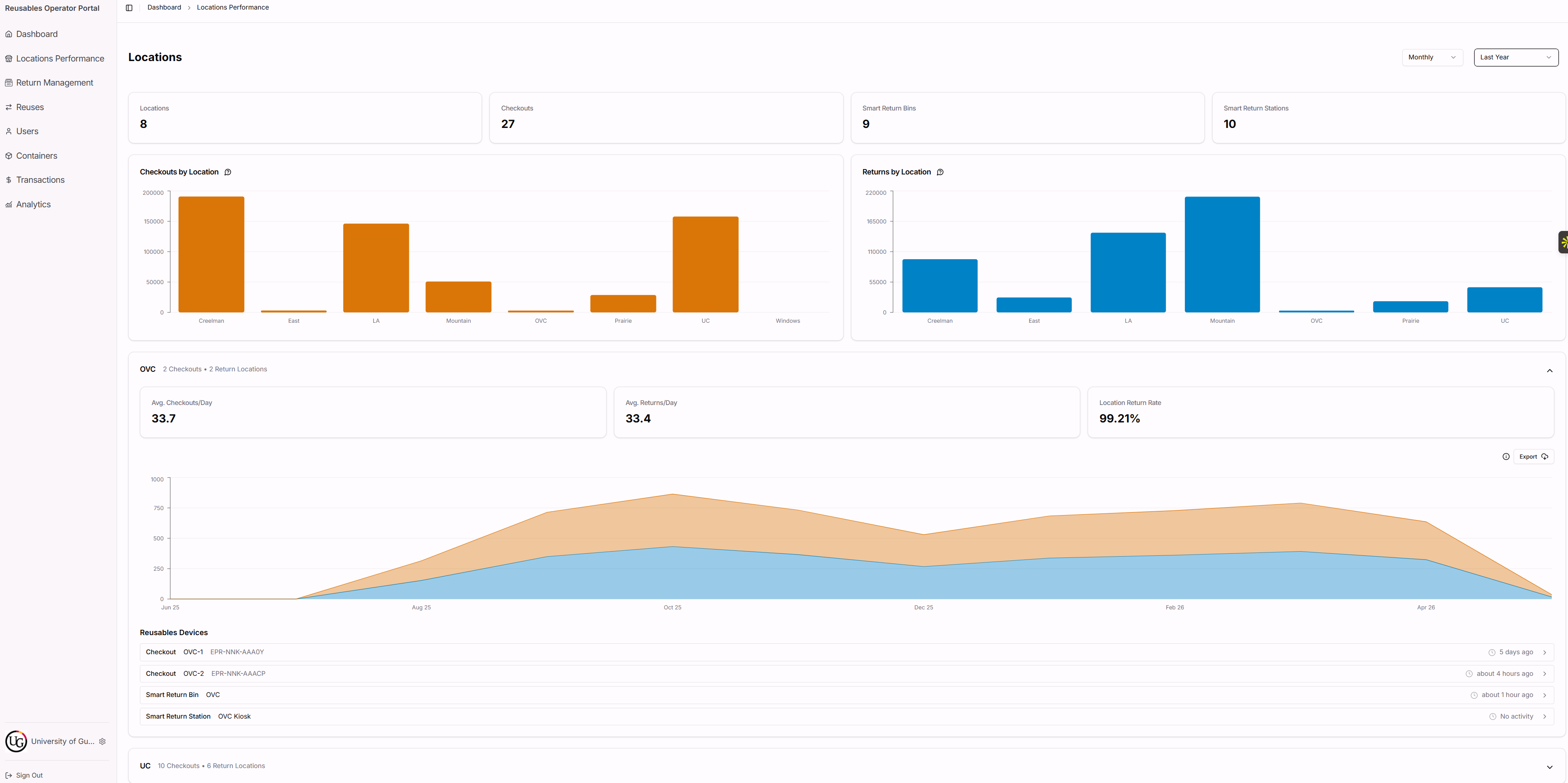
How do you know if your program is actually working? A robust operator dashboard gives you the data you need to manage your system effectively. Instead of guessing, you get a live look at the key metrics that matter. You can see campus-wide usage rates, track return rates over time, and monitor current inventory levels across all locations. This real-time data allows you to spot trends, identify popular dining halls, and make informed decisions to optimize your operations. It transforms container management from a reactive task into a proactive, data-driven strategy that supports your entire supply chain.
Gaining Full Inventory Visibility
One of the biggest challenges with traditional reusable container programs is simply losing track of them. Containers can get misplaced, hoarded by users, or accidentally sent to the wrong location, leading to stock shortages and unexpected replacement costs. A connected tracking system prevents this by providing complete inventory visibility. The dashboard shows you exactly where every container is—whether it's in circulation with a user, sitting in a return bin, or ready for use in a dining hall. This accurate, automated tracking eliminates the guesswork and ensures you always have the right number of containers where you need them, cutting down on loss and improving operational efficiency.
How to Launch a Successful Late Fee Program
A successful reuse program hinges on getting your containers back, and a well-designed late fee system is your most effective tool for ensuring that happens. But launching this system requires more than just setting a price and a deadline. It's about creating a framework that feels fair, is easy to understand, and clearly communicates its purpose to your campus community. The goal isn't to penalize students, but to create a gentle, automated nudge that encourages timely returns. When students understand the rules and the reasons behind them, they are far more likely to participate enthusiastically.
A thoughtful launch strategy focuses on transparency and education. Before the first container is ever checked out, students should know how the program works, what the return deadlines are, and what happens if they miss one. By combining fair fee levels with a clear policy and proactive communication, you can build a system that runs smoothly in the background. This approach minimizes staff intervention, prevents container loss, and reinforces the shared goal of reducing campus waste. Ultimately, a successful launch sets the foundation for the 99% return rates that top-tier reuse programs achieve.
Set Fair and Effective Fee Levels
The key to setting a late fee is to find the sweet spot. The fee should be significant enough to motivate a return and cover the replacement cost of the container, but not so high that it feels punitive. Most partners find success with a fee that reflects the value of the asset. The real magic, however, is in the automation. Our system integrates directly with existing campus payment systems, so holds and charges are processed automatically. This means your staff never has to chase down students or manually manage fees. The system handles the reminders and transactions, ensuring the process is consistent, fair, and free of administrative headaches.
Design a Clear Return Policy
Simplicity is your best friend when it comes to your return policy. A complicated set of rules will only create confusion and frustration. Instead, design a policy that is straightforward and easy to remember. For example, the University of New Mexico has a clear policy: if a container isn't returned on time, it's marked 'Late.' The student then has a 48-hour grace period to return it. Only after that window closes is the fee charged to their dining account. This multi-step process gives students ample opportunity to do the right thing. Once you've defined your policy, make sure it's clearly posted on your website and on signage near checkout and return locations.
Communicate the Program to Your Community
Proactive communication is essential for a smooth rollout. You want to make sure every student is aware of the program before they ever check out a container. Use a multi-channel approach to spread the word: send out emails, post on campus social media accounts, and display information on digital screens in dining halls. As the program runs, automated notifications are a powerful tool. Just as Clemson University notes in its terms, students can receive text messages about their account status, including reminders when a container is due soon. This level of transparency ensures there are no surprises and helps students keep track of their borrowed items, making the entire experience feel supportive rather than punitive.
Educate Users on How It Works
Beyond just explaining the rules, it's crucial to educate students on why the program exists. Frame it as a collective effort to build a more sustainable campus. When students understand the positive impact of their actions, they become partners in your mission. As the University of New Mexico explains to its students, the program helps reduce environmental impact by cutting down on single-use plastic waste. By connecting the simple act of returning a container to your campus's broader sustainability mission, you can foster a sense of shared responsibility. This educational approach builds buy-in and encourages participation far more effectively than fees alone ever could.
How to Maximize Return Rates and User Experience
Automated late fees are a powerful tool for ensuring containers come back, but they work best as part of a broader strategy focused on the user. When you make your reuse program simple, convenient, and even fun, you create a system that students and staff actually want to participate in. High return rates aren't just about accountability; they're the result of a thoughtfully designed experience.
Combining smart technology with clear communication and positive reinforcement is the key to success. The goal is to make reusing containers the easiest and most obvious choice. When you remove friction from the process, you not only protect your inventory but also build a campus culture of sustainability that lasts. By focusing on these key areas, you can achieve the 99% return rates that leading programs see while keeping your community happy.
Provide Convenient Return Locations
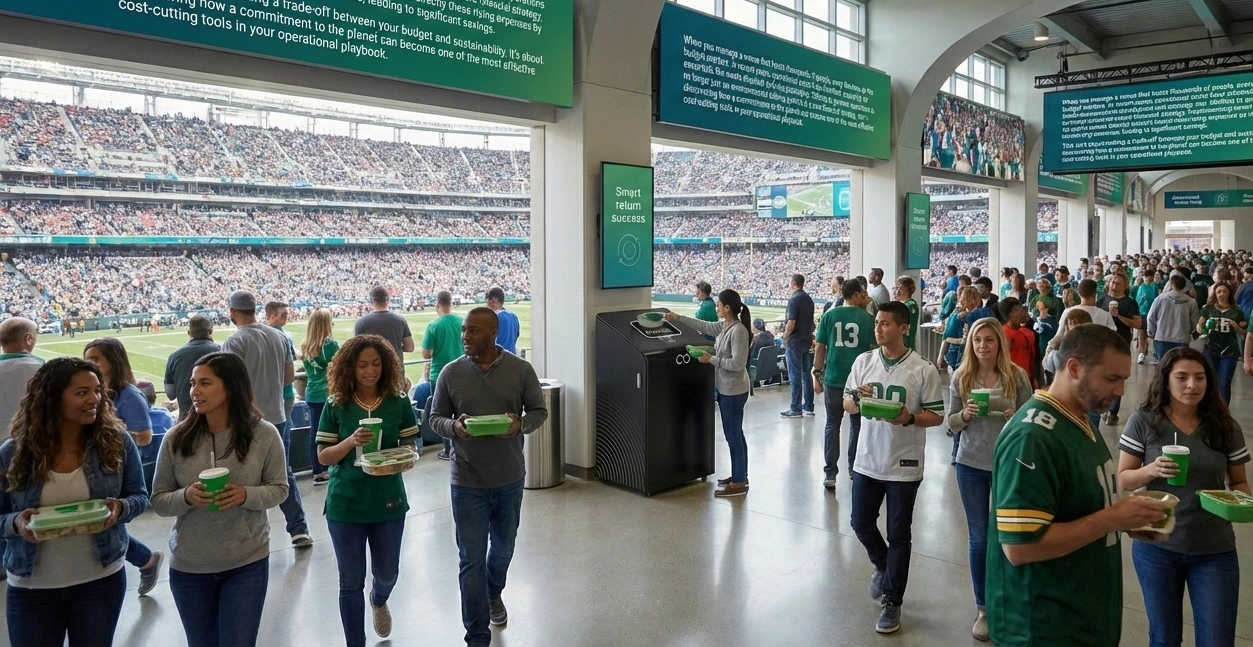
The easier you make it for someone to return a container, the more likely they are to do it. Think about the daily paths of your students and staff—where do they live, study, and socialize? Placing smart return bins in these high-traffic areas is critical. Think residence halls, library entrances, student unions, and athletic facilities. An out-of-the-way bin is an unused bin.
Efficient management of your reusable containers is the backbone of a smooth-running program. When returns are effortless, participation becomes second nature. Our Smart Return Bins are designed for this, offering 24/7, tamper-proof access so users can drop off containers on their own schedule, not just during dining hall hours. This level of convenience is what turns a good idea into a successful, campus-wide habit.
Use Incentives to Encourage Returns
While automated fees create a clear consequence for not returning a container, positive incentives create a reason to participate enthusiastically. You can build a culture of reuse by rewarding students for doing the right thing. Consider a gamified system with leaderboards that show which residence hall is leading in returns, or offer prize draws for students who consistently bring their containers back on time.
These kinds of programs add a layer of fun and friendly competition that resonates with campus life. Instead of focusing only on the penalty, you're celebrating the positive impact students are making. This approach, which combines accountability with engagement, helps build long-term habits and fosters a genuine commitment to your campus sustainability goals. It shifts the dynamic from a requirement to a shared community effort.
Prevent Container Loss
A successful reuse program depends on keeping your container inventory in a closed loop. Common problems like loss or theft can quickly derail your financial and environmental goals if not managed properly. This is where technology becomes your most valuable asset. By assigning a unique QR code and RFID tag to every single container, you gain complete visibility over your inventory.
This digital tracking system means you always know which container is checked out to which user, when it's due back, and where it was returned. It's the foundation of an automated accountability system that prevents loss without creating extra work for your staff. Instead of chasing down missing assets, the system handles reminders and fees automatically, ensuring your containers make it back to be washed and used again.
Address Common Questions and Concerns
Launching any new program requires clear and consistent communication. Students and staff will have questions, and answering them proactively is the best way to ensure a smooth rollout. Create simple, easy-to-understand materials that explain how the program works: how to check out a container, where to return it, and what the return timeline is.
The absence of standardized processes across different reuse systems can sometimes cause confusion, so make your instructions impossible to misinterpret. Use signage at dining halls, post FAQs on your website, and send out an email campaign before launch. When users feel confident and informed, they are far more likely to embrace the change. If you have questions about designing your communication plan, our team is always here to help you get started.
How to make your policy fair and legally sound
An automated fee system is only as good as the policy behind it. Students need to understand what they are agreeing to, trust that the process is fair, and have a clear path to resolve any issues that arise. A well-documented, transparent policy protects your institution and builds the student confidence that underpins high participation rates.
Know your obligations under consumer protection rules
Any system that applies charges to student accounts is subject to your institution's own payment policies and, in some jurisdictions, broader consumer protection requirements. Before launching, confirm with your finance and compliance teams that your fee structure, grace periods, and refund processes meet all applicable standards. In practice, this usually means ensuring fees are clearly disclosed before checkout, that students receive adequate notice before a charge is applied, and that there is a straightforward process for raising a dispute. These are not just legal requirements — they are also good program design.
Be transparent about every step
No fee should ever come as a surprise. The policy should be clearly stated at checkout, posted on your dining services website, and displayed near return stations. Students should receive a confirmation when they check out a container, a reminder before the return deadline, a notification if the item becomes overdue, and an immediate confirmation when the container is returned and any fee is reversed. This level of communication signals that the system is there to support participation, not to generate revenue from mistakes. When students feel the process is fair, they accept the accountability — and are far more likely to return the container rather than dispute the charge.
Provide a simple dispute resolution process
Even a well-run system will occasionally produce a fee that a student believes was applied incorrectly — perhaps a container was returned to a bin that did not scan correctly, or a technical issue caused a delay. Having a clear, accessible way for students to raise these concerns, and a commitment to resolve them quickly, is essential for maintaining trust. Dining staff should know how to handle these conversations, and the platform should make it easy to review the container's scan history so disputes can be resolved with data rather than guesswork. A system that treats legitimate disputes with transparency and speed turns a potential complaint into a demonstration that the program is genuinely fair.
How to Measure Your Program's Success
Once your automated late fee system is up and running, you need a clear way to see if it's working. Measuring success isn't just about counting returned containers; it's about understanding the full picture—your financial savings, operational efficiency, user experience, and environmental impact. A great reuse program doesn't just run, it provides you with the data to prove its value and make smart decisions for the future. The right technology partner will give you a dashboard with real-time data, making it simple to track your progress against the goals you set from day one. This transparency is key to demonstrating the program's value to stakeholders and securing long-term support for your sustainability initiatives.
Define Your Key Performance Indicators (KPIs)
Before you can measure success, you have to define what it looks like for your campus. Key Performance Indicators (KPIs) are the specific, measurable metrics you'll use to track your program's performance. Think beyond just return rates. Your KPIs should cover operational health, financial outcomes, and user engagement. Consider tracking metrics like the average number of uses per container, the percentage of students actively participating, and the overall container lifecycle. A system that integrates with your campus card system makes tracking financial metrics seamless, allowing you to see how fees influence return habits without adding administrative work for your team.
Analyze Your Return Rate Data
Your container return rate is the clearest indicator of your program's health. A high return rate means your inventory is secure, your costs are low, and your users understand and value the system. Leading campus programs have demonstrated that with the right combination of convenient return options and automated accountability, it's possible to achieve a 99% return rate. Your data should do more than give you a single percentage; it should offer insights. Look at which return bins are used most often to optimize placement, or identify if returns dip during certain times, like exam periods, so you can adjust your messaging accordingly.
Assess the Financial Impact
A successful reuse program should make a positive impact on your budget. The most direct financial win comes from drastically reducing your spending on single-use packaging, which has seen costs skyrocket in recent years. To get a full picture, compare your new, lower spending on disposables against the cost of the reuse program. While some programs rely on upfront deposits or membership fees, an automated, refundable late fee model protects your inventory without discouraging participation. Don't forget to factor in new revenue streams, like the advertising opportunities available on smart return bins, which can help make your program financially self-sustaining.
Track Your Environmental Savings
Ultimately, the goal of a reuse program is to create a more sustainable campus. Quantifying this impact is one of the most rewarding parts of measuring your success. Your system's dashboard should translate your operational data into clear environmental metrics. Track the total number of single-use containers you've avoided, the amount of waste diverted from landfills, and the corresponding reduction in your carbon footprint. This data provides powerful proof of your commitment to sustainability, showing exactly how a campus-wide program can make a significant environmental difference. These are the numbers that will inspire your community and build momentum for future green initiatives.
What's Next for Automated Reusables?
Automated reuse systems are already transforming how campuses handle takeout packaging, but this is just the beginning. The future of reusables isn't just about replacing disposables; it's about creating smarter, more connected, and completely frictionless experiences for both your team and your students. As technology advances, these systems are set to become even more integrated into the fabric of campus life, delivering deeper operational insights and greater environmental impact.
The next wave of innovation is focused on a few key areas. We're seeing the rise of more sophisticated tracking technologies that offer unprecedented visibility into inventory and user behavior. At the same time, the user experience is being refined to eliminate every possible point of friction, making reuse the easiest and most obvious choice. Behind the scenes, deeper integrations with existing campus platforms are breaking down operational silos, while new approaches to sustainability are helping institutions measure and share their success stories more effectively. These advancements are paving the way for a future where zero-waste dining is not just an initiative, but the standard.
Emerging Tracking Technologies
The simple QR code has been a workhorse for reusable container programs, but the next generation of tracking is far more powerful. The future lies in combining technologies like RFID with the Internet of Things (IoT) and artificial intelligence (AI) to create a truly intelligent inventory system. By integrating real-time tracking systems, we can move from simply knowing where a container is to predicting where it needs to be. Imagine a dashboard that doesn't just tell you a return bin is full, but alerts you that it will be full in two hours based on campus event schedules and historical data. This level of predictive analytics helps you manage your container fleet with incredible efficiency, ensuring you always have enough clean inventory ready to go.
New Features for a Better User Experience
A successful reuse program is one that students actually want to use. That's why the future is focused on making the experience as seamless as possible. We're moving beyond clunky apps and deposits toward truly invisible tech, like the ability to check out a container with a simple tap of a student ID or credit card. Accountability is also getting a user-friendly upgrade. Instead of punitive upfront deposits, advanced systems use automated late fees that are clearly communicated and directly integrated with campus payment platforms. This approach, combined with gamification features like leaderboards and rewards, turns participation from a chore into a positive and engaging part of the campus culture.
Deeper System Integrations
For a reuse program to work at scale, it can't operate in a vacuum. The next step is deeper integration with the core software that powers your campus. While many programs already connect with campus card systems for payment and identification, future integrations will go much further. Think of your reuse platform communicating directly with your point-of-sale (POS) system, your campus mobile app, and even your marketing automation tools. This creates a unified ecosystem where data flows freely, reducing manual work for your staff and creating a more cohesive experience for students. These business solutions ensure the reuse program feels like a natural extension of your existing dining services, not a separate, bolted-on system.
Innovations in Sustainability
As reuse programs mature, so does our ability to measure and understand their impact. The future of sustainability in this space is all about data. While current systems track metrics like waste diversion, the next generation will offer even more granular insights into your environmental footprint, calculating real-time savings in carbon emissions, water usage, and energy consumption. The financial models are also evolving. The most effective programs are moving away from complex deposit or membership schemes toward a simple, free-to-use model for students, supported by automated accountability. This removes participation barriers and ensures the program can scale effectively, making it easier than ever to achieve and report on your institution's ambitious zero-waste goals.
Related Articles
- Deposit-Free Reuse Systems and their Impact for On-Campus Dining – Reusables.com
- ASUCLA – Reusables.com
- SFU and Reusables – Reusables.com
Frequently Asked Questions
Will students be upset about getting charged late fees? This is a common concern, but we find that when the system is framed correctly, students are very receptive. The key is clear communication from the start. The charge isn't a penalty; it's a small, fully refundable deposit that's only applied after a generous return window and multiple reminders. By explaining that this system is what allows the program to be free for everyone to use, students understand their role in keeping the containers in circulation for the whole community.
How much extra work does an automated fee system create for my dining staff? It actually creates less work. The entire system is designed to run in the background so your team can focus on what they do best. Staff members never have to track down containers, have awkward conversations about late items, or manually process charges. The technology handles all the tracking, user notifications, and financial transactions automatically, which frees up your team's time and removes a major operational headache.
We already have reusable containers. Can we use those with your system? Yes, absolutely. Our platform is designed to be flexible, which means it can work with the containers you already own. We simply tag your existing inventory with our unique QR and RFID trackers. This allows you to get the benefits of our automated tracking and accountability system without having to make a brand new investment in containers if you don't want to.
Why are refundable fees necessary if the program is free for students to join? Think of the fee as a temporary placeholder that ensures the container comes back. Without a small incentive, containers are easily forgotten in dorm rooms or lost, which can quickly deplete your inventory and undermine the program's success. This simple, automated accountability is what drives the 99% return rates our partners see and ensures there are always clean containers available for the next person.
What happens if a student returns a container after the fee has been charged? The moment a student scans their container at any smart return bin, the fee is automatically refunded to their campus account. The process is instant and seamless because our system integrates directly with your existing campus payment platforms. This ensures the process is fair and transparent, reinforcing that the goal is simply to get the container back, not to penalize anyone.
Other stories you may find interesting


.png)


.avif)








.webp)




Watch the Webinar
Learn How to Eliminate Single-Use Waste
Get instant access to our expert webinar and discover how leading institutions reach 99% return rates through smarter reuse systems.

© Reusables™. All rights reserved.