
RFID vs QR Code for Reusable Tracking: Which is Best?

December 8, 2025
For years, the conversation around tracking reusable containers has been framed as a simple choice. Do you go with the low-cost accessibility of QR codes, or the powerful, high-speed automation of RFID? This question often forces dining directors to make a trade-off between their budget and their operational efficiency, leaving them to choose the lesser of two evils. But what if you didn't have to compromise? The classic RFID vs QR code for reusable tracking debate often overlooks a more powerful, hybrid approach that leverages the strengths of both. Before we declare a winner, let's explore how these technologies work and see how combining them creates a truly seamless and resilient system for your campus.
Key Takeaways
- RFID automates your workflow, while QR codes require manual effort: RFID excels at processing many returns at once without direct line of sight, keeping your lines moving. QR codes, however, need individual scanning for every transaction, which can slow down service during peak times.
- Durability is essential for a long-term program: Reusable containers face daily wear from commercial dishwashers and constant handling. Embedded RFID tags are built to survive these conditions, whereas printed QR codes can easily get damaged, leading to lost containers and unreliable data.
What Are RFID and QR Codes?
When you're managing hundreds or thousands of reusable containers, keeping track of every single one is crucial for success. Two of the most common technologies for this are RFID and QR codes. While they both help you track your inventory, they work in fundamentally different ways. Understanding these differences is the first step in choosing the right system for your campus dining operations. Let's break down how each one works.
How RFID Technology Works
RFID stands for Radio Frequency Identification. In this system, each container gets a small tag containing a tiny chip and antenna. This tag uses radio waves to communicate with a scanner, or reader. The biggest advantage here is that you don't need a direct line of sight to scan the tag. An RFID reader can pick up the signal even if the tag is inside a bag or stacked under other containers. This allows you to scan multiple items at once, making inventory counts and return processing incredibly fast and efficient. It’s a game-changer for high-volume environments where speed and accuracy are top priorities.
How QR Code Technology Works
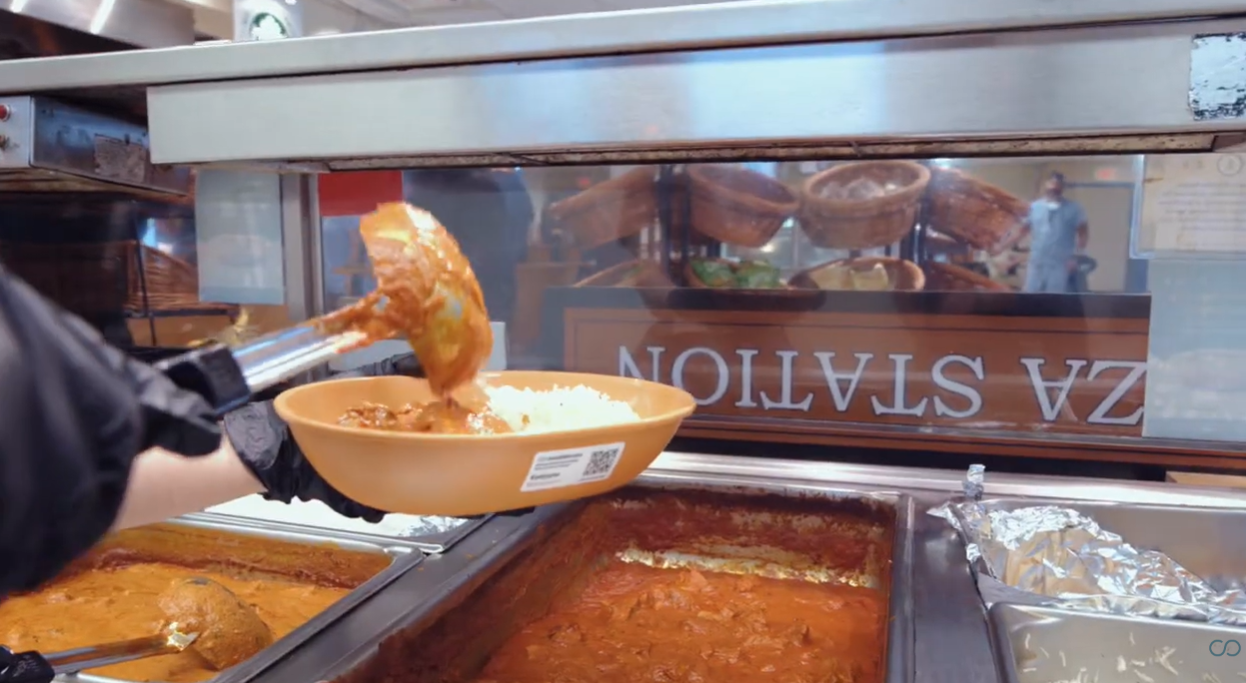
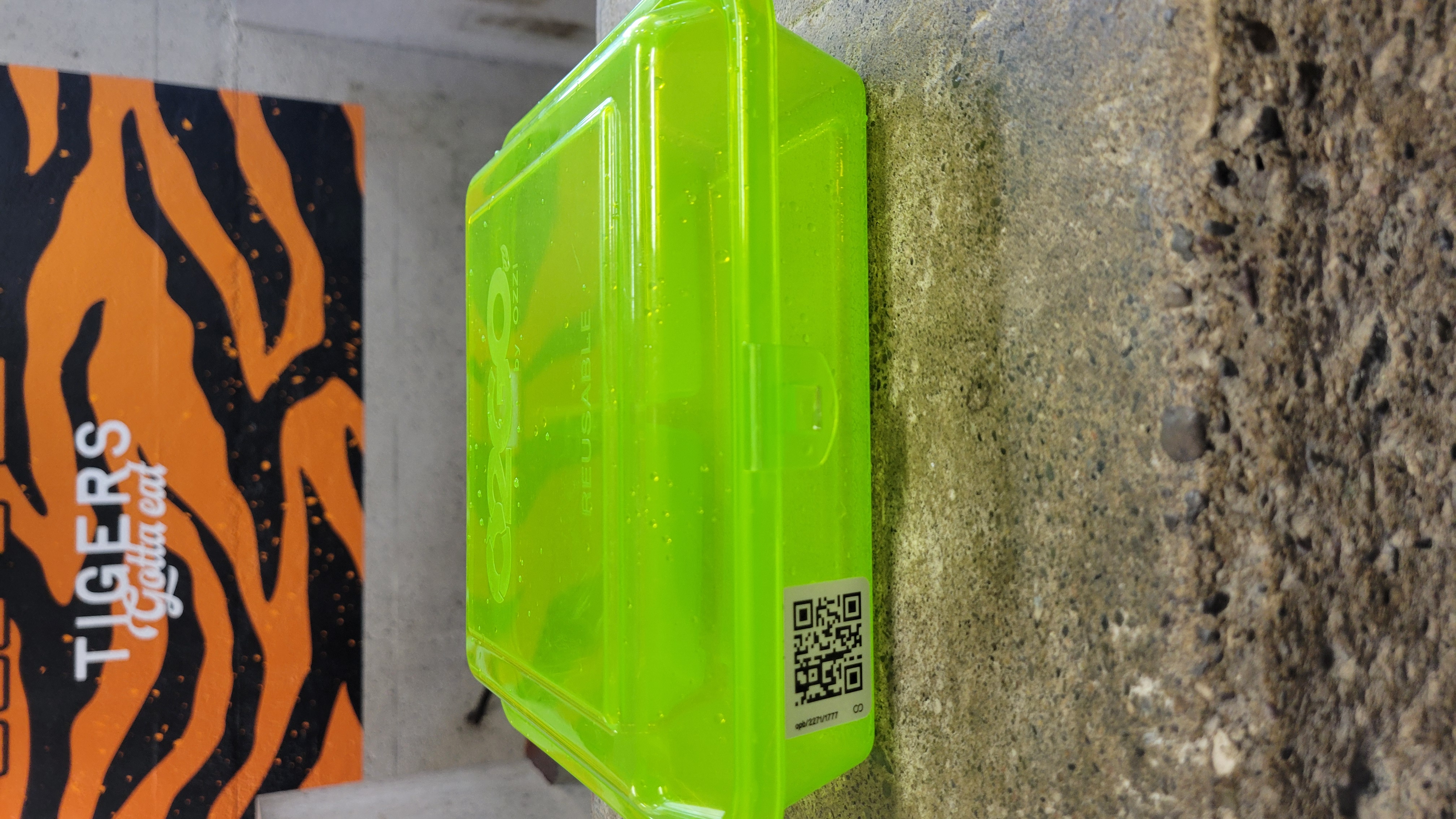
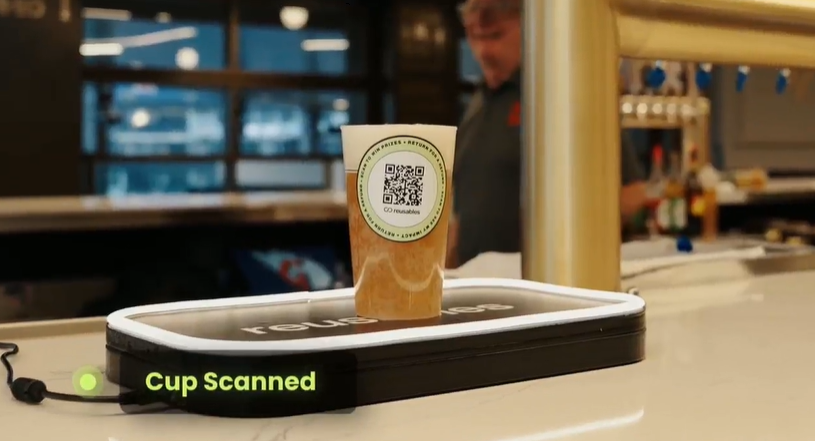
You’re likely already familiar with QR codes—they’re the black-and-white squares you scan with your phone to pull up a restaurant menu or a website. In a reuse system, each container has a unique QR code printed on it. To check a container in or out, a staff member or student simply scans the code using a smartphone or dedicated scanner. Unlike RFID, QR codes require a direct line of sight, meaning the camera has to see the code clearly. This also means each item must be scanned individually, which can be more time-consuming than scanning a batch of items at once.
How Do RFID and QR Codes Track Reusables?
Both RFID and QR codes give each reusable container a unique digital identity. Think of it as a license plate for your coffee cups and takeout boxes. This unique ID allows a system to track each item's journey—from the moment a student checks it out at the dining hall, to when they drop it off in a return bin, and all the way through the washing and restocking process. While the goal is the same, the way each technology accomplishes this tracking is quite different. By assigning a unique identifier to every asset, you can monitor its entire lifecycle and gather valuable data to keep your reuse program running smoothly.
The RFID Tracking Process
The RFID tracking process relies on two key pieces: a small tag attached to or embedded in the reusable container and a reader. The tag contains a unique identifier that can be read by radio waves. When a container with an RFID tag passes near a reader—say, at a checkout counter or a smart return bin—the reader automatically captures its ID without needing a direct line of sight. This provides real-time inventory visibility and detailed analytics on how your containers are being used. By embedding RFID tags in your reusables, you can streamline your asset tracking processes and reduce losses from misplaced items.
The QR Code Tracking Process
Tracking with QR codes is a more hands-on process. Each container has a unique QR code printed on it, which acts as its identifier. To check an item out or in, a staff member or student uses a smartphone or a dedicated scanner to scan the code. This action logs the container's status in your system, linking it to a specific user or location. This method is straightforward and gives you a simple way to track your containers and ensure they are returned efficiently. QR codes can also be used to engage students by linking to information about your sustainability program or their personal impact.
RFID vs. QR Codes: What's the Difference?
When you’re looking at tracking technology for a reusable container program, it’s easy to see RFID and QR codes as interchangeable. Both can be attached to a container and scanned to track inventory. But how they work, what they can do, and how they hold up in a busy campus dining environment are worlds apart. Understanding these key differences is the first step to choosing a system that won't create headaches for your staff or students down the line. A system should make life easier, not add another complicated process to the lunch rush. Let's break down what sets these two technologies apart so you can see which one is truly built for the demands of a high-volume food service operation.
Data Storage and Capacity
Think of a QR code as a digital sticky note. It holds a small, static piece of information—usually a web link or a unique ID number. Once it's printed, that information can't be changed. An RFID tag, on the other hand, is more like a tiny, rewritable hard drive. RFID tags can store significantly more data, from a few bytes to several kilobytes, and that data can be updated over time. This means an RFID tag can carry not just an ID, but also information about the container's history, its last cleaning cycle, or its user, making your tracking system much more powerful and your operational data much richer.
Scanning Speed and Requirements
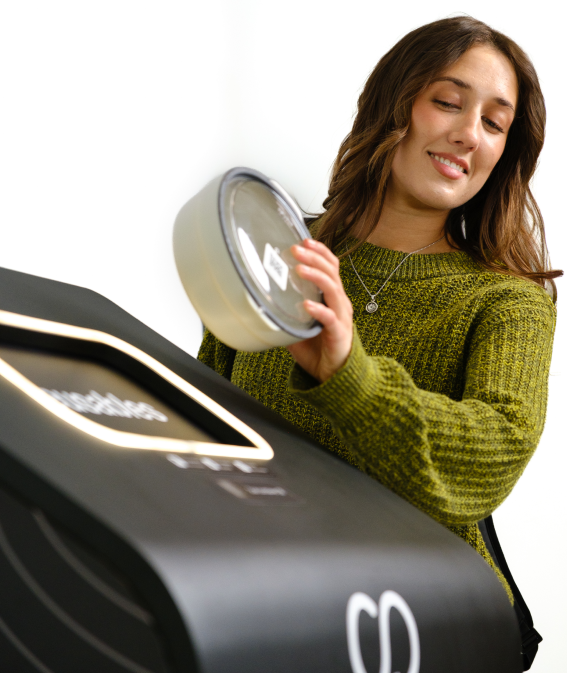
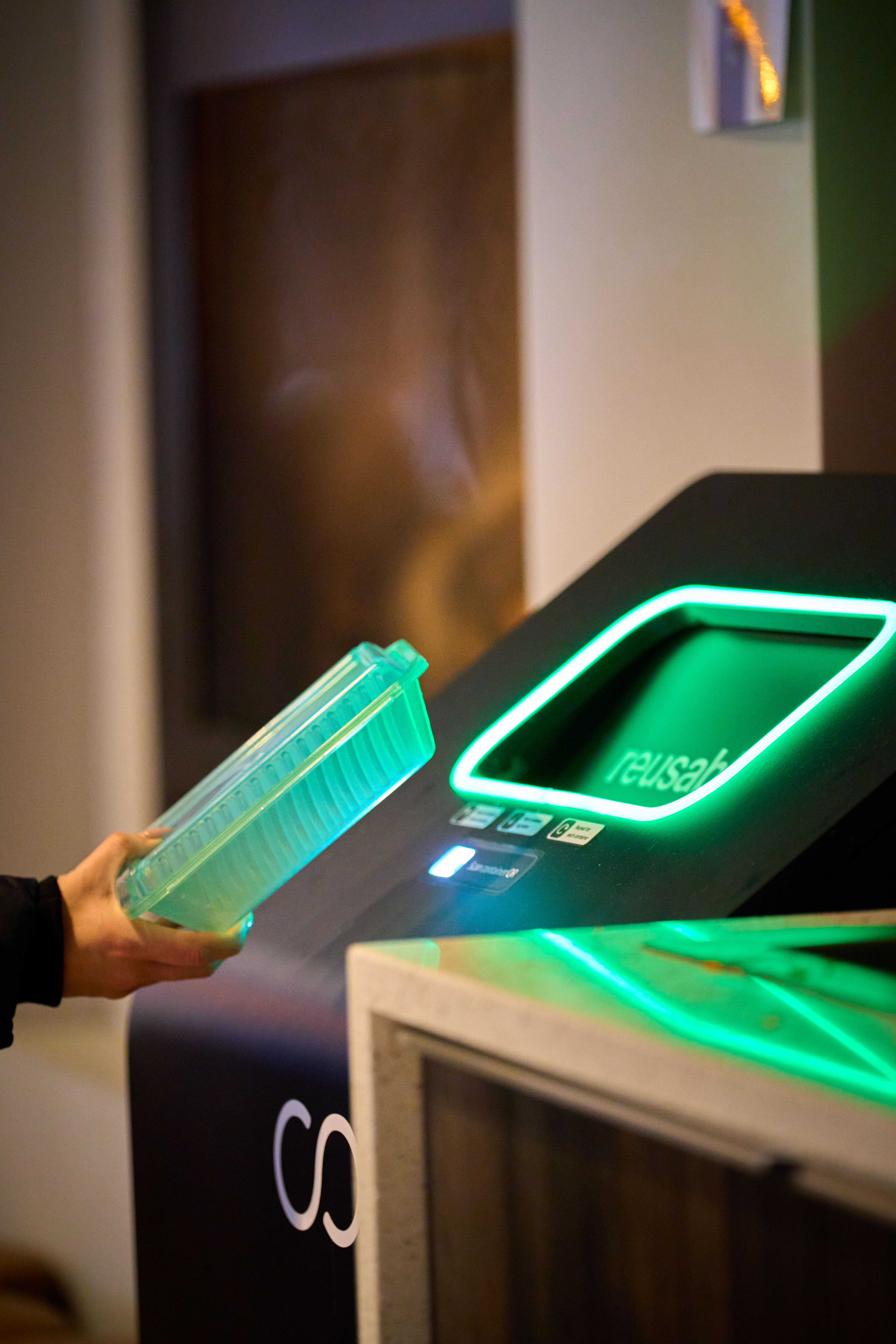
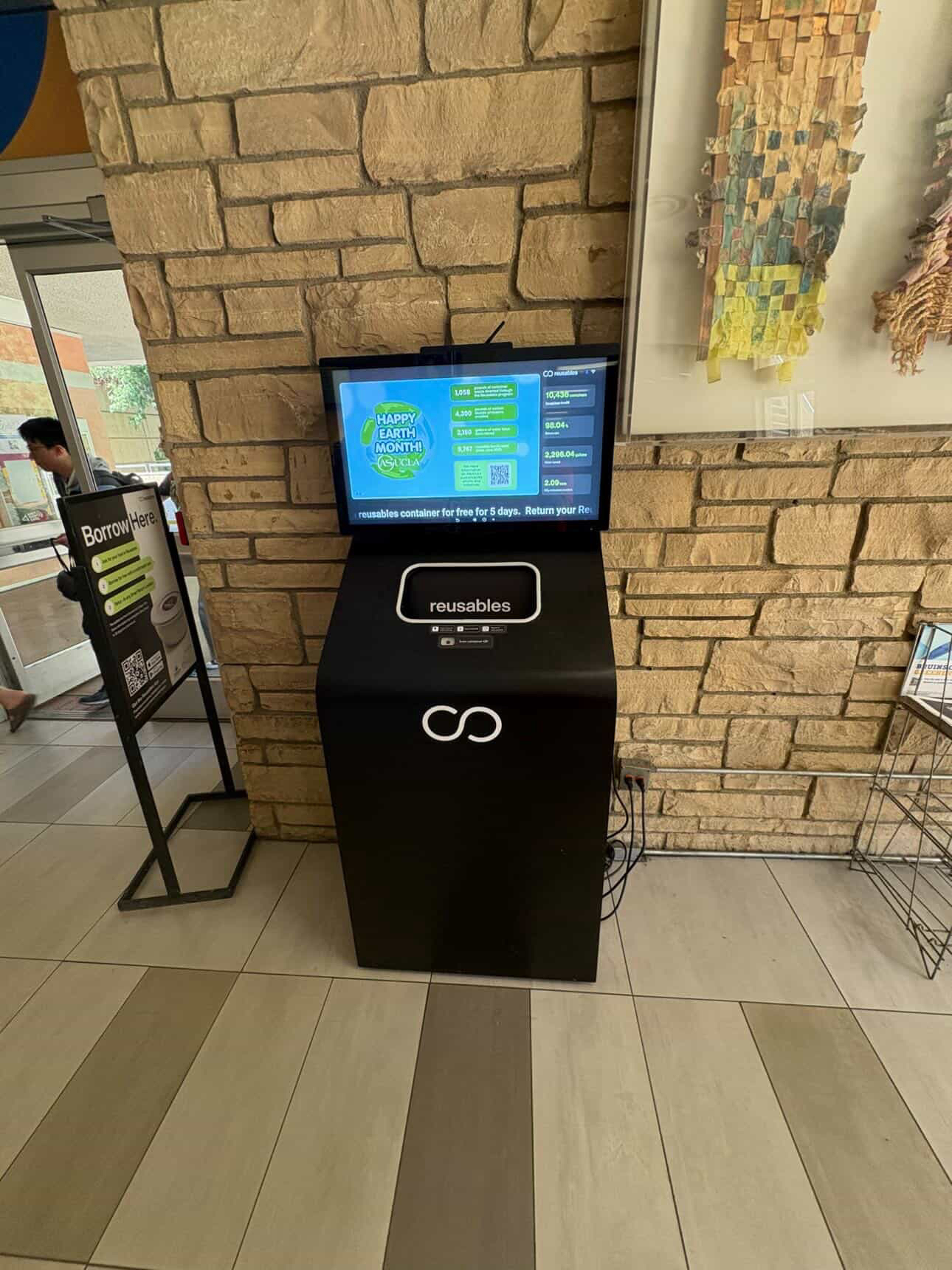
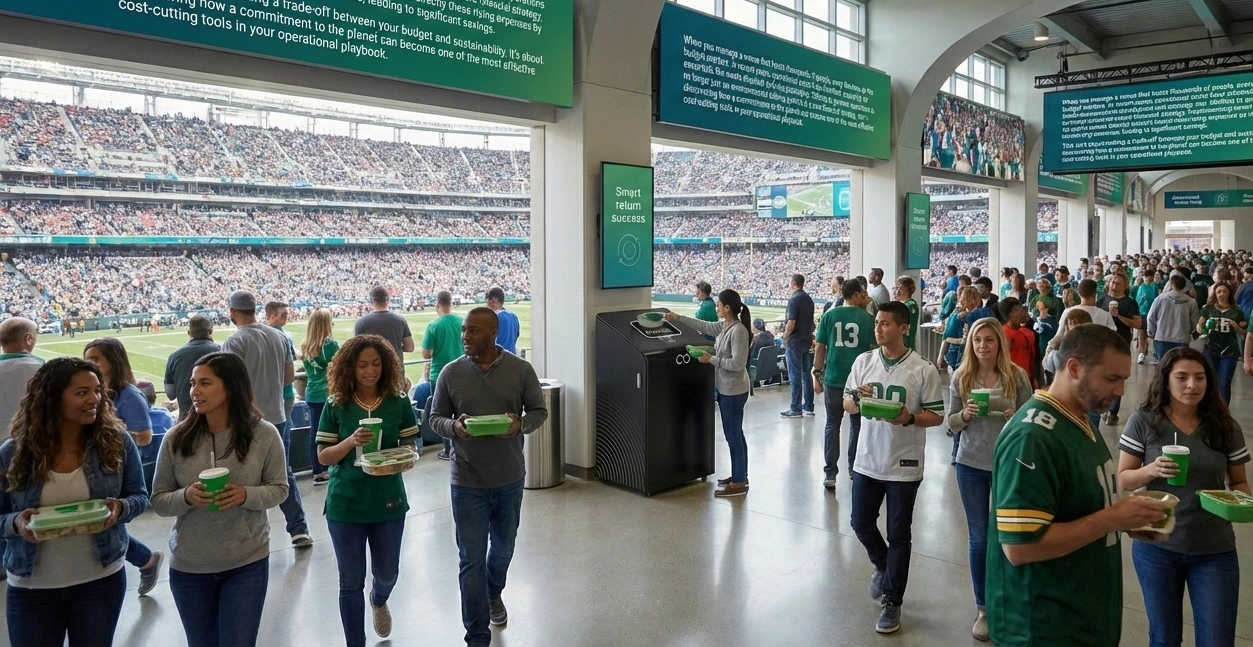
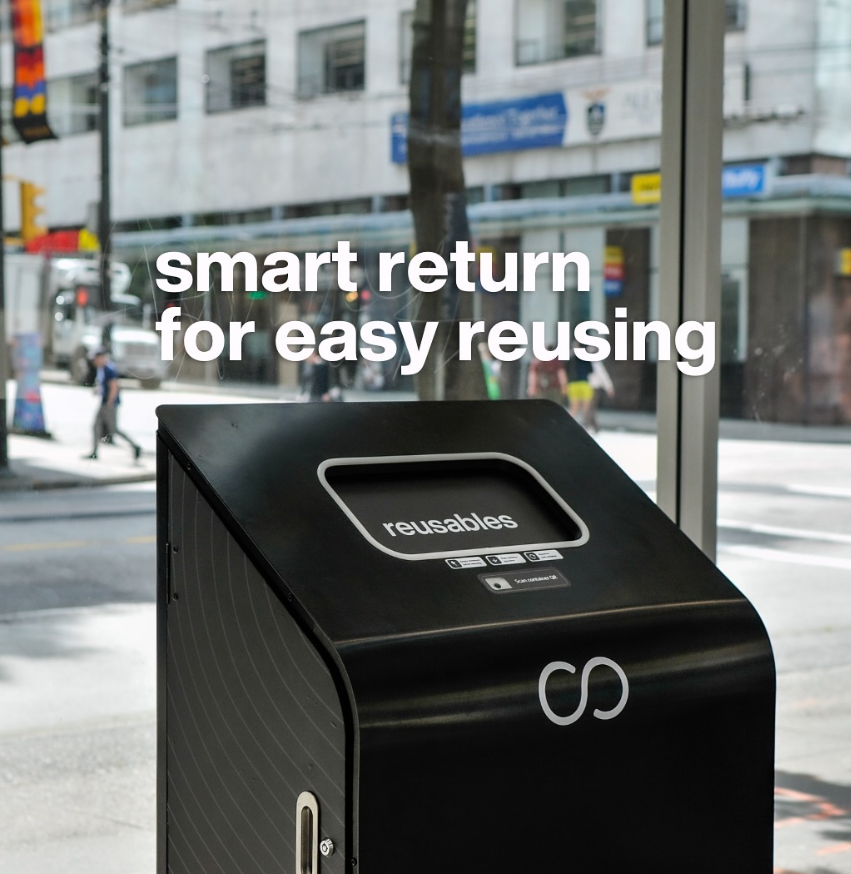
This is where the difference becomes critical for day-to-day operations. To read a QR code, you need a direct line of sight. A staff member or student has to aim a smartphone or scanner directly at the code, one at a time. Imagine the bottleneck during a lunch rush. RFID technology uses radio waves, which means a scanner can read tags without seeing them. Even better, an RFID reader can scan hundreds of tags simultaneously. A student can simply drop a container into a smart return bin, and the system instantly logs its return without anyone needing to scan a thing. This difference is fundamental to creating a truly frictionless user experience.
Durability and Resistance
Your reusable containers are going to go through a lot—bumps, drops, and countless trips through a high-temperature commercial dishwasher. A QR code, which is typically a printed sticker or etching, can easily get scratched, faded, or covered in grime, making it unreadable. An unreadable code means a lost container in your system. RFID tags are built for tough environments. They are typically encased in a protective shell, making them completely waterproof and resistant to the heat, chemicals, and physical impact of a busy kitchen. This durability is essential for the long-term success of a reuse program and protects your investment.
Security and Data Protection
In any system that tracks assets and user data, security is a top priority. QR codes are simple images that can be easily copied or faked with a screenshot or a good printer. This creates a potential vulnerability in your inventory management and accountability system. RFID technology offers much more robust security. The data on an RFID tag can be encrypted and password-protected, making it nearly impossible to duplicate or tamper with. This ensures that your data is accurate, your inventory of high-performance reusable containers is secure, and you have a reliable system for holding users accountable for returns without creating loopholes.
The Pros of Using RFID for Tracking Reusables
When you’re managing thousands of reusable containers across a bustling campus, efficiency and accuracy are everything. While QR codes have their place, Radio Frequency Identification (RFID) technology offers some powerful advantages that are perfectly suited for high-volume reuse programs. RFID uses radio waves to automatically identify tagged items, creating a seamless tracking experience for both your team and your students. This automated approach helps you maintain a closed-loop system with minimal manual effort, ensuring you always have a clear picture of your inventory.
For dining programs looking to scale their sustainability efforts without adding operational headaches, the benefits of RFID are a game-changer. From faster returns to more durable tracking, it’s a technology built to handle the rigors of a campus environment. Let’s look at the specific advantages you can expect.
Scan Multiple Items at Once
Imagine a student dropping off a stack of three containers at a return bin after lunch. With RFID, a single reader can identify all three items simultaneously, in a fraction of a second. Because RFID tags use radio waves to communicate, they don't need a direct line of sight to be read. This means a reader can scan them through a bag, a stack of other containers, or even the wall of a smart bin. This capability dramatically speeds up the return process and eliminates the need for staff or students to manually scan each item one by one, which is a huge step up in operational efficiency.
Get Real-Time Data
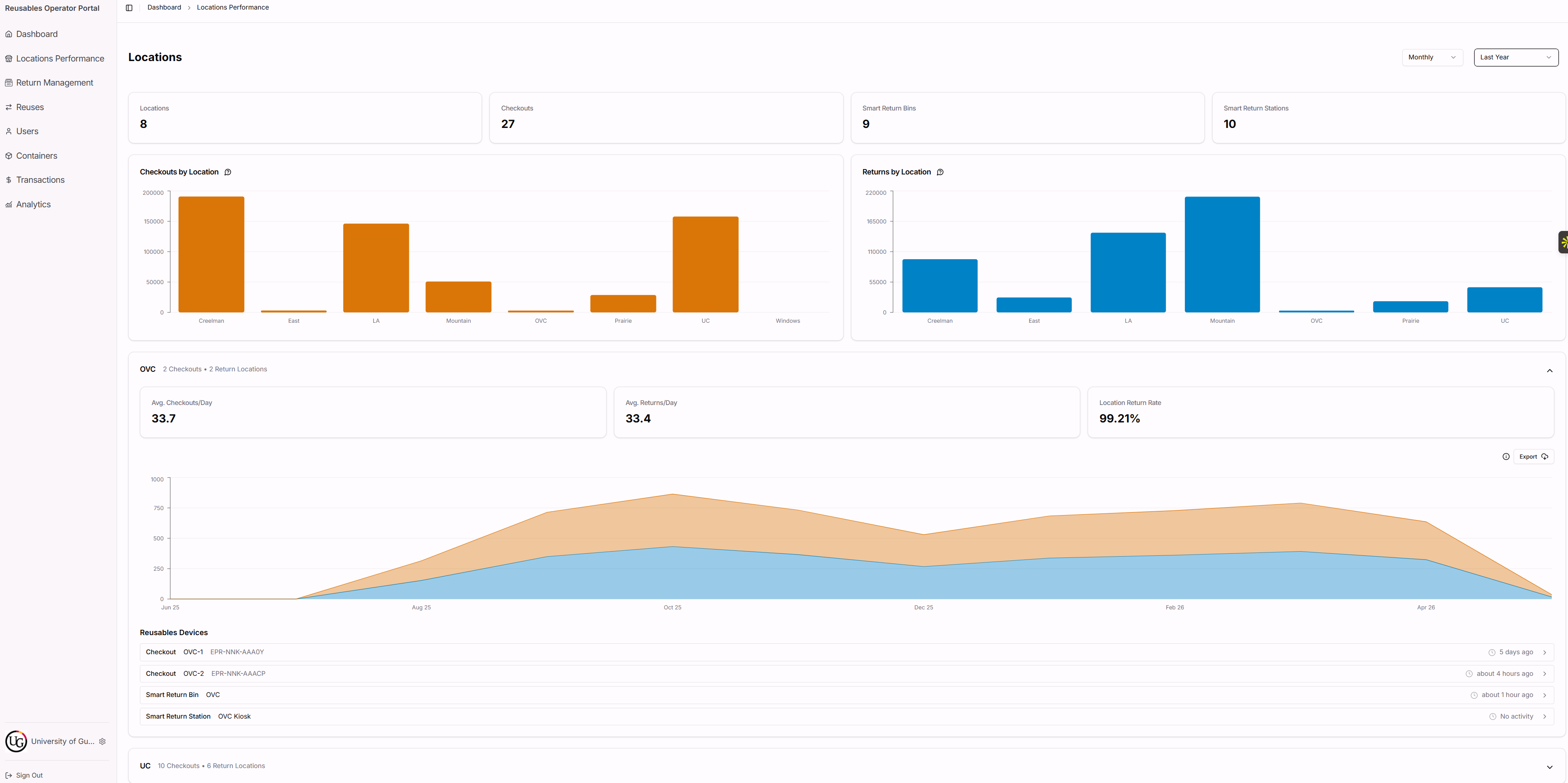
RFID systems provide a constant, automated flow of information. As soon as a tagged container passes a reader—whether at checkout or a return station—the system updates instantly. This gives you a live, accurate count of your entire container inventory. You can see exactly how many containers are in circulation, which ones have been returned, and even get alerts when a return bin is nearing capacity. This real-time data is crucial for making smart decisions about inventory levels, dishwashing schedules, and staffing, ensuring your reuse program runs smoothly without guesswork.
Built to Last in Tough Environments
Campus dining halls are demanding environments. Containers are constantly being used, dropped, and sent through high-temperature commercial dishwashers. RFID tags are designed for this. They are typically embedded within the container or encased in a durable, waterproof shell, making them resistant to water, heat, impact, and grime. Unlike a printed QR code that can get scratched, faded, or peel off over time, a robust RFID tag is built to last for thousands of cycles. This durability means you can rely on your tracking system for years without worrying about tag failure.
No Direct Line of Sight Needed
One of the biggest practical advantages of RFID is that the tags don’t need to be seen to be scanned. A student can toss a container into a smart return bin in any orientation, and the reader will still pick it up. This flexibility makes the return process truly frictionless and error-proof. You don’t have to worry about a scanner failing because a QR code is facing the wrong way or is covered in sauce. This "forgiving" nature of RFID technology is key to achieving the high return rates needed to make a zero-waste packaging system successful and sustainable long-term.
The Cons of RFID Technology
As powerful as RFID technology is, it’s not the perfect solution for every situation. Before you decide it’s the right fit for your campus, it’s important to look at the full picture, including the potential downsides. Understanding these challenges will help you make a more informed choice and plan your implementation for success. The main hurdles you might encounter with RFID revolve around the initial investment, the complexity of the setup, and the potential for signal interference in certain environments. While these are all solvable problems, they are definitely factors to consider as you weigh your options against QR codes and evaluate what your dining operations truly need. Let's break down each of these potential cons so you know exactly what to expect.
Higher Upfront Costs
Let’s talk budget. There’s no getting around the fact that implementing an RFID system typically requires a higher upfront investment than a QR code-based one. The cost comes from the hardware itself—the RFID tags for each container and the specialized readers needed to scan them. When you’re looking at tracking thousands of reusable containers, this initial asset management expense can seem daunting. While the long-term ROI from automation and efficiency can often justify the cost, it’s a significant figure that needs to be planned for. This is a key difference from QR codes, where the codes themselves cost next to nothing to generate and can be read by any standard smartphone or scanner.
More Complex to Set Up
Getting an RFID system up and running is more involved than just printing and sticking on labels. The technology needs to be carefully integrated with your existing operational software, like your campus card or point-of-sale systems. This process can be complicated and often requires specialized technical support to ensure everything communicates correctly. You’ll need to install readers at key points—like checkouts and return bins—and configure the software to accurately track every container's journey. This isn't a simple weekend project; it requires careful planning, installation, and testing to get right, which is why many institutions choose to work with a partner who handles the heavy lifting.
Potential for Signal Interference
Because RFID operates using radio waves, it can sometimes be sensitive to its surroundings. Certain materials and environmental conditions can interfere with the signals between the tag and the reader, potentially causing a missed scan. For example, large metal surfaces—like stainless steel kitchen equipment or shelving—and even liquids can sometimes block or reflect radio waves. While modern RFID systems are designed to be robust, the potential for signal interference is something to be aware of, especially in a busy and varied dining hall environment. Proper system design and placement of readers are critical to minimize these issues and ensure reliable tracking.
The Pros of Using QR Codes for Tracking
QR codes are a familiar and highly accessible technology, making them a popular choice for many tracking systems. Think of them as an advanced version of the traditional barcode. For campus dining programs looking to implement a reuse system, QR codes offer a straightforward and effective way to assign a unique digital identity to every container. This approach is often favored for its simplicity and low barrier to entry, allowing you to get a system up and running without a massive initial investment in specialized hardware.
Their widespread use means that both your staff and students already know how to interact with them using their smartphones, which dramatically simplifies training and user adoption. This familiarity is a key advantage when you’re introducing a new process into the daily routine of a busy campus. Let’s look at the specific benefits of using QR codes to track your reusable inventory.
Lower Cost to Get Started
One of the most significant advantages of QR codes is their affordability. Unlike RFID tags, which involve electronic components, QR codes are simply images. As one source notes, "QR codes are cheap to make and can be printed on many different materials." This means you can produce them at a very low cost per unit, often for just pennies apiece. They can be printed on durable, waterproof labels that adhere directly to your existing containers, whether they're plastic or stainless steel. This low initial cost makes QR codes an excellent option for launching a pilot program or for institutions that need to manage a tight budget while still making progress on sustainability goals.
Simple to Set Up and Use with Any Smartphone
The beauty of QR codes lies in their simplicity. You don't need to purchase expensive, specialized scanners to read them. Instead, your staff and students can use the device they already have in their pockets: their smartphone. As one expert puts it, "QR codes are like special barcodes you can scan with a smartphone camera or a barcode reader." This eliminates the need for a large hardware investment and significantly reduces the time needed for staff training. The checkout and return process becomes intuitive, as scanning a QR code is a familiar action for most people. This ease of use is critical for achieving high adoption rates across campus.
Flexible Data Options
Despite their simple appearance, QR codes can hold a surprising amount of information. They can do much more than just store a number; they can link to websites, trigger actions in an app, or store detailed text. In a reuse system, a QR code on a container can instantly connect to a student's dining account, log the checkout time, and provide data on that specific container's usage history. This data is the backbone of a smart reuse program, enabling features like automated return reminders, tracking environmental impact, and even creating fun engagement incentives like campus-wide leaderboards to encourage participation.
Easy to Maintain
From an operational standpoint, QR codes are incredibly low-maintenance. Because they are essentially printed labels, replacing one is a simple and inexpensive task. If a code gets scratched or damaged to the point where it can no longer be scanned, a staff member can print a new one and apply it in seconds. This is a major advantage in a high-volume dining environment where containers go through daily wear and tear, including commercial dishwashing. This simple maintenance process ensures your system experiences minimal downtime and your container inventory remains fully trackable without complex repair procedures.
The Cons of QR Code Tracking
QR codes are everywhere, and their simplicity is appealing. For a reuse program, they seem like an easy, low-cost way to get started with tracking. However, when you're managing hundreds or thousands of containers in a fast-paced campus dining hall, the limitations of QR codes can quickly turn into major operational headaches. What starts as a simple solution can lead to inaccurate data, slow service, and a frustrating experience for both your staff and students.
The core issue is that QR-based systems rely entirely on manual processes and perfect conditions. Any breakdown in that chain—a missed scan during the lunch rush, a smudged code, or a container that gets returned without being scanned—can throw off your inventory counts and undermine the accountability needed for a successful program. These small issues add up, potentially leading to low return rates and negating the cost savings you hoped to achieve. Understanding these drawbacks is key to choosing a tracking system that truly supports your sustainability goals without creating new problems for your team.
Requires Manual, One-by-One Scanning
The biggest daily challenge with QR codes is the scanning process itself. Because QR codes require a direct line of sight, each container must be scanned individually. Think about your busiest service times—a long line of students waiting for their food. Your staff has to pick up every single container, find the code, and align it perfectly with a scanner or smartphone camera. This adds precious seconds to every transaction, slowing down the entire line. The same bottleneck happens at return stations, where a manual, one-by-one process can discourage students from participating. This reliance on manual scanning not only impacts operational efficiency but also opens the door to human error, where a simple missed scan means a lost asset in your system.
Limited Data Storage
QR codes are designed to hold a small, static piece of information. They can store a unique ID number for a container, but that’s about it—they are "read-only" and can't be updated with new data. This means the code itself doesn't carry any history about the container, such as how many times it's been used or when it was last washed. Your entire system's intelligence lives in a central database, which depends on flawless scanning at every single touchpoint to stay accurate. If a scan is missed, the database won't know the container's status, creating gaps in your data and making it difficult to get a true real-time view of your inventory.
Easily Damaged or Obscured
Reusable containers live a tough life. They’re dropped, scraped by cutlery, and run through high-temperature commercial dishwashers daily. Unfortunately, printed QR codes aren't always up to the task. A simple scratch, a food smudge, or gradual fading from heat and detergents can render a code unscannable. When a container's code can't be read, it effectively drops out of your tracking system. It can't be checked in or out, which frustrates users and leads to inventory loss. This directly threatens the high return rates that are essential for a financially sustainable reuse program.
When to Choose RFID Over QR Codes
Deciding between RFID and QR codes isn't just a technical choice—it's a strategic one that impacts your operational flow, data accuracy, and the overall success of your reuse program. While QR codes are a fantastic, low-cost entry point, certain scenarios demand the power and automation of RFID. If you're aiming for a seamless, scalable system that requires minimal manual intervention, RFID is often the clear winner. It’s about matching the technology to the scale and intensity of your campus dining operations.
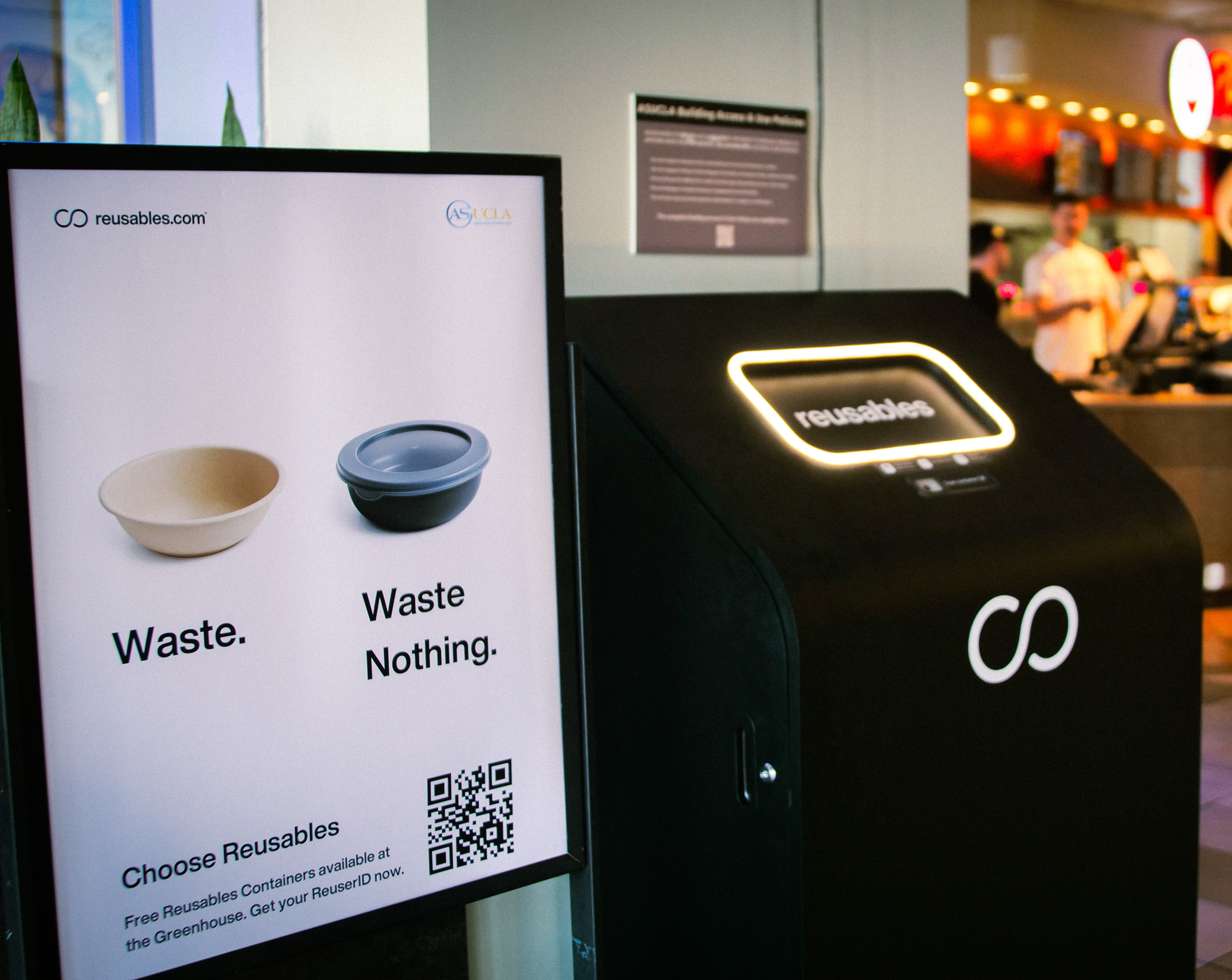
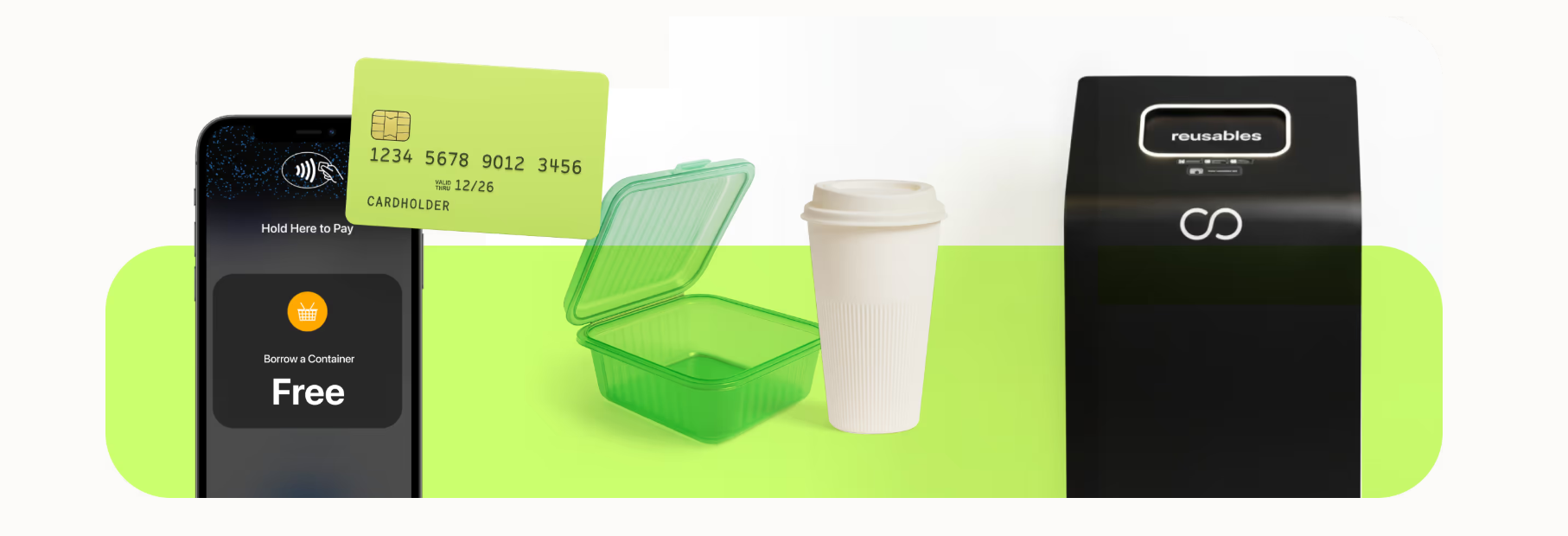
Reusables' platform supports both tracking methods eliminating the need to choose just one.
For High-Volume, Automated Operations
Imagine the lunch rush at your busiest dining hall. Students are moving quickly, and your staff is focused on service, not scanning individual containers. This is where RFID shines. Because RFID tags use radio waves, they don't need a direct line of sight to be read. As one source puts it, "They can scan many items at once." This means a student can drop a stack of containers into a smart return bin, and the system instantly registers all of them without anyone needing to scan each one individually. This capability is crucial for maintaining operational efficiency and ensuring a frictionless experience for both students and staff.
When You Need Maximum Durability
Reusable containers go through a lot—commercial dishwashers, daily handling, and occasional drops. A flimsy paper QR code sticker won't survive long in that environment. RFID tags, on the other hand, are built for toughness. They are often encased in durable plastic or ceramic, making them resistant to water, high heat, and physical wear. As Checkpoint Systems notes, RFID tags "are strong and can handle dirt or tough conditions." This resilience ensures your tracking system remains reliable for the entire lifecycle of your durable RFID-enabled products, protecting your investment and preventing data loss from damaged tags.
Factoring in Your Budget and Resources
It's true that implementing an RFID system typically involves a higher upfront cost. While the tags themselves can be inexpensive, "you need dedicated RFID readers, which can be costly, especially if you need many." However, it's important to look at the total cost of ownership. The automation provided by RFID can dramatically reduce the labor costs associated with manual scanning. It also drives higher return rates, which protects your container inventory. Think of it as an investment in a system that runs itself, freeing up your staff to focus on what they do best: providing great food and service.
How to Choose the Right Tracking Tech for Your Campus
Selecting the right tracking technology for your campus reuse program is a big decision. It’s not just about choosing between RFID and QR codes; it’s about finding a solution that fits your specific operational needs, budget, and long-term vision. The best choice will make your program efficient, user-friendly, and impactful. Think of it as building the foundation for a successful and sustainable dining experience.
To make the right call, you’ll want to look at the decision from a few key angles. First, how does the technology support your campus’s overarching sustainability mission? The data and accountability it provides are crucial for measuring success. Second, how will it affect your staff and students? A system that’s complicated or slow will face an uphill battle for adoption. Finally, how well does it play with your existing operational systems? A solution that creates more work or data headaches isn't a solution at all. By walking through these considerations, you can confidently choose a tracking system that sets your campus up for zero-waste success.
Align with Your Sustainability Goals
Your tracking technology is more than just an operational tool—it’s a core component of your sustainability strategy. The right system provides the data you need to measure your impact, track return rates, and demonstrate a real reduction in single-use waste. This data is essential for reporting on your progress and building support for the program across campus. When you can show exactly how many disposable containers have been avoided, you turn an abstract goal into a tangible achievement.
Effective tracking connects your dining services with students to strengthen sustainability efforts and improve container returns. Whether you choose RFID, QR codes, or a hybrid system, the goal is to create a closed-loop program that minimizes loss and maximizes reuse. This choice should directly reflect your commitment to building a more sustainable campus environment.
Consider Staff Training and User Adoption
A successful reuse program depends on how easily people can adopt it. If the system is clunky for your staff or confusing for students, participation will suffer. The ideal technology should feel almost invisible, creating a frictionless experience for everyone. For staff, this means minimal training and a system that works quickly during busy lunch rushes. For students, the process of borrowing and returning a container should be as simple as tapping a card or scanning a code.
Think about the day-to-day reality of your dining halls. A system that requires manual, one-by-one scanning might create bottlenecks, while an automated system can keep lines moving. The goal is to find a solution that makes participation in your reusable container program the easiest and most convenient option, encouraging high adoption rates from the start.
Ensure It Integrates with Your Current Systems
Your new tracking technology shouldn't operate in a silo. To be truly effective, it needs to integrate seamlessly with the systems you already use every day. This includes your point-of-sale (POS) terminals, student card platforms like Transact or CBORD, and inventory management software. A fully integrated system provides a single source of truth, eliminates the need for manual data entry, and gives you a clear, real-time view of your operations.
When your reuse program communicates directly with your other campus systems, you gain powerful insights and automate key processes. For example, you can link a reusable container to a student’s meal plan account without any extra steps. This level of integration is what transforms a reusable packaging system from a standalone initiative into a streamlined part of your dining services.
Ready to implement dual-mode tracking? Discover how Reusables' RFID and QR system delivers 99% return rates.
Frequently Asked Questions
RFID seems more expensive upfront. How does that cost balance out in the long run? That's a fair question, and it’s important to look at the total cost of ownership, not just the initial price tag. While RFID hardware does require a larger upfront investment, it creates significant savings over time by automating your system. You reduce the labor hours your staff spends manually scanning containers one-by-one. More importantly, the seamless return process leads to much higher return rates—often over 99%—which means you spend far less on replacing lost containers.
How do these tracking tags actually hold up in a commercial dishwasher? This is a critical point because your containers go through a tough environment every day. Printed QR code labels can fade, peel, or get scratched, quickly becoming unreadable after repeated trips through a high-temperature wash cycle. Industrial-grade RFID tags, however, are built for this. They are completely sealed in a durable, waterproof casing that protects the internal chip from heat, water, and impact, ensuring they continue to work reliably for years.
My team is already stretched thin. How much work is it to implement a new tracking system like this? Introducing a new system shouldn't create more work for your team. While the technology behind an RFID or hybrid system is more complex, the implementation process doesn't have to fall on your shoulders. When you work with a full-service partner, they handle the heavy lifting—from integrating the software with your existing campus card and POS systems to installing the hardware. The goal is to deliver a solution that’s ready to go, not a complicated project for your staff to manage.
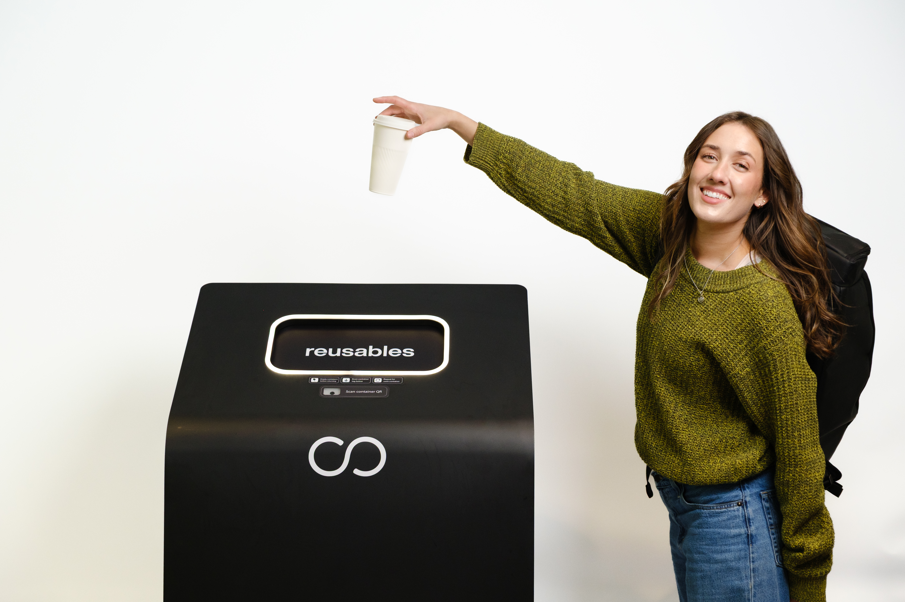
Which technology creates a better experience for students and encourages them to return containers? The easier you make the process, the more likely students are to participate. While scanning a QR code is simple, it still requires them to stop, pull out their phone, and line up the code. RFID enables a truly frictionless return. With smart bins, a student can simply drop their container inside and walk away. The internal reader automatically logs the return without them having to do a thing. This "drop and go" convenience is key to achieving the high return rates needed for a successful program.
Do we really have to choose just one? What does a system that uses both RFID and QR codes look like? You don't have to choose! The most robust and flexible programs use both technologies together. In this kind of dual-mode system, each container has both a QR code and an RFID tag. This allows you to use the best tool for each specific job. Students might use the familiar QR code to check out a container at a self-serve station, while RFID handles the high-speed, automated work of logging returns in a smart bin or tracking inventory in the dish room. It creates a seamless system that’s efficient for your operations and simple for your users.
Other stories you may find interesting


.png)
.avif)



.webp)




Watch the Webinar
Learn How to Eliminate Single-Use Waste
Get instant access to our expert webinar and discover how leading institutions reach 99% return rates through smarter reuse systems.

© Reusables™. All rights reserved.