
The Truth: Why Compostable Packaging is Unsustainable

December 30, 2025
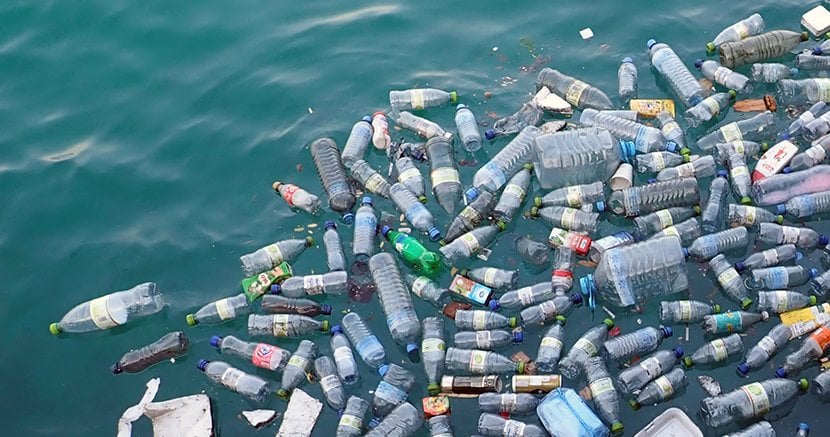
You've likely been told that switching to compostable packaging is one of the most impactful steps you can take to reduce your campus's plastic waste. But what if that advice is wrong? What if the compostable containers you're paying a premium for are actually contributing to climate change and contaminating your local soil? The evidence is mounting, and it points to a difficult truth about why compostable packaging is unsustainable. From its reliance on fossil-fuel-intensive agriculture to its tendency to release methane in landfills, the compostable promise is falling short. This article directly confronts the myths and lays out the facts, providing a clear-eyed look at the problem and presenting a proven, tech-enabled alternative.
Key Takeaways
- Compostables Aren't a Silver Bullet: The "green" label often hides a resource-intensive production process. More importantly, when these items end up in a landfill—which most do—they can release potent methane gas, undermining your campus's climate goals.
- Disposal Creates Operational Headaches: Compostable packaging requires specialized industrial facilities that are often unavailable. This means these items frequently contaminate valuable recycling streams or create costly sorting problems for waste management, adding unexpected expenses to your budget.
- Smart Reuse Delivers Measurable Wins: The most effective way to eliminate single-use waste is a (tech-enabled reuse system). By ensuring accountability with smart tracking, you can achieve near-perfect return rates, generate significant cost savings on packaging, and get clear data to report on your sustainability progress.
Compostable vs. Plastic: What's the Real Difference?
When you're trying to make a sustainable choice for your campus dining program, the term "compostable" sounds like a perfect solution. It brings to mind images of packaging breaking down naturally and returning to the earth, checking a major box for your institution's green initiatives. But the reality is far more complex. While compostable packaging is certainly different from traditional plastic, those differences don't automatically make it the better environmental choice. In fact, a closer look reveals hidden issues that can undermine your sustainability goals. Understanding how these materials are made, how they actually break down, and what they leave behind is key to making a truly informed and sustainable decision for your operations.
How Compostable Materials Actually Work
In a perfect world, compostable packaging breaks down into nutrient-rich soil in a commercial composting facility within a few months. Unlike plastic, which just fragments into smaller pieces, these materials are designed to decompose completely. The problem is, many common compostable products, especially molded fiber containers, aren't as clean as they seem. They often contain PFAS, also known as "forever chemicals," to repel water and grease. These harmful substances don't break down; instead, they can contaminate the compost, soil, and water. This means the very process designed to be restorative can end up introducing persistent pollutants into our ecosystem, creating a new problem in place of the old one.
Key Distinctions from Traditional Plastic
While compostables are marketed as a green alternative, their production story often starts with fossil fuels—just like plastic. Many bioplastics are made from crops like corn or sugarcane, which require fossil-fuel-intensive agriculture to grow and harvest. The environmental issues don't stop there. If a compostable container ends up in a landfill instead of a proper composting facility (which happens all too often), it can release methane as it decomposes without oxygen. Methane is a greenhouse gas over 80 times more potent than carbon dioxide in the short term, making it a significant contributor to climate change. This critical disposal issue can make some compostables a more damaging choice than the single-use plastics they aim to replace.
Common Types of Compostable Packaging on the Market
Take a look around any campus food court, and you'll see compostable packaging everywhere: salad bowls, coffee cups, cutlery, and takeout containers. These items are intended to solve the plastic problem, but they often create a new set of environmental challenges. From the land and water used to grow the base crops to the energy consumed during manufacturing, their lifecycle has a hefty footprint. When you factor in the potential for greenhouse gas emissions and chemical contamination, it becomes clear that many of these products contribute more to environmental harm than good. The promise of a simple, guilt-free disposable item rarely matches the complex and often damaging reality of its journey from production to disposal.
The Disposal Problem: Where Compostables Go Wrong
The promise of compostable packaging sounds simple: use it, toss it in a green bin, and let it return to the earth. But the reality of disposal is far more complicated and, unfortunately, much less green. For a compostable container to complete its ideal lifecycle, it needs to end up in a specialized industrial composting facility. The problem is, that rarely happens. Due to a lack of infrastructure, consumer confusion, and contamination issues, most of these "eco-friendly" products end up in the wrong place. Instead of solving our waste problem, they often create a new set of environmental and financial challenges, from generating potent greenhouse gases in landfills to disrupting our already fragile recycling systems. The journey of a compostable container after it leaves the dining hall is where its sustainable image begins to fall apart.
Why They Create Methane in Landfills
Here's a hard truth: the vast majority of compostable packaging ends up in a landfill. Without widespread access to industrial composting facilities, these items get thrown into the regular trash. Once buried in a landfill and deprived of oxygen, they don't biodegrade cleanly. Instead, they break down anaerobically and, as research shows, release methane in the process. Methane is a greenhouse gas over 80 times more potent than carbon dioxide in the short term, making it a significant contributor to climate change. In this scenario, a well-intentioned compostable fork actually becomes a bigger climate threat than a traditional plastic one, which would remain relatively inert in the same landfill environment.
There is a further problem that receives less attention: compostable containers do not simply disappear in a landfill. Without the specific conditions of an industrial composting facility, these materials can persist for years — in some cases nearly as long as conventional plastic. They may partially degrade under anaerobic conditions, but that partial degradation produces methane rather than a clean breakdown. They can also leave behind microplastic residues that enter the soil and water systems around the landfill site. The "compostable" label implies a clean, circular end-of-life that landfill conditions make essentially impossible.
How They Contaminate Recycling Streams
What happens when someone tries to do the right thing and puts a compostable container in the recycling bin? It causes a major headache. These materials might look and feel like plastic, but they are chemically different and cannot be recycled with conventional plastics like PET or HDPE. When compostable packaging enters the recycling stream, it's treated as a contaminant. A single compostable cup can compromise an entire bale of valuable recyclable plastic, forcing the whole batch to be rerouted to the landfill. This not only wastes the recyclable materials but also undermines the economic viability of recycling programs. It's a classic case of good intentions leading to counterproductive results, creating more waste, not less.
The Financial Strain on Waste Management
The disposal issues with compostables don't just harm the planet—they hit the budget, too. Contamination is a costly problem for both recycling and composting facilities. When non-compostable items get mixed in with organic waste, processors have to invest in extra labor and machinery to sort it all out. This contamination can add significant operational costs, sometimes as much as $50 to $60 per ton. These expenses are inevitably passed on to the municipalities and institutions—like your campus—that use these services. This financial burden makes it harder for composting programs to succeed, creating a cycle where the infrastructure never quite catches up to the need.
Is Producing Compostables Actually Green?
When we see a "compostable" label, we tend to feel good about our choice. It seems like a simple, eco-friendly swap. But if we look at the entire lifecycle of that compostable fork or container, starting from its creation, the picture gets a lot more complicated. The environmental impact of a product isn't just about where it ends up; it's also about the resources required to make it in the first place. The story of that "green" container begins long before it lands in a student's hands.
The journey of a compostable product often begins on an industrial farm, and this starting point comes with its own significant environmental footprint. From the fuel needed for machinery to the energy consumed in processing facilities, the production of so-called green alternatives can be surprisingly resource-intensive. It's a complex supply chain that is often overlooked in the rush to find a quick fix for single-use plastic. Before you can decide if compostables are the right choice for your campus, it's important to understand what it takes to bring them into existence. Let's look at the hidden environmental costs that come with manufacturing these single-use items.
The Hidden Costs of Farming and Fossil Fuels
Most compostable packaging is made from bioplastics, which are derived from plant sources like corn or sugarcane. Growing these crops at an industrial scale requires a massive amount of energy, and much of that energy comes from fossil fuels. Think about the entire process: diesel-powered tractors and harvesters work the fields, fertilizers (often produced using natural gas) are applied to the soil, and trucks transport the raw materials to processing plants. This reliance on fossil fuels means that the production of plant-based packaging contributes to greenhouse gas emissions long before the products ever reach your dining hall.
High Water and Chemical Usage in Manufacturing
Beyond fossil fuels, the agricultural production for bioplastics is also incredibly thirsty. Crops like corn demand huge volumes of water to grow, placing a strain on local water resources. In addition, industrial farming often involves the heavy use of chemical pesticides and fertilizers to maximize crop yields. These chemicals can run off into nearby rivers and streams, impacting water quality and local ecosystems. The manufacturing process itself, which converts the plant matter into plastic-like material, also consumes significant amounts of water and can involve toxic chemicals, challenging the idea that these products are inherently "natural" or clean.
The Surprising Energy Drain of Production
Here's a fact that surprises many: producing compostable and bioplastic products can require more energy than making conventional single-use plastics. The multi-step process of growing, harvesting, transporting, and processing plant materials into a finished product is incredibly energy-intensive. According to research from groups like Upstream, the creation of these items often consumes more energy and water than their fossil-fuel-based counterparts. This means that by switching to compostables, many organizations are unintentionally increasing their overall environmental footprint from a production standpoint, even with the best intentions.
Why Composting Facilities Struggle with "Compostable" Packaging
Even when compostable packaging makes it to the right facility, it creates a surprising number of headaches for the operators. The promise of a clean, green disposal process often falls apart when faced with the realities of large-scale composting. These facilities are fine-tuned operations, and materials that don't fit their precise requirements can throw the entire system off balance, leading to lower-quality compost, higher costs, and operational nightmares.
The core of the issue is a mismatch between how compostable products are designed and how commercial composting actually works. Many facilities simply aren't equipped to handle the influx of bioplastics, which behave very differently from food scraps and yard trimmings. As a result, many operators view so-called "compostable" packaging not as a valuable organic material, but as a contaminant that threatens their bottom line and the quality of their final product. From contamination issues that ruin entire batches to sky-high processing costs and materials that simply don't break down in time, the challenges are significant. Let's break down the three main reasons why these facilities are pushing back against the compostable trend.
Contamination: A Threat to Compost Quality
The biggest challenge for composting facilities is contamination. When non-compostable items end up in the organic waste stream, they have to be manually sorted and removed, which is a costly process. Unfortunately, compostable packaging often adds to the problem. It can be difficult for both consumers and facility workers to distinguish between compostable and traditional plastics, leading to cross-contamination. Even worse, many compostable plastics themselves can act as contaminants, failing to break down properly and leaving plastic fragments in the finished compost. This lowers the soil's quality and can prevent the compost from being certified for organic farming, making the final product far less valuable.
The High Cost and Lack of Infrastructure
Running a commercial composting facility is a business with tight margins, and contamination drives up operational costs significantly. Sorting out plastics and other non-compostable materials is a labor-intensive process that can add up to $60 per ton to processing fees. This financial burden is a major reason why many facilities are hesitant to accept food service packaging. Furthermore, the specialized industrial composting infrastructure needed to properly break down bioplastics isn't available everywhere. Without access to a facility that can manage these materials correctly, compostable containers are just another form of waste destined for the landfill, negating their intended environmental benefit and straining municipal budgets.
When "Compostable" Doesn't Break Down Fast Enough
Timing is everything in commercial composting. Facilities operate on strict schedules, typically processing batches of organic material over a 60- to 90-day cycle. While compostable packaging is technically designed to decompose, it often doesn't break down within this critical window. Many bioplastics require longer, more specific conditions to fully degrade than the facility's standard process allows. When the cycle is complete, these items remain partially intact, leaving behind plastic pieces that must be screened out. This not only contaminates the batch but also creates an additional waste stream that the facility has to pay to dispose of, turning a potential resource into a costly problem.
The financial case against compostable packaging
The environmental argument against compostable packaging is compelling, but there is a parallel case to be made on purely operational and financial grounds. Most compostable food service packaging costs significantly more per unit than conventional disposables. Institutions pay that premium expecting an environmental return — a product that completes its end-of-life journey as intended and supports their sustainability reporting. In most cases, they are not getting that return.
You are paying more for the same disposal outcome
When compostable packaging ends up in a landfill — which, due to the infrastructure gap, it almost always does — the institution has paid a higher price for a product that performed identically to conventional trash. The premium covers the production cost of plant-based materials, not a better disposal outcome. In the absence of a direct relationship with an industrial composting facility that accepts food service packaging, the "compostable" designation is effectively a marketing label with no operational meaning at your institution. It adds cost without adding environmental value.
Sorting challenges compound the problem
Even when compostable packaging is deposited into the correct green bin, it frequently does not make it through the composting process. Material recovery facility workers — and the automated sorting systems they rely on — often cannot distinguish compostable plastics from conventional ones by sight or feel. To protect the quality of their compost output, facility operators frequently default to pulling any item that resembles plastic and routing it to the landfill. This means that even the fraction of compostable packaging that reaches a facility may be rejected before it ever has a chance to break down. The result is a product that fails at nearly every stage of its intended journey.
Education cannot close an infrastructure gap
A common institutional response to poor compostable disposal outcomes is to invest in better student and staff education. This approach has genuine limits. The problem is not primarily one of behaviour — it is one of missing infrastructure. Even a campus community that perfectly sorts every piece of compostable packaging will still fail to achieve the intended outcome if there is no industrial composting facility accessible within a viable logistics distance. Asking students to sort correctly for a system that cannot process the materials is a fundamentally flawed strategy. It creates the appearance of a sustainable practice without the substance. The more honest response is to question whether compostable packaging is the right tool for your campus's sustainability goals in the first place.
Debunking the Top Myths About Compostable Packaging
Compostable packaging often seems like the perfect solution, a simple way to meet campus sustainability goals. But the reality of how these materials perform is frequently misunderstood, leading to well-intentioned programs that fall short. Let's clear up some of the most common myths so you can make a truly informed decision for your dining operations.
Myth 1: It Breaks Down Anywhere
One of the biggest misconceptions is that compostable containers will simply return to the earth if they end up as litter or in a landfill. This isn't the case. These products are designed to be durable; they don't just dissolve when wet. In fact, they only break down under the special conditions found in industrial composting facilities, which require specific high temperatures and microorganisms. Left in a landfill or the natural environment, a compostable container can persist for years, much like traditional plastic.
Myth 2: Any Composting Bin Will Do
It's easy to assume that a "compostable" label means an item can go into any campus green bin. However, most of these products are certified for commercial composting, not for a backyard or small-scale pile. These local composts rarely reach the high, sustained temperatures needed to break down bioplastics like PLA. For your campus, this means that unless you have access to a dedicated industrial composting facility that accepts food-service packaging, these containers are likely headed for the landfill, where they contribute to methane emissions.
Myth 3: Green Marketing Equals Green Impact
The promise of compostable packaging is powerful, but its environmental benefit depends entirely on proper disposal. When these items aren't collected and processed correctly, the green label becomes little more than marketing. The true value is only unlocked when certified compostables are turned into valuable compost that enriches the soil. If your campus infrastructure can't support this specific waste stream, you may be investing in a premium-priced product without achieving the positive environmental impact you're paying for. It creates a feel-good moment at the bin that doesn't translate to a real-world win.
Myth 4: It's Always Better Than Plastic
This myth is tricky because there's a grain of truth to it. From a production standpoint, many compostable products generate fewer greenhouse gases and use less fossil fuel than their petroleum-based counterparts. That's a definite plus. However, this only tells half the story. The end-of-life problem—where these items contaminate recycling streams or release methane in landfills—can offset those initial benefits. A product's full lifecycle matters, and when you factor in the significant disposal challenges, the environmental math gets a lot more complicated.
A Smarter Path Forward: The Power of Reuse
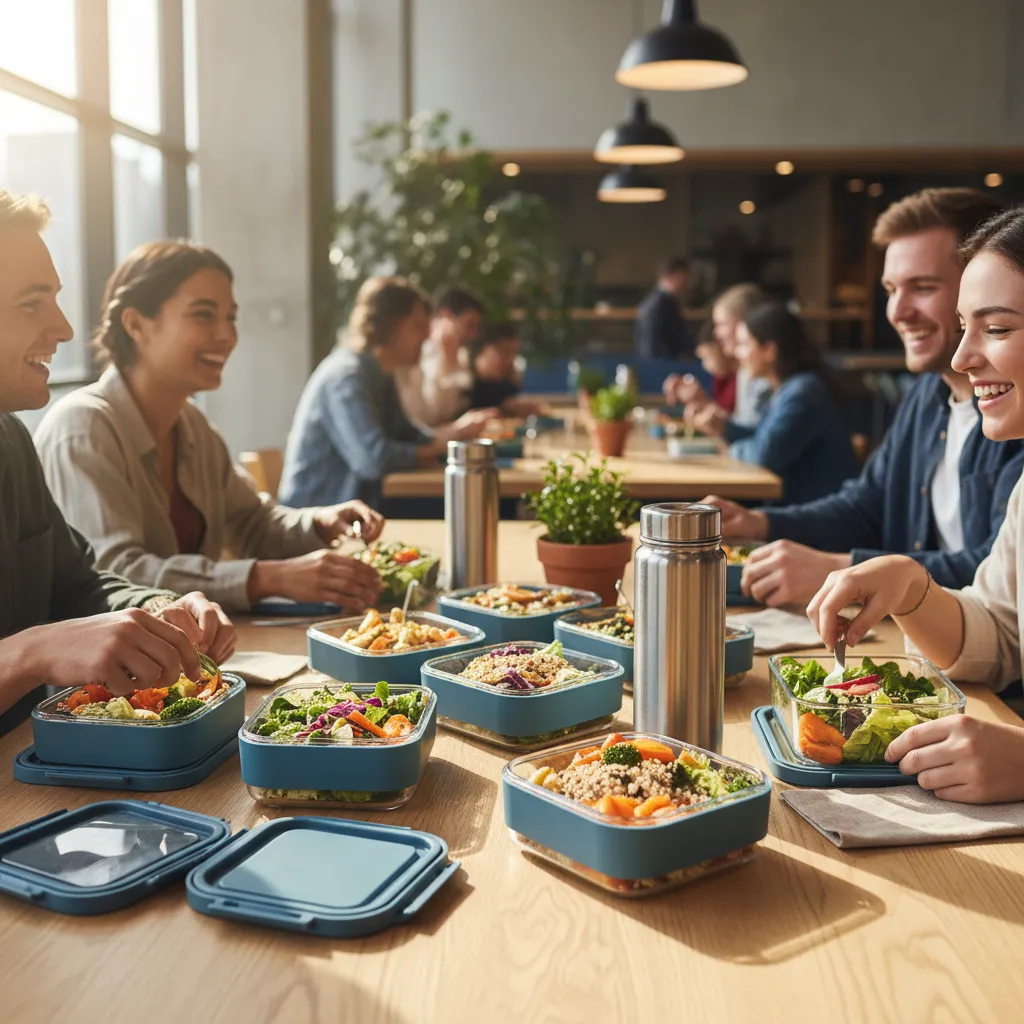
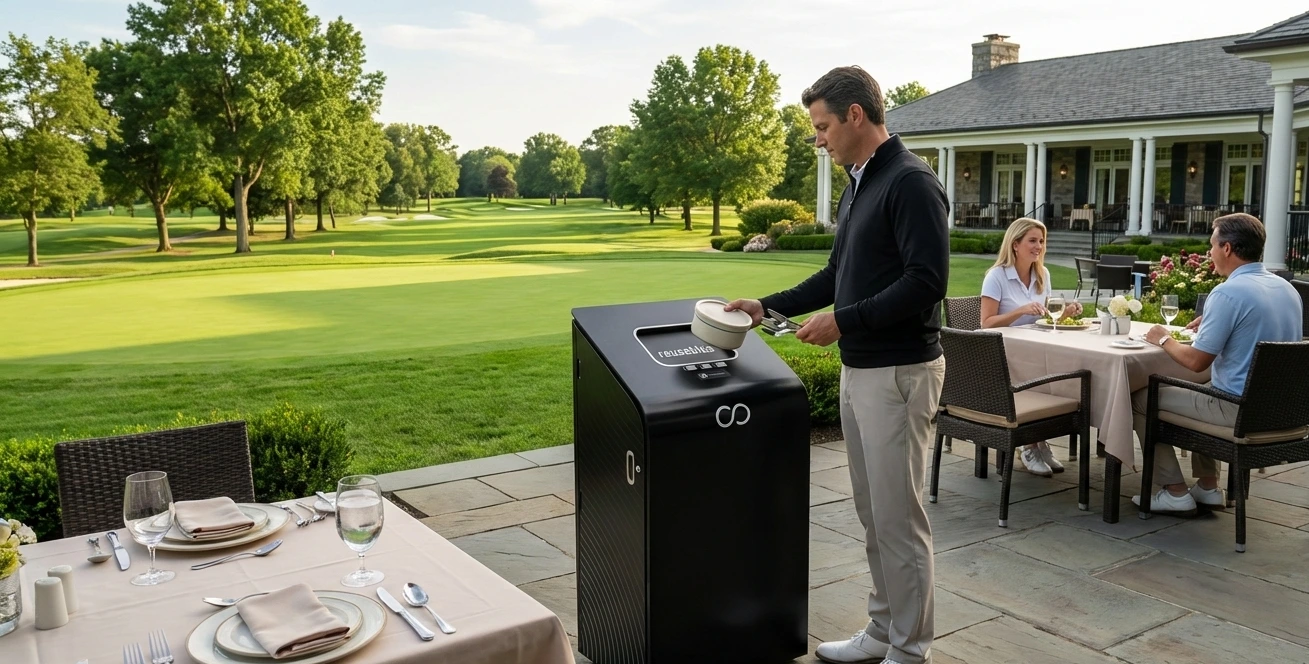
After seeing the real story behind compostable packaging, it's clear that a different approach is needed to meet campus sustainability goals without creating new problems. The most effective way to eliminate single-use waste is to stop creating it in the first place. This is where reuse comes in. Modern reuse programs are nothing like the manual, high-loss systems of the past. By integrating smart technology, campuses can build a truly circular system that cuts costs, reduces waste, and offers a better experience for students and staff. It's about creating a closed-loop system that is both environmentally responsible and financially sound.
Introducing Tech-Enabled Reusable Systems
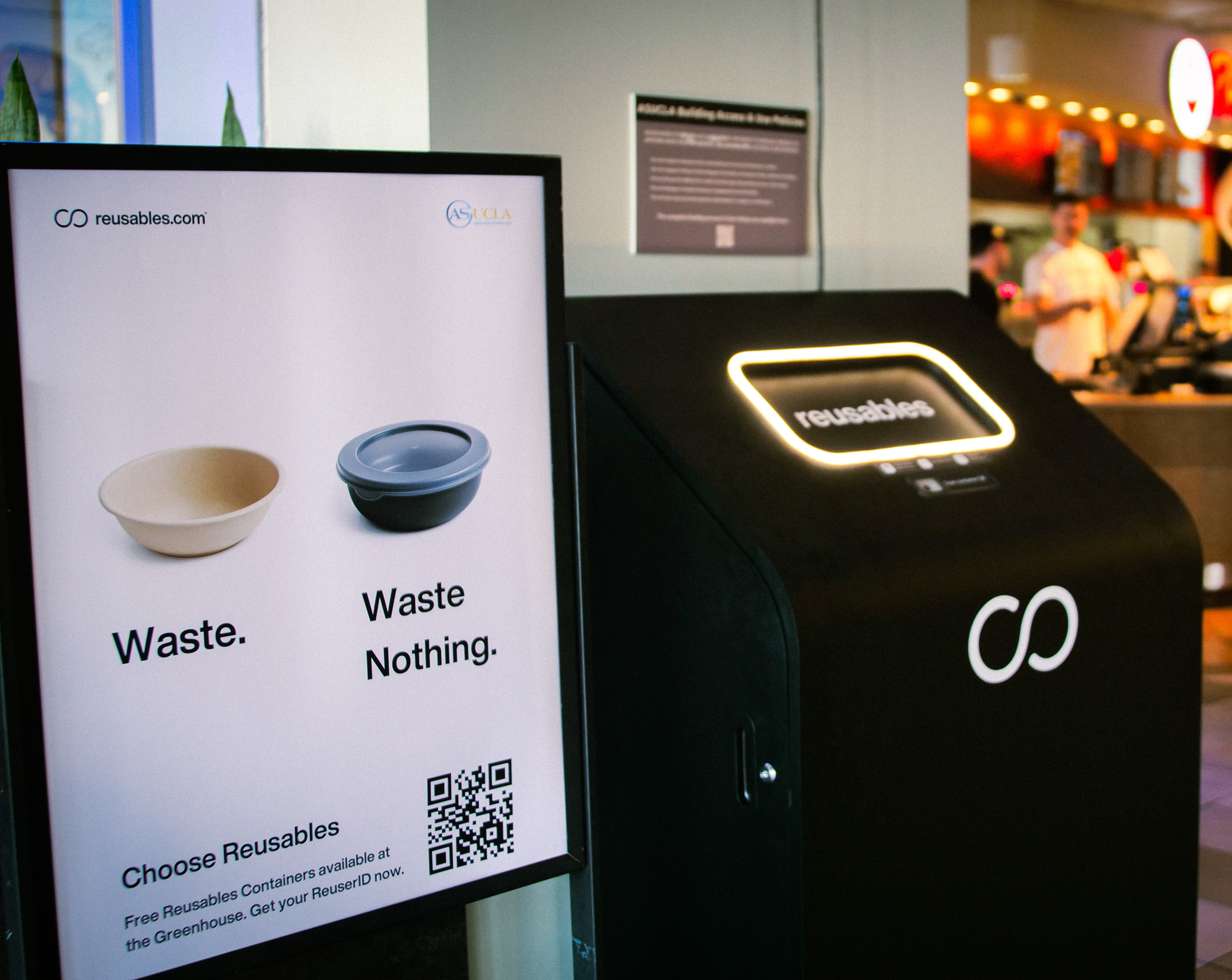
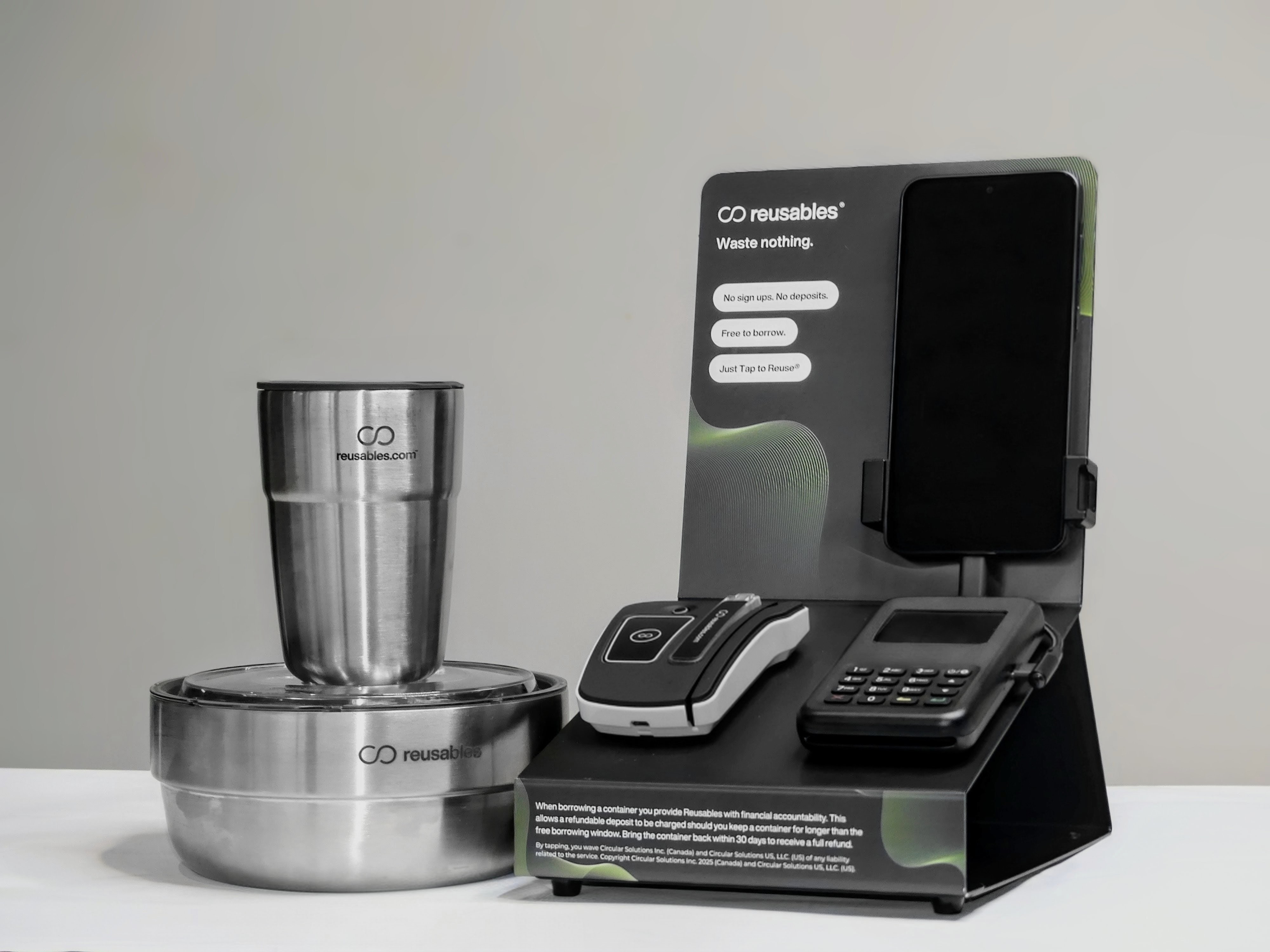
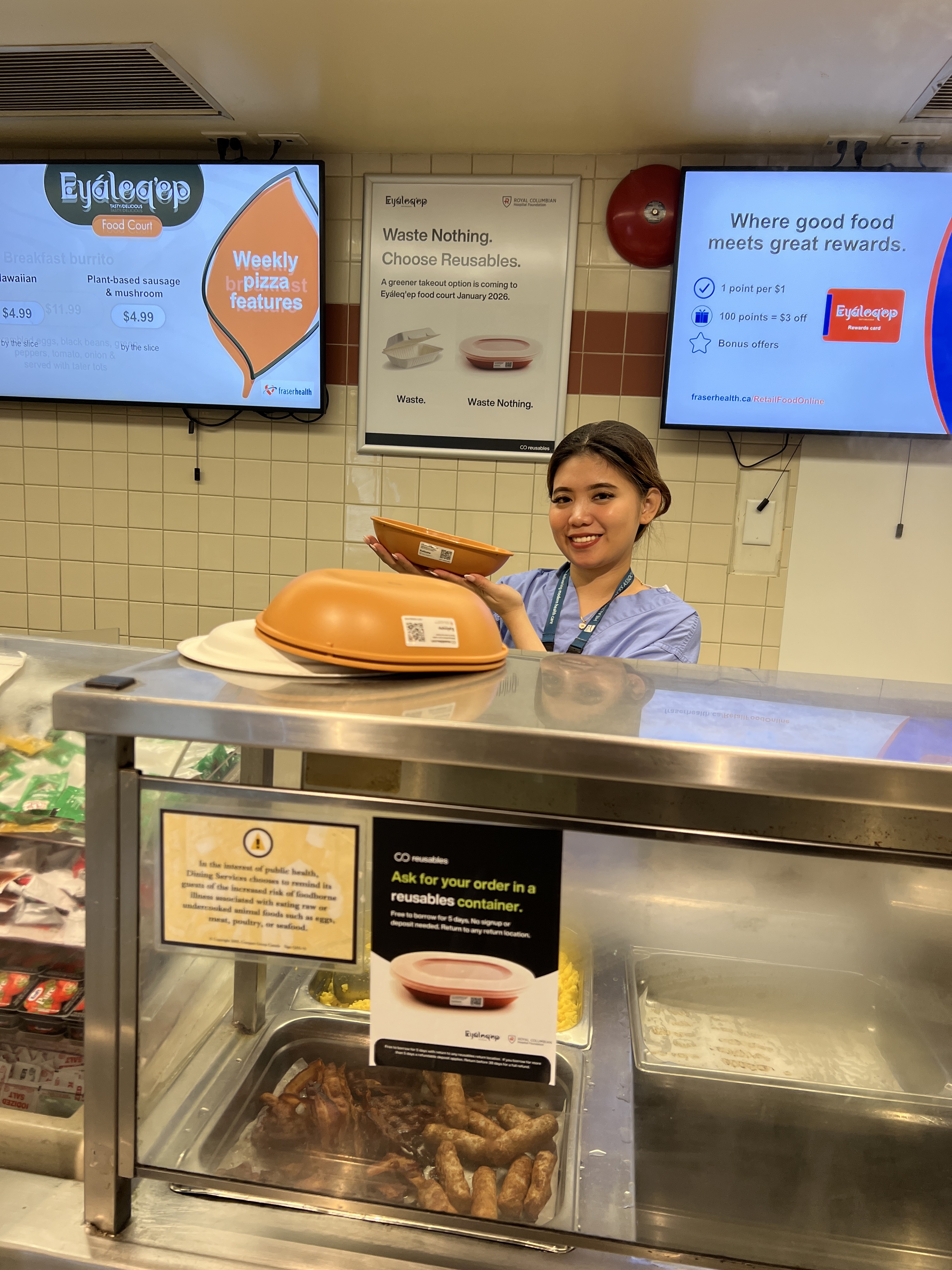
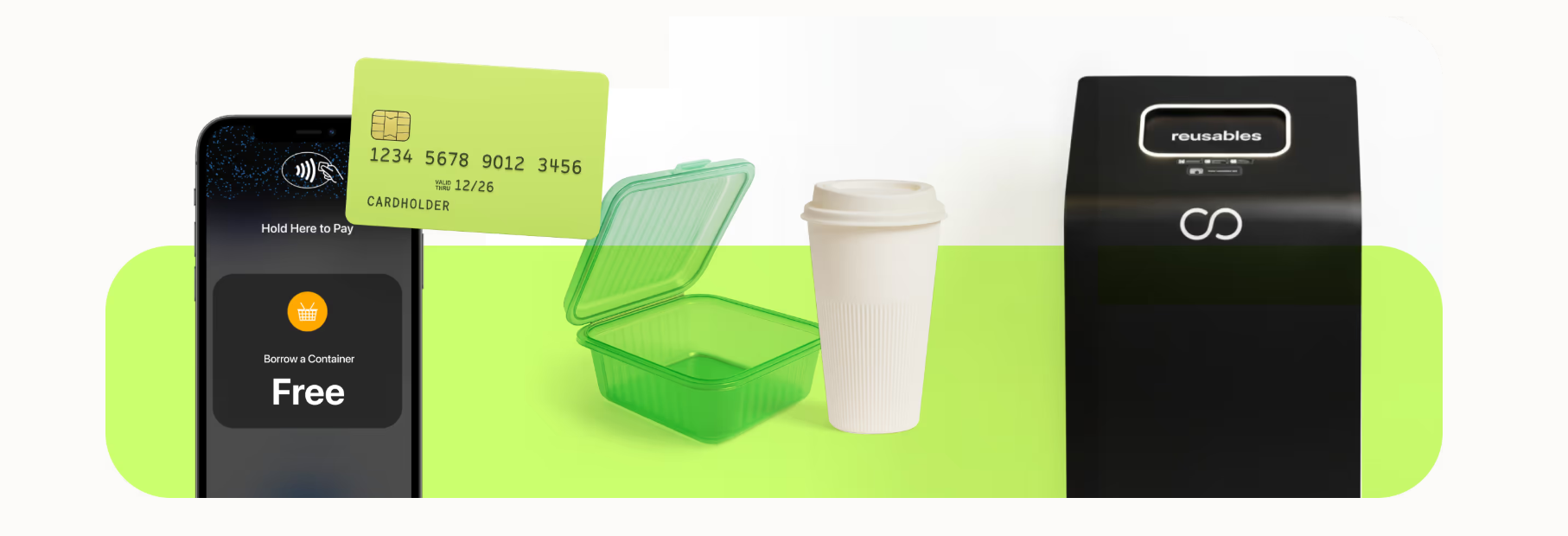
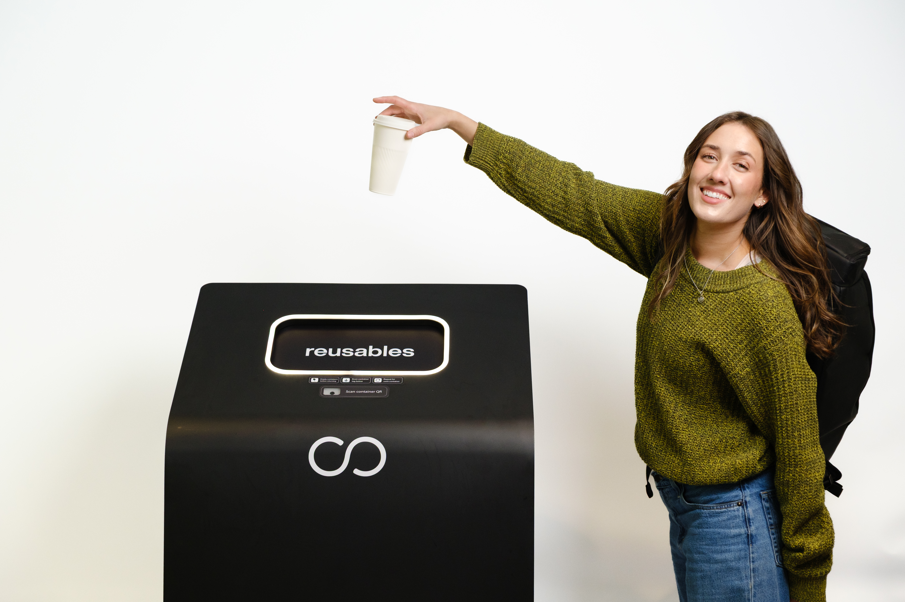
Transitioning to a reusable packaging system is a powerful way to demonstrate your campus's commitment to sustainability. Today's tech-enabled solutions make it incredibly simple for everyone to participate. Instead of relying on students to download yet another app, systems like Reusables.com use a frictionless "Tap to Reuse" model. Students can check out a container simply by tapping their student ID, credit card, or mobile wallet. This approach integrates directly into your existing campus card and POS systems, making the switch seamless for your operations team. It removes the barriers that plagued older programs, turning reuse into an easy, intuitive part of the campus dining experience.
Reusables' mission replaces single-use packaging with truly sustainable solutions.
How Smart Tracking Ensures High Return Rates
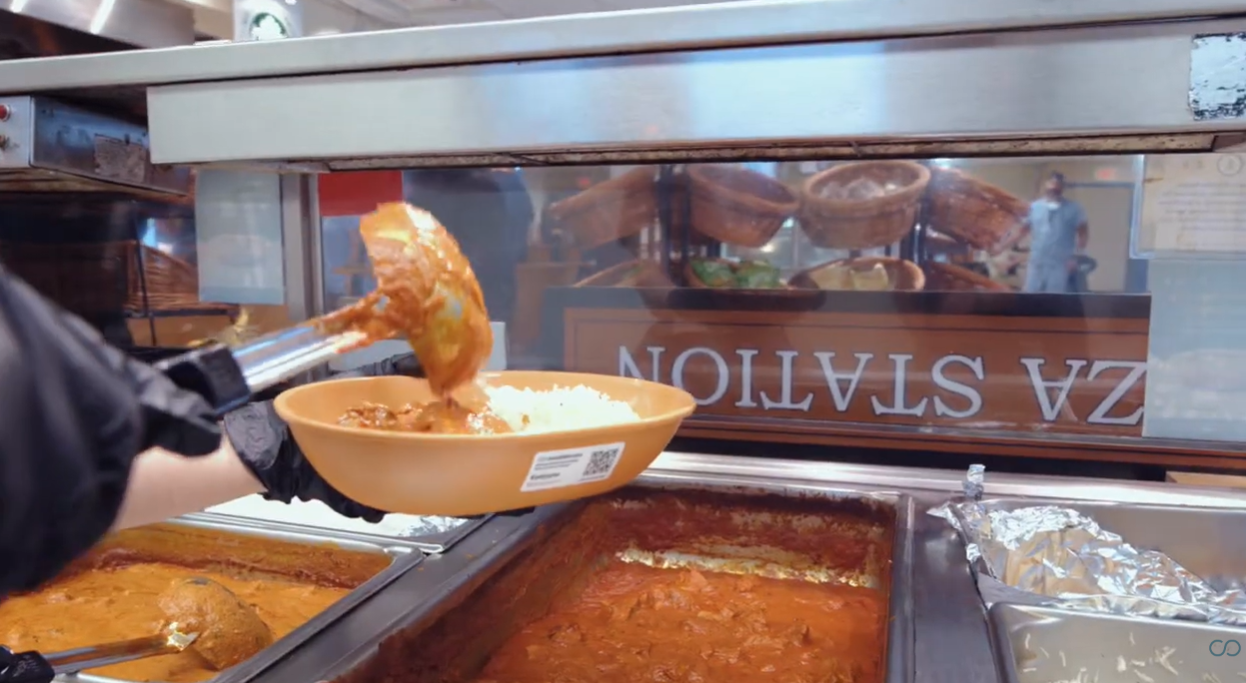
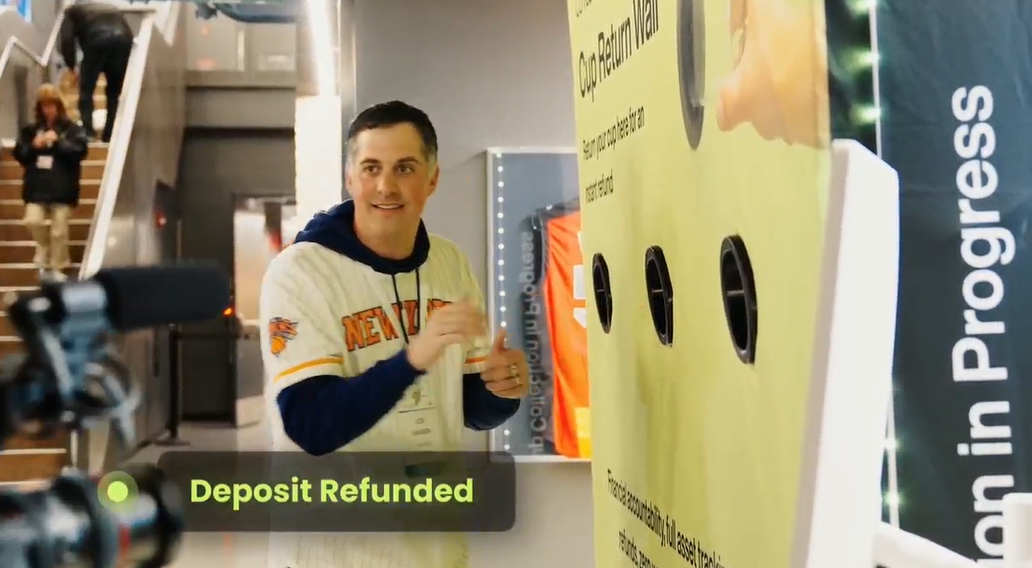
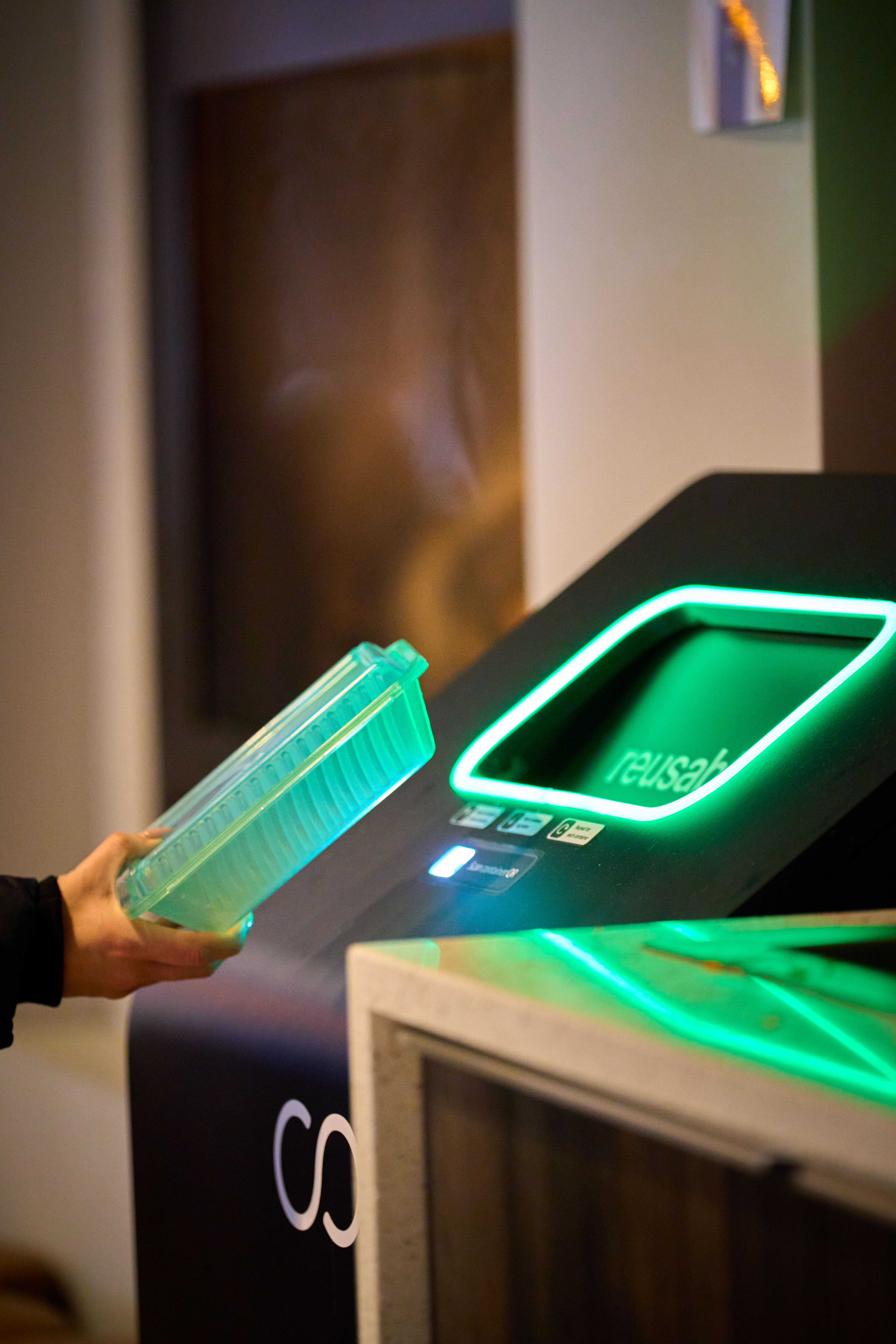
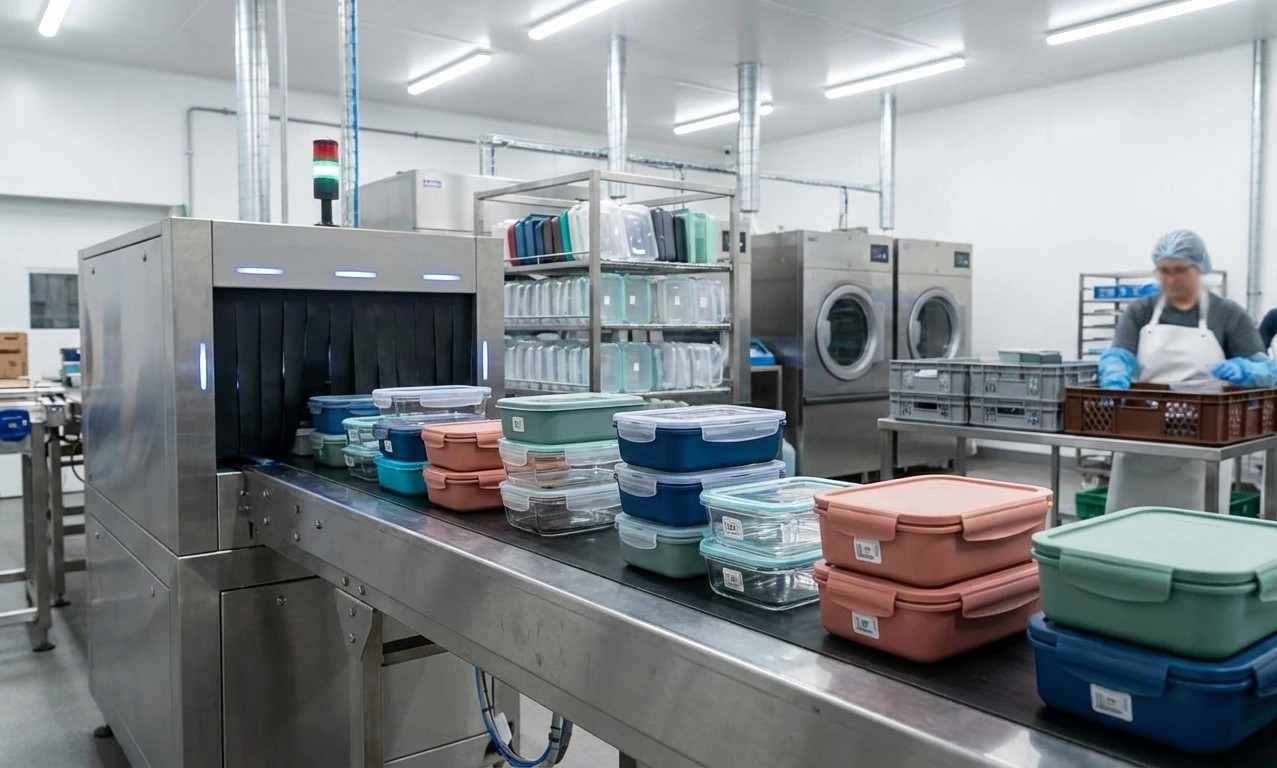
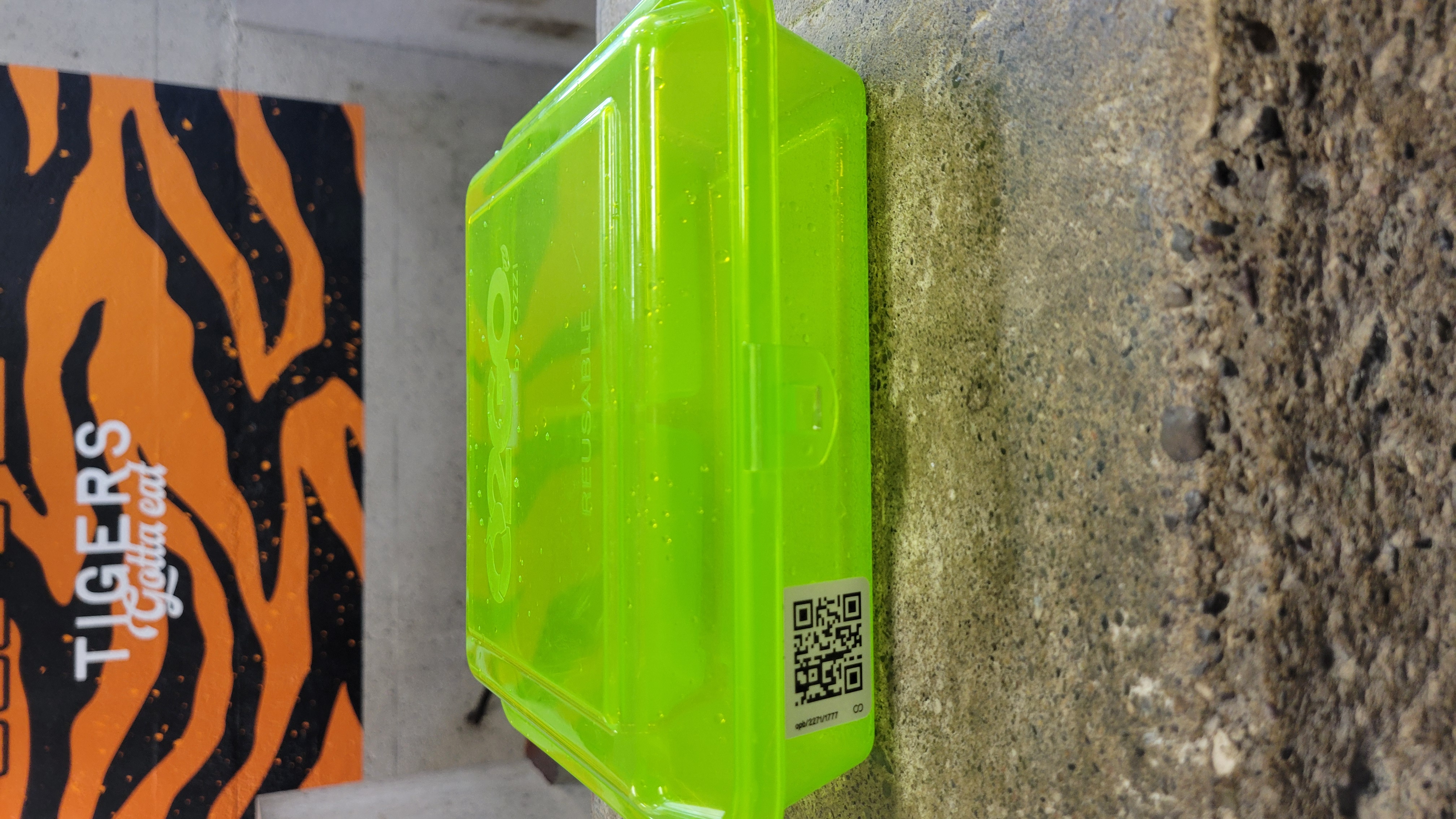
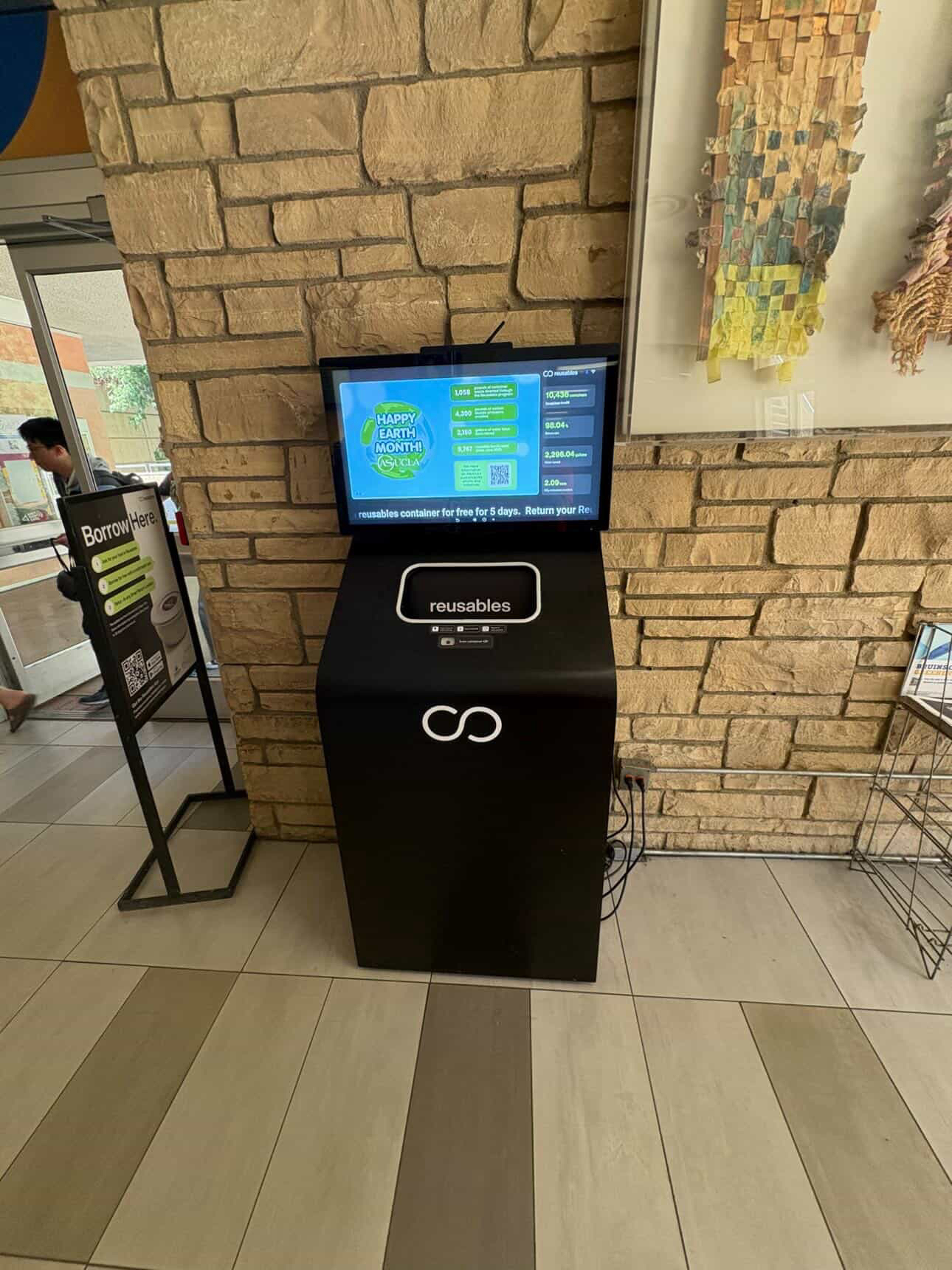
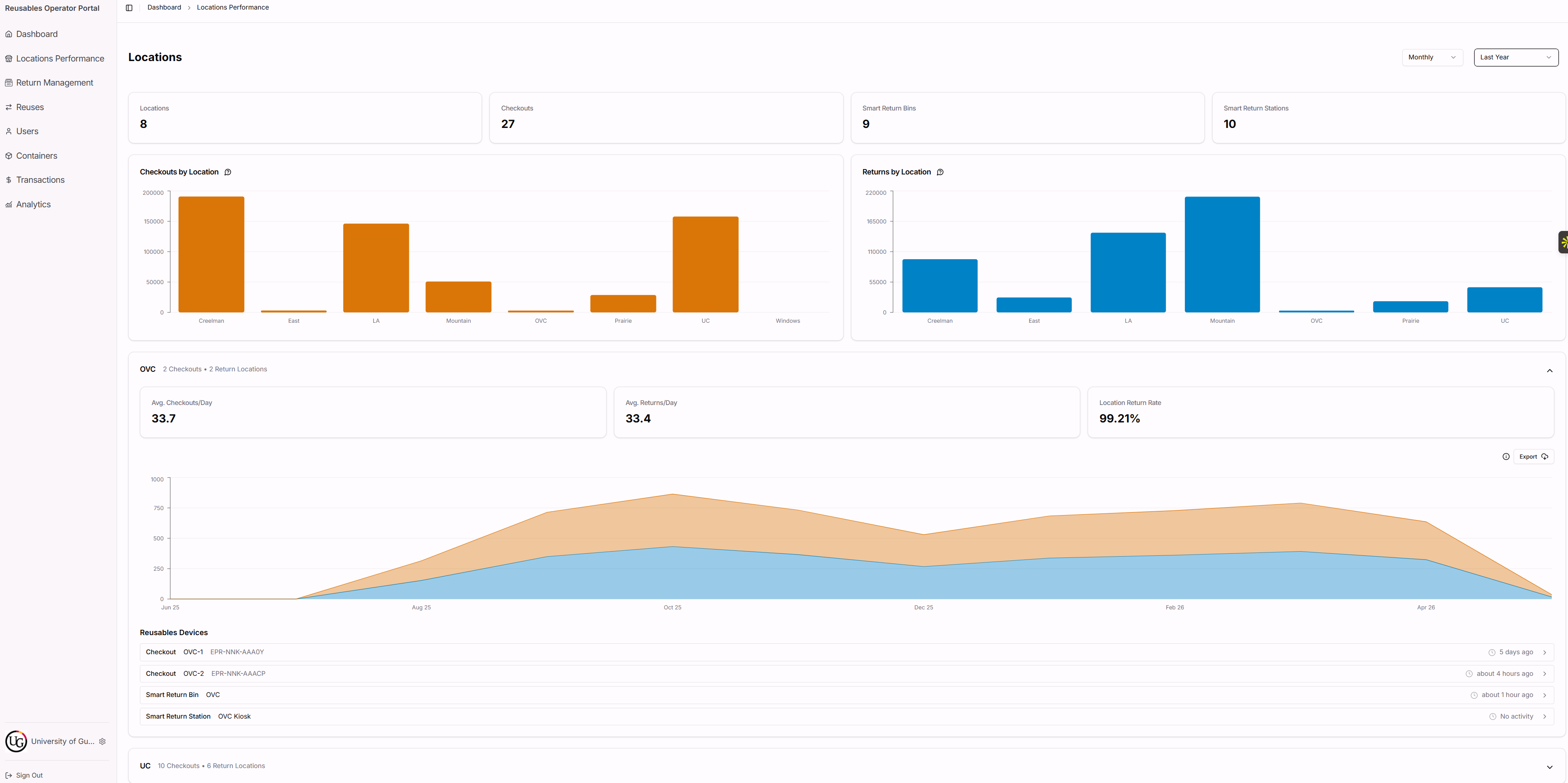
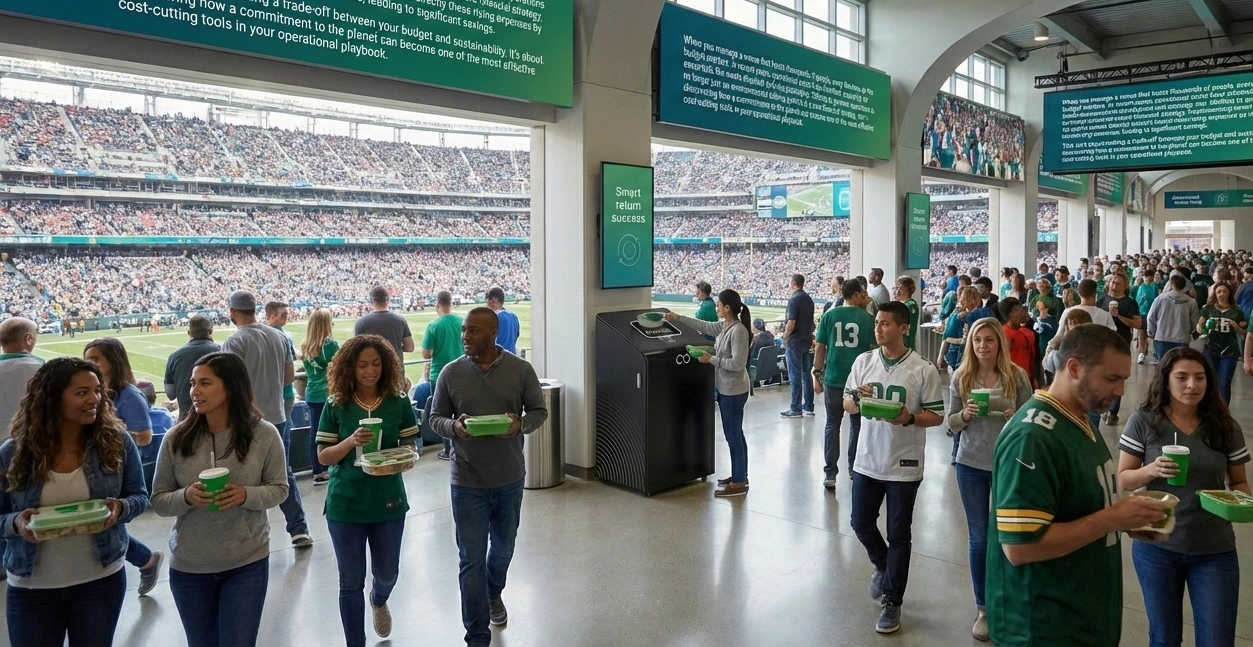
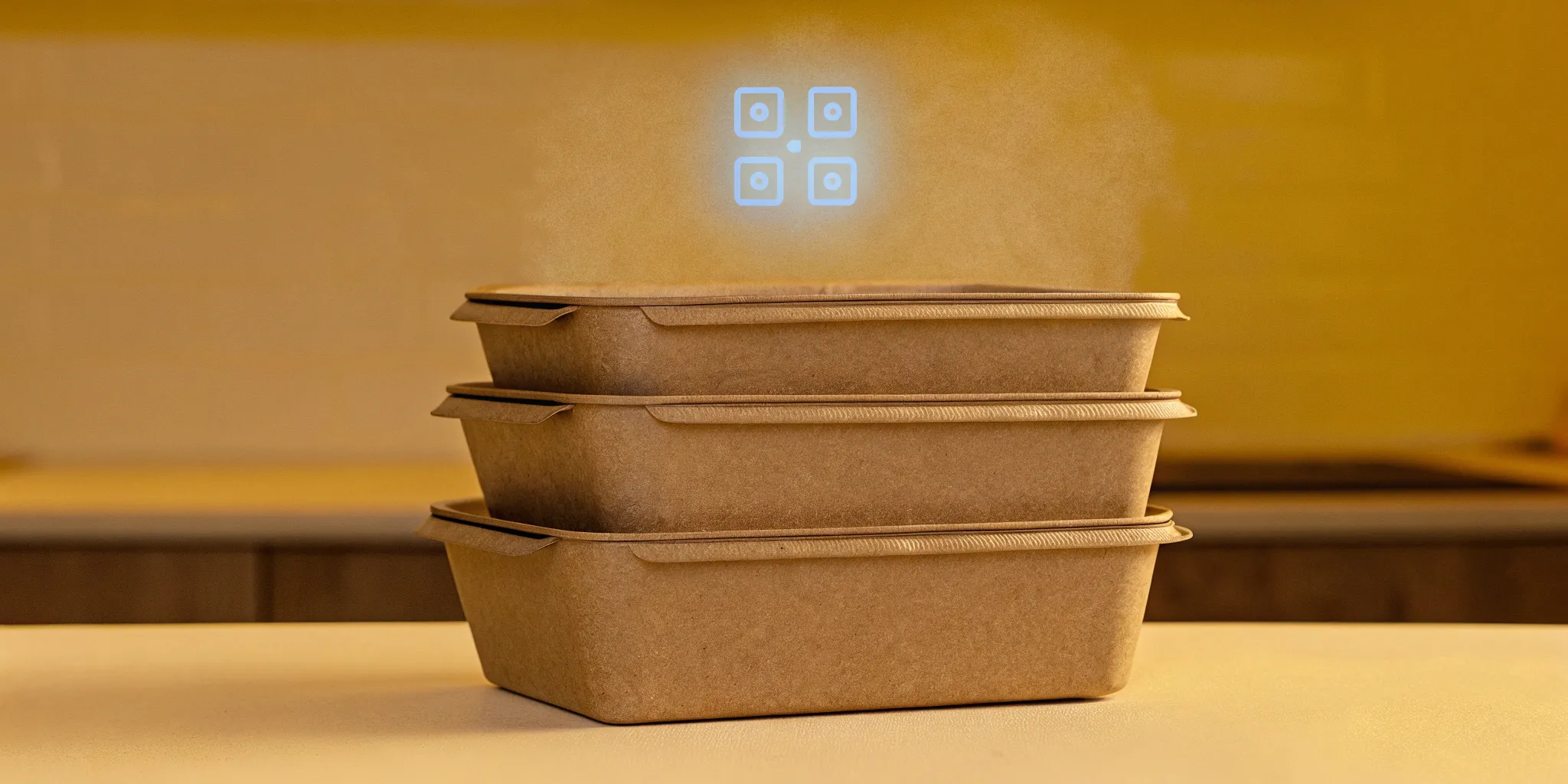
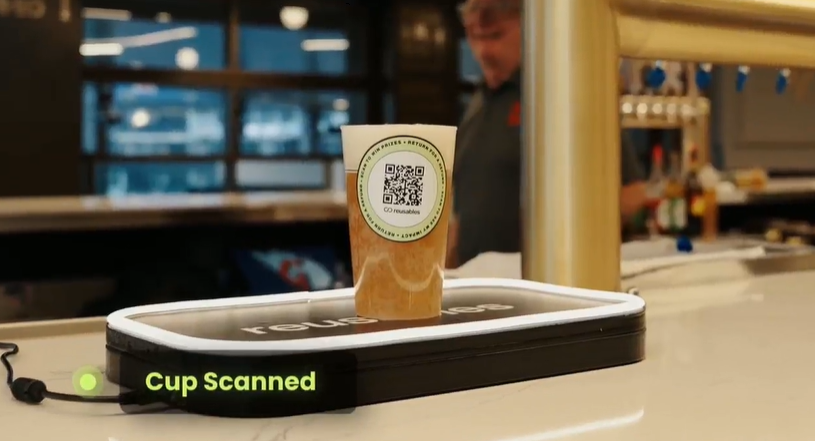
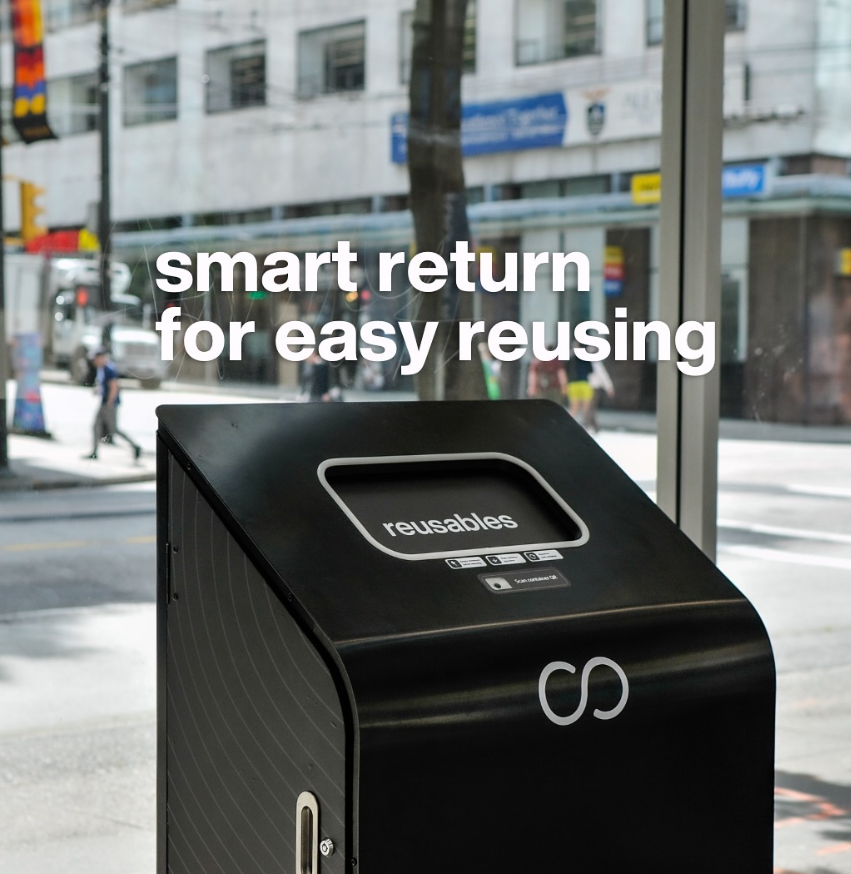
The biggest challenge with any reuse program is getting the containers back. This is where smart tracking changes the game. Every reusable container is equipped with a unique QR code or RFID tag, creating a system of automated accountability. When a student checks out a container, it's linked to their account. Smart return bins, available 24/7, automatically scan the container upon return, instantly closing the loop. This digital tracking provides real-time data on inventory and return rates, while automated reminders and late fees encourage participation without requiring any manual follow-up from your staff. The result? We see case-study-backed return rates of 99%, ensuring your investment is protected and the system remains sustainable.
Achieving Real Cost Savings and Environmental Wins
A high-performing reuse system delivers on two critical fronts: your budget and your environmental impact. With disposable packaging costs soaring, switching to reusables can lead to significant financial benefits, with many of our partners seeing over 30% in annual cost savings. Because nearly every container is returned, you drastically reduce the need to purchase new inventory. On the environmental side, the impact is direct and measurable. You can track exactly how many single-use containers you've diverted from the landfill, providing clear, reportable data for your institution's sustainability goals. It's a win-win that aligns your operational budget with your campus's zero-waste mission.
Instead of unsustainable compostables explore how reusable systems save 50% on packaging costs.
Related Articles
- About Reusables - Taking a Stand Against Single-Use Plastics – Reusables.com
- How Charging for Single-Use Packaging Makes Reuse the Easy Choice
- Reusables for Film & TV Production Sets – Reusables.com
- Vancouver Startup Driving Reuse, Zero-Waste Packaging – Reusables.com
Frequently Asked Questions
So, are you saying all compostable packaging is a bad choice? Not necessarily, but its environmental benefit depends entirely on a perfect disposal system that rarely exists in the real world. For compostables to work as intended, they must end up in a specialized industrial composting facility. When they land in a landfill, as most do, they can release potent methane gas. If they end up in a recycling bin, they contaminate the entire batch. The problem isn't the material itself, but the fact that the infrastructure to handle it properly is largely missing.
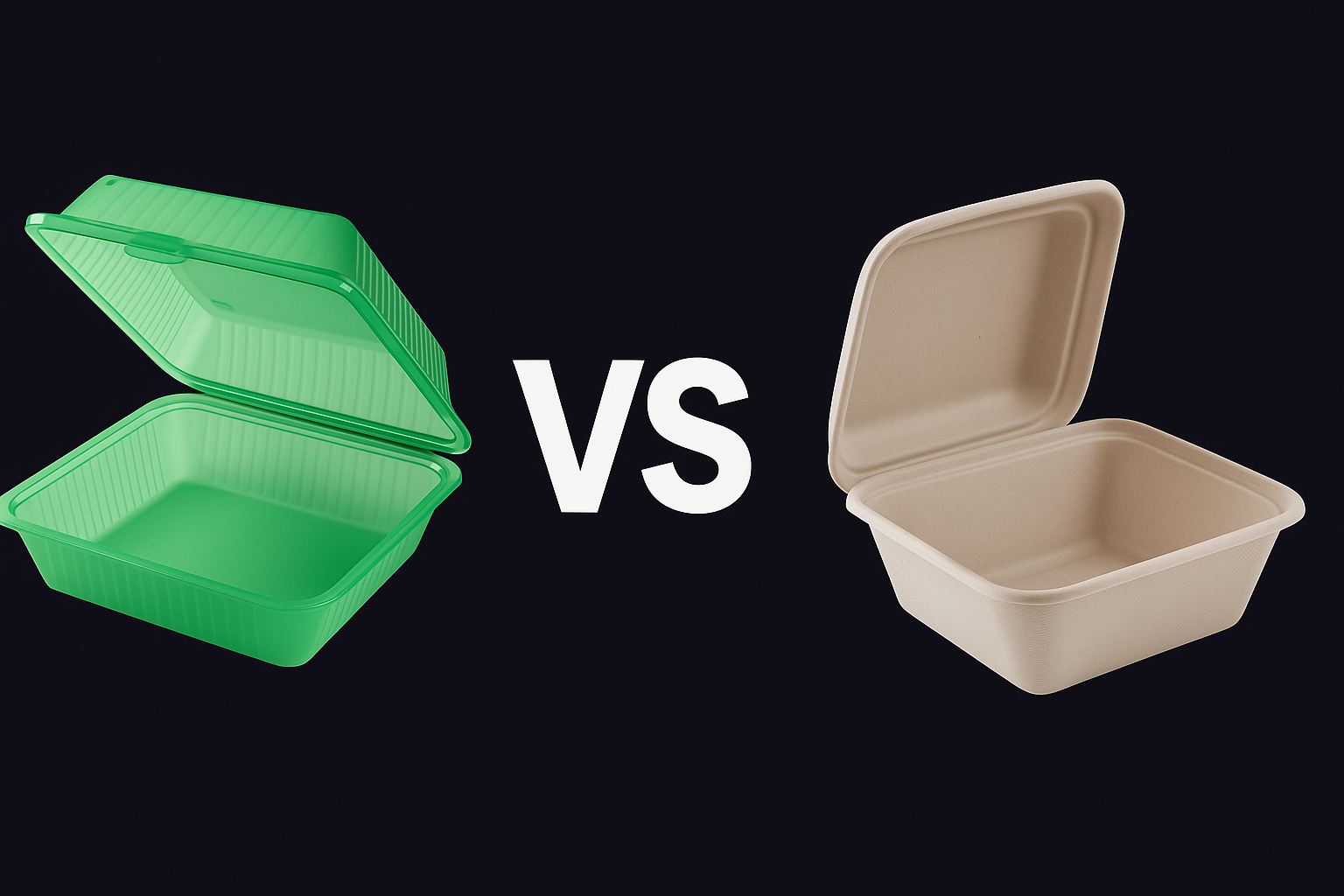
Doesn't it take a lot of energy and water to make reusable containers? Yes, producing a durable container has a higher upfront environmental cost than making a flimsy disposable one. However, the key is looking at the entire lifecycle. A reusable container's impact is spread out over hundreds or even thousands of uses. After just a handful of uses, it becomes the far better environmental choice, saving significant resources and preventing a constant stream of waste from being created in the first place.
We tried a reusable container program before and lost most of our inventory. How is this different? That's a common and completely valid concern. Older programs failed because they relied on manual tracking and the honor system. Modern systems, like ours, solve this with technology. Every container has a unique digital identity, like a QR code or RFID tag, that is scanned at checkout and return. This creates automated accountability, and with smart return bins and gentle reminders, we see return rates of 99%. You always know where your containers are, which protects your investment.
Our students are passionate about sustainability. Won't they be disappointed if we move away from compostables? Students want to see a real impact, and a tech-enabled reuse system makes sustainability tangible. Instead of tossing a container into a bin and hoping it goes to the right place, they become active participants in a circular system they can see working every day. It shifts the focus from disposable convenience to meaningful, collective action. Plus, features like campus-wide leaderboards and rewards for reusing can make it a fun and engaging part of the dining experience.
This sounds like a major operational change. Is it difficult to implement? It's much more straightforward than you might think. Modern reuse platforms are designed to be frictionless and integrate directly with the systems you already use, like campus card and POS terminals. Students can check out a container with a simple tap of their ID card or phone—no app download required. The goal is to make reuse the easiest and most convenient option for both your team and your students, not to create another complicated process for you to manage.
Other stories you may find interesting
.png)
.avif)






.webp)



Watch the Webinar
Learn How to Eliminate Single-Use Waste
Get instant access to our expert webinar and discover how leading institutions reach 99% return rates through smarter reuse systems.

© Reusables™. All rights reserved.