
What Is a Circular Economy in Healthcare? A Guide

January 7, 2026
The need for a systemic shift is more pressing than ever. The institutional sector is a major contributor to environmental pollution, largely due to its heavy reliance on single-use plastics and other disposable items. As organizations dedicated to well-being and education, there's a growing responsibility to address the environmental impact of our operations. Adopting a circular model isn't just about being 'green'—it's about creating a healthier future for everyone. The benefits seen in the circular economy in healthcare are clear and compelling. They include significant cost savings from reduced waste, improved safety for staff and patients, and a smaller environmental footprint. It’s a powerful way for your institution to lead by example.
Key Takeaways
- Focus on the financial win, not just the environmental one: A circular model is a smart financial strategy that cuts the recurring costs of disposable packaging and waste removal. This allows you to redirect your budget toward improving the dining experience or other key initiatives.
- Make the "10 Rs" your roadmap for change: This framework provides a clear, step-by-step approach to reducing waste. Start at the top with 'Refuse' and 'Rethink' to design waste out of your system from the beginning, which delivers the most significant results.
- Start small and prove the concept: Begin by auditing a high-impact area like your food service operations to understand your current spending on disposables. Use this data to build a strong business case, get stakeholder buy-in, and track key metrics like cost savings and container return rates to demonstrate success.
What Is the Circular Economy in Healthcare?
The concept of a circular economy is about redesigning systems to eliminate waste and keep resources in use for as long as possible. In a healthcare setting, this means moving away from the traditional, disposable-heavy model toward one that prioritizes reuse, repair, and resourcefulness. It’s a practical approach that not only addresses environmental concerns but also creates more resilient and efficient operations. By rethinking how materials and products are used, from medical devices to food service packaging, healthcare facilities can significantly reduce their footprint while improving their bottom line. This shift is about creating a system that is restorative and regenerative by design, ensuring that the pursuit of human health doesn't come at the expense of planetary health.
Moving From a Linear to a Circular Model
For decades, many industries, including healthcare, have operated on a linear model: take, make, and dispose. Think of all the single-use items—gloves, syringes, and packaging—that are used once and then thrown away. This approach creates a staggering amount of waste and puts a constant strain on resources. The circular economy offers a smarter, more sustainable alternative. Instead of a straight line to the landfill, it creates a loop. The goal is to reduce waste by reusing materials, extending the life of products, and minimizing our reliance on new resources. By applying key circular economy principles, like the '10 Rs' framework, healthcare facilities can fundamentally rethink their operations and keep valuable materials in use for as long as possible.
Why Healthcare Needs a Circular Shift Now
The need for this shift is more pressing than ever. The healthcare sector is a major contributor to environmental pollution, largely due to its heavy reliance on single-use plastics and other disposable items. As institutions dedicated to human health, there's a growing responsibility to address the environmental impact of our operations. Adopting a circular model isn't just about being 'green'—it's about creating a healthier future for everyone. The benefits of a circular healthcare system are clear and compelling. They include significant cost savings from reduced waste and resource consumption, improved safety for patients and staff, and a smaller environmental footprint. It’s a powerful way for healthcare to lead by example, promoting both planetary and human well-being.
Healthcare institutions implementing circular economy principles can explore Reusables' specialized healthcare solutions with automated tracking and compliance.
Key Principles for a Circular Healthcare System
Transitioning to a circular model in healthcare can feel like a massive undertaking, but it’s a change that starts with a clear set of guiding principles. Instead of focusing only on recycling at the end of a product’s life, a circular approach looks at the entire lifecycle, from procurement to disposal. It’s about systematically designing waste out of your operations from the very beginning.
The best way to approach this is with a framework that breaks the process into actionable steps. The "10 Rs" of the circular economy provide exactly that—a comprehensive roadmap that helps you identify opportunities for improvement at every stage. These principles guide you to question old habits, find new efficiencies, and create more resilient systems. By thinking through each "R," you can move beyond simply managing waste to actively preventing it, saving resources, and creating a healthier environment for your patients and staff. This framework isn't just a theory; it's a practical tool for building a more sustainable and efficient healthcare facility.
Understanding the "10 Rs" Framework
The "10 Rs" offer a clear hierarchy for making decisions that support a circular economy. By applying these principles, healthcare facilities can make significant strides toward sustainability. The framework encourages you to prioritize actions that keep resources at their highest value for as long as possible. The 10 Rs are:
- Refuse: Avoid using certain materials or products.
- Rethink: Re-evaluate processes to be more efficient and less wasteful.
- Reduce: Use fewer resources in the first place.
- Reuse: Use items again for their original purpose.
- Repair: Fix broken items instead of replacing them.
- Refurbish: Restore an old product to good working condition.
- Remanufacture: Use parts of a discarded product in a new one.
- Repurpose: Use a product for a different function.
- Recycle: Process waste materials into new products.
- Recover: Generate energy from waste.
Reusables' technology platform drives circular economy adoption across healthcare education and corporate sectors.
How to Refuse and Rethink Medical Waste
The first two principles, Refuse and Rethink, are about prevention. Refusing means questioning whether a single-use item is truly necessary or if a more sustainable alternative exists. This starts with procurement and challenging the status quo. Rethinking involves redesigning entire systems. While healthcare faces unique challenges like strict regulations and a cultural preference for disposables for safety reasons, these are the exact areas that need fresh ideas. Could a process be changed to eliminate the need for a specific disposable item? Can you work with suppliers to develop new, waste-free solutions? This is where true innovation begins.
Applying Reduce, Reuse, and Repair in Your Facility
These next three principles focus on extending the life of your resources. Reducing consumption is a straightforward way to cut waste and costs. You can start by regularly training healthcare workers on how to perform their duties using fewer resources. Reusing items is another powerful strategy. While safety is always the top priority, it’s important to explore which medical materials can be safely cleaned and reused instead of being thrown away after one use. Finally, repairing equipment instead of immediately replacing it can drastically cut down on waste and save money. Implementing a proactive maintenance program keeps equipment running longer and reduces the environmental impact of manufacturing new devices.
Finding Opportunities to Refurbish, Remanufacture, and Repurpose
When an item can no longer be used or repaired, there are still valuable circular options before recycling or disposal. Refurbishing and remanufacturing involve giving products a second life. You can support this by choosing companies that design products to be easily taken apart so their components can be used in new items. This makes your procurement choices a key part of your sustainability strategy. Repurposing finds creative new uses for items that would otherwise become waste. For example, some facilities are exploring ways to turn non-hazardous lab plastics into material for 3D printing. These strategies help you extract the maximum value from your resources.
What Are the Benefits of Circular Healthcare?
Adopting a circular model is more than just a sustainability initiative; it's a strategic move that delivers tangible benefits across your entire operation. By shifting from a "take, make, waste" system to one that prioritizes reuse and resourcefulness, healthcare facilities can unlock significant financial savings, reduce their environmental impact, and even improve health outcomes for patients and staff. This approach transforms waste into a resource, creating a more resilient and efficient system that benefits your budget, your community, and the planet. It’s a practical framework for building a healthier future from the inside out.
Lower Costs and Improve Operational Efficiency
One of the most immediate benefits of a circular approach is its positive impact on your bottom line. Constantly purchasing single-use items, from food containers to medical supplies, adds up quickly, as do the associated waste disposal fees. By implementing circular strategies, you can drastically cut these recurring costs. For example, switching to a reusable foodware system eliminates the need to constantly reorder disposable containers. While every healthcare facility has unique needs and routines, the core principle remains the same: optimizing resource use leads to greater operational efficiency. This allows you to reallocate funds from waste management to patient care and other critical areas.
Reduce Your Environmental Footprint
The healthcare industry is a major contributor to waste, particularly single-use plastics. A circular model directly addresses this by designing waste out of the system. Instead of relying on disposable items that end up in landfills, the focus shifts to durable, reusable, and non-toxic products. This change not only conserves natural resources and reduces pollution but also aligns your facility with growing environmental standards and public expectations. Moving to a circular healthcare system creates a healthier environment for everyone. It’s a powerful way to demonstrate your commitment to sustainability and community well-being, making a positive impact that extends far beyond your facility’s walls.
Improve Patient Safety and Health Outcomes
A healthier environment naturally leads to better health outcomes. Many single-use products and materials contain chemicals that can be harmful to both people and the planet. By thoughtfully selecting reusable and non-toxic alternatives, you reduce exposure risks for patients and staff. This transition helps create a safer indoor environment and minimizes the release of pollutants into the surrounding community. This holistic approach recognizes the deep connection between environmental health and human health, ensuring that your sustainability efforts also contribute directly to your core mission of caring for people.
Create a Competitive Advantage Through Innovation
Embracing circularity positions your facility as a forward-thinking leader. In a world where patients and staff are increasingly environmentally conscious, a demonstrated commitment to sustainability can be a key differentiator. Applying the principles of the circular economy, often summarized as the "10 Rs" (Refuse, Rethink, Reduce, Reuse, etc.), opens the door to creative solutions and innovative partnerships. By showcasing successful initiatives, like a zero-waste dining program or an efficient equipment refurbishment plan, you build a reputation for innovation and responsibility. This not only enhances your brand but also attracts top talent and partners who share your vision for a more sustainable future.
How to Implement Circular Economy Strategies in Your Facility
Putting circular principles into practice requires a thoughtful, facility-wide approach. It’s about looking at your existing operations—from the operating room to the cafeteria—and identifying opportunities to close loops, reduce waste, and recover value. By focusing on a few key areas, you can start making a tangible impact on both your budget and your environmental footprint. These strategies aren't just about being green; they're about building a more resilient, efficient, and responsible healthcare system for everyone.
Manage the Full Lifecycle of Medical Equipment
Many medical devices are designed for a single use, contributing to mountains of waste and significant costs. A circular economy for medical devices shifts this paradigm by focusing on reuse, repair, and remanufacturing. Instead of discarding equipment after one procedure, you can partner with specialized companies that sterilize and refurbish devices for safe reuse.
Start by auditing your most frequently used single-use items to identify candidates for a circular model. You can also establish in-house programs for repairing and maintaining equipment to extend its lifespan. This not only cuts down on waste but also reduces supply chain dependencies and lowers procurement costs, allowing you to reallocate funds to other critical areas of patient care.
Implement a Pharmaceutical Waste Reduction Program
Pharmaceutical waste is a complex and often overlooked area where circular principles can make a huge difference. The goal is to minimize waste at every stage, from procurement to disposal. By applying the "10 Rs" of the circular economy, you can create a more sustainable pharmaceutical management system. This could involve refusing unnecessary drug samples, rethinking prescription sizes to match patient needs, and implementing take-back programs for unused medications.
Work with your pharmacy and clinical teams to review prescribing habits and inventory management. Are you over-ordering certain drugs? Can you use smaller vials? Implementing better tracking and disposal systems ensures that expired or unused medications are handled responsibly, preventing environmental contamination and creating a safer system for everyone.
Introduce Sustainable Food Service and Reusables
Your facility’s food service is a prime area for circular innovation. Disposable containers, cutlery, and cups generate a massive amount of daily waste and come with ever-rising costs. By adopting sustainable procurement practices and shifting away from single-use items, you can achieve significant savings and reduce your environmental impact.
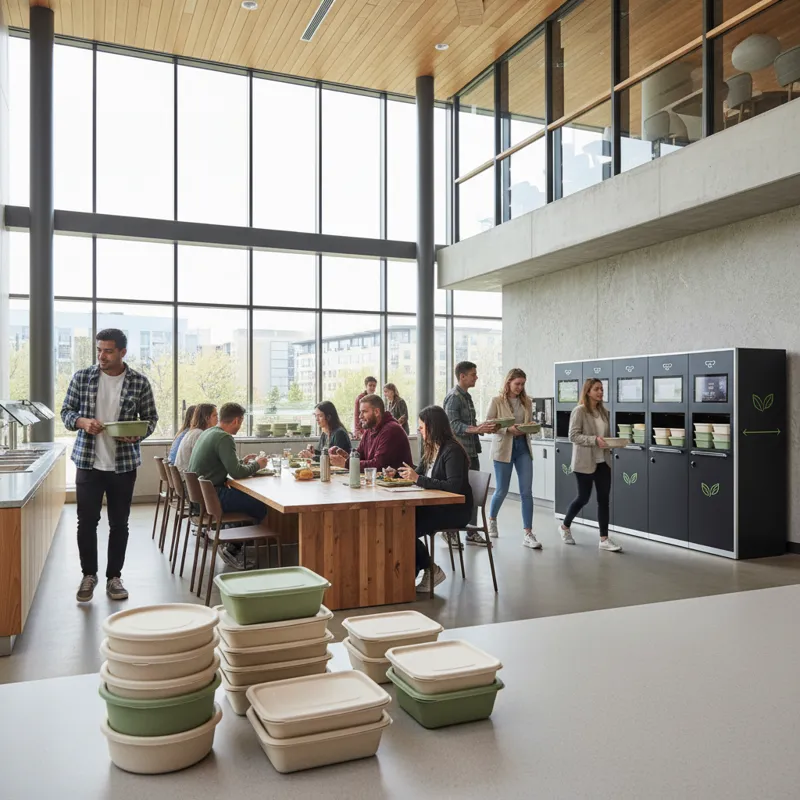
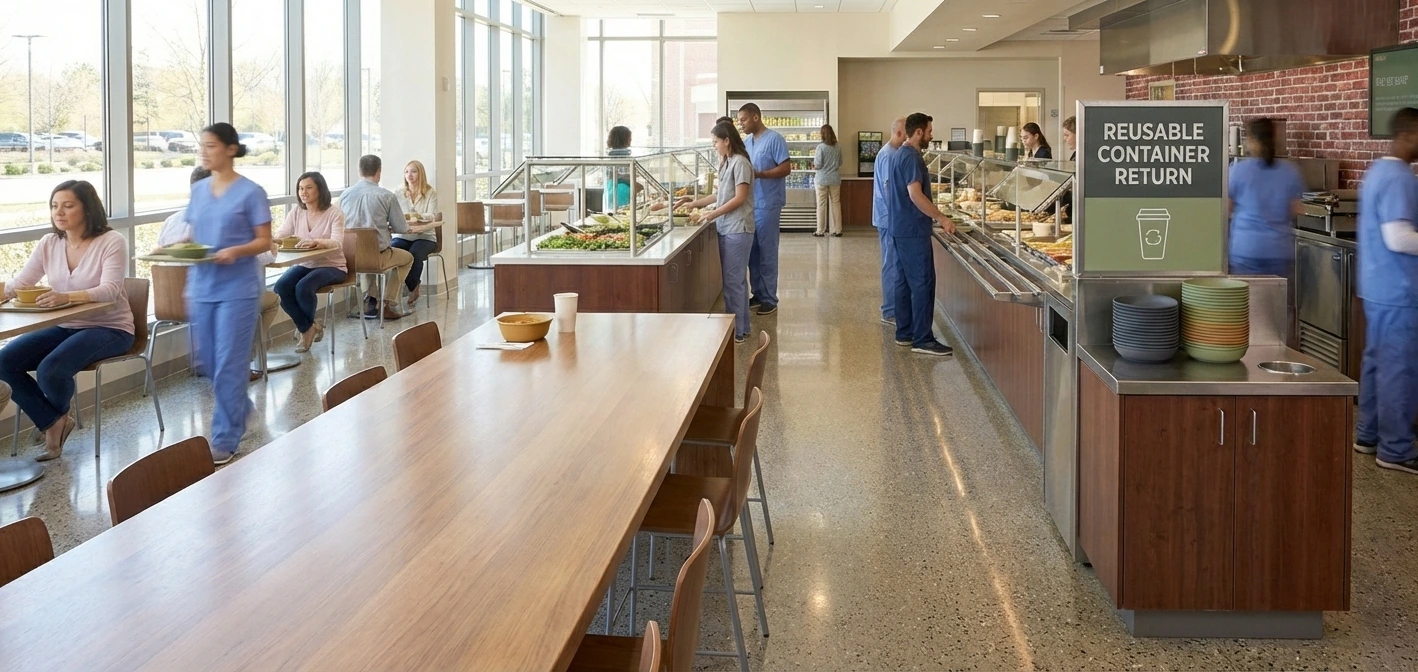
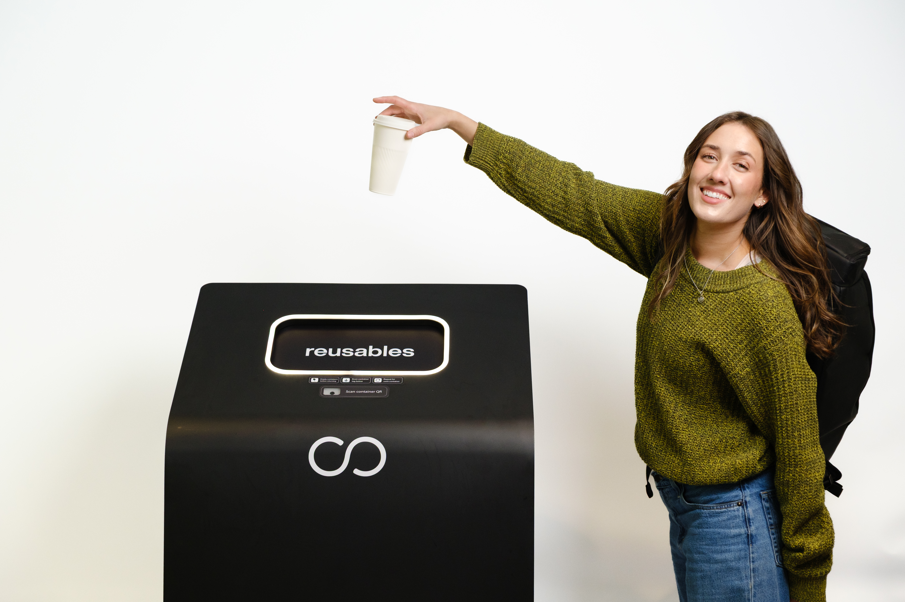
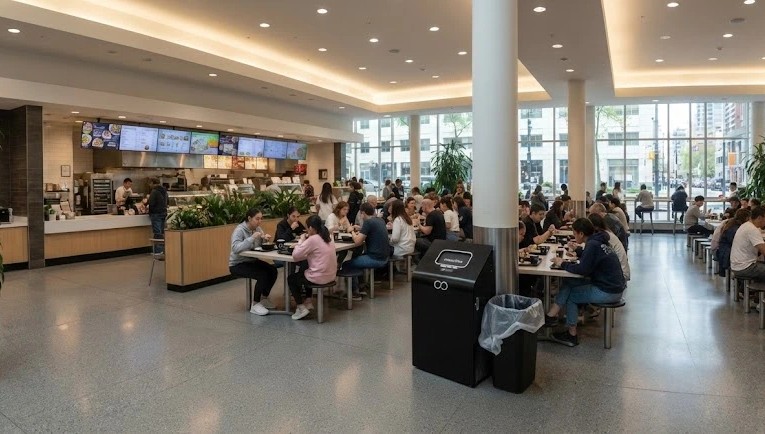
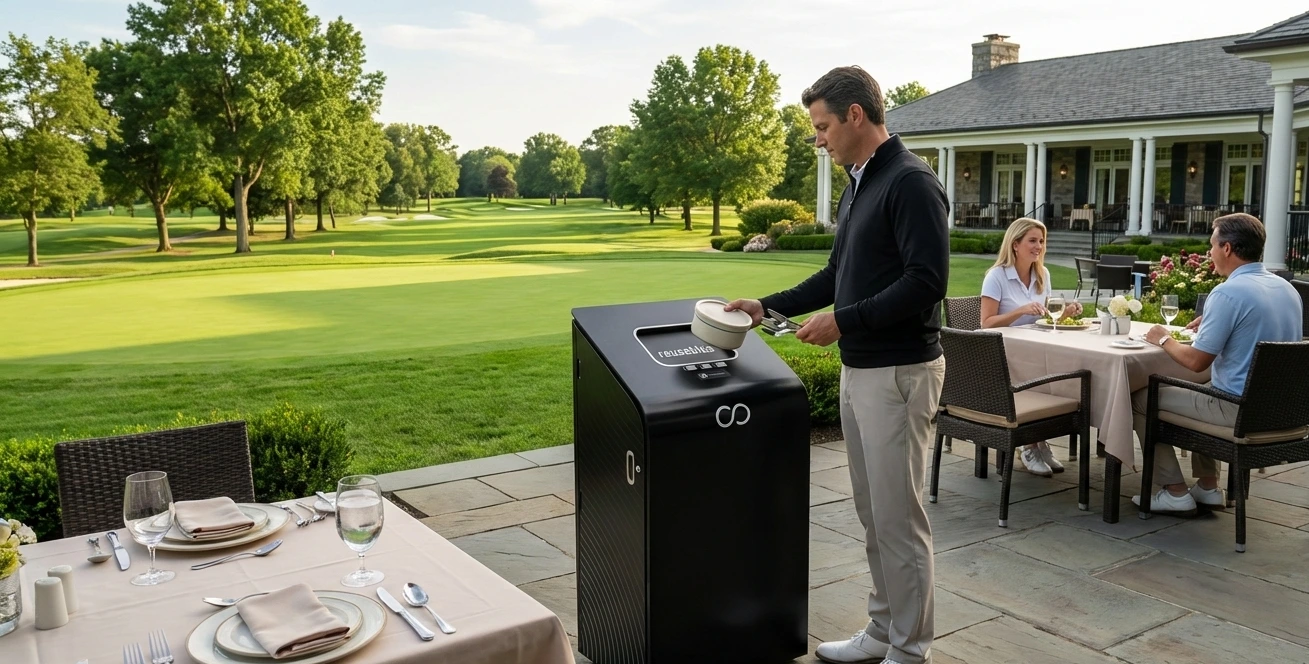
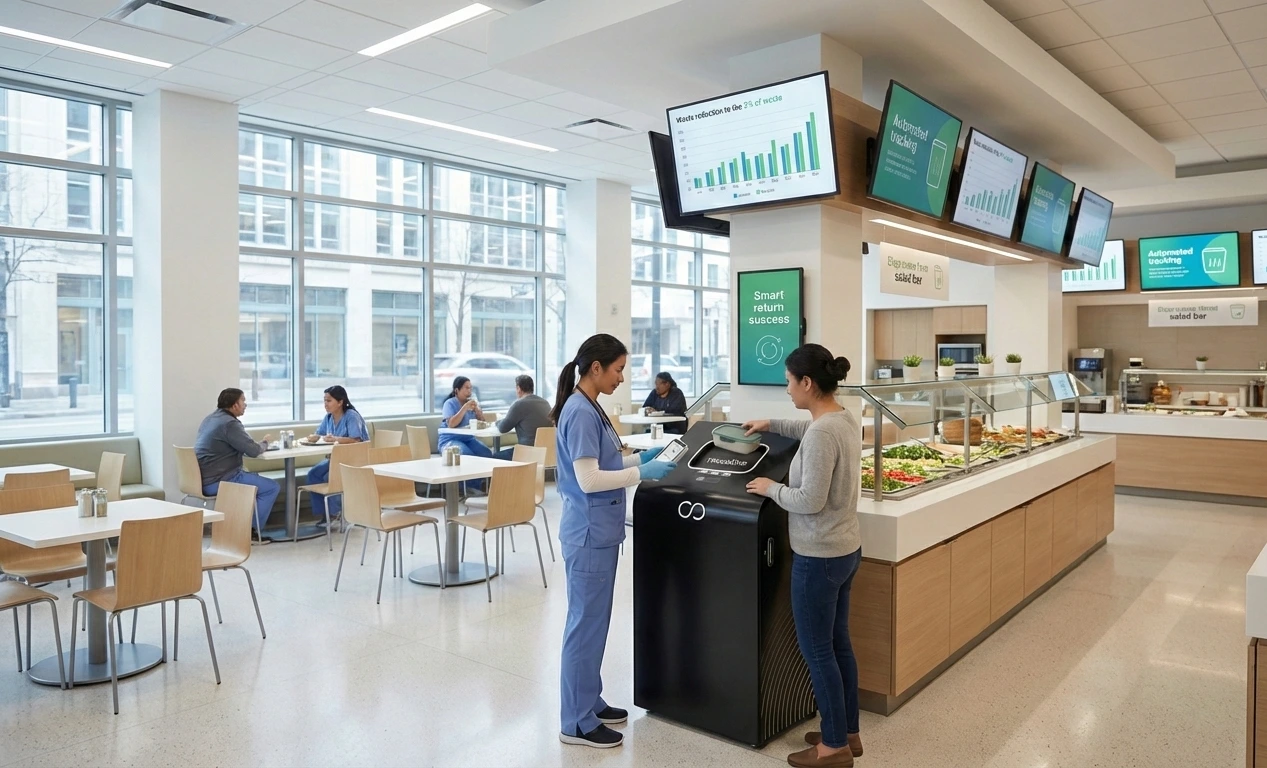
Consider implementing a tech-enabled reuse system for meal trays, cups, and takeout containers in your cafeterias and for patient dining. Modern systems use smart tracking to ensure high return rates without creating extra work for your staff. This approach not only eliminates packaging waste but also improves the dining experience for staff and visitors, demonstrating a clear commitment to sustainability while cutting operational costs.
Establish Chemical Reuse and Recovery in Labs
Laboratories and cleaning services use a wide range of chemicals, many of which are hazardous and costly to dispose of. A circular strategy focuses on reducing chemical use, recovering valuable substances, and replacing harmful agents with safer alternatives. Removing harmful chemicals not only protects your staff and patients but also simplifies recycling and waste management processes down the line.
You can start by implementing solvent recovery systems in your labs, which distill and purify used chemicals for reuse. Also, conduct a review of your cleaning supplies to identify opportunities to switch to green, non-toxic alternatives. These changes create a healthier indoor environment, reduce regulatory burdens associated with hazardous waste, and often lead to lower purchasing costs.
Adopt Energy and Water Conservation Practices
While not always the first thing that comes to mind with the circular economy, resource conservation is a core principle. Healthcare facilities are incredibly energy- and water-intensive, presenting a major opportunity for efficiency gains. Implementing robust energy and water conservation measures can drastically reduce your utility bills and shrink your carbon footprint.
Simple steps can include upgrading to LED lighting, installing motion sensors in low-traffic areas, and retrofitting plumbing with low-flow fixtures. For a bigger impact, conduct an energy audit to identify inefficiencies in your HVAC systems, which are often the largest energy consumers in a hospital. These investments pay for themselves over time through lower operating costs and position your facility as a leader in sustainable healthcare.
Common Challenges in Adopting a Circular Model
Making the switch to a circular model is an exciting goal, but it’s natural to have questions about the practicalities. Any significant operational change comes with its own set of hurdles. The good news is that these challenges are well-understood, and today’s best reuse systems are designed specifically to address them head-on. By anticipating these roadblocks, you can create a clear path to a successful and sustainable program.
From navigating safety regulations to getting your team and community on board, the transition requires careful planning. You’ll need to think about the initial investment, how to train your staff, and how new technology will fit into your existing operations. It can feel like a lot to manage, but you don’t have to figure it all out on your own. The most effective circular solutions are built to be seamless, intuitive, and fully integrated, turning potential barriers into manageable steps. Understanding these common challenges is the first move toward building a program that not only meets your sustainability goals but also enhances your operational efficiency and experience. Let's walk through the four main areas you'll want to consider.
Meeting Regulatory and Safety Standards
In any institutional setting, especially one that serves food, safety and hygiene are non-negotiable. For decades, single-use items have been seen as the simplest way to minimize contamination risks. This can make the idea of reusables seem complicated, as it introduces new cleaning and handling protocols. Sectors with even more stringent rules, like healthcare, are also grappling with how to balance reuse with strict safety standards.
The key is to adopt a system built with these standards in mind from the ground up. Modern reuse platforms use durable, food-grade materials that are easy to sanitize, along with tracking technology that ensures every container is properly processed before it re-enters circulation. By partnering with a provider that prioritizes compliance, you can meet and even exceed health regulations without compromising on your zero-waste goals.
Securing Initial Investment and Infrastructure
Implementing a reuse program often requires an upfront investment in containers, return stations, and the technology needed to run the system. When you’re used to ordering disposable packaging as an ongoing operational expense, shifting to a capital investment for a new infrastructure can feel like a significant financial leap. This initial cost is one of the most common barriers for organizations considering a transition to a circular model.
However, it’s important to frame this as an investment with a clear return. While disposables seem cheap per unit, their costs add up quickly and are constantly rising. A well-designed reuse system can deliver significant long-term savings by eliminating the need to constantly repurchase single-use items. Many institutions find that the program pays for itself within a few years, turning a recurring expense into a cost-saving asset that also improves the experience.
Overcoming Cultural Resistance with Staff Training
Technology and infrastructure are only part of the equation; people are what make a circular system work. Your staff and patients are accustomed to the convenience of a linear, "take-and-toss" culture. Introducing a new process, no matter how beneficial, can be met with resistance if it’s not managed well. Without proper buy-in, even the best-laid plans can falter.
Success depends on making the change easy and intuitive for everyone. This starts with clear communication and hands-on training for your staff so they feel confident and prepared to guide users. For patients, the system should be frictionless—think simple tap-to-checkout systems that don’t require downloading an app. When the sustainable choice is just as easy as the disposable one, adoption happens naturally. Gamification, rewards, and clear signage can also help build excitement and encourage participation across the location.
How Circular Practices Improve Safety and Efficiency
Adopting a circular model isn't just about hitting sustainability targets; it’s a strategic move that directly enhances the safety and efficiency of your daily operations. By rethinking how materials flow through your facility, you can create a cleaner, more streamlined environment for both your staff and the people you serve. Instead of constantly managing a high volume of disposable items, your team can focus on higher-value tasks. This shift reduces clutter, minimizes waste-related risks, and creates more predictable workflows.
A circular approach helps you gain control over your supply chain and inventory. Rather than being subject to the volatile pricing and availability of single-use products, you invest in a durable, reliable system. This means fewer emergency orders and less time spent on procurement. Furthermore, well-designed reuse systems come with built-in tracking and data, giving you clear insights into how resources are being used. This visibility allows you to optimize inventory, anticipate needs, and ensure every part of your operation is running as smoothly as possible.
Limiting Exposure to Harmful Materials
One of the most immediate safety benefits of a circular system is reducing contact with potentially harmful materials found in many single-use plastics. Disposables, especially those used in food service, can contain chemicals that are best avoided. As the organization Health Care Without Harm points out, the goal should be to lead the way in using "reusable, non-toxic items that save natural resources." By choosing durable alternatives like stainless steel or high-grade reusable plastics for food containers, you create a safer experience for everyone and demonstrate a clear commitment to well-being. This simple change minimizes daily exposure risks for both your staff and your customers.
Strengthening Sterilization and Hygiene Protocols
There’s a common misconception that single-use items are inherently more hygienic. However, a professionally managed reuse system often involves more rigorous and consistent sterilization protocols than the manufacturing and supply chain processes for disposables. Instead of relying on disposables that may have been exposed to contaminants during shipping and storage, a closed-loop reuse system gives you full control over the cleaning process. Research is increasingly focused on identifying which materials can be safely cleaned and reused. Modern reuse platforms are designed with hygiene as a top priority, using commercial-grade washing and data-driven tracking to ensure every item meets strict safety standards before it’s used again.
Streamlining Waste Management
Managing waste is a significant operational burden, involving labor, space, and disposal fees. A circular approach simplifies this entire process by drastically reducing the volume of trash you generate. By applying principles like "Reduce" and "Reuse," you can cut down on overflowing bins, reduce the frequency of waste pickups, and free up staff time. This isn't just about being cleaner; it's about being more efficient. When your team spends less time handling trash, they can focus on core service tasks. This shift makes your facility’s waste management more sustainable and less of a drain on your operational budget.
Optimizing Resource and Inventory Management
Circular practices give you a much clearer handle on your inventory. The constant cycle of ordering, stocking, and discarding disposables can be unpredictable and costly. Investing in a durable inventory of reusables stabilizes this process. Instead of guessing how many single-use items you’ll need, you manage a consistent, trackable pool of assets. Modern tech-enabled platforms provide real-time data on container usage, return rates, and inventory levels. This allows you to maintain optimal stock without the risk of over-ordering or sudden shortages, ensuring you always have what you need while keeping costs under control.
How to Begin Your Circular Transformation
Making the switch to a circular model can feel like a huge undertaking, but you don't have to overhaul everything overnight. The most successful transitions start with a clear plan, strong partnerships, and measurable goals. By breaking the process down into manageable steps, you can build momentum and create a lasting, positive impact on your facility and your budget. Think of it as a strategic project, not just an operational change. It’s about building a smarter, more resilient system for the future.
Assess Your Current State and Plan Your Strategy
Before you can map out where you're going, you need to know exactly where you stand. Start by conducting a simple audit of your current operations. How much are you spending on single-use packaging each year? What volume of waste does your dining service generate? Understanding these baseline numbers is the first step in building a business case for reuse. Once you have a clear picture of your current costs and waste output, you can identify the biggest areas for improvement and set realistic goals. This data will be your guide as you explore new solutions for your business and plan a phased rollout.
Define and Track Your Success Metrics
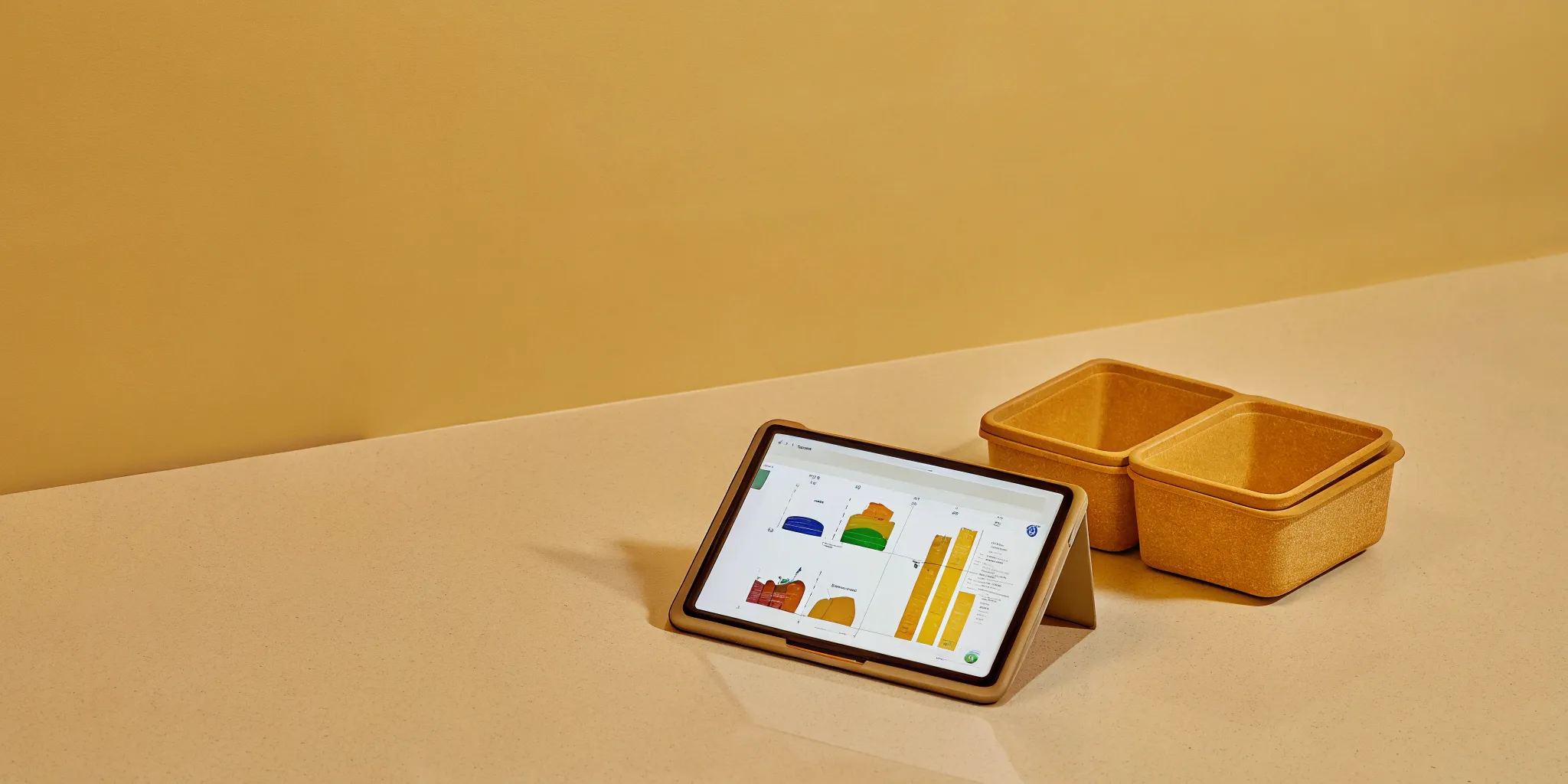
What does success look like for your program? It’s more than just feeling good about reducing waste. You need to define clear, measurable metrics to track your progress. Key performance indicators (KPIs) could include the reduction in single-use container purchases, cost savings on packaging and waste hauling, and, most importantly, your container return rate. A high return rate is the cornerstone of a financially viable reuse system. Using a tech-enabled platform with a robust dashboard allows you to see real-time data on usage, inventory levels, and environmental impact. This helps you demonstrate the program's value and make data-driven decisions to continuously improve your system.
Related Articles
- How Charging for Single-Use Packaging Makes Reuse the Easy Choice
- Guide to Sustainable College Cafeterias
- Smart Reuse Programs for Campuses, Private Clubs, Offices & More
Frequently Asked Questions
Isn't switching to a reusable system really expensive upfront? That's a fair question, as there is an initial investment in durable containers and the right infrastructure. However, it's helpful to see it as shifting an expense rather than adding a new one. Think about what you currently spend on disposable packaging every year—those costs are recurring and constantly rising. A reuse system turns that endless operational expense into a one-time capital investment that delivers long-term savings by nearly eliminating the need to repurchase single-use items. Most institutions find the system pays for itself surprisingly quickly.
We've tried basic reuse programs before and they didn't work. What makes modern systems different? Many early reuse programs failed because they relied on manual processes, clunky apps, or inconvenient drop-off points. The difference today is technology and integration. Modern platforms are built to be frictionless for both users and operators. They don't require app downloads and integrate directly with existing payment systems. With real-time data, you can see exactly how the system is performing, track your inventory, and measure your financial and environmental impact, which was impossible with older, analog approaches.
This all sounds great, but where's the best place to start implementing circular practices in our dining services? The best first step is to get a clear picture of your current situation. Conduct a simple waste audit to understand how many single-use containers you're using and what you're spending on them annually. This data is powerful—it builds a clear business case for making a change. Once you have those numbers, you can identify the area with the biggest potential for impact, like the primary cafeteria or a busy grab-and-go spot, and plan a focused pilot program.
Other stories you may find interesting



















.webp)
.webp)






.webp)
































Watch the Webinar
Learn How to Eliminate Single-Use Waste
Get instant access to our expert webinar and discover how leading institutions reach 99% return rates through smarter reuse systems.

© Reusables™. All rights reserved.