
How to Use QR Codes for Reusable Containers: A Practical Guide

December 24, 2025
A successful reuse program does more than just cut down on trash; it runs like a well-oiled machine. The secret isn't more staff or bigger budgets—it's better data. By tracking your reusable containers with QR codes, you get a real-time view of your entire operation. You can see which dining halls have the highest adoption, when containers are returned, and exactly how many you have in circulation at any moment. This isn't just about inventory; it's about making smarter decisions that improve efficiency and the student experience. We'll walk you through how to use QR codes for reusable containers to gather these insights and build a smarter, more cost-effective program.
Key Takeaways
- QR Codes Provide Seamless Accountability: By giving each container a unique digital identity, you can track its entire journey. This automates inventory management, significantly reduces container loss, and frees up your staff from manually chasing down missing items.
- A Frictionless System Drives Participation: The key to high return rates is making reuse easy. A system that integrates with existing campus cards—no app required—and uses convenient, 24/7 smart return bins removes barriers and encourages students to consistently participate.
- Turn Scans into Actionable Insights: Every scan provides valuable data for your operation. You can monitor return rates in real time, optimize inventory based on usage patterns, and automatically generate environmental impact reports to prove your program's value and share your success.
What Are QR Codes and How Do They Track Reusable Containers?
You've seen QR codes everywhere—on restaurant menus, event tickets, and product packaging. These scannable black-and-white squares are a simple way to connect the physical world to digital information. When it comes to reusable container programs, they are the key to creating a system that's both accountable and easy to use. By placing a unique QR code on every container, you give each item a distinct digital identity. This allows you to track its journey from the dining hall, to the student, and back to your dish room, all without manual effort.
This digital tracking system is a major upgrade from older methods like sign-out sheets or token systems, which are often clunky and lead to high container loss rates. Instead, a quick scan is all it takes to check a container out or in. This simple action provides the data you need to understand inventory levels, monitor return rates, and see the real-time impact of your program. It's a straightforward technology that powers a sophisticated, data-driven approach to managing your reusable inventory. By making tracking effortless, you can focus on the bigger picture: reducing waste and meeting your campus sustainability goals.
How QR Codes Work for Container Tracking
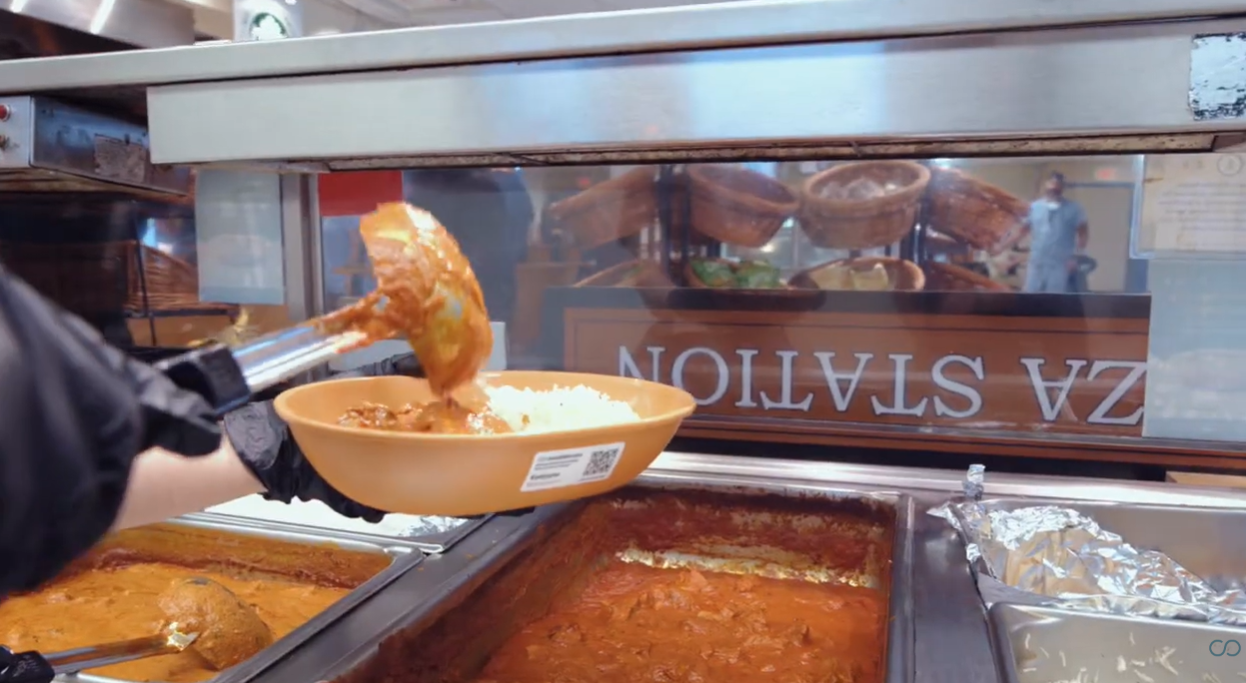
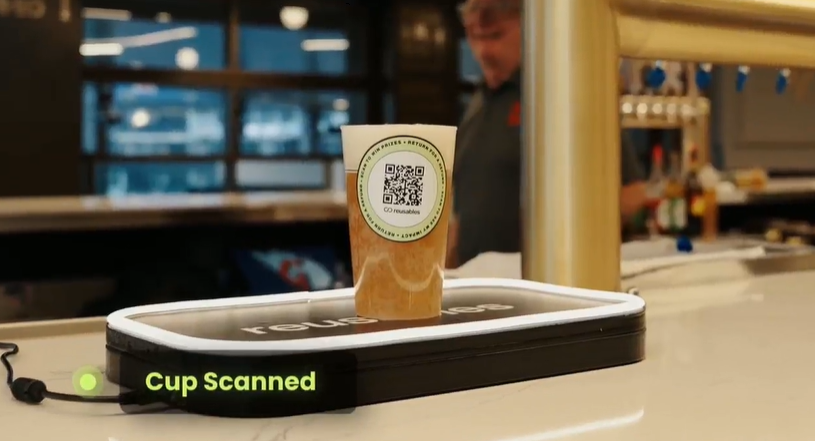
Think of a QR code as a unique fingerprint for each container. When a student chooses a reusable container for their meal, a staff member scans the QR code at the point of sale. This scan links that specific container to the student's account through your campus card or another payment system. The container is now "checked out." When the student is finished, they return it to a designated smart bin or drop-off station. Another scan marks the container as "returned," closing the loop.
This process is what makes a large-scale reuse program manageable. As some experts on reusable packaging systems explain, QR codes act as the bridge that turns students into active participants. They create a clear, low-friction system of accountability that encourages returns without adding extra work for your team.
Dynamic vs. Static QR Codes: What's the Difference?
Not all QR codes are created equal, and the distinction matters for a reuse program. A static QR code has fixed information—once created, the data it links to cannot be changed. A dynamic QR code, on the other hand, allows the linked information to be updated without physically altering the code itself. This flexibility is essential for reusable packaging. Each container needs a unique identity that can be updated as it moves through the system—from "available" to "checked out" to "in the wash." Dynamic codes make it possible to manage this entire lifecycle for thousands of containers, ensuring accurate tracking and smooth operational flow from the moment a code is first applied to a container.
Integrating QR Codes into Your Reuse System
Putting QR codes on containers is just the first step; the real magic happens when they are integrated into a smart, user-friendly system. A successful program depends on making the process of borrowing and returning containers completely seamless. For students, this means a quick scan without needing to download a special app. For your staff, it means the system works with your existing POS and campus card technology, like those from Transact or CBORD.
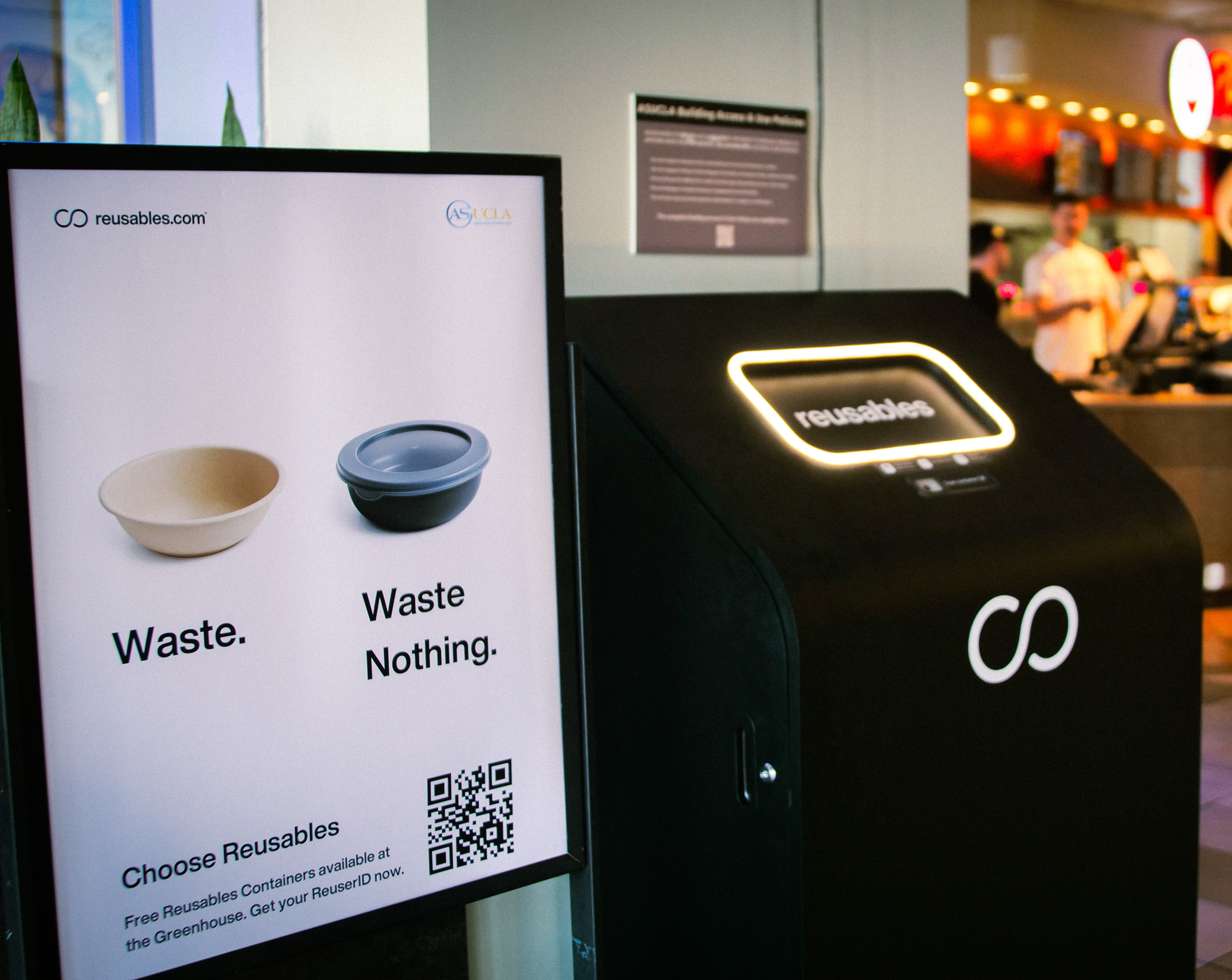
The goal is to have the technology work quietly in the background. The QR codes should manage the user-facing elements that drive participation, making it feel effortless. When you partner with a provider like Reusables.com, you get a fully integrated reuse solution that handles everything from the durable, QR-coded containers to the smart return bins and the back-end data portal. This ensures the system is easy to adopt and manage from day one.
Why Use QR Codes to Track Your Reusables?
If you're managing a campus dining program, you know the frustration of disappearing inventory. You invest in durable, reusable containers to reduce waste, but without a solid tracking system, they can vanish, driving up replacement costs and undermining your sustainability goals. This is where QR codes come in. By giving each container a unique digital identity, you transform a simple box into a trackable asset. This small, scannable square is the key to building an accountable and efficient reuse program that actually works.
Think of it like a library system for your containers. A quick scan at checkout links a specific container to a student or staff member. When it's returned to a smart bin, another scan checks it back in. This simple process creates a closed loop, giving you a clear view of your entire inventory in real time. It's not just about tracking; it's about creating a system that's easy for students to use and simple for your staff to manage. A well-designed QR code system is a core part of the tech-enabled solutions that make large-scale reuse programs successful, helping you cut down on waste and operational headaches while making sustainability the most convenient choice on campus.
Simplify Your Inventory Management
Manual inventory counts are time-consuming and often inaccurate. QR codes eliminate the guesswork. When every container has a unique code, you can see exactly how many are in circulation, where they were last checked out, and how many are ready for use in your dining halls. This digital approach turns your containers into smart assets. More importantly, it makes participation easy for students. As one industry report notes, QR codes serve as the consumer-facing bridge that brings users into the system without friction. A quick scan is all it takes for them to borrow a container, making them active partners in your zero-waste initiative. This streamlined process reduces the burden on your staff and gives you a precise, up-to-the-minute inventory count.
Get Real-Time Data and Insights
Beyond just tracking location, QR code scans generate a wealth of data that can help you run a smarter dining operation. Every scan provides a data point, revealing which dining locations are the most popular for reusables, what times of day have the highest usage, and how quickly containers are being returned. This information is invaluable for making strategic decisions. You can optimize inventory levels to meet demand, place return bins in high-traffic areas, and identify potential bottlenecks in your system. This data-driven approach allows you to refine your program over time, ensuring it runs smoothly and meets the needs of your campus community while providing clear metrics on your environmental impact.
Cut Costs and Improve Efficiency
Lost containers are a direct hit to your budget. By creating a system of accountability, QR codes dramatically improve return rates, which means you spend less on replacing lost inventory. The primary goal is to replace costly, single-use packaging, and an effective tracking system ensures your investment in reusables pays off. With each container's usage tracked via its unique QR code, you can automate reminders for overdue items, which encourages timely returns without adding work for your team. This automation frees up your staff to focus on what they do best—providing great food and service—instead of chasing down missing containers. The result is a more efficient, cost-effective, and sustainable dining program.

How to Set Up QR Codes for Your Containers
Setting up a QR code system might seem like a huge technical lift, but it breaks down into a few manageable steps. While a simple, do-it-yourself approach can work for a small pilot program, scaling up to serve an entire campus requires a system built for durability and accuracy. A fully integrated platform handles the technical details for you, ensuring every container is tracked correctly from day one.
Let's walk through the foundational steps to get a QR code tracking system off the ground.
Pick the Right QR Code Generator
For a small-scale test, you can use a free online tool to create your QR codes. These generators are user-friendly and let you link a code to a specific URL or piece of text. However, for a campus-wide reuse program, you need more than a simple, static code. You need dynamic QR codes that can be updated and managed centrally.
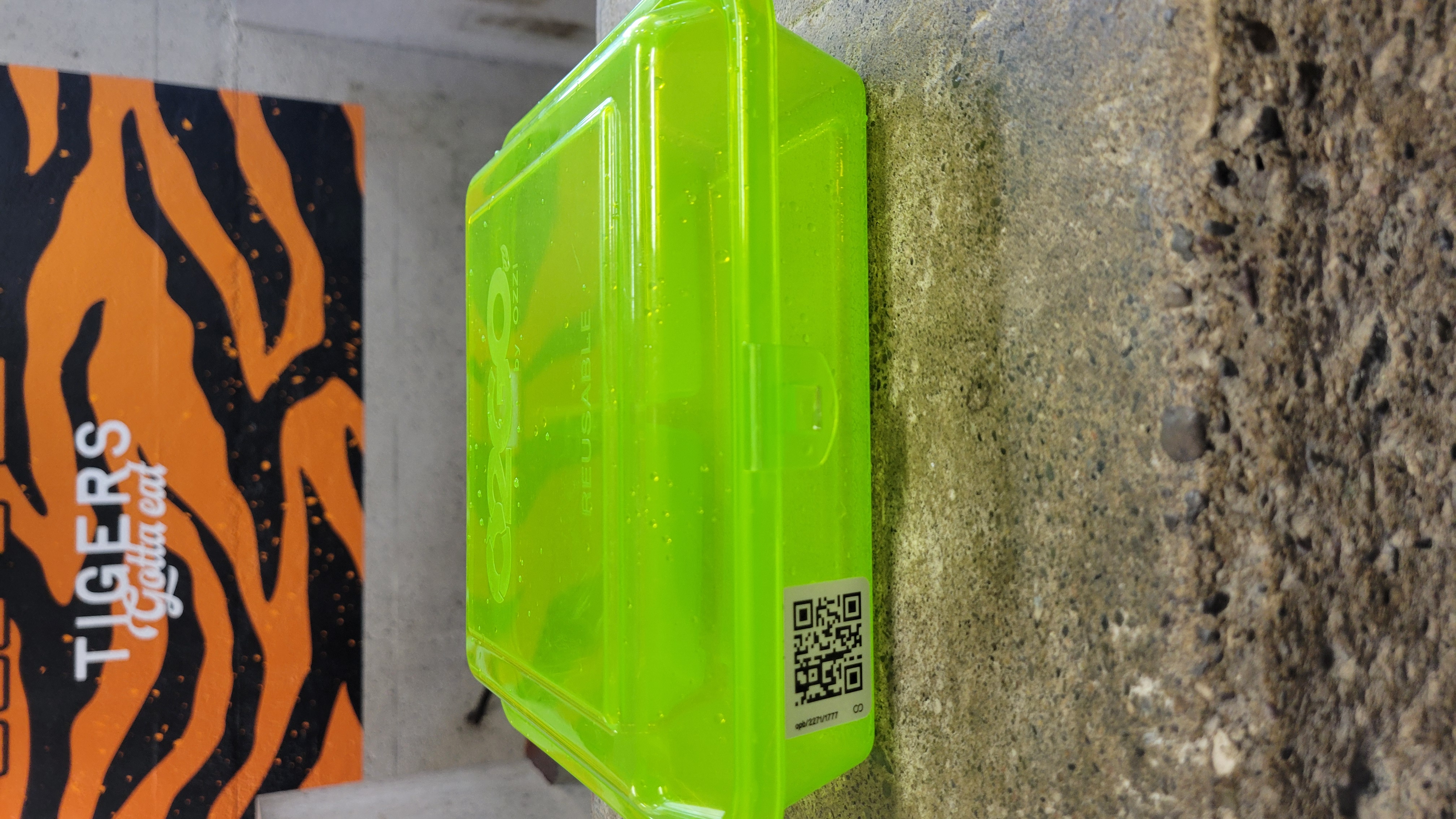
A professional reuse platform provides unique, durable QR codes for every container in your inventory. These aren't just printed stickers; they are designed to withstand thousands of uses and washes in commercial dishwashers. This saves your team the immense effort of generating, printing, and managing thousands of individual codes and ensures they remain scannable for the container's entire lifecycle.
Build Your Container Database
Every QR code needs to connect back to a central database. Think of this as the brain of your operation. For each container, you'll want to create a record of its unique ID, type, deployment date, and current status—whether it's available, checked out, or in the wash cycle. While you could start this with a spreadsheet, it quickly becomes impossible to manage at scale.
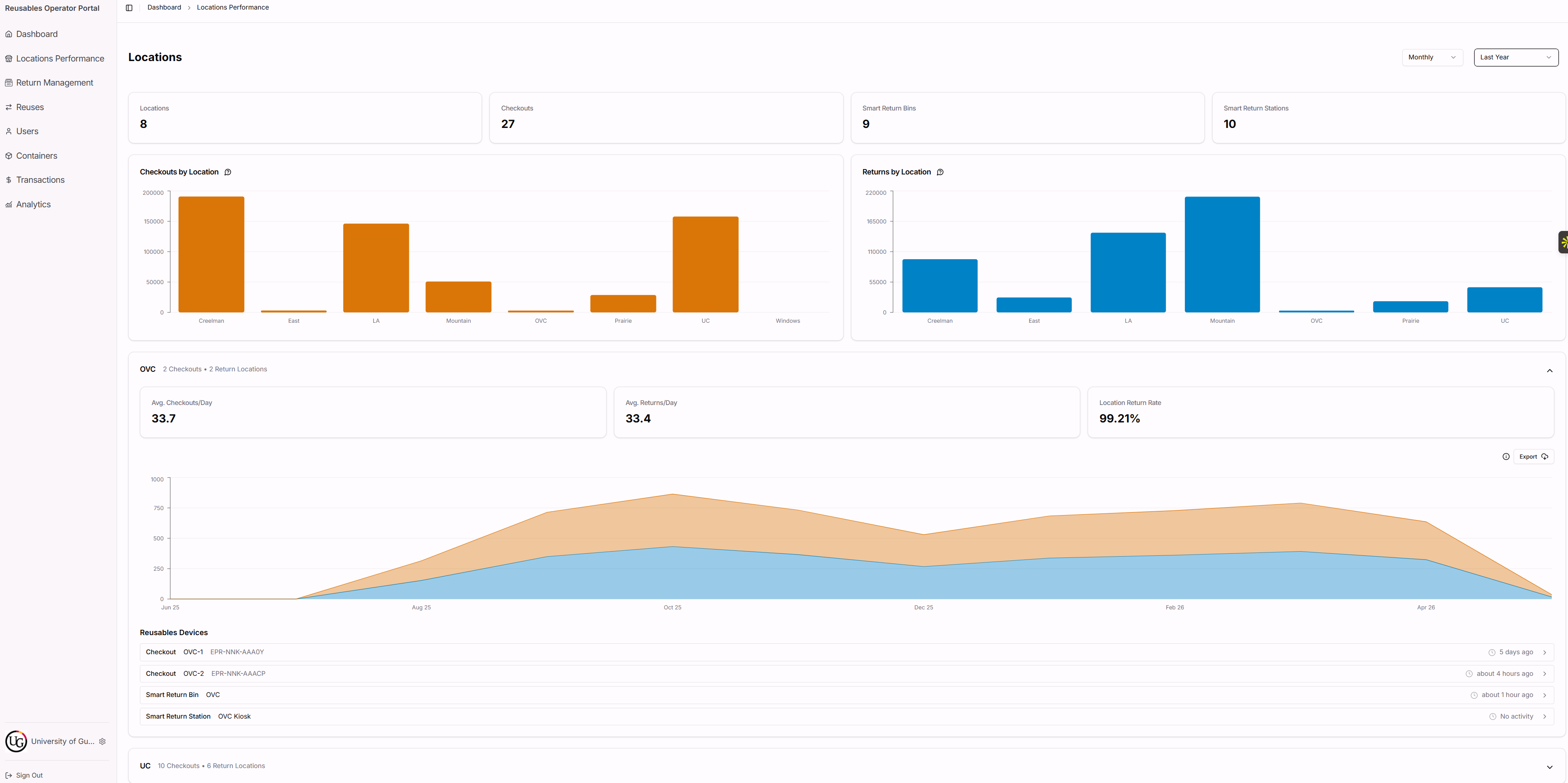
This is where a robust operator portal becomes essential. Instead of manual data entry, the system automatically updates your container inventory in real time. You get a live dashboard showing usage rates, return data, and inventory levels across all your locations, giving you a clear view of your entire operation without touching a single spreadsheet.
Label and Integrate Your Containers Effectively
Once you have your codes and database, it's time to label your containers. For home use, you might print a code on paper and attach it with packing tape. But in a high-volume food service environment, that label wouldn't last a day. Your containers need labels that can handle daily use, high-temperature washing, and constant handling.
Professional systems use laser-etched or specially bonded labels that are permanently part of the container. Placement is also key. The QR code should be located where it's easy for staff and students to scan at checkout and return stations. A well-placed, durable code is fundamental to a frictionless user experience, ensuring scans are quick, easy, and accurate every single time.
What Information Should Your QR Codes Contain?
A QR code is much more than a black-and-white pattern; it's the digital key to your entire reuse system. The information linked to each code determines how smoothly your program runs, how much data you can gather, and how easy it is for students and staff to participate. When you think about what to include, it helps to break it down into three core functions: tracking the asset, guiding the user, and verifying its history. A simple scan should connect the physical container to a wealth of digital information that makes your whole operation smarter and more efficient.
Getting this right means your team can see where every container is in real-time, students know exactly what to do next, and you have a clear record of each item's journey. This isn't just about inventory management; it's about creating a reliable, transparent, and user-friendly system that people trust. A well-designed QR code strategy turns a simple container into a smart, connected asset. This provides valuable operational visibility, helps you meet your sustainability goals, and reduces the manual work required from your staff. It's the data behind the code that makes a reuse program successful at scale.
Key Data for Accurate Tracking
To effectively manage your inventory, each QR code must link to a unique identifier. Think of it as a digital serial number for every container. This ID is the foundation of your tracking system. As one case study on reusable packaging notes, "Each container is equipped with a QR code for easy tracking of usage by the platform." This unique code allows your software to log every scan, associating the container with a specific user, location, and time. It lets you follow the container's entire lifecycle, from checkout at a dining hall to its return in a smart bin, giving you a clear picture of usage patterns and inventory levels across campus. This is the core data that powers your operational dashboard and makes automated accountability possible.
Clear Instructions for Users
Your QR codes are the primary touchpoint for students, so they need to provide simple, clear guidance. A quick scan should instantly tell a user what to do next. As experts at Circulayo point out, "QR codes serve as the consumer-facing bridge that transforms consumers into active participants of reusable packaging systems." Instead of linking to a complicated app download, the code can open a simple mobile page with instructions like, "You've checked out this container!" or "Find your nearest return bin." This immediate feedback removes confusion and makes participation feel effortless. By making the process intuitive, you encourage higher user engagement and ensure students can confidently use the system from day one.
Log Maintenance and Cleaning History
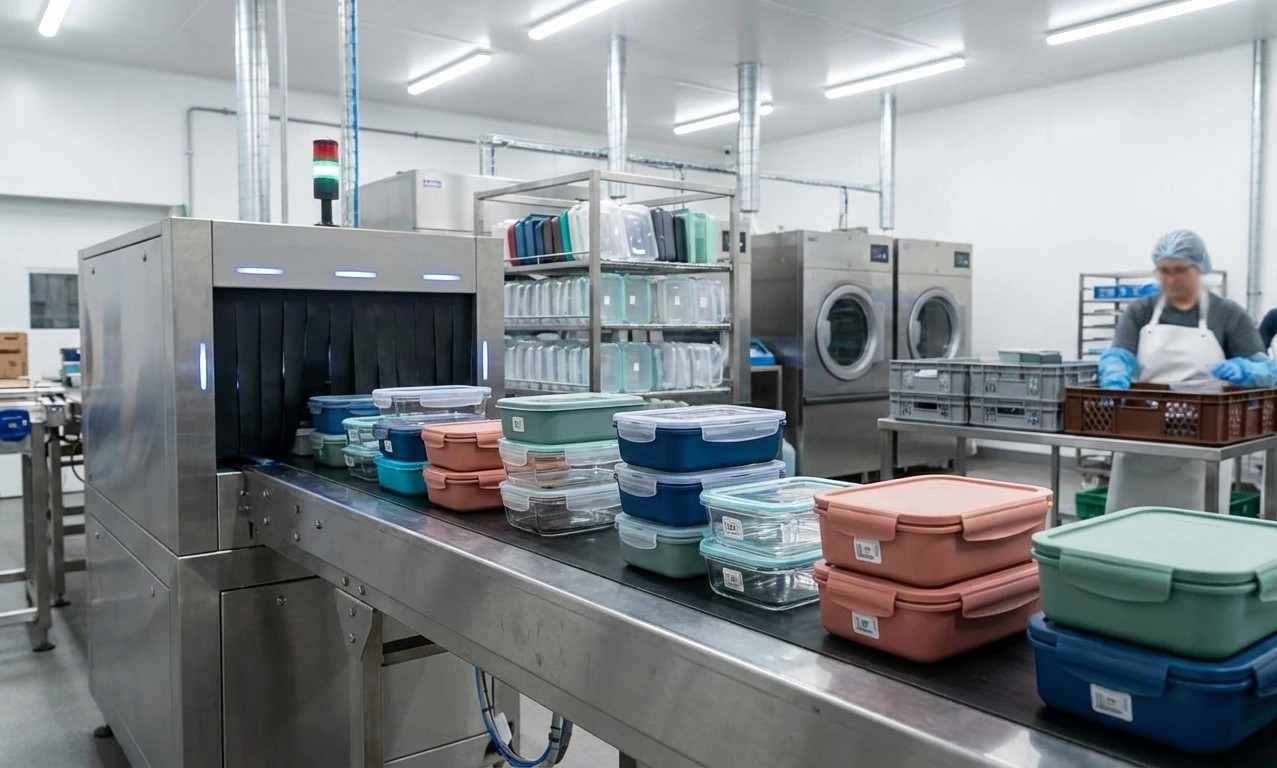
For any food service operation, hygiene is non-negotiable. QR codes can provide a transparent and easily accessible record of each container's cleaning history. This builds trust with your diners and simplifies compliance for your team. For example, Rieber's digital system equips all containers with QR codes to create "a comprehensive log of maintenance and cleaning history." When a container goes through the dish room, a quick scan can update its status to "clean and ready for use." This digital log ensures that only sanitized containers make it back into circulation and provides a verifiable record that your team is meeting health and safety standards. It's a simple way to maintain quality control and give everyone peace of mind.
How QR Codes Help Improve Return Rates
A successful reusable container program hinges on one critical factor: getting the containers back. Low return rates mean lost inventory, rising replacement costs, and a system that fails to deliver on its environmental or financial promise. This is where QR codes change the game. By attaching a unique digital identity to every container, you create a smart, connected system that encourages returns through accountability, convenience, and positive reinforcement.
Instead of relying on manual tracking or the honor system, QR codes provide the data and automation needed to keep your inventory circulating. They make it simple for students and staff to do the right thing by making the return process incredibly easy. When you combine this simplicity with a system that can track every item and even reward participation, you create a powerful loop that drives return rates up. This tech-forward approach is what separates a struggling program from a thriving one, turning a potential operational headache into a streamlined, cost-saving asset for your campus.
Create Effortless Accountability
One of the biggest challenges with reusable programs is container loss. QR codes solve this by creating a seamless system of accountability. When a student checks out a meal, a quick scan of the QR code links that specific container to their account. This simple action establishes a clear, digital trail without adding friction to the checkout process. As one case study on reusable packaging notes, "Each container is equipped with a QR code for easy tracking of usage by the platform."
This tracking allows your system to know who has which container and for how long. If an item isn't returned within a set period, the system can automatically send friendly reminders. This gentle nudge is often all that's needed to prompt a return. Best of all, this entire process is automated, freeing up your staff from the awkward and time-consuming task of chasing down missing inventory.
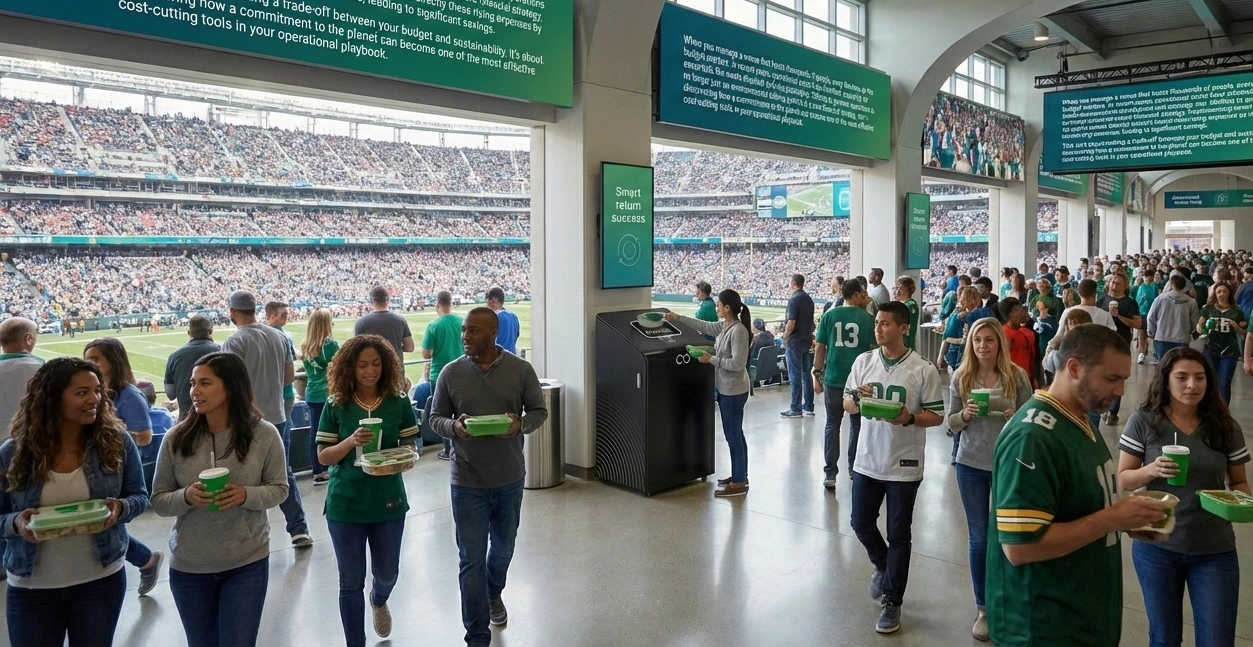
Connect with Smart Return Bins
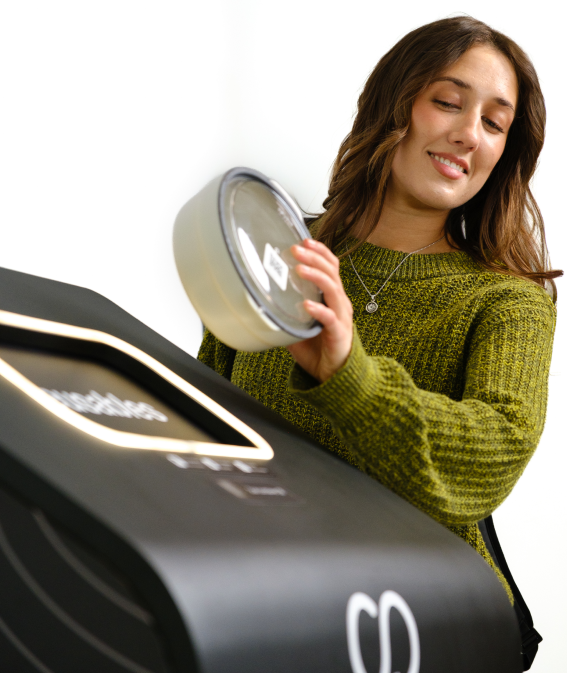
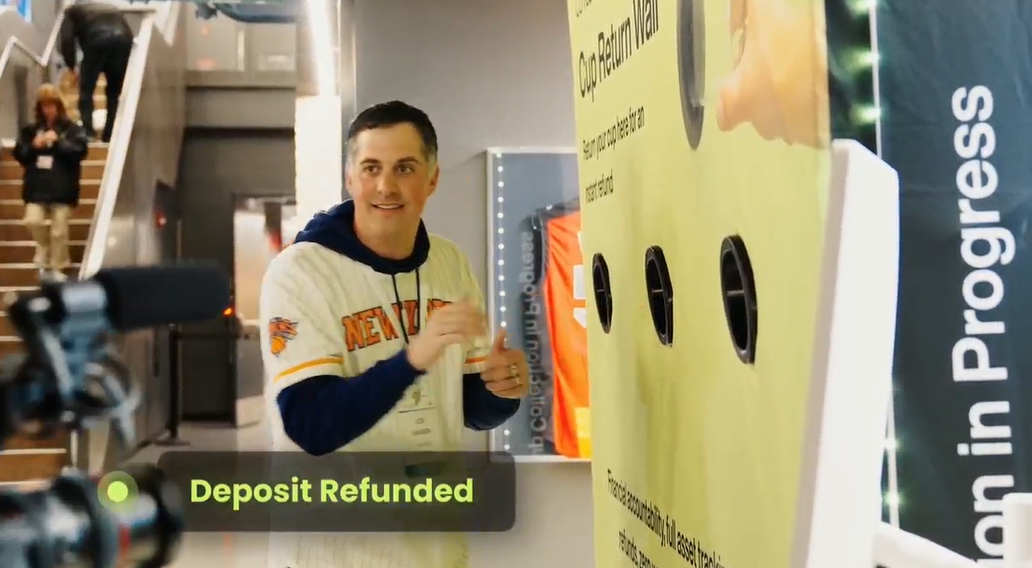
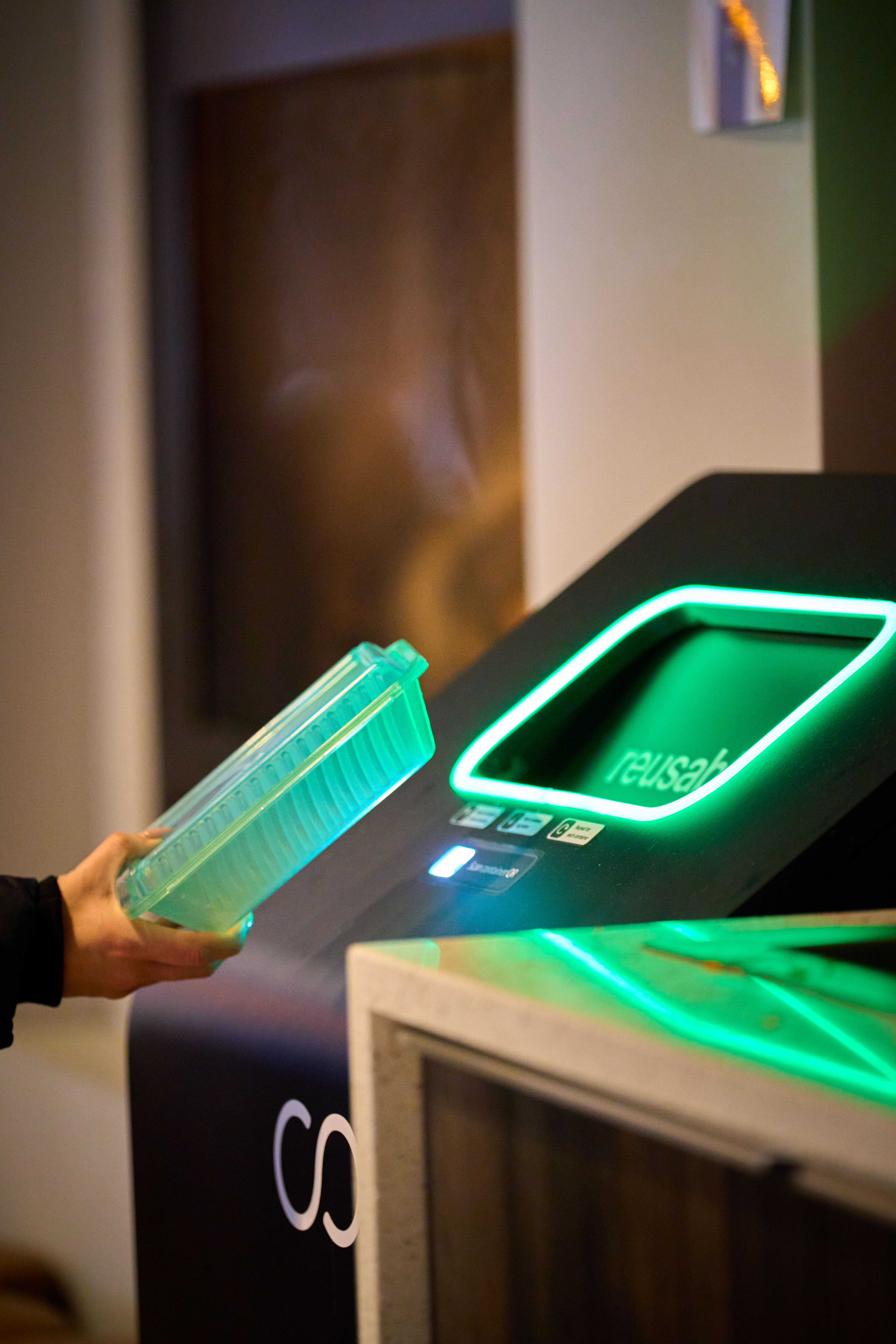
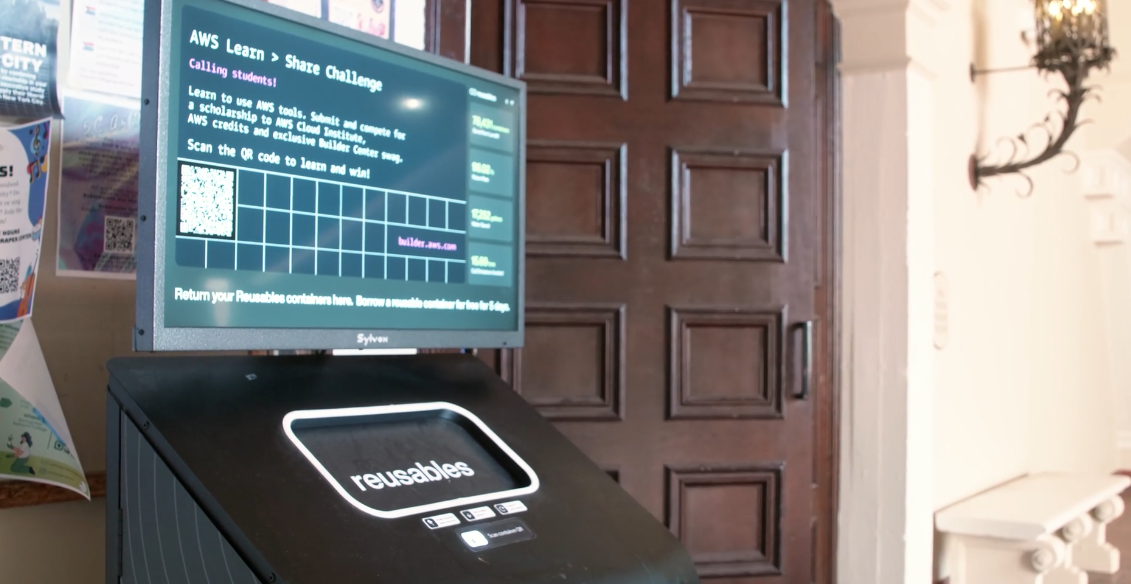
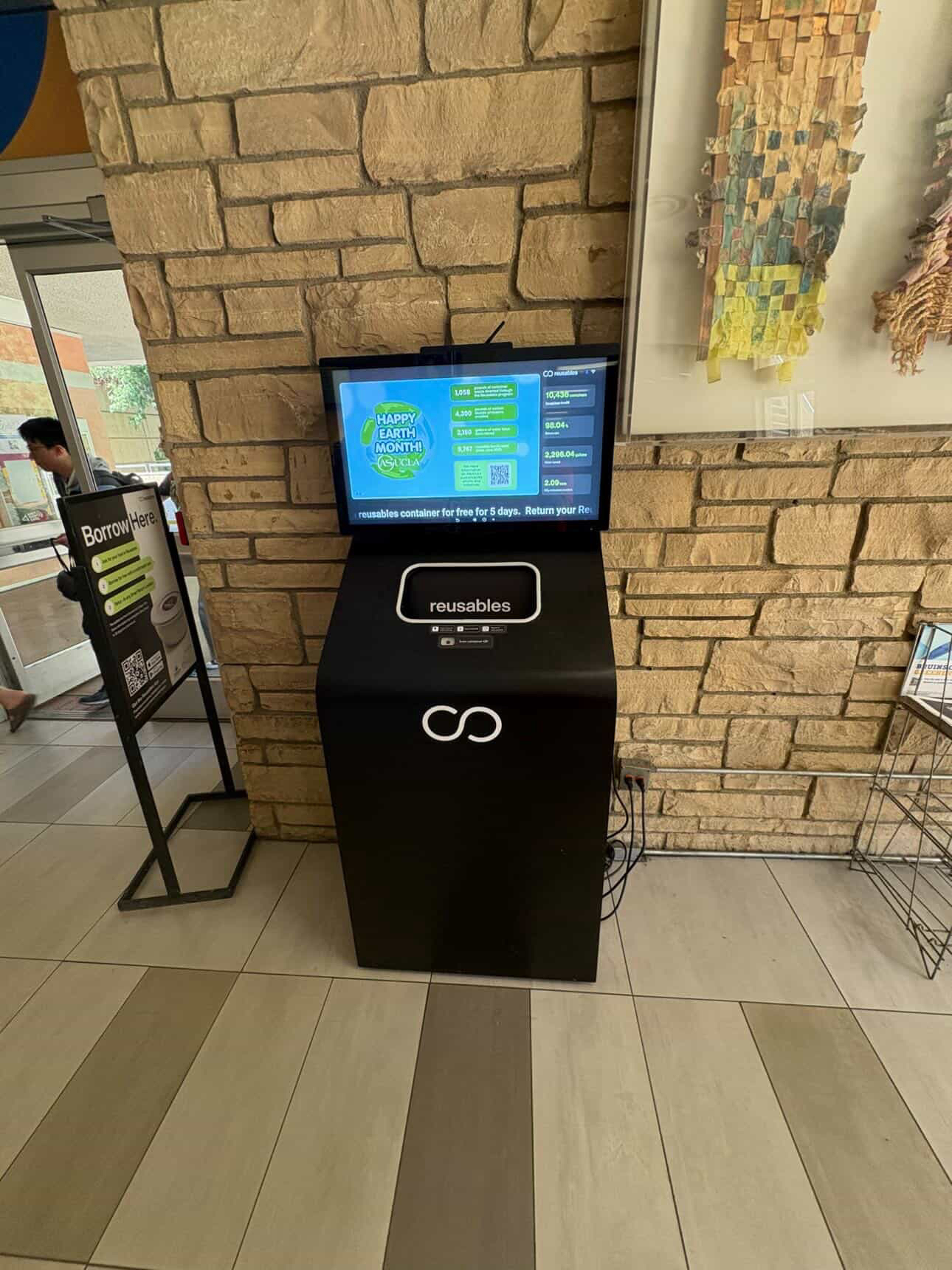
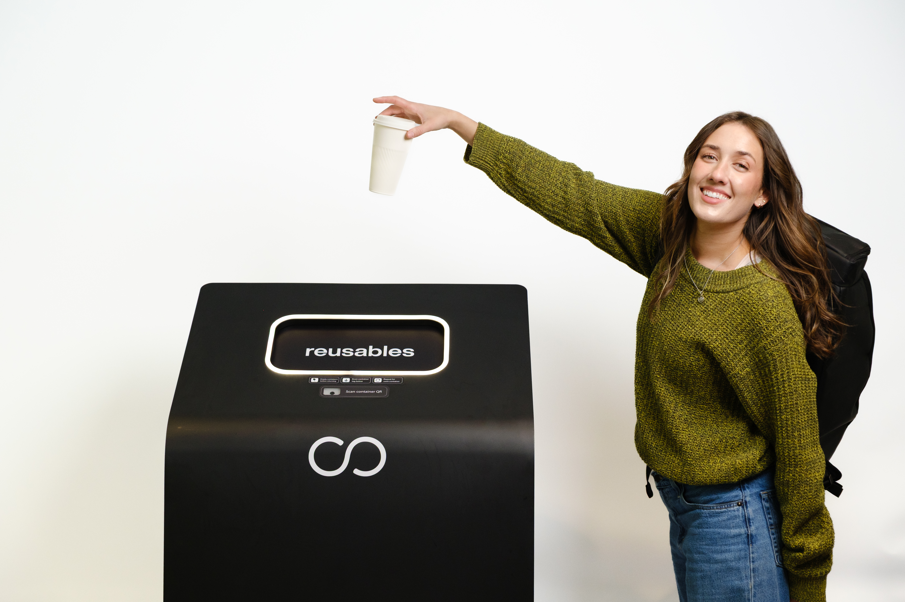
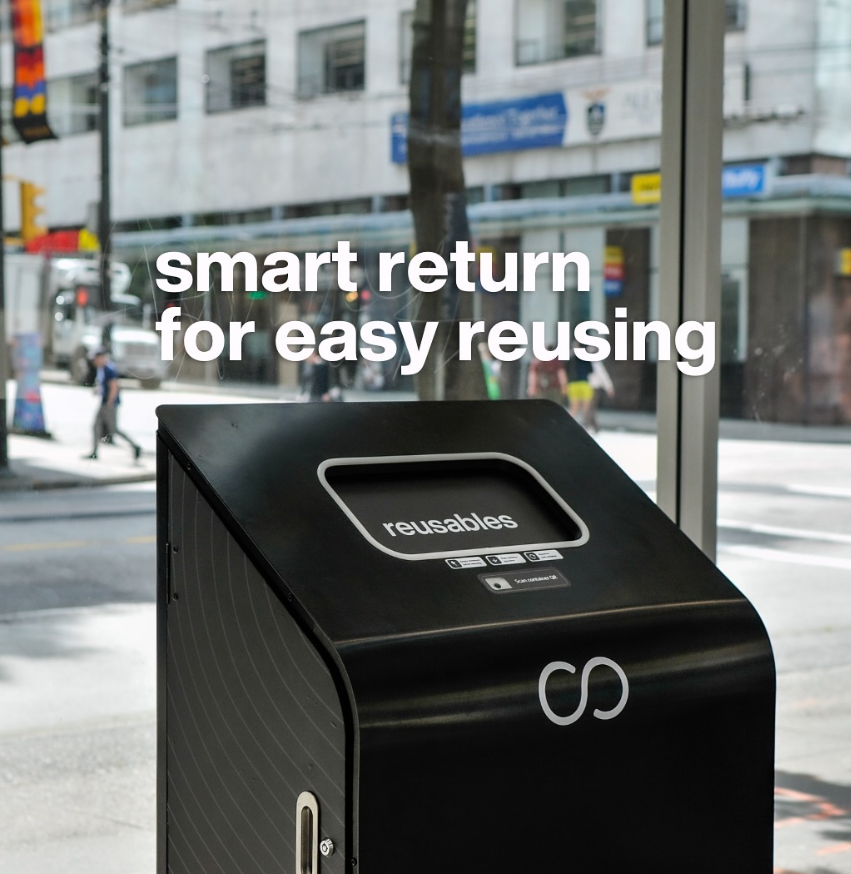
To get people to return containers, the process needs to be as easy as throwing something away. QR codes make this possible by connecting each container to a network of smart return stations. Students can simply walk up to a bin, scan their container's QR code, and drop it inside. The scan instantly registers the return, updating their account and closing the loop. This makes the QR code a "consumer-facing bridge that transforms consumers into active participants," as noted in a report on reusable packaging systems.
This self-service model means students can return containers 24/7, whether it's in a residence hall, library, or student center. There's no need to wait for a dining hall to open or find a specific staff member. This level of convenience removes major barriers to participation and is a key driver behind the 99% return rates seen in well-designed programs.
Engage Users with Incentives
While accountability and convenience are essential, you can also use QR codes to make participating fun. Because each scan is tied to a user's account, you can build a rewards system that encourages good habits. QR codes can be used to "offer rewards or special deals to encourage people to participate," turning the simple act of returning a container into a rewarding experience.
For example, you can implement a points system where every return earns points toward a free coffee or a discount at the campus store. You could also introduce gamification elements like campus-wide leaderboards or prize draws for students who consistently return their containers. These incentives help build a positive culture around reuse, transforming it from a requirement into a shared campus initiative that students are excited to be a part of. It's a fantastic way to foster community and reinforce your institution's commitment to sustainability.
Overcome Common QR Code Implementation Challenges
Introducing any new system on campus comes with its own set of questions. How will students react? Will it complicate things for my staff? Will the technology actually work with our current setup? These are valid concerns, but they are far from insurmountable. The key to a successful QR code-based reuse program lies in choosing a system designed to address these challenges from the start. A well-designed program isn't just about sticking a code on a container; it's about creating a seamless experience for everyone involved.
The goal is to make reusing as easy—or even easier—than throwing something away. This involves clear communication, intuitive technology, and a system that integrates smoothly into your daily operations. When you focus on the user experience for both students and staff, you'll find that adoption happens naturally. By anticipating potential hurdles and implementing practical solutions, you can build a program that not only meets your sustainability goals but also enhances the campus dining experience.
Getting Students and Staff on Board
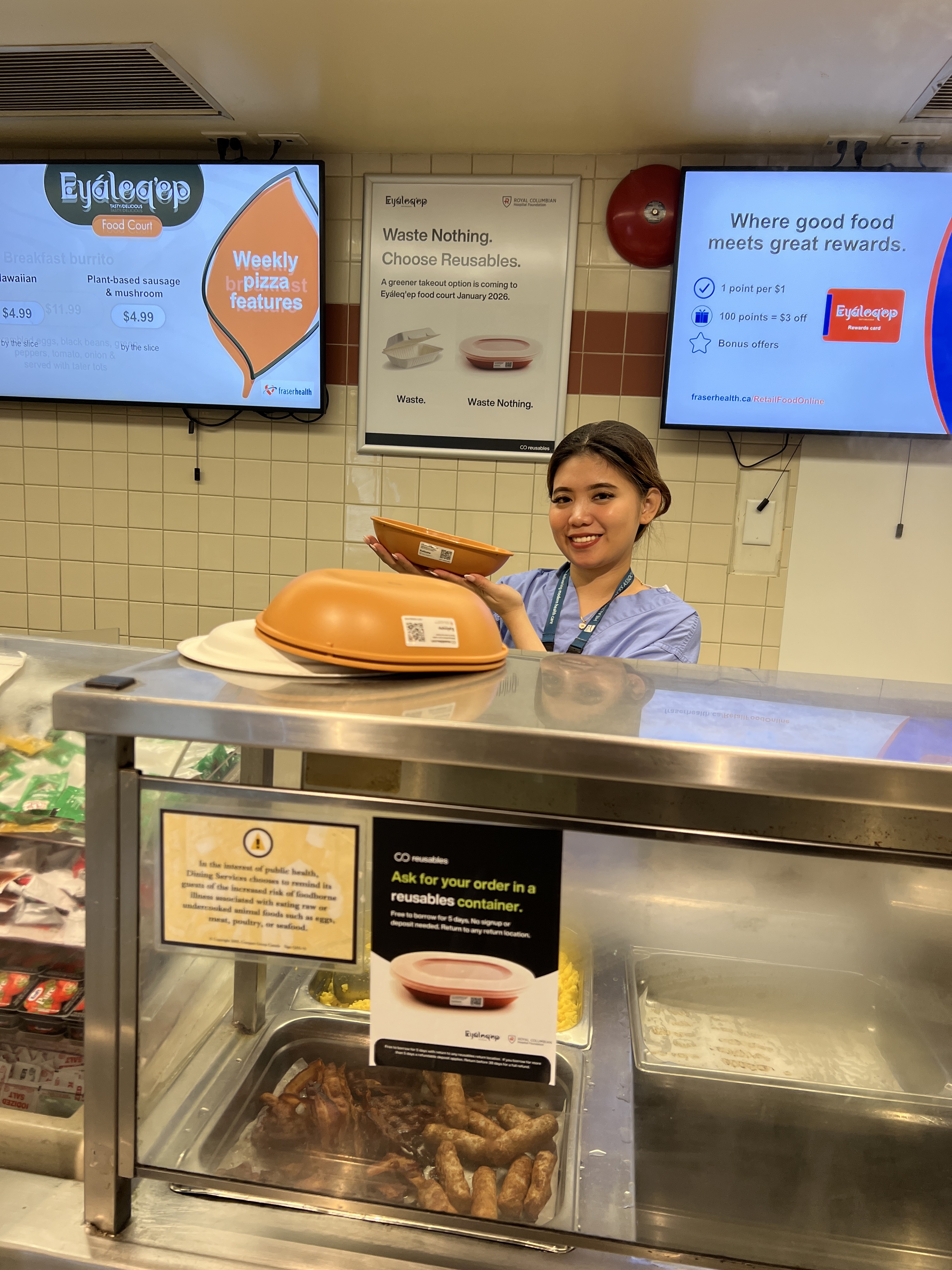
The success of a reuse program hinges on participation. If the process is clunky or confusing, people will simply opt out. QR codes act as the perfect consumer-facing bridge, turning a simple scan into an act of participation. The best way to get everyone on board is by making reuse easy and intuitive. Look for systems that don't require users to download yet another app. A simple tap of a student card or phone is all it should take to check out a container.
Clear signage at dining halls and return stations is also crucial. Use simple, direct language that explains the process in a few quick steps. Adding incentives like leaderboards or rewards for frequent reusers can also create a sense of community and friendly competition, encouraging consistent participation across campus.
Handle Technical Integration Hurdles
A common worry for any dining director is how a new system will mesh with existing campus technology. The last thing you need is a solution that operates in a silo, creating more work for your team. Fortunately, modern reuse platforms are built for this. They are designed to integrate with leading platforms for campus cards, payments, and point-of-sale systems you already use, like Transact, CBORD, and TouchNet.
This integration is what makes the system feel effortless. When a student can use their existing campus card to check out a reusable container, the barrier to entry is virtually eliminated. This approach allows QR codes to manage the simple, user-facing interactions while the back-end system handles the operational details, ensuring a smooth flow of data without disrupting your workflow.
Practical Solutions That Work
At its core, a QR code system is a practical tool for tracking your assets. As one case study notes, the solution can be as straightforward as ensuring every container is equipped with a unique QR code for easy tracking. This simple step transforms each bowl and cup into a trackable item within your inventory, giving you a clear view of where your containers are at all times.
This is where a robust operator dashboard becomes invaluable. Every time a container is scanned at checkout or a smart return bin, that data feeds directly into your portal. You can see usage rates, inventory levels, and return patterns in real time. This isn't just about tracking; it's about gaining the operational visibility you need to manage your inventory effectively, automate accountability, and reduce manual work for your staff.
Ensuring Data Security and Student Privacy
When a tracking system connects reusable containers to individual student accounts, data security becomes a serious operational consideration. You are responsible for protecting student information, and your reuse partner must have robust security measures in place. A trustworthy system will prioritise security by using secure protocols and integrating safely with your campus credential platforms. This ensures that all tracking data is handled responsibly, giving your institution and your students confidence that personal information is protected. When evaluating providers, ask specifically how they handle data storage and what steps they take to comply with your institution's privacy requirements. A reputable partner will be transparent about their security practices and should integrate with your campus systems without creating data silos or workarounds.
Match the Right Tech to Your Container Materials
Choosing the right container is a big step, but matching it with the right tracking technology is what makes your reuse system truly seamless. The material you choose—whether it's durable plastic or stainless steel—plays a major role in determining the most effective tracking method. While QR codes are incredibly versatile, the best approach often depends on your specific operational needs and the physical properties of your containers.
A flexible system should be container-agnostic, meaning it can adapt to whatever inventory you have or plan to use. The goal is to find a technology pairing that can withstand daily wear and tear, high-temperature dishwashing, and frequent handling. For some, a simple QR code is enough. For others, combining QR codes with Radio Frequency Identification (RFID) creates a more robust and automated system that simplifies things for both your staff and your diners. Understanding these nuances will help you build a program that's efficient, scalable, and built to last.
Tracking on Stainless Steel
Stainless steel is a popular choice for its durability and longevity, and it pairs perfectly with QR code technology. Because these containers can handle high heat and rigorous cleaning, you need a tracking method that's just as tough. QR codes can be permanently etched onto steel lids and containers or applied using industrial-strength, heat-resistant labels. This ensures each container's unique identity remains scannable throughout its long lifecycle. As one case study notes, a digital system that utilizes QR codes on all stainless steel assets enables efficient tracking and management, making it a reliable choice for busy dining operations.
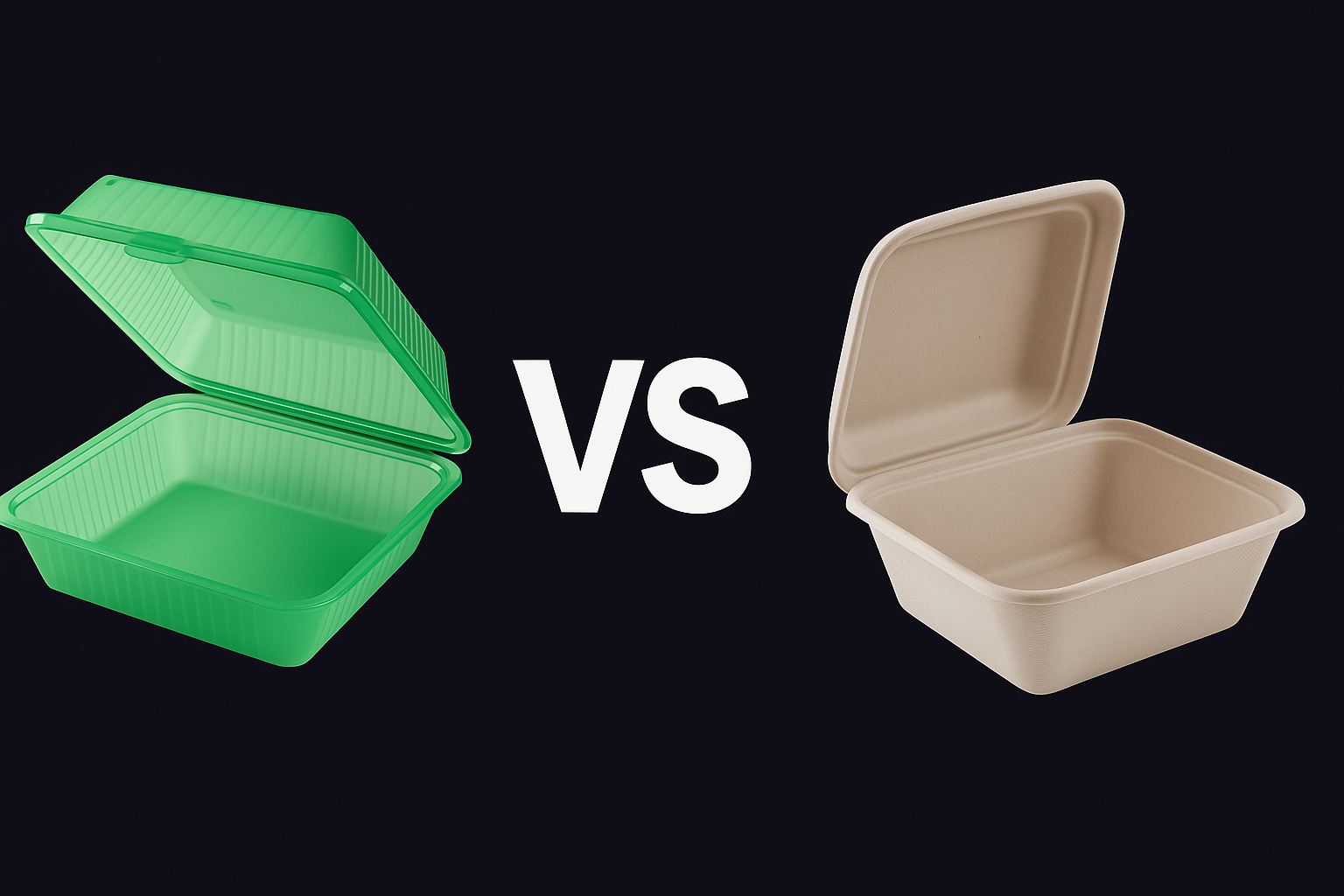
Tracking on Durable Plastic
Durable plastic containers offer flexibility in shape, size, and color, and they are also an excellent match for QR codes. One of the biggest advantages here is that QR codes can be molded directly into the container during manufacturing. This eliminates the need for labels, which can peel or fade over time. With an embedded code, each container has a permanent, scannable identity from day one. This method is highly scalable and cost-effective for large inventories. As noted in a report by Break Free From Plastic, equipping each durable plastic container with a QR code facilitates easy tracking of usage and simplifies inventory management through a digital platform.
When to Use Both QR and RFID
For the most streamlined and data-rich system, a dual-mode approach using both QR codes and RFID is the gold standard. Think of it this way: QR codes are for the user, and RFID is for your operations. A student can easily scan a QR code with their phone to check out a container, while RFID tags allow your staff to scan dozens of returned containers at once without a direct line of sight. This combination addresses operational challenges while engaging users and making them active participants. This is the foundation of our dual-mode digital tracking, which creates a frictionless experience from checkout to return.
How to Measure Your Program's Success
Launching a reusable container program is a fantastic first step, but the real magic happens when you can see exactly how it's performing. Measuring your success isn't about adding more work to your plate; it's about having the right data at your fingertips to make smart decisions, prove your program's value, and celebrate your wins. A well-designed system with QR codes gives you a clear window into your operations, showing you what's working and where you can make improvements.
The best part? You don't need a spreadsheet and a manual clicker to figure it out. Modern reuse platforms are built to track everything automatically, from individual container journeys to campus-wide adoption rates. This data helps you manage your inventory, understand user behavior, and quantify your environmental impact. By focusing on a few key metrics, you can get a complete picture of your program's health and share compelling stories with students, staff, and leadership about the positive changes you're making together.
What Key Metrics to Track
To get a clear picture of your program's performance, you'll want to focus on a handful of essential metrics. The most important one is your return rate. This number tells you what percentage of your containers are coming back, which is the ultimate sign of a healthy, sustainable system. A high return rate means your inventory is secure and your users are engaged. Another key metric is the adoption or usage rate, which shows how many people are actively choosing reusables. You should also track container turnover—how many times each container is used—to understand its lifespan and the return on your investment. A robust operator dashboard will display all of this in real time, giving you instant access to the data you need.
Tools for Monitoring Return Rates
Manually counting returned containers is a thing of the past. Today, technology does the heavy lifting for you. Every time a container's QR code is scanned at checkout and again at a return point, a digital record is created. This simple action provides precise, real-time data on your return rates without any manual effort from your staff. Smart return bins and dedicated return stations make this process even smoother by automatically scanning containers as they're dropped off. This technology gives you an accurate, up-to-the-minute count of your inventory and ensures you always know how effectively your containers are circulating through the system. It's the key to maintaining the 99% return rates that top-tier programs achieve.
Report Your Environmental Impact
One of the most rewarding parts of running a reuse program is seeing the positive impact it has on your campus and the planet. The data you collect does more than just streamline operations; it allows you to tell a powerful sustainability story. Your tracking system can automatically translate usage rates into tangible environmental metrics, like the number of single-use containers diverted from landfills, the reduction in waste, and the associated carbon savings. Sharing these figures with your community through campus displays or newsletters helps everyone feel connected to the mission. It builds trust, reinforces sustainable habits, and proves that your commitment to zero waste is making a real, measurable difference.
Who Offers QR Code Tracking for Reusables?
Several providers have developed systems to help institutions manage reusable container programmes. Each takes a slightly different approach, so understanding the landscape is useful when making a decision for your campus.
Reusables.com: An All-in-One Campus Solution
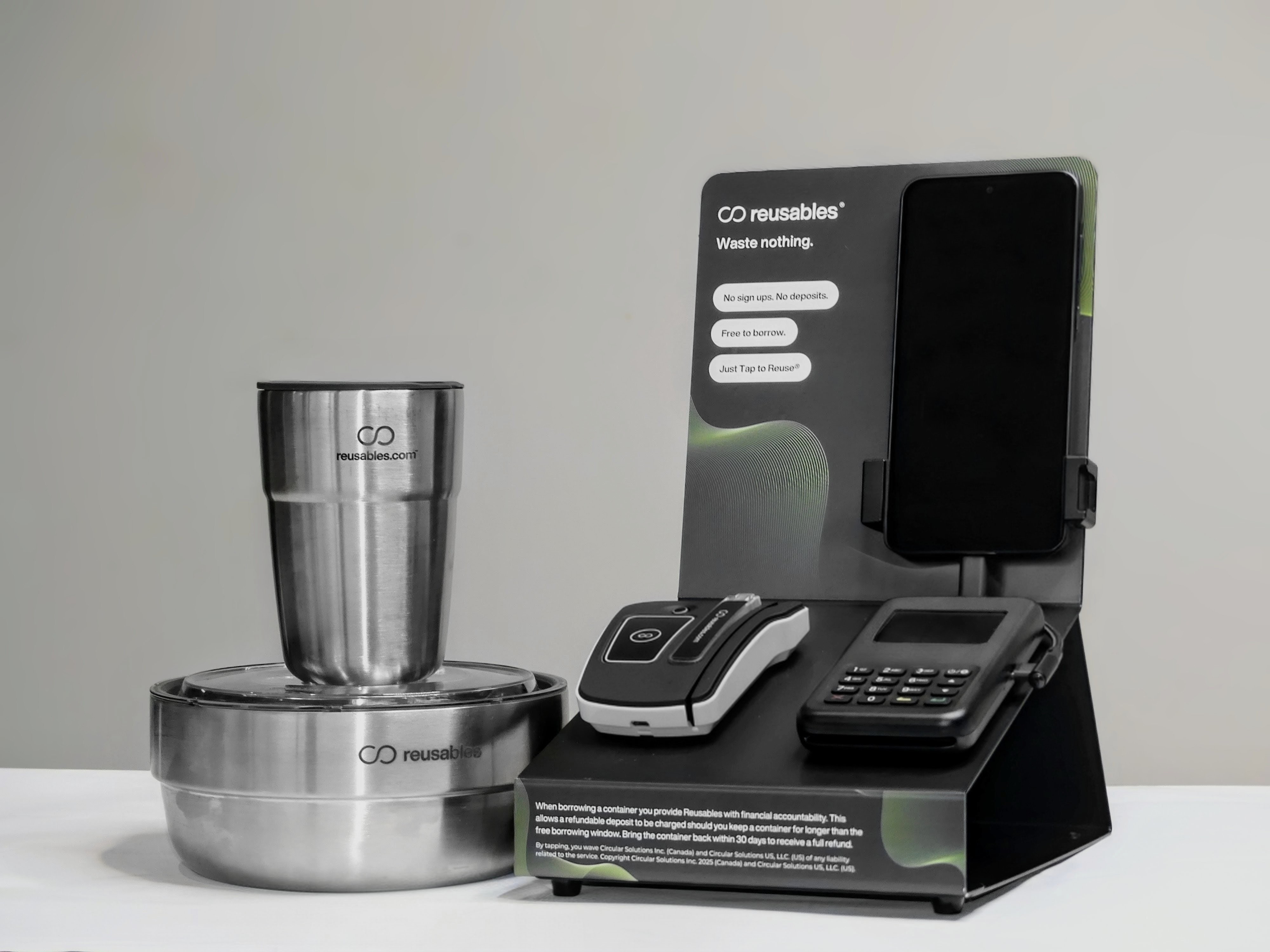
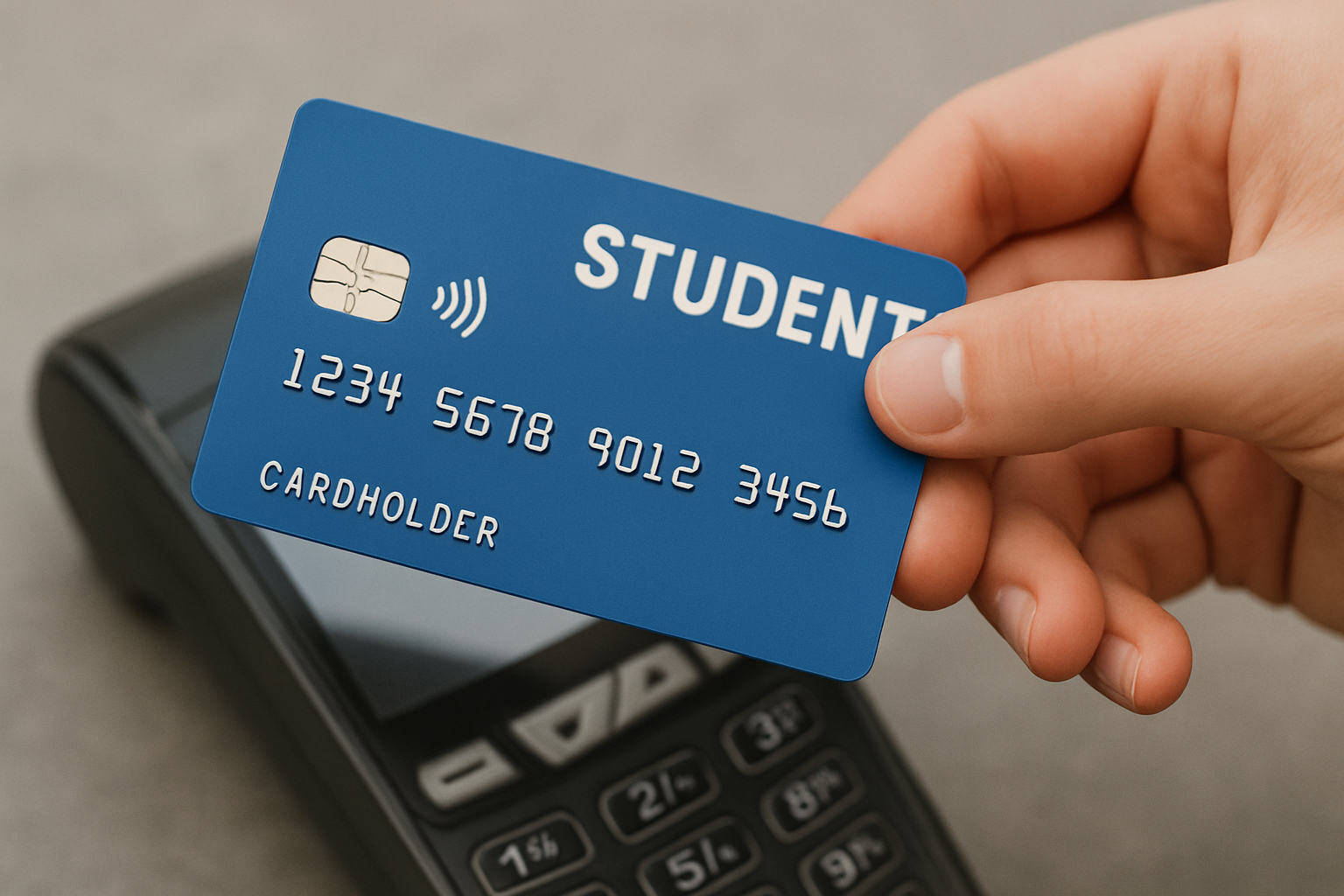
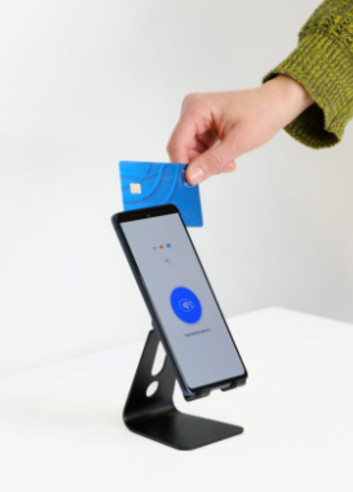
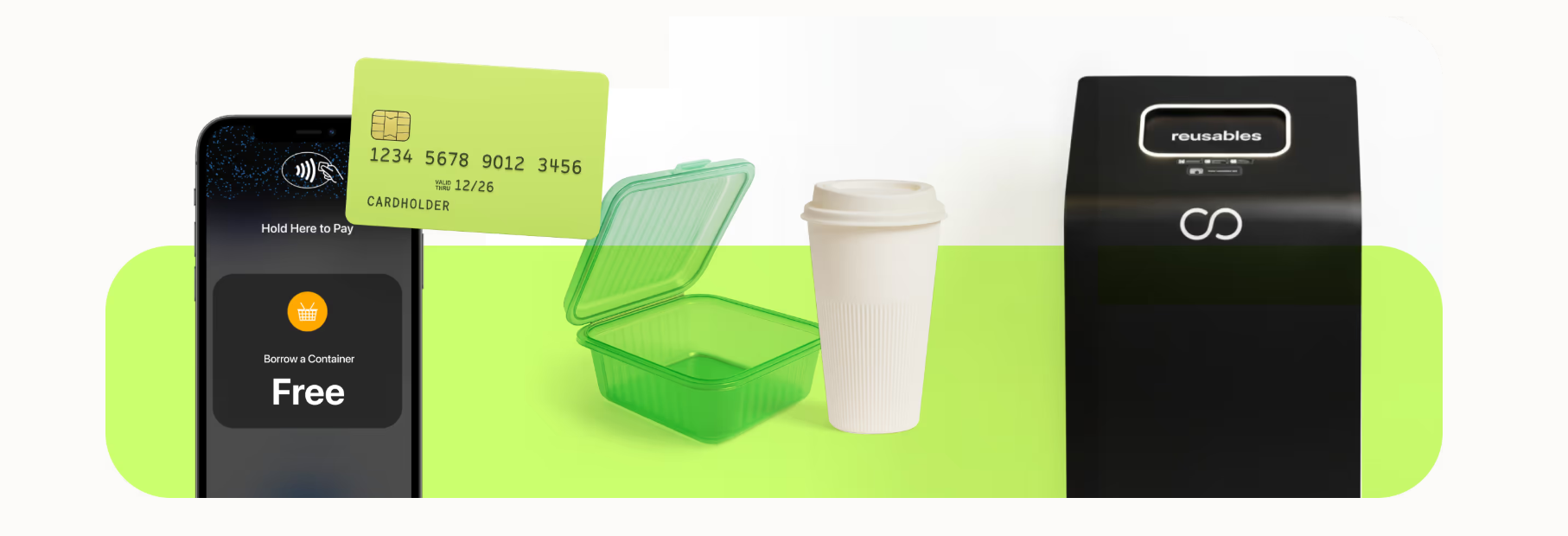
Reusables.com provides a platform built specifically for college and university environments. Students can check out a container by tapping their student ID or a credit card at the point of sale—no app download required. The platform fully integrates with major campus card systems including Transact and CBORD, and combines QR and RFID tracking with smart return bins for 24/7 automated returns. Dining directors get real-time data on inventory, return rates, and environmental impact through a central operator portal, while the system automates accountability processes including reminders and late fee management.
Reath: Enterprise-Level Tracking
Reath offers a "track and trace" system for reusable packaging geared toward large enterprises. Their platform follows the entire lifecycle of reusable assets, providing data to optimise the system and understand usage patterns. By leveraging unique digital IDs for each item, Reath gives organisations a clear view of inventory as it moves through the supply chain—a robust option for businesses managing complex, multi-site logistics.
Reuzzi: A Focus on Educational Institutions
Reuzzi is a mobile app solution designed for college campuses. Through the Reuzzi app, users check out and return containers by scanning QR codes, with the tracking process managed via students' smartphones. This approach relies on app adoption as the primary driver of participation, which introduces a friction point that can affect adoption rates.
ReusePass: Programmes for Dining Establishments
ReusePass helps a range of dining venues—from campus cafés to corporate cafeterias—transition from single-use to reusable containers. The ReusePass system uses QR codes to track containers at checkout and return, providing a straightforward circular system for food service operations that want a simple, lower-overhead implementation.
Related Articles
Frequently Asked Questions
How much extra work does a QR code system create for my dining staff? This is a great question, and the answer is that it's designed to reduce their workload, not add to it. The system automates the most time-consuming parts of managing reusables. Instead of manually tracking sign-outs or chasing down missing containers, your staff's involvement is usually just a quick scan at the point of sale. The software handles the rest, from tracking inventory and sending return reminders to managing late fees, freeing up your team to focus on food and service.
Will this system work with our existing campus card and POS technology? Yes, absolutely. A modern reuse platform is built to fit into your current operational flow. It's designed to integrate directly with the major campus card and payment systems you already use, such as Transact, CBORD, and TouchNet. This means students can check out a container using the same card they use for everything else on campus, making the process familiar and incredibly simple for everyone.
What happens if a QR code gets damaged or won't scan? Durability is key, so professional systems use QR codes that are laser-etched or applied with industrial-strength labels made to withstand thousands of cycles in a commercial dishwasher. They are designed to last the entire life of the container. In the rare event a code becomes unreadable, that specific container can be easily retired from the system and replaced, ensuring your inventory data remains accurate.
Can I use my current inventory of containers with this tracking system? In many cases, yes. A flexible platform can often be adapted to the containers you already own by retrofitting them with durable, specialized QR code labels. The system is container-agnostic, meaning it works with a wide variety of materials and brands, including both stainless steel and durable plastic. This gives you the option to use your existing stock or choose new containers from a list of approved partners.
How does this system actually encourage students to return the containers? It works by making returns easy and creating a simple system of accountability. When a container is scanned and linked to a student's account, there's a clear record of who has it. The system can send automated, friendly reminders if it isn't returned on time. More importantly, a network of 24/7 smart return bins placed in convenient locations across campus makes it effortless for students to drop off containers whenever they want. This combination of convenience and gentle accountability is what drives the industry-leading return rates.
Other stories you may find interesting

.png)
.avif)


.webp)



Watch the Webinar
Learn How to Eliminate Single-Use Waste
Get instant access to our expert webinar and discover how leading institutions reach 99% return rates through smarter reuse systems.

© Reusables™. All rights reserved.