
How to Implement Sustainable Hospital Cafeteria Solutions

April 8, 2026
Hospitals generate an estimated 33 pounds of waste per staffed bed every day, and cafeterias account for a significant share of that total. Between single-use packaging for patient trays, grab-and-go meals for staff, and visitor dining, hospital food service operations face mounting pressure to cut costs and reduce environmental impact at the xsame time.
Sustainable hospital cafeteria solutions are not just about swapping out disposable containers. They require a structured approach that brings together procurement, facilities, nutrition services, and sustainability teams around a shared implementation plan. This guide walks you through the process, from building the business case to measuring long-term results, so your program delivers on both financial and environmental goals.
Why Hospital Cafeterias Need a Sustainability Strategy
Hospital dining operations are uniquely complex. Unlike university or corporate cafeterias, hospitals serve three distinct populations: patients with dietary restrictions, staff working around the clock, and visitors with unpredictable schedules. Each group has different needs, which means more packaging, more waste, and more cost.
The financial case for change is compelling. Disposable packaging costs have increased by more than 200% over the past three years for many institutions. A mid-size hospital can spend $50,000 or more annually on single-use containers alone. When you add waste hauling fees, environmental compliance costs, and rising regulatory pressure around single-use plastics, the total cost of inaction grows quickly.
Beyond cost savings, hospitals have a mission-driven reason to act. Healthcare organizations are increasingly held to sustainability mandates and ESG reporting requirements. A well-designed cafeteria sustainability program demonstrates institutional commitment to environmental stewardship while reducing operational expenses.
Step 1: Conduct a Waste Audit and Baseline Assessment
Before making any changes, you need clear data on where waste comes from and what it costs. A cafeteria waste audit typically involves:
This baseline gives you the numbers you need to justify the investment and measure progress. Most hospitals find that packaging waste makes up 30% to 40% of total cafeteria waste by volume, making it a high-impact area for improvement.
Step 2: Get Stakeholder Buy-In Across Departments
Hospital sustainability initiatives fail when they stay siloed in one department. A successful program needs support from multiple stakeholders:
Frame the conversation around shared goals. Food services leaders care about cost control and operational efficiency. Facilities teams want to reduce waste hauling volume. Sustainability officers need measurable impact data for reporting. When each stakeholder sees how the program serves their priorities, adoption accelerates.

Step 3: Evaluate Reusable Container Systems
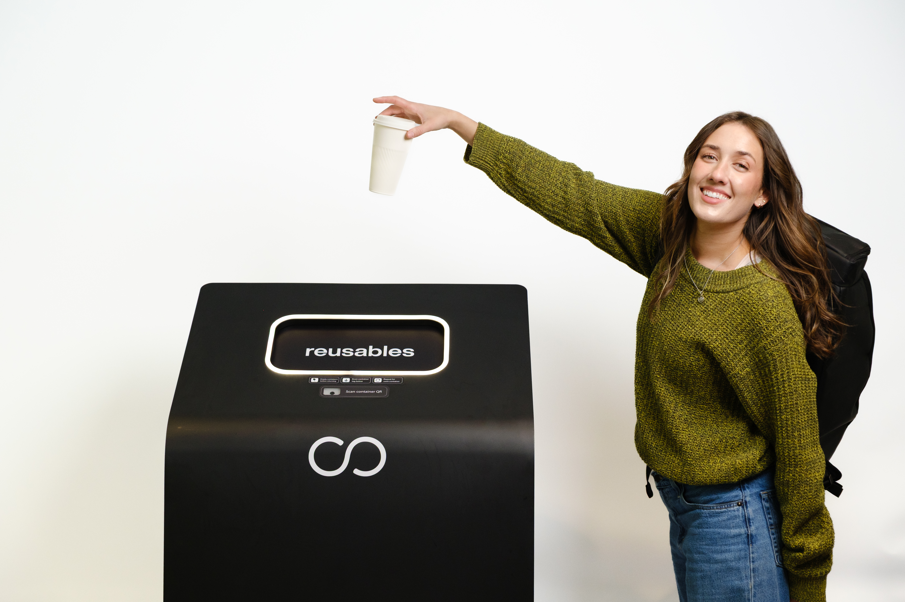
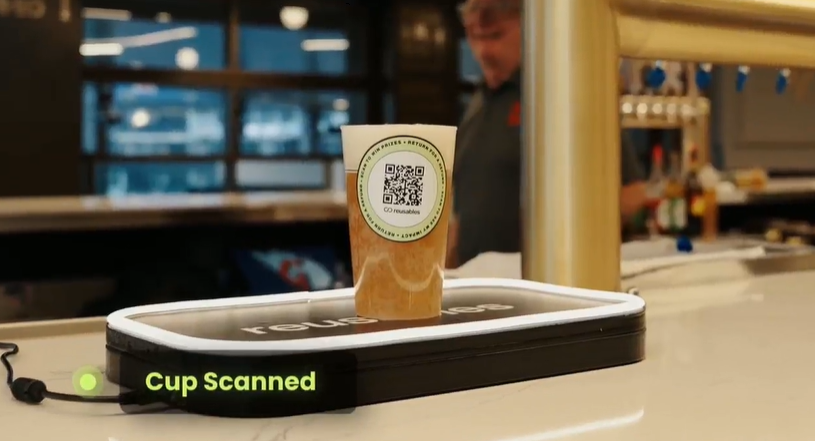
Switching from disposable to reusable packaging is one of the highest-impact changes a hospital cafeteria can make. Modern reusable container programs use technology to solve the tracking and accountability challenges that made earlier programs impractical.
When evaluating systems, look for these capabilities:
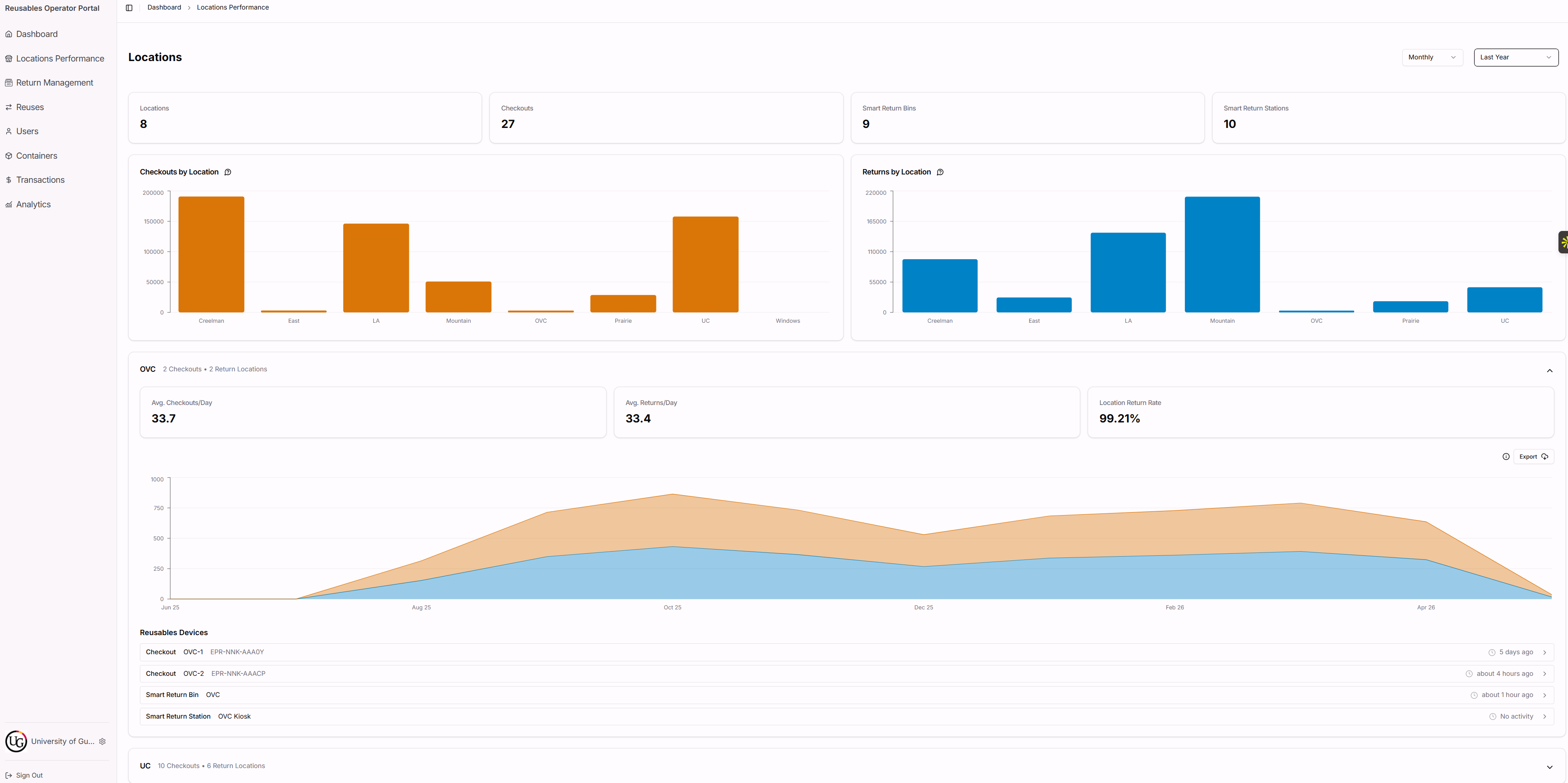
The right system should reduce packaging costs by 50% or more while requiring minimal additional staff time. Look for solutions that handle container-level tracking, generate automated compliance reports, and scale across multiple dining locations within a healthcare facility.
Step 4: Start With a Pilot Program
Rolling out a sustainability program across an entire hospital at once is risky. A phased approach lets you test assumptions, gather data, and build internal support before scaling.
Choose your pilot location carefully. The staff cafeteria or a single grab-and-go station is often the best starting point because:
Set clear pilot metrics:
Run the pilot for at least 90 days to capture enough data for meaningful analysis. Document everything, including unexpected challenges and how you resolved them.
Step 5: Optimize and Expand the Program
Once your pilot proves the concept, use the data to refine your approach before scaling. Common optimization steps include:
Expand in phases, adding one dining location or service type at a time. Patient tray services may require different container specifications and sanitization protocols than grab-and-go operations, so treat each expansion as its own mini-implementation with tailored processes.
Step 6: Measure and Report Results
Sustainability programs need ongoing measurement to maintain institutional support and demonstrate ROI. Track these metrics monthly:
Use this data for internal reporting to hospital leadership and for external sustainability reports. Quantifiable results, such as "reduced cafeteria packaging waste by 60% in the first year" or "saved $35,000 annually on disposable containers," make it easier to justify continued investment and expand the program.
Building a Cafeteria Sustainability Roadmap
Implementing sustainable hospital cafeteria solutions is a process, not a one-time project. The hospitals that succeed treat sustainability as an ongoing operational strategy with clear milestones:
Each step builds on the last, creating a system that reduces costs, cuts waste, and positions your hospital as a leader in sustainable healthcare operations.
Ready to see how a reusable container system could work in your hospital cafeteria? Book a discovery call to learn how institutions are eliminating single-use packaging while reducing costs by 50% or more.
Frequently Asked Questions
How much does it cost to implement a reusable container program in a hospital cafeteria?
Implementation costs vary based on facility size and the number of dining locations, but most hospitals see a positive ROI within the first year. Reusable container systems typically reduce packaging costs by 50% or more compared to disposable alternatives. Many programs also generate additional savings through reduced waste hauling fees.
Will a reusable system meet hospital infection control standards?
Yes. Modern reusable container programs use commercial-grade sanitization processes that meet or exceed healthcare facility standards. Containers are tracked individually, so you can verify that every unit goes through proper washing and sanitization before returning to circulation.
How long does it take to implement a sustainable cafeteria program?
A typical implementation takes 5 to 7 months from waste audit to full pilot launch. Scaling to additional locations usually takes another 3 to 5 months. The phased approach lets you build on proven results rather than risking a large upfront investment.
What kind of return rates can hospitals expect with reusable containers?
Hospitals using automated tracking and gentle accountability systems (such as automated reminders and small late fees) typically achieve return rates above 95%. Some institutions report rates as high as 99% once the program is fully established.
Can reusable container programs work for patient meal service?
Reusable programs can be adapted for patient tray service, though this requires additional consideration for dietary labeling, infection control protocols, and logistics. Most hospitals start with staff and visitor dining before expanding to patient services.
Other stories you may find interesting


.png)

.avif)







.webp)




Watch the Webinar
Learn How to Eliminate Single-Use Waste
Get instant access to our expert webinar and discover how leading institutions reach 99% return rates through smarter reuse systems.

© Reusables™. All rights reserved.