
Finding the Best Reusable Patient Dining Ware

March 6, 2026
The quality of your dining ware sends a powerful message. Flimsy plastic forks and styrofoam containers can make even the best food feel cheap, undermining the entire dining experience you work so hard to create. Switching to a high-quality reusable system is about more than just reducing trash; it’s about elevating the perceived value of your service. Providing sturdy, attractive containers shows a commitment to quality and care that your diners will notice. This is especially true in healthcare, where providing dignified reusable patient dining ware can directly impact comfort and morale. That same principle applies to any institutional setting. This guide will explore how to select the best materials and designs to enhance your dining program and leave a lasting positive impression.
Key Takeaways
- Think system, not just containers: A successful reusable program depends on smart technology. Look for a complete solution with features like QR or RFID tracking and smart return bins to automate accountability, guarantee high return rates, and reduce manual work for your staff.
- Prioritize safety and the user experience: The best dining ware is durable, shatterproof, and designed for your specific audience. Choose high-quality, non-porous materials that can handle commercial dishwashing and consider ergonomic features that make dining easier and more dignified for everyone.
- A smooth launch requires seamless integration: Ensure high adoption from day one by selecting a partner that integrates directly with your existing campus card and payment systems. This, combined with clear staff training and simple communication for diners, makes participation feel effortless.
What Exactly Is Reusable Patient Dining Ware?
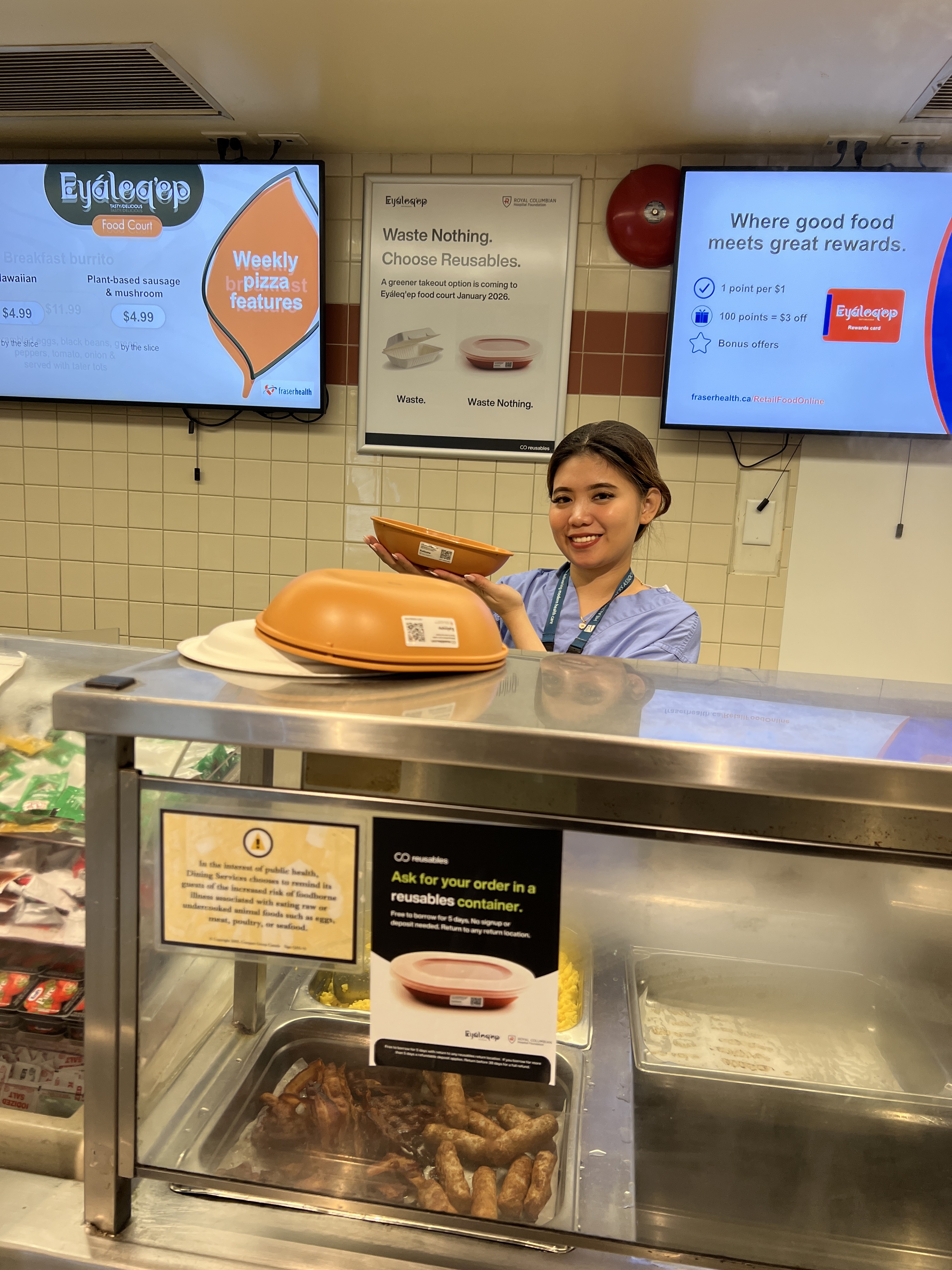
When we talk about reusable patient dining ware, we're referring to a complete system of durable plates, bowls, cups, and utensils designed specifically for institutional settings like hospitals, long-term care facilities, and even university dining halls. Think of it as a major upgrade from flimsy, single-use plastics and styrofoam. These aren't just standard dishes you’d find at home; they are built to withstand the demands of commercial dishwashing, frequent handling, and the specific needs of your diners.
Companies like JonesZylon and Aladdin Temp-Rite create products that are often shatterproof, microwave-safe, and designed to look and feel like upscale tableware. The goal is to provide a better, more dignified dining experience while standing up to the rigors of a high-volume food service operation. More than just the physical items, a modern reusable dining program often includes a smart system for tracking, returning, and managing inventory. This ensures you have what you need when you need it, without the constant waste and reordering of disposables. It’s a thoughtful, long-term solution that replaces a temporary, throwaway problem.
Why Reusables Beat Disposables
Switching from single-use to reusable dining ware is about more than just reducing trash. It’s an opportunity to provide a safer, cleaner, and higher-quality experience for everyone. For starters, many reusable products are designed with hygiene as a top priority. Some even incorporate antimicrobial technology during the manufacturing process to help keep items cleaner between washes. This focus on cleanliness provides peace of mind that you just can't get from a disposable fork wrapped in thin plastic.
Beyond hygiene, reusables simply perform better. They are sturdier, more pleasant to eat from, and maintain food temperature more effectively than disposables. An Oxford Academic study found that switching to reusables is likely to reduce most impacts on the environment, a huge step toward meeting institutional sustainability goals. By choosing reusables, you’re not just making a greener choice; you’re investing in a superior and more reliable dining system.
Save Money and Reduce Your Footprint
Let’s talk about the bottom line. While there is an upfront investment, reusable dining ware is designed to save you significant money over time. The recurring expense of purchasing disposable containers, cups, and cutlery adds up quickly, especially with supply chain issues and rising material costs. By investing in a durable set of reusables, you eliminate that weekly or monthly line item and create a more predictable budget.
This financial benefit goes hand-in-hand with a major reduction in your environmental footprint. You’ll drastically cut down on the amount of waste your facility sends to the landfill, a visible and impactful way to demonstrate your commitment to sustainability. A well-implemented program, especially a tech-enabled reuse system, makes this transition smooth for your staff and seamless for your diners. It’s a practical strategy that delivers both cost savings and a powerful environmental win.
What Are Your Reusable Dining Ware Options?
When you decide to switch from single-use items, you open up a world of high-quality, specialized options designed for institutional dining. The great news is that you don’t have to sacrifice variety or functionality. Modern reusable dining ware is thoughtfully designed to meet the diverse needs of your students or patients, enhancing their experience while supporting your operational goals. From durable plates that can handle the busiest lunch rush to specialized utensils that offer support, there’s a reusable solution for every scenario.
The key is to think of your dining ware as a complete system. You can select from a wide range of products that not only look great but are also built to last. Many suppliers offer flexible container options, allowing you to choose what works best for your specific environment. Whether you’re serving hundreds in a campus dining hall or providing meals in a healthcare setting, you can find plates, bowls, cups, and utensils that are safe, durable, and easy to manage. Let’s look at some of the most common categories and what makes them a smart choice for your program.
Plates and Bowls for Every Need
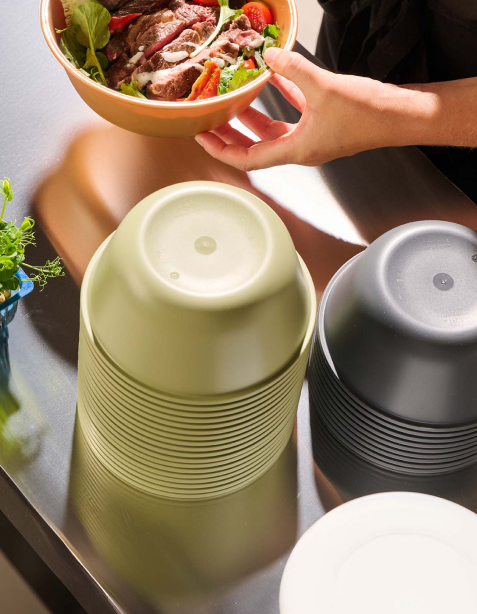
The foundation of any meal service is its plates and bowls, and reusable options are designed for the demands of a high-volume environment. You can find products made from strong, eco-friendly materials that are practically indestructible. For example, many suppliers offer durable plates and bowls that are completely shatterproof, which is a huge relief for any dining manager concerned with safety and replacement costs. These items are built to be used again and again, and many are even recyclable at the end of their long life. This durability ensures you get a fantastic return on your investment while keeping your diners safe.
Cups and Specialized Drinking Aids
Moving on to drinkware, reusables offer a significant upgrade in both quality and user experience. You can find everything from standard tumblers to specialized mugs designed for specific needs. Many modern reusable tumblers and dishware are made from impact-resistant materials that look great but are also affordable and dishwasher-safe. This means you can provide a more dignified, pleasant drinking experience without worrying about breakage. For those who need extra support, you can also find insulated mugs with easy-grip handles or other drinking aids that make a real difference in a person’s ability to dine independently and comfortably.
Finding the Right Adaptive Utensils
Utensils are a small detail that can have a massive impact on a person’s dining experience. Providing well-designed, high-quality utensils shows you care about the comfort and dignity of every person you serve. This is especially true when it comes to adaptive utensils that cater to specific physical needs. These can include utensils with built-up, weighted, or non-slip handles that make them easier to hold for people with limited grip strength or mobility. Offering these thoughtful options helps create a more inclusive and supportive dining environment, ensuring everyone can enjoy their meal with confidence.
What to Look For in a Reusable Dining Ware Solution
Switching to a reusable dining program is a big move, and choosing the right partner is the most important decision you’ll make. The best systems go far beyond just providing containers. They offer a complete, integrated solution that makes life easier for your staff, improves the dining experience for your customers, and delivers real cost savings and environmental impact.
When you’re evaluating different options, it helps to focus on three core pillars: technology, container quality, and safety. A great reusable program needs smart, seamless tracking to ensure containers come back. It requires durable, high-quality containers that can stand up to daily use while looking great. And it must have a rock-solid commitment to hygiene and safety that gives you and your diners total peace of mind. Finding a solution that excels in all three areas is the key to launching a program that people love to use and that delivers on its promise to reduce waste and operational headaches.
Tech-Enabled Systems for Seamless Tracking
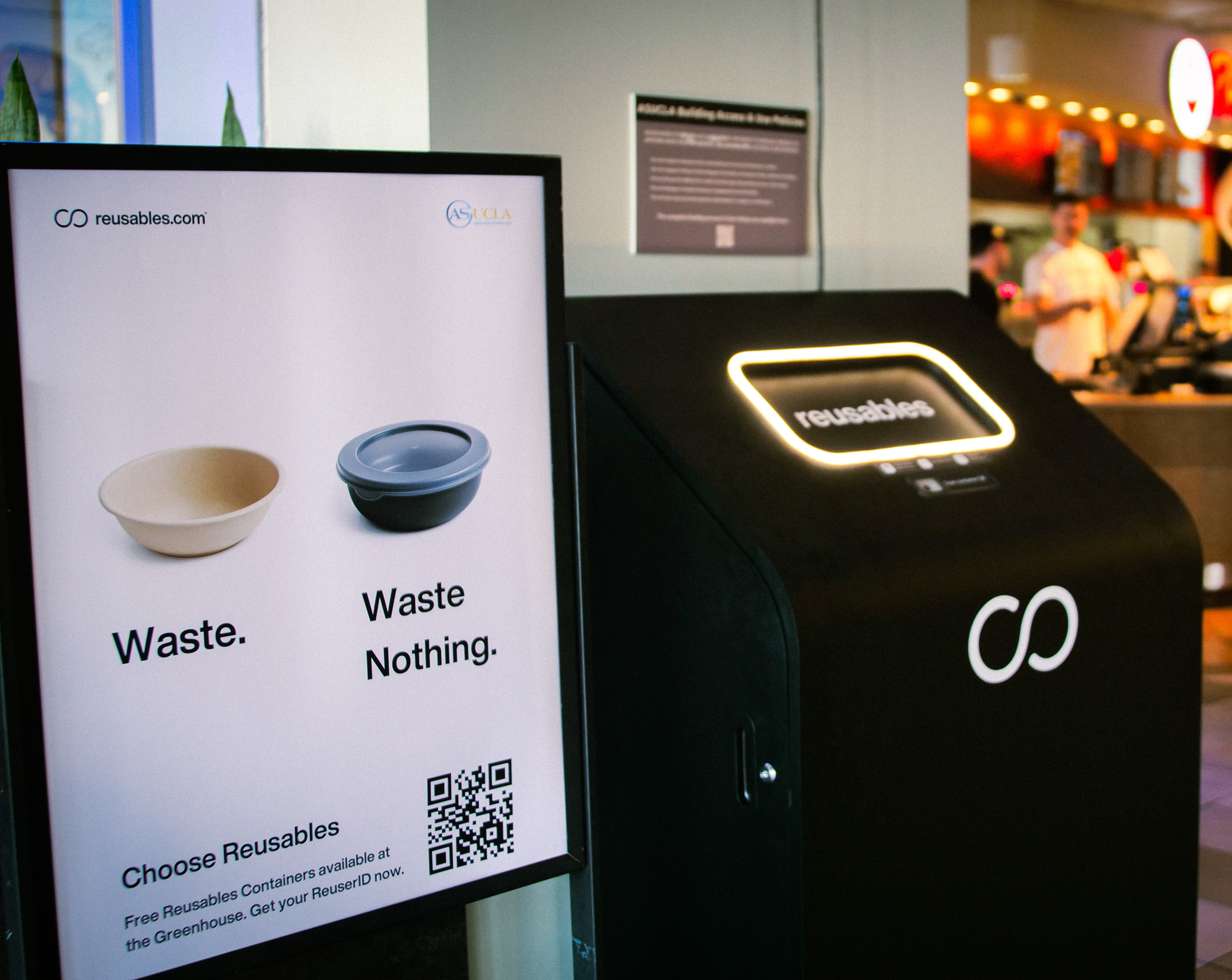
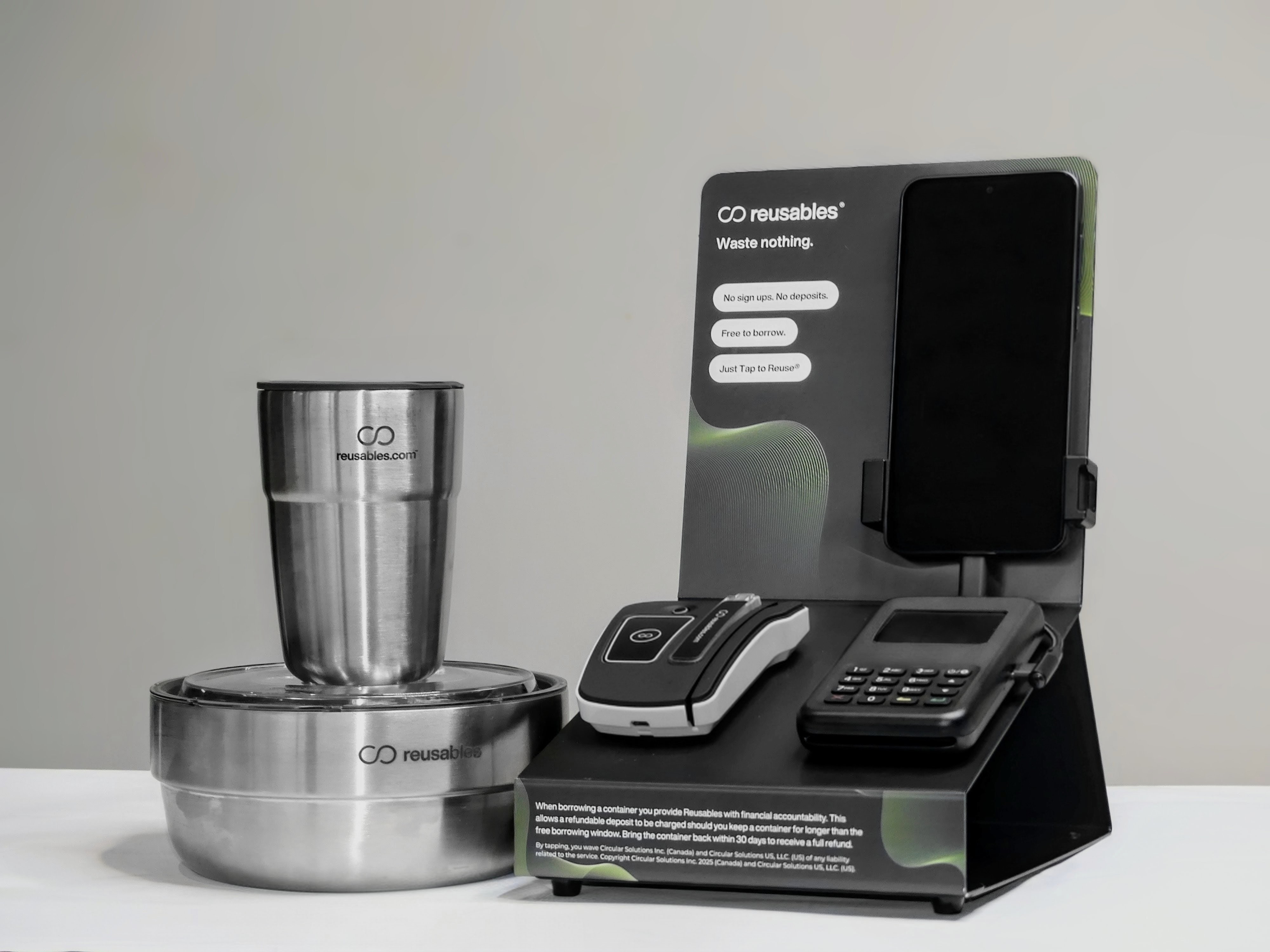
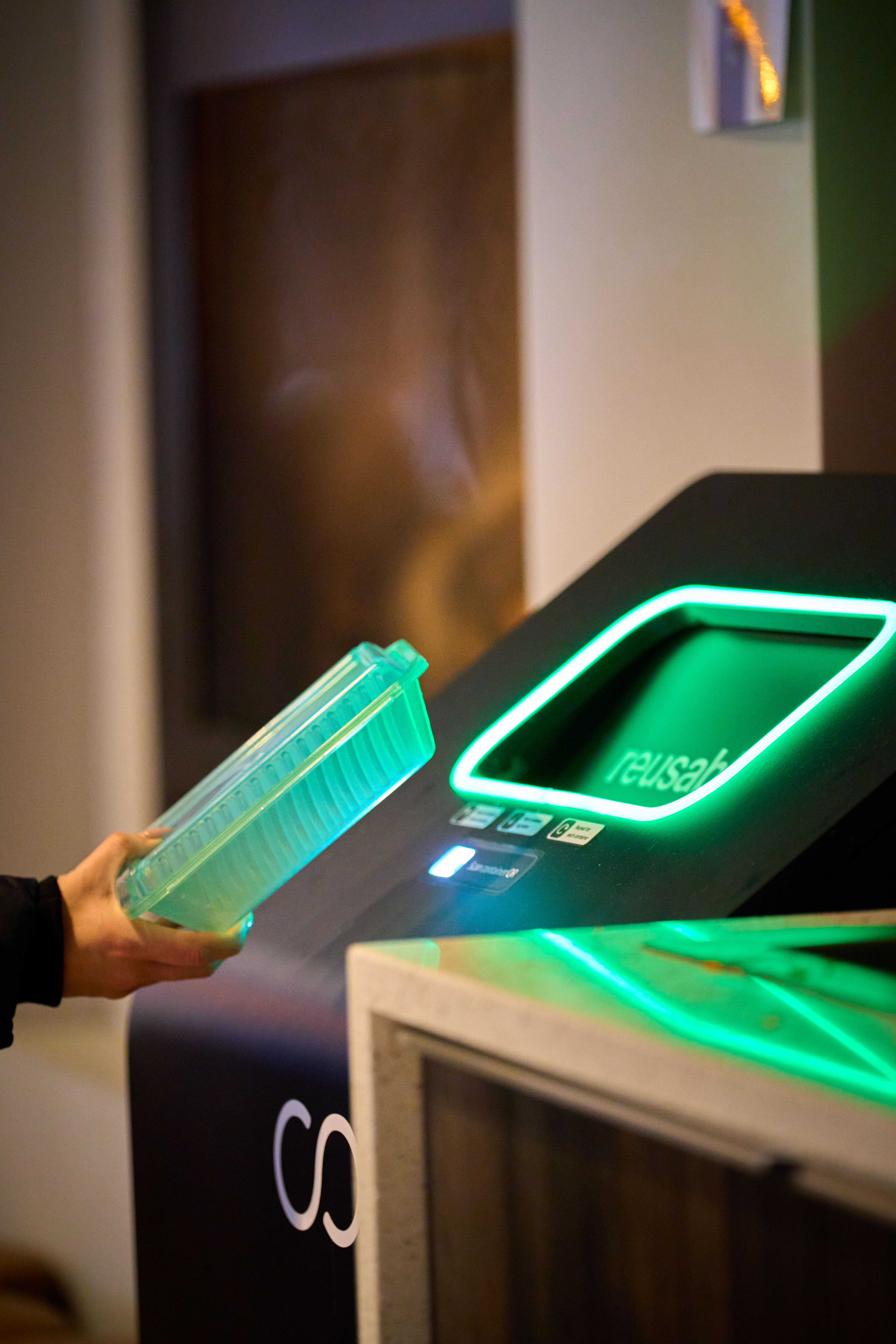
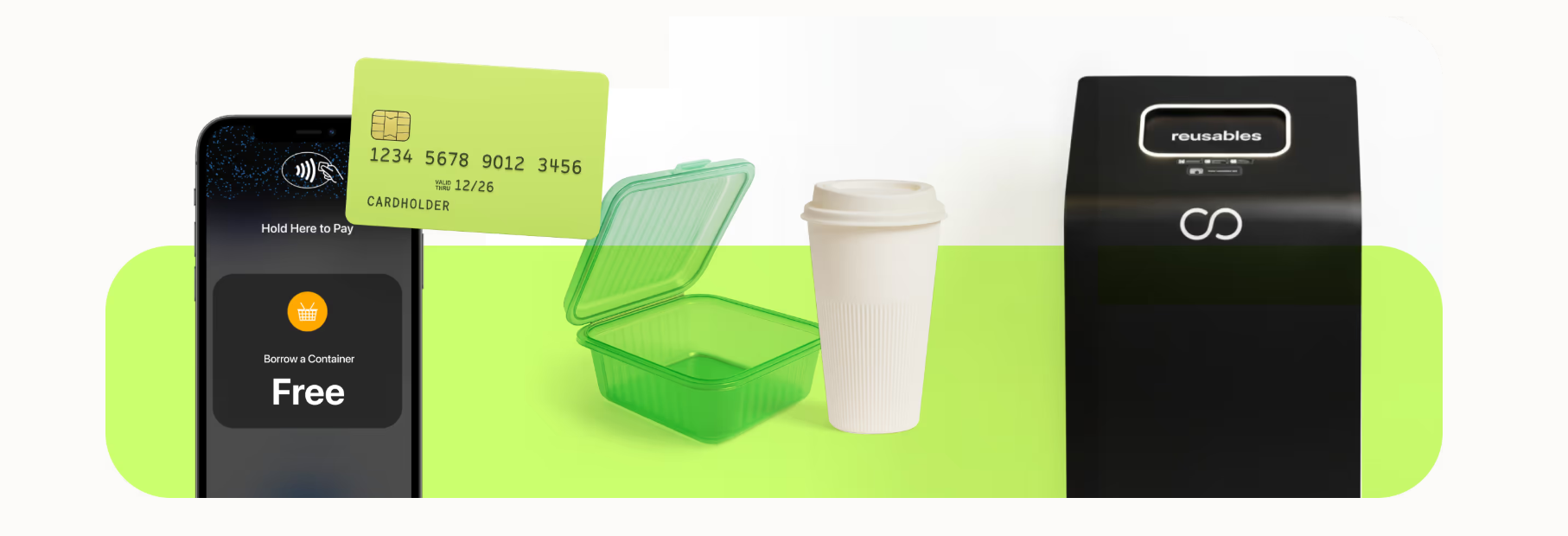
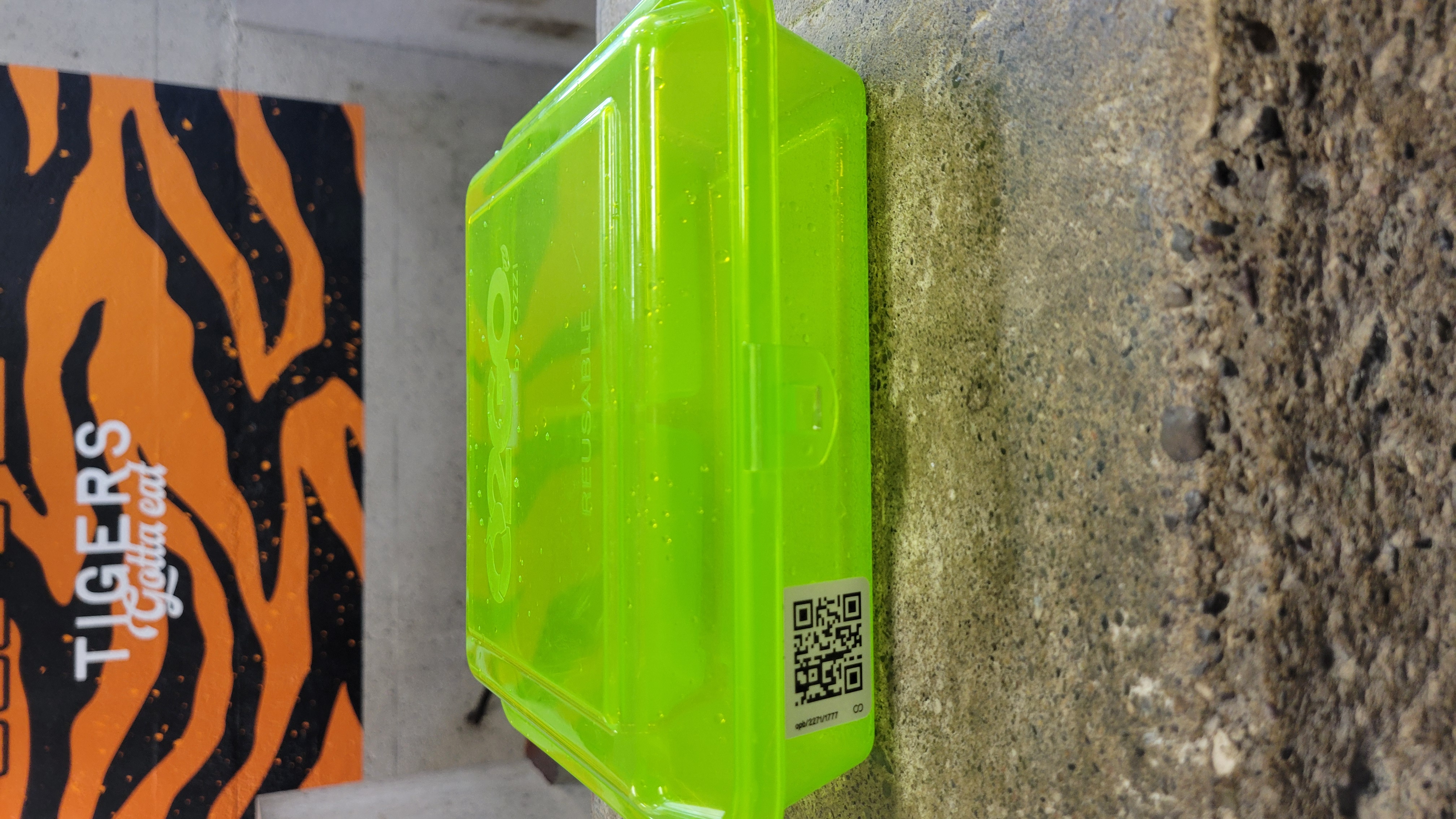
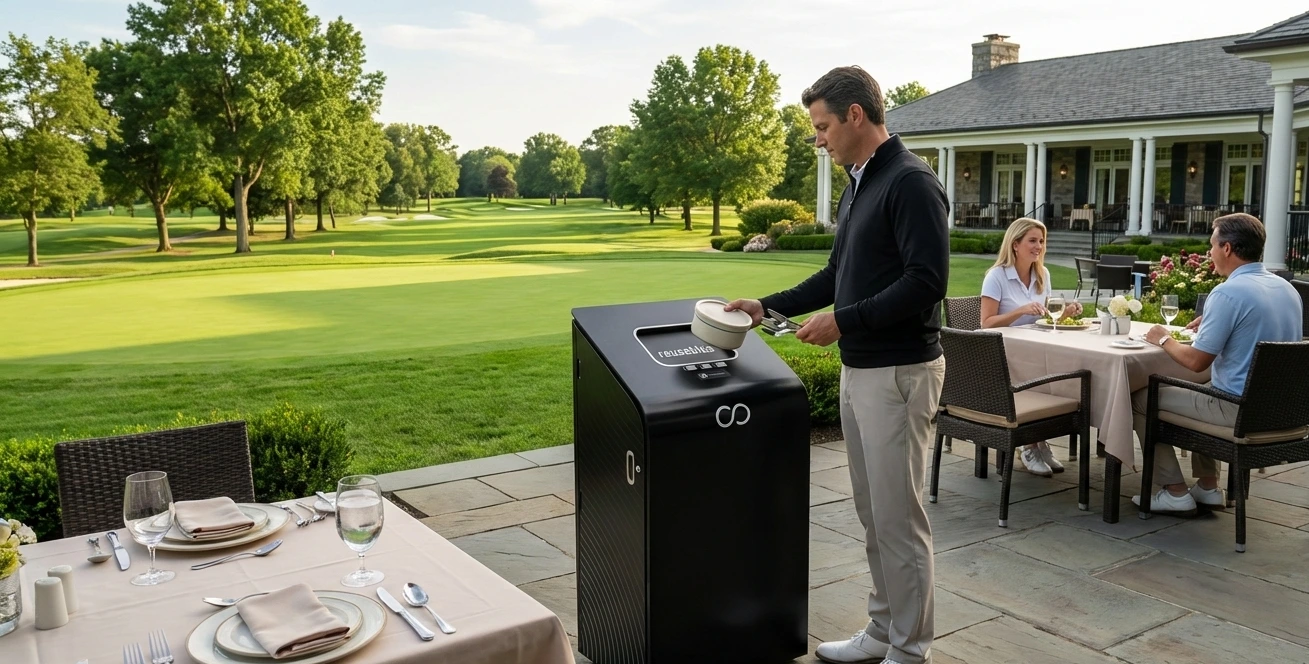
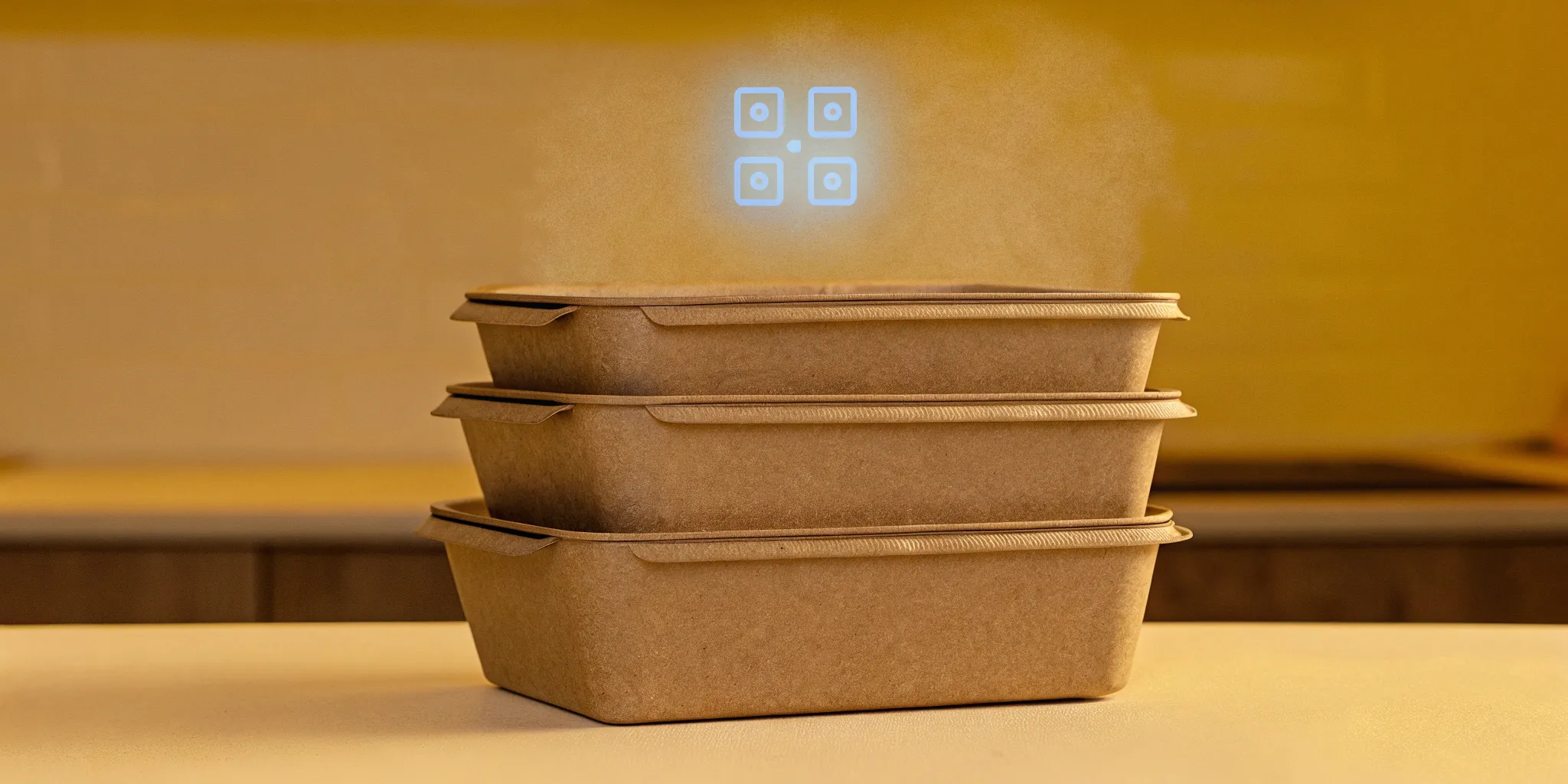
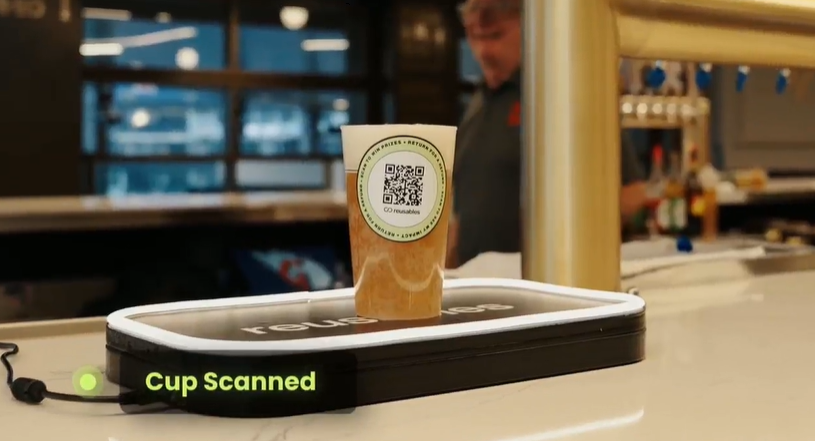
A successful reuse program depends on getting your containers back. Without a reliable way to track your inventory, you risk low return rates and the constant expense of replacing lost items. Look for a tech-enabled system that makes tracking effortless for both you and your users. Modern solutions use QR codes or RFID tags on every container, giving you a real-time view of your inventory.
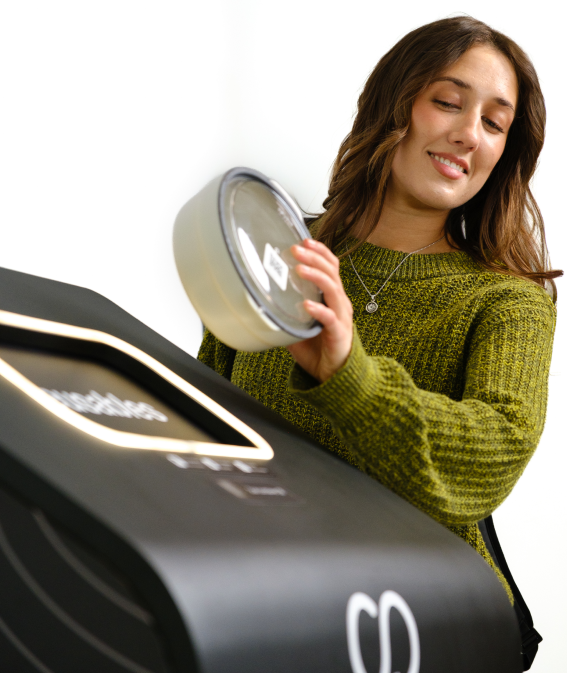
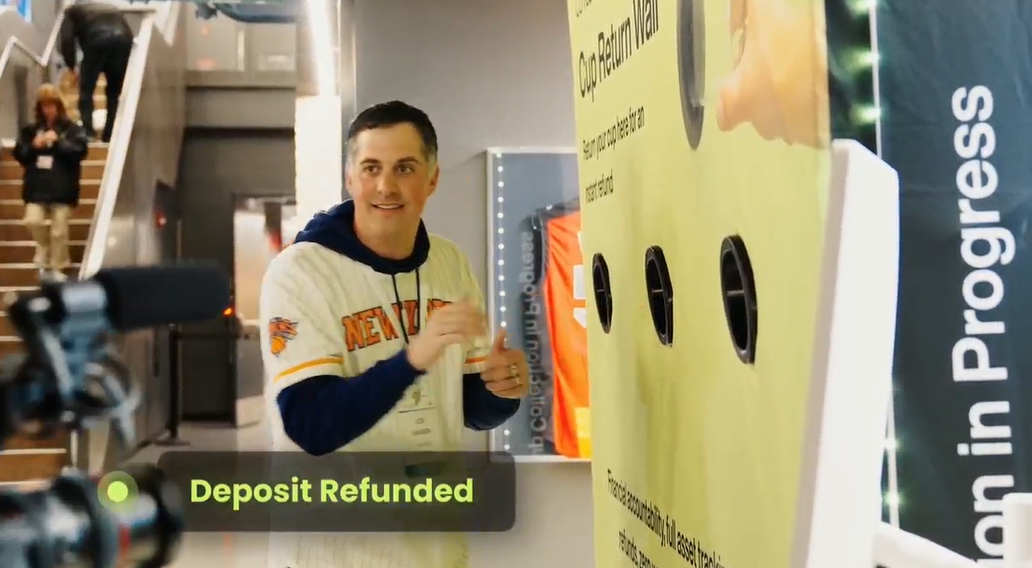
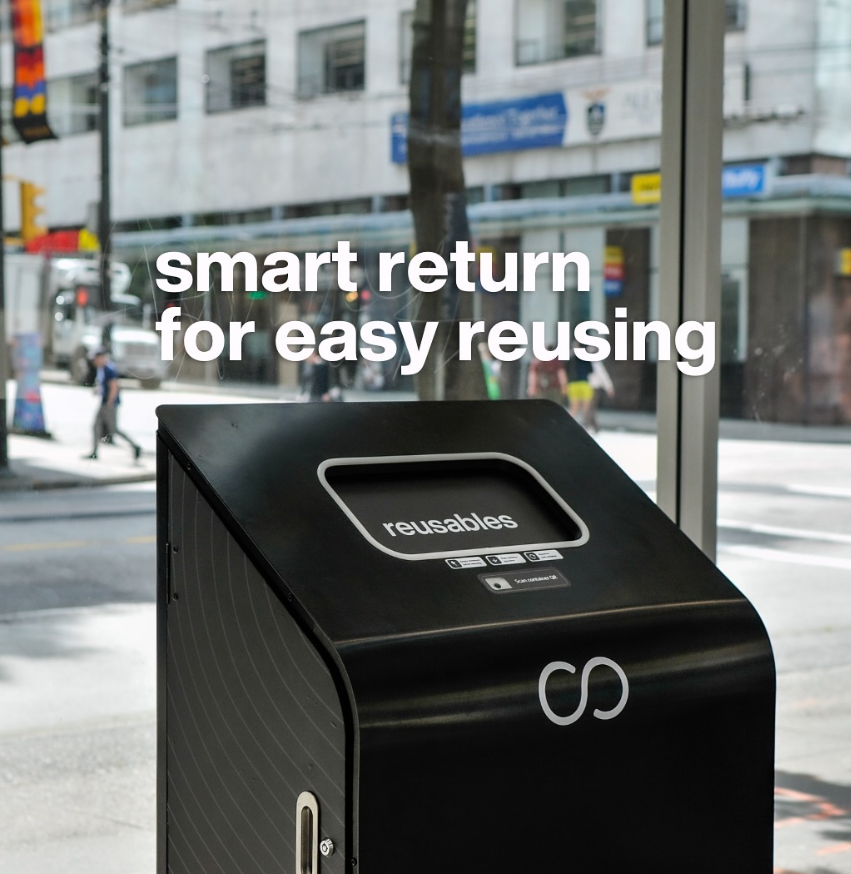
This technology powers features like app-free checkouts and smart return bins, which simplify the process for diners and your team. A robust tracking system eliminates manual work, provides valuable data on usage rates, and automates accountability to ensure an impressive return rate. This is what separates a program that works from one that creates more problems than it solves.
Durable, High-Quality Container Options
The containers are the star of the show, so they need to be tough enough for constant use and appealing enough for your diners. Your ideal container should be shatterproof, stain-resistant, and able to withstand hundreds of cycles in a commercial dishwasher without degrading. High-quality materials not only provide long-term savings but also contribute to a better, more premium dining experience compared to flimsy disposable packaging.
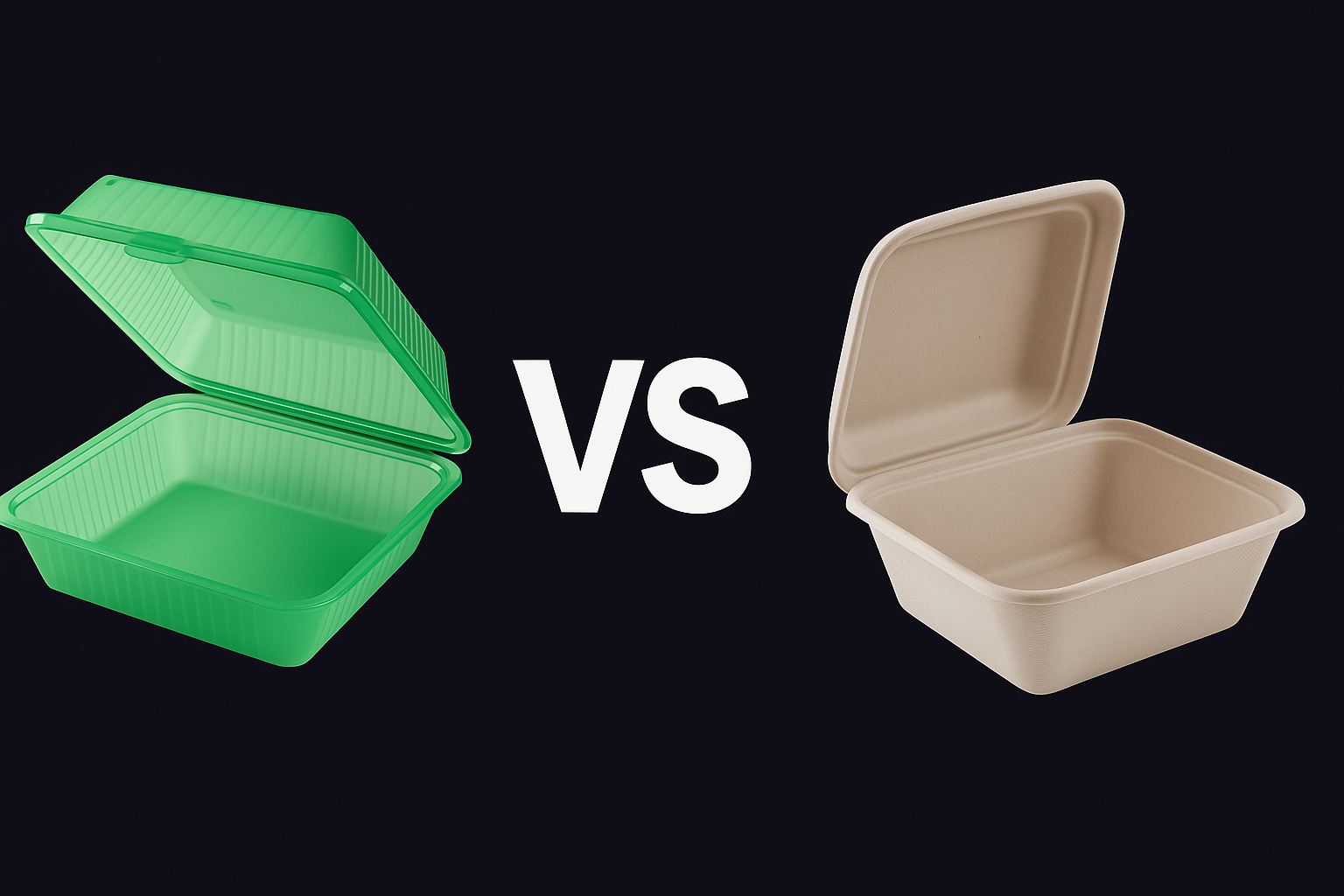
Your provider should offer flexibility, allowing you to choose from different materials like durable polypropylene or stainless steel. Whether you use your existing inventory or select new containers, make sure they are built for a circular system. The right container options are an investment that pays off in durability, user satisfaction, and environmental benefits.
A Strong Focus on Hygiene and Safety
Nothing is more important in food service than hygiene. A top-tier reusable dining solution must have safety built into every step of the process. This starts with the containers themselves, which should be made from non-porous, food-grade materials that are easy to sanitize. Some modern containers even incorporate antimicrobial technology to help them stay cleaner between uses.
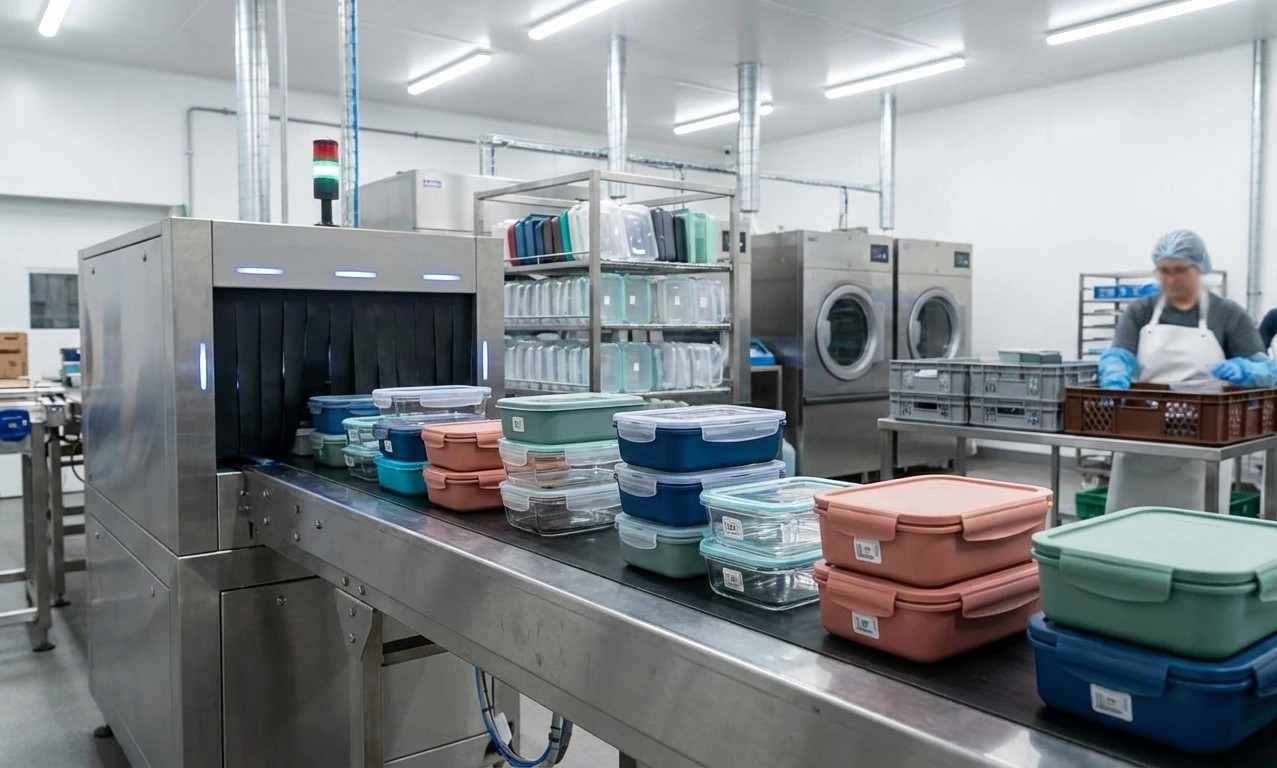
Beyond the container, evaluate the system’s design for hygiene. Look for features like enclosed, tamper-proof return bins that prevent contamination and keep used items separate. Your partner should have clear guidelines and support for washing and sanitization that meet or exceed health standards. A strong commitment to safety ensures your staff and diners can feel confident every time they participate in the program.
Choosing the Best Materials for Patient Dining Ware
The material you choose for your patient dining ware is a big decision. It directly impacts everything from patient safety and the dining experience to your budget and operational workflow. The right material can stand up to the demands of a busy kitchen, resist breakage, and maintain a high standard of hygiene. The wrong one, however, can lead to frequent replacement costs, staff frustration, and even potential safety hazards. Before you commit to a specific type of plate or bowl, it’s helpful to understand the pros and cons of the most common options available for healthcare settings.
Your choice will likely depend on the specific needs of your patient population and the unique environment of your facility. For example, the ideal material for a behavioral health unit, where durability is paramount, might be different from what’s best for a general medical floor or a long-term care facility that prioritizes a more home-like feel. You’ll want to think about factors like durability, temperature retention, weight, and ease of cleaning. A well-chosen set of dining ware not only supports patient well-being but also makes life easier for your staff. Let’s look at the top contenders: durable plastics, stainless steel, and other common materials, plus some key features to consider.
Durable Plastics: Polypropylene and Copolymer
When safety and durability are your top priorities, it’s hard to beat high-quality, durable plastics. Materials like polypropylene and copolymer are specifically designed for repeated use in demanding healthcare environments. Their primary advantage is their shatterproof nature, which makes them an excellent choice for long-term care, memory care, and behavioral health facilities where accidental drops are common.
These plastics are built to withstand the rigors of commercial dishwashers and frequent handling without chipping or breaking. They are also lightweight, making them easier for both patients and staff to manage. Plus, many modern options are recyclable, allowing you to meet your sustainability goals without sacrificing performance. Choosing these materials means investing in a long-lasting solution that prioritizes patient safety.
The Benefits of Stainless Steel
Stainless steel is another fantastic option for patient dining ware, known for its incredible durability and hygienic properties. It’s virtually unbreakable, so you won’t have to worry about replacement costs from breakage. Stainless steel is also non-porous, meaning it resists germs and is easy to sanitize completely, which is a huge plus in any healthcare setting.
When selecting stainless steel products, make sure they are food-grade (look for 18/8 or 18/10 classifications) to ensure they are non-toxic and won’t react with food. The one major consideration is that stainless steel cannot be used in the microwave. This is a critical detail for your kitchen workflow, so be sure your reheating processes are compatible before making a commitment.
Considering Melamine and Ceramic Options
You’ll often see melamine and ceramic dining ware in commercial settings, but they come with a few caveats for patient use. Melamine is popular for its durability and light weight, but it can pose a risk when heated. The material can release harmful chemicals, like formaldehyde, when exposed to high temperatures or acidic foods. For this reason, melamine should never be put in the microwave.
Ceramic options can offer a more home-like, aesthetically pleasing look, which can be great for patient morale. However, they are far more prone to chipping and breaking than plastic or stainless steel. This makes them less suitable for high-use environments and can create safety hazards if a piece shatters. While they have their place, they may not be the most practical choice for every healthcare facility.
The Role of Antimicrobial Features
To add an extra layer of hygiene, some dining ware comes with built-in antimicrobial features. This technology involves adding a substance to the material during the manufacturing process that helps inhibit the growth of bacteria on the surface of the plates, bowls, and utensils. This doesn’t replace regular cleaning and sanitizing, but it does help keep the items cleaner for longer between washes.
In a healthcare setting where preventing cross-contamination is paramount, antimicrobial tableware can provide valuable peace of mind. It’s a proactive step toward maintaining the highest standards of cleanliness for your patients. When evaluating suppliers, ask if they offer products with this protective technology.
Key Safety Features to Prioritize
When you’re serving patients, safety is the absolute top priority. The reusable dining ware you choose must not only stand up to the demands of a busy healthcare facility but also protect the well-being of every individual. Prioritizing specific safety features from the start ensures your reusable program enhances the patient experience while maintaining the highest standards of care. Think of these features as the foundation of a successful and responsible reusable dining system.
Insist on Shatterproof and Break-Resistant Designs
In a healthcare environment, a broken plate or cup is more than just a mess; it's a serious safety hazard. That’s why selecting shatterproof and break-resistant dining ware is non-negotiable. Materials like durable, BPA-free plastics or high-quality stainless steel are designed to withstand accidental drops without shattering into dangerous pieces. This is especially critical in long-term care, behavioral health, and memory care settings where patient safety is paramount. Choosing durable containers also means they last longer, reducing replacement costs and ensuring your investment is sound. A well-designed system supports a variety of container options so you can select the safest materials for your specific patient population.
Ensure Patient Comfort with Ergonomic Shapes
The design of your dining ware directly impacts a patient's comfort, dignity, and independence. Look for ergonomic features that make items easier to handle. Tumblers with textured grips can help those with limited hand strength, while low-profile bowls and plates fit more easily on delivery carts and bedside tables. These thoughtful details contribute to a better, more comfortable mealtime experience. By focusing on patient-centered design, you show a commitment to care that goes beyond the food itself. The right dining ware can empower patients, making it easier for them to eat and drink on their own.
Check for Temperature and Dishwasher Safety
Your reusable dining ware will go through a lot, from holding hot soups to being sanitized in commercial dishwashers. It’s essential to confirm that your chosen products can handle it all. Check the manufacturer’s specifications for temperature tolerance, ensuring items can safely hold both hot and cold foods without warping or leaching chemicals. They must also be rated for high-heat commercial dishwashers to meet strict sanitation protocols. This durability is key to maintaining food safety and operational efficiency. A reliable reuse system is built on products that can withstand the daily cycles of a professional food service operation, giving you peace of mind.
Addressing Common Concerns About Reusables
Making a significant operational change always brings up important questions. Switching from single-use disposables to a reusable dining ware system is no exception. You need to be confident that the new system is safe, affordable, and manageable for your team. Let's walk through the most common concerns about reusables and get you the clear, straightforward answers you need to make an informed decision for your campus.
Hygiene and Contamination: Setting the Record Straight
Let’s tackle the biggest question first: are reusables truly as hygienic as disposables? The simple answer is yes. When washed according to health and safety standards, reusable containers are perfectly safe for serving food. Think about it: your dining hall already uses reusable plates, cups, and cutlery every single day. Extending this practice to takeout is just a logical next step.
Food safety experts confirm that a properly cleaned reusable container has the same contamination risk as a brand new single-use item. Your commercial dishwashing equipment is designed to sanitize materials to a standard that single-use items, which can be exposed to contaminants during production and shipping, don't always meet. A well-managed reuse program maintains the highest standards of cleanliness you already practice.
The Real Cost: Upfront Investment vs. Long-Term Savings
The budget is always a top consideration, so let's talk numbers. While there is an upfront investment in purchasing a fleet of durable containers, it’s important to see it as just that: an investment, not just another expense. With the cost of disposable packaging rising dramatically, the endless cycle of buying and trashing single-use items quickly becomes a major drain on your budget.
By switching to reusables, you replace a recurring operational expense with a one-time capital investment that pays for itself over time. Many institutions find they can reduce annual packaging and waste costs by 30% or more. By eliminating the need to constantly reorder disposables, you can achieve significant long-term savings and gain more predictable budget control.
Managing Staff Workload and Maintenance
You're likely wondering how a reuse program will impact your team's day-to-day operations. It’s a valid concern. The key is to understand that a modern reuse program is much more than just a pile of containers; it’s a smart, tech-enabled system designed to minimize manual work. The right partner provides a solution that automates the most labor-intensive parts of the process.
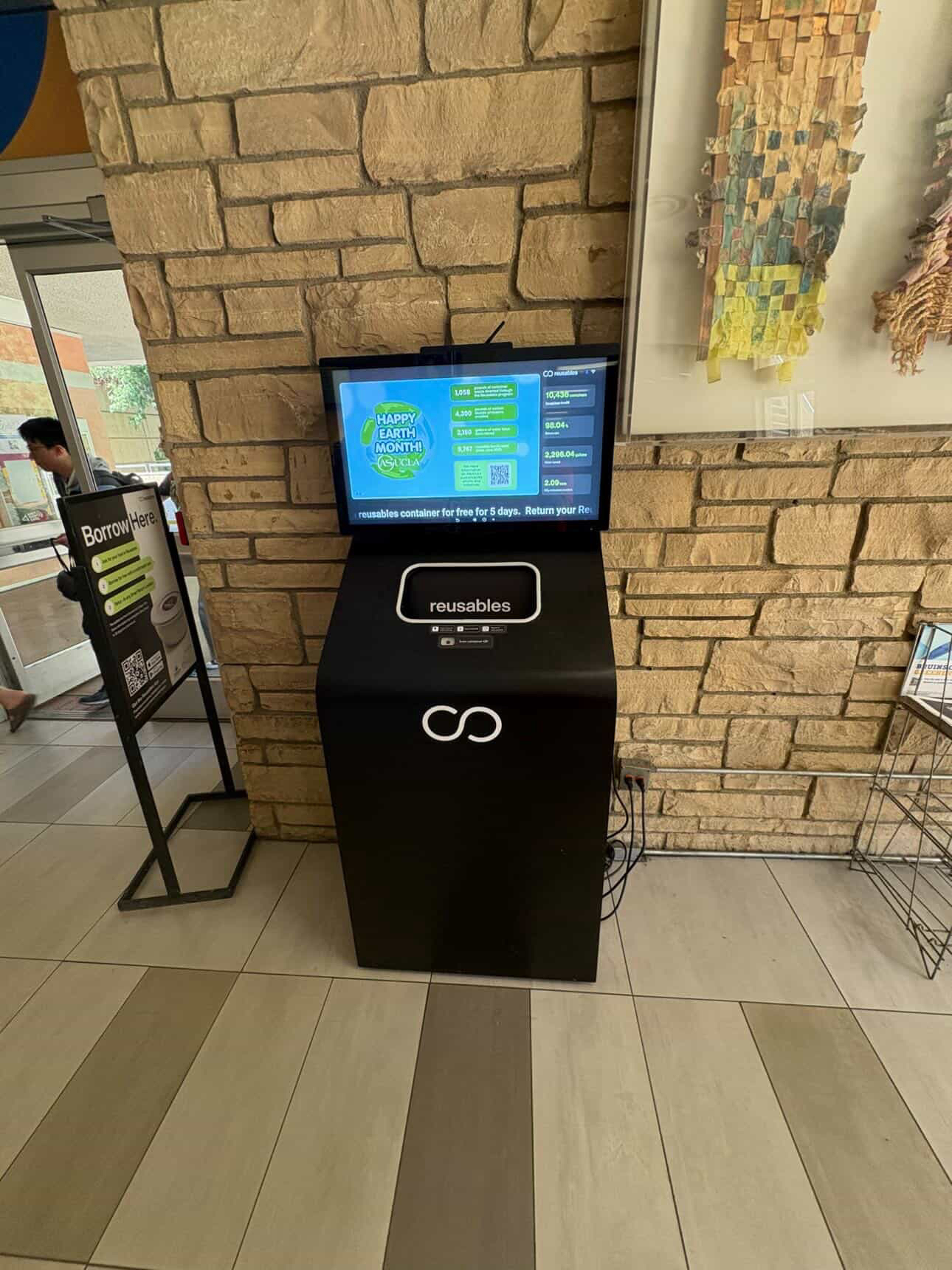
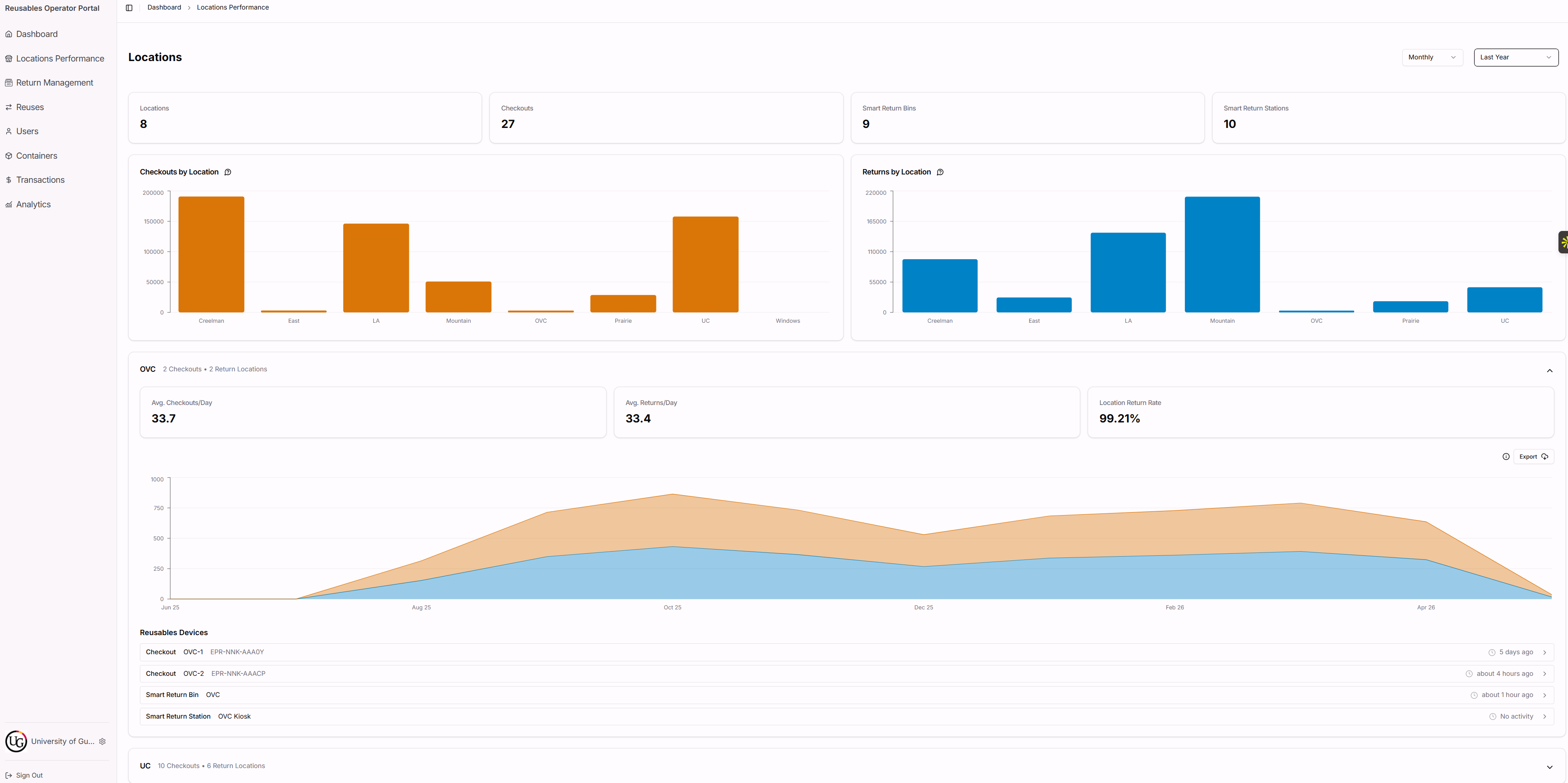
While it might seem like reusables would add more work, a well-designed system does the opposite. Features like smart return bins that alert staff when they need emptying, automated QR or RFID tracking, and a central dashboard for inventory management give your team more visibility and control with less effort. The system handles tracking containers and managing user accountability, freeing up your staff to focus on providing great service.
Selecting Dining Ware for Specific Patient Needs
Choosing the right dining ware goes far beyond simple logistics. For patients, the right plate, cup, or utensil can make the difference between a frustrating meal and a comfortable, dignified dining experience. Thoughtful selection shows you’re considering their unique needs, which is a crucial part of holistic care. When patients feel supported during meals, it can directly impact their nutritional intake and overall morale. Let’s look at how to select dining ware that meets the diverse needs of your patient population.
Accommodating Mobility Limitations
For patients with limited mobility, arthritis, or tremors, standard dining ware can be a major hurdle. The key is to find items that promote independence and safety. Look for ergonomic utensils with built-up, non-slip handles that are easier to grip. Plates and bowls with high rims or specialized guards can help prevent spills, reducing frustration and making it easier for patients to eat on their own. Well-designed, high-quality dinnerware takes these details into account, ensuring patients can dine with dignity and comfort. Lightweight yet durable materials are also important, as they are easier for both patients and staff to handle.
Supporting Specialized Diets
In a healthcare setting, nearly every meal is a specialized one. Your dining ware needs to support physician-directed diets, from low-sodium and diabetic-friendly to high-protein and puréed. This is where compartment trays become essential. They ensure nutritional accuracy by keeping foods separate and portions controlled, which simplifies meal prep for your team and reduces the risk of errors. As more people adopt specific eating styles, having versatile options allows you to cater to dietary restrictions and preferences, making the dining experience feel more personalized and less institutional.
Meeting Therapeutic and Portion Control Needs
Dining ware is also a therapeutic tool. For patients recovering from surgery or managing chronic conditions, precise portion control can be vital for their recovery. Reusable trays and plates with clearly defined sections help your staff serve accurate portions every time without extra measuring. Beyond the functional benefits, choosing high-quality reusables creates a better dining experience for patients. A sturdy, well-designed plate feels more like home than a flimsy disposable tray, which can positively influence a patient’s appetite and perception of their care. This simple switch supports both environmental goals and patient well-being.
How to Launch a Successful Reusable Dining Program
Switching to a reusable dining program is a powerful move, but a successful launch goes beyond simply swapping out containers. It’s about introducing a new, better way of doing things for both your team and your diners. A thoughtful rollout plan is your best tool for ensuring a smooth transition, encouraging widespread adoption, and achieving the high return rates that make a reuse system sustainable. When you focus on clear training, simple communication, and seamless system integration from the start, you set the stage for a program that not only meets your sustainability goals but also enhances the dining experience for everyone. The key is to make participation feel effortless and rewarding. With the right strategy and partner, you can build a program that people are excited to be a part of, turning a simple operational change into a celebrated campus-wide initiative.
Set Your Staff Up for Success with Training
Your dining staff are the daily champions of your reusables program, and their buy-in is essential. A great training plan goes beyond the mechanics of the system; it starts with the "why." Help your team understand the positive impact of the program, from hitting sustainability targets to reducing operational costs. It’s also helpful to highlight the direct benefits to their work. For example, studies on reusable serviceware show that staff often appreciate the improved food presentation and reduced spills. Once they’re on board with the vision, you can focus on the "how." Provide clear, hands-on training for any new technology, like scan stations or checkout systems, and equip them with simple answers to the most common questions diners will ask.
Create Clear Communication for Diners
For diners to embrace your new program, they need to understand it. Your communication strategy should be simple, consistent, and focused on making participation feel easy. Start before launch day with a campaign that builds awareness and excitement. Use clear signage in dining halls, post on social media, and send out emails explaining how the new system works. Focus on a few key messages: how to borrow a container, where to return it, and the positive impact of their participation. A low-friction process is critical for adoption. When the steps are intuitive and the benefits are clear, you can significantly improve diner satisfaction and build momentum for your program right from the start.
Integrate with Your Existing Systems
One of the biggest hurdles to a successful reuse program is clunky technology that doesn’t work with your current operations. A smooth transition depends on choosing a system that integrates directly with your existing infrastructure. Look for a partner whose technology works seamlessly with your campus card and point-of-sale systems, like Transact, CBORD, or Atrium. This eliminates the need for your staff to manage a separate, disconnected process. A fully integrated reuse platform automates everything from tracking inventory to managing late fees, which removes the administrative burden from your team. This approach directly addresses the operational and economic challenges that can hinder reuse programs, ensuring your system is efficient, accountable, and built for long-term success.
Finding Your Reusable Dining Ware Partner
Choosing a reusable dining ware partner is a major decision that goes far beyond just picking out plates and cups. You're not just buying a product; you're implementing a new operational system. The right partner will work with you to understand your campus's unique challenges, from infrastructure to student habits, and provide a solution that fits seamlessly into your dining services. They should act as an extension of your team, offering robust support, transparent data, and a clear path to achieving your sustainability and financial goals. A true partner helps you build a program that lasts, one that students will love and your staff can manage with ease.
How to Vet Suppliers and Partners
When you’re evaluating potential partners, look past the product catalog and focus on their process and proof of success. A great partner will have a deep understanding of the barriers to running a successful reuse program, like standardizing across different dining halls or working with existing infrastructure. Ask for case studies and data that back up their claims, especially on return rates and user adoption. You want to see a proven track record. Dig into their support model. Will they be there to help you train staff and troubleshoot issues after launch? A partner’s mission and track record should show a clear commitment to making reuse work for complex organizations like yours.
Understand Purchasing and Pricing Models
The financial model for a reusable system is fundamentally different from the endless cycle of purchasing disposables. While there's an initial investment, the goal is significant long-term cost savings and a predictable budget. Ask potential partners for a detailed breakdown of their pricing. Does it include the containers, tracking technology, return stations, and software? Are there ongoing fees for support or data access? A transparent partner should be able to provide a clear return on investment (ROI) calculation based on your current spending on single-use items. Be wary of any hidden costs and look for a model that aligns with your financial goals, turning a recurring expense into a valuable asset.
Why System Integration Is Non-Negotiable
For a reusable dining program to succeed, it has to be effortless for both students and staff. This is where system integration becomes critical. A standalone system that requires a separate app or manual tracking adds friction and creates extra work for your team. The best solutions integrate directly with your existing campus technology, like student ID cards, payment platforms, and point-of-sale systems. This allows for a frictionless experience, such as an app-free checkout, and provides automated accountability without burdening your staff. When vetting partners, always ask about specific integrations to ensure their system will feel like a natural part of your campus dining experience, not a clunky add-on.
Related Articles
- A Buyer's Guide to Reusable Food Containers for Hospitals
- What Is a Circular Economy in Healthcare? A Guide
- 6 Steps for Hospital Cafeteria Waste Reduction
Frequently Asked Questions
How does the cost of a reusable system compare to what I'm spending on disposables? Think of it as shifting from a constant operational expense to a one-time capital investment. While there is an upfront cost for the containers and technology, you eliminate the recurring, and often rising, expense of single-use packaging. Many campuses find that the system pays for itself over time, leading to significant long-term savings and a more predictable budget, especially since you're no longer at the mercy of volatile supply chain prices for disposables.
How can I be sure we'll get the containers back? Low return rates seem like a big risk. This is a common and completely valid concern. The key to high return rates is a smart, tech-enabled system that makes accountability easy and automatic. Modern programs use unique QR or RFID tags on every container. This allows for effortless checkouts and returns at designated stations, creating a seamless process for students. When combined with automated reminders and incentives, this technology ensures return rates of 99% or higher, protecting your investment and keeping the system running smoothly.
Will switching to reusables create more work for my staff? A well-designed reuse program should actually reduce manual work for your team. The best systems are built to automate the most time-consuming tasks. For example, smart return bins can notify staff when they're full, and a central dashboard provides real-time inventory data, eliminating guesswork. Because the technology handles user accountability and tracking, your staff is freed from chasing down containers or managing complex spreadsheets, allowing them to focus on service.
Are reusable containers truly as hygienic as single-use options? Yes, absolutely. When cleaned in a commercial dishwasher according to health and safety standards, reusable containers are perfectly sanitary. Your kitchen already uses this process for all of its dine-in plates, glasses, and cutlery. A professional washing and sanitizing cycle is more than capable of ensuring every container is safe for reuse, often to a higher standard than single-use items that can be exposed to contaminants during manufacturing and shipping.
Does a system like this require students and staff to use a separate app or payment method? Not at all. The most effective reuse programs integrate directly with the technology you already have on campus. This means students can check out a container simply by tapping their existing student ID card or using their meal plan at the point of sale. This app-free, frictionless approach is crucial for high adoption because it doesn't ask anyone to change their habits or download something new. It just becomes a natural part of their dining experience.
Other stories you may find interesting
.png)
.avif)





.webp)




Watch the Webinar
Learn How to Eliminate Single-Use Waste
Get instant access to our expert webinar and discover how leading institutions reach 99% return rates through smarter reuse systems.

© Reusables™. All rights reserved.