
Your Guide to Reusable Packaging for Food Courts

April 10, 2026
Food courts face a growing problem: disposable packaging costs keep climbing while sustainability pressure intensifies. Many institutions now spend over $50,000 a year on single-use containers that are used for minutes and discarded. Reusable packaging offers a proven alternative that cuts costs, reduces waste, and meets the expectations of environmentally conscious diners.
This guide walks food court operators through everything they need to know about implementing a reusable packaging program, from understanding the options to measuring results.
Key Takeaways
- Reusable packaging systems can reduce food court packaging costs by 50% or more compared to single-use disposables.
- Modern tech-enabled reuse platforms eliminate the need for manual tracking, deposits, or dedicated apps.
- Successful food court reusable programs achieve return rates above 95% when paired with convenient return infrastructure.
- Implementation typically takes weeks, not months, with turn-key solutions that integrate into existing operations.
- Data-driven dashboards provide real-time visibility into return rates, container inventory, and environmental impact.
Why Food Courts Are Switching to Reusable Packaging
Food courts are uniquely positioned to benefit from reusable packaging. High foot traffic, repeat visitors, and centralized dining areas create the ideal conditions for a circular container system.
Several factors are accelerating the switch:
Rising disposable costs. Single-use container prices have increased dramatically in recent years. Compostable options, while better for the environment than traditional plastics, still carry significant procurement and disposal costs. For a busy food court serving thousands of meals daily, these costs add up fast.
Sustainability mandates. Many universities, hospitals, and corporate campuses have committed to zero-waste goals with 2030 deadlines. Food courts represent one of the largest sources of packaging waste on these campuses, making them a natural starting point for waste reduction programs.
Consumer expectations. Today's diners, especially students and younger professionals, actively prefer businesses that demonstrate environmental responsibility. A visible reusable packaging program signals commitment to sustainability and can boost customer satisfaction.
Regulatory pressure. Cities and states across North America are introducing legislation to reduce single-use plastics. Getting ahead of these regulations with a reusable system avoids costly last-minute transitions.
How Reusable Packaging Systems Work in Food Courts
Modern reusable packaging systems are designed for simplicity. The goal is to make reuse as easy as, or easier than, using disposables. Here is how a typical tech-enabled system operates:
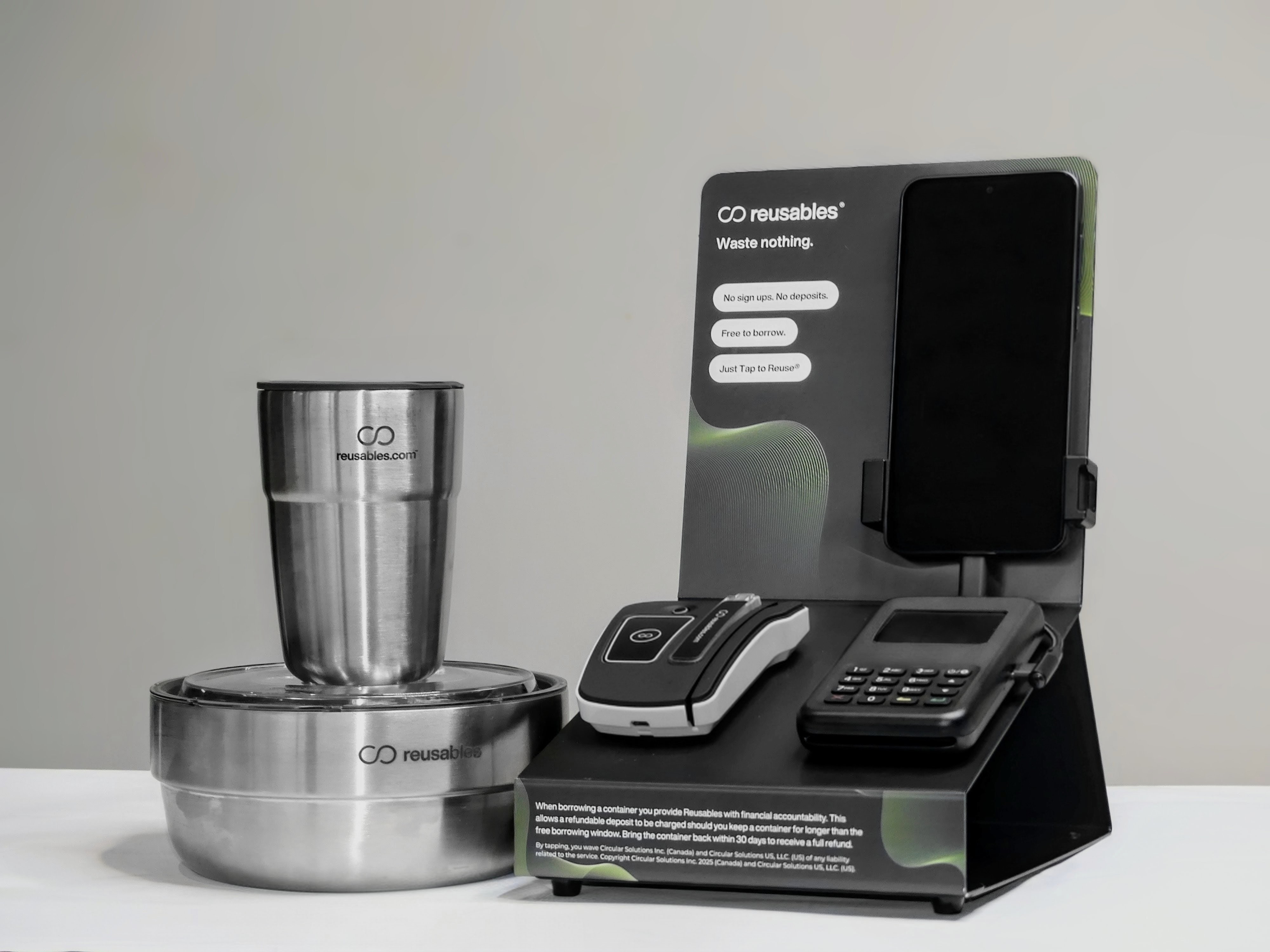
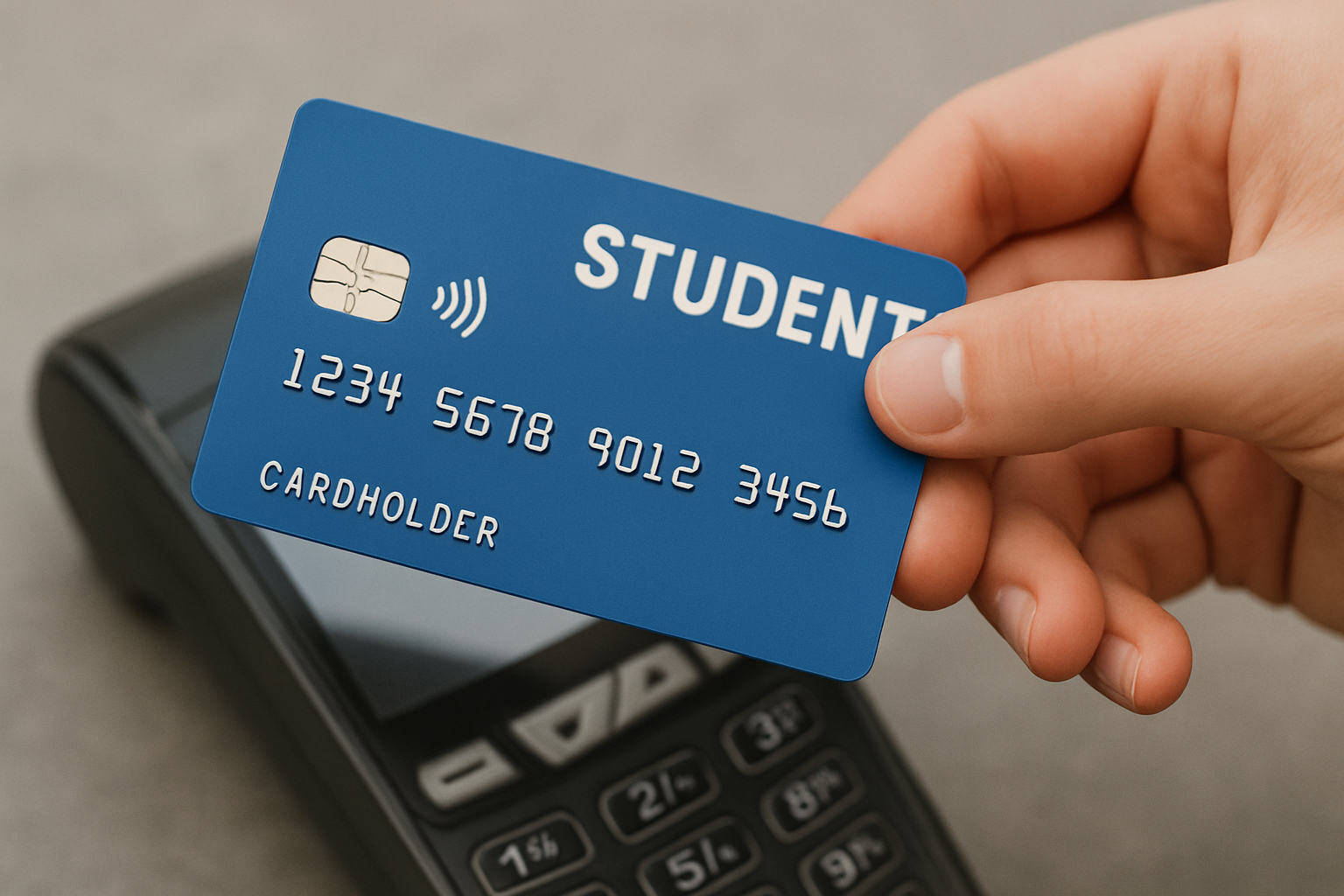
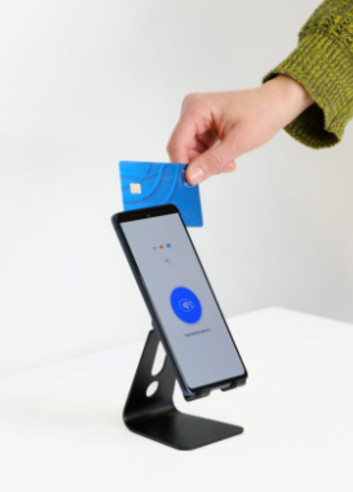
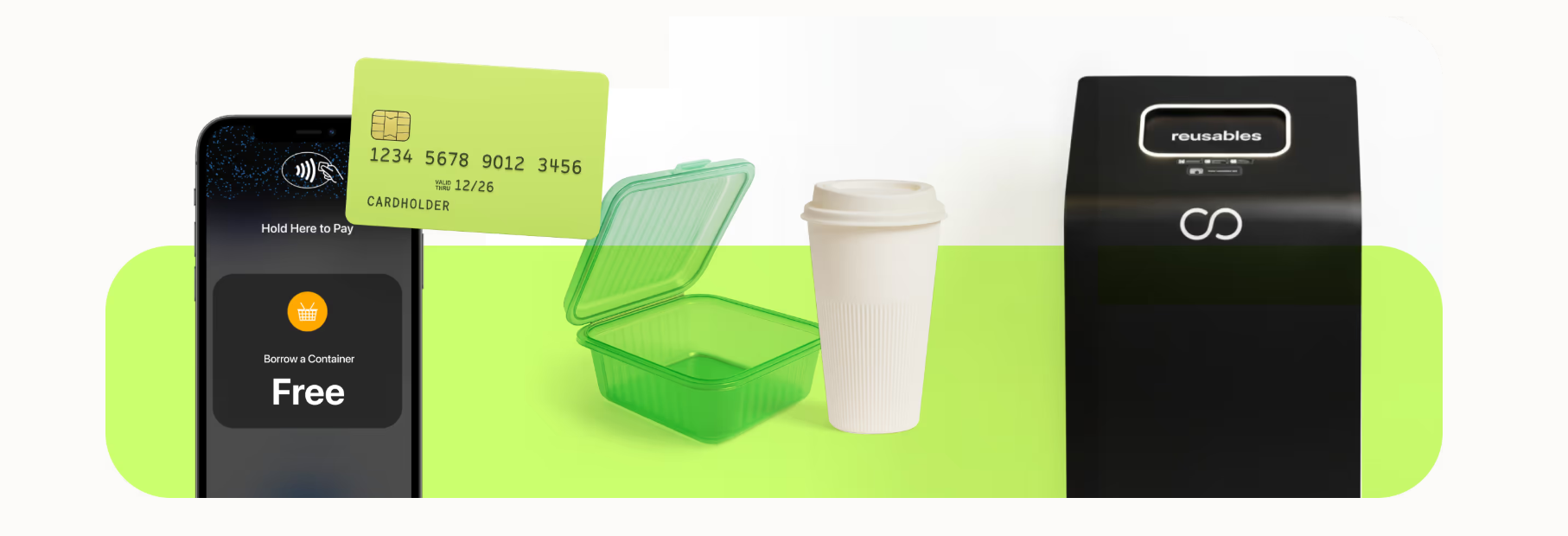
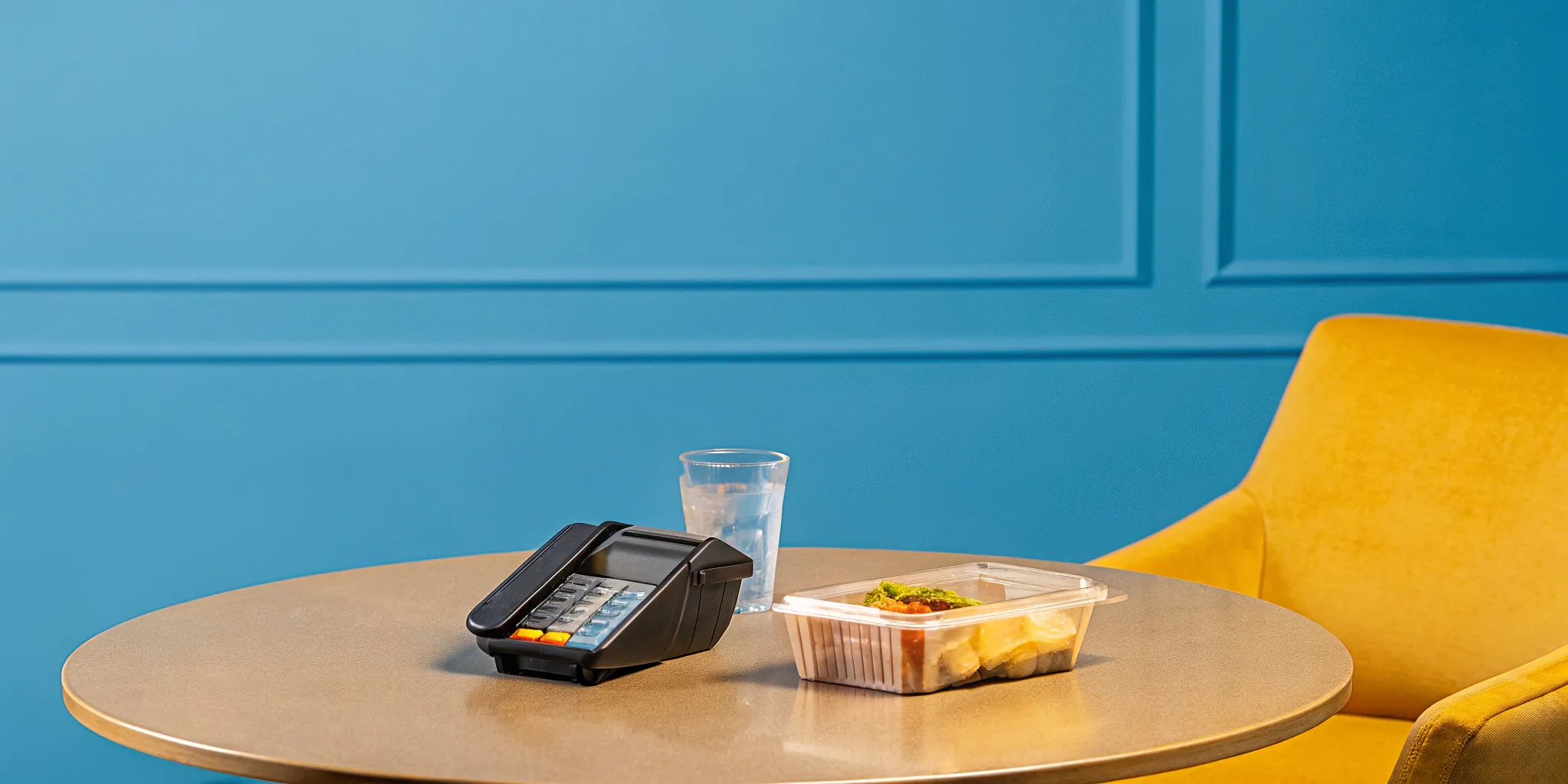
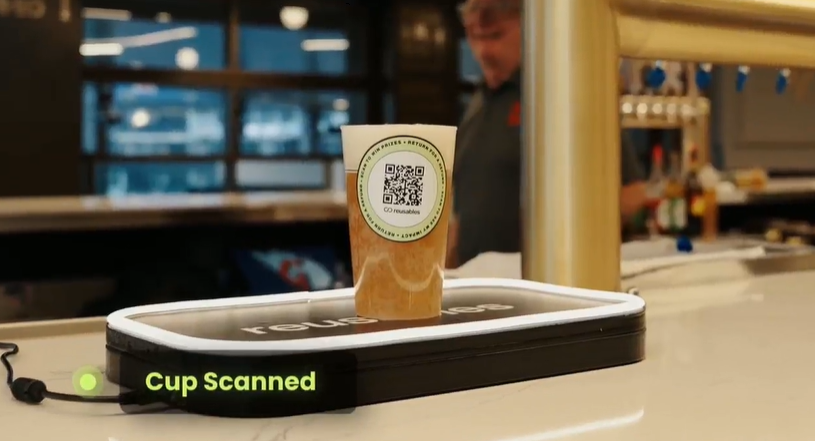
1. Borrow. A diner picks up a reusable container at any food court vendor. They tap their campus card, credit card, or employee badge at the point of sale. No app download is required, and no deposit changes hands upfront.
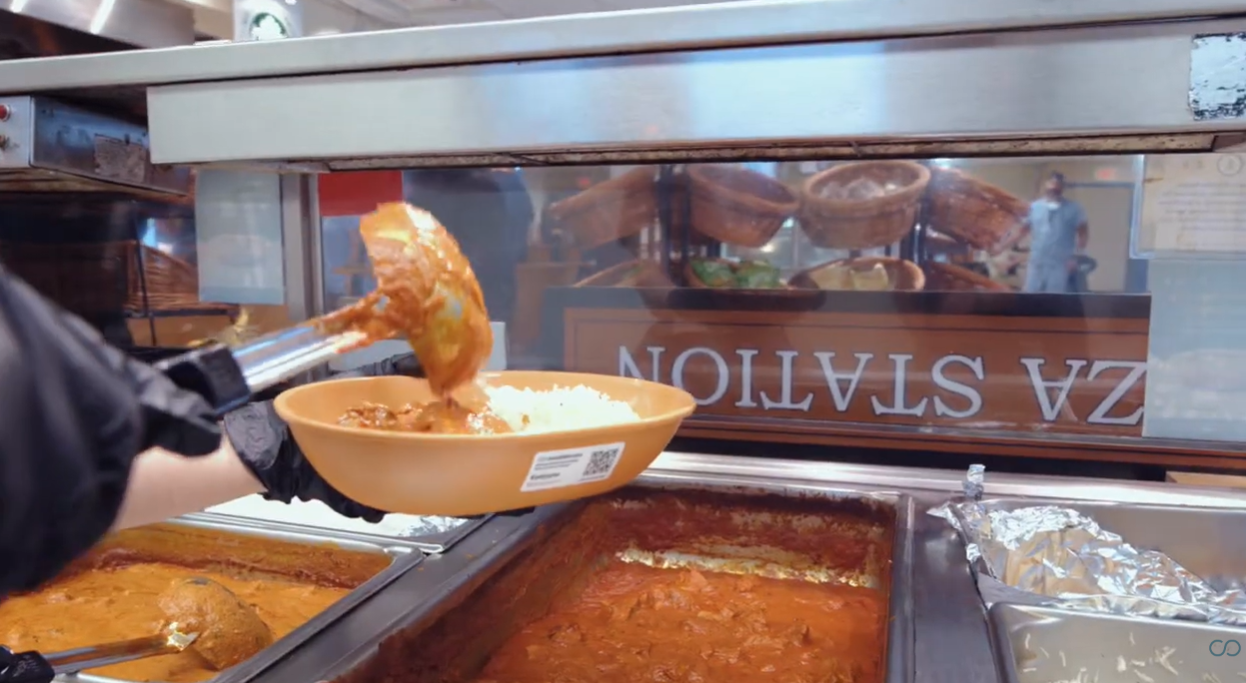
2. Use. The diner fills their container, eats their meal, and goes about their day. The container is durable, food-safe, and designed for repeated use across hundreds of cycles.
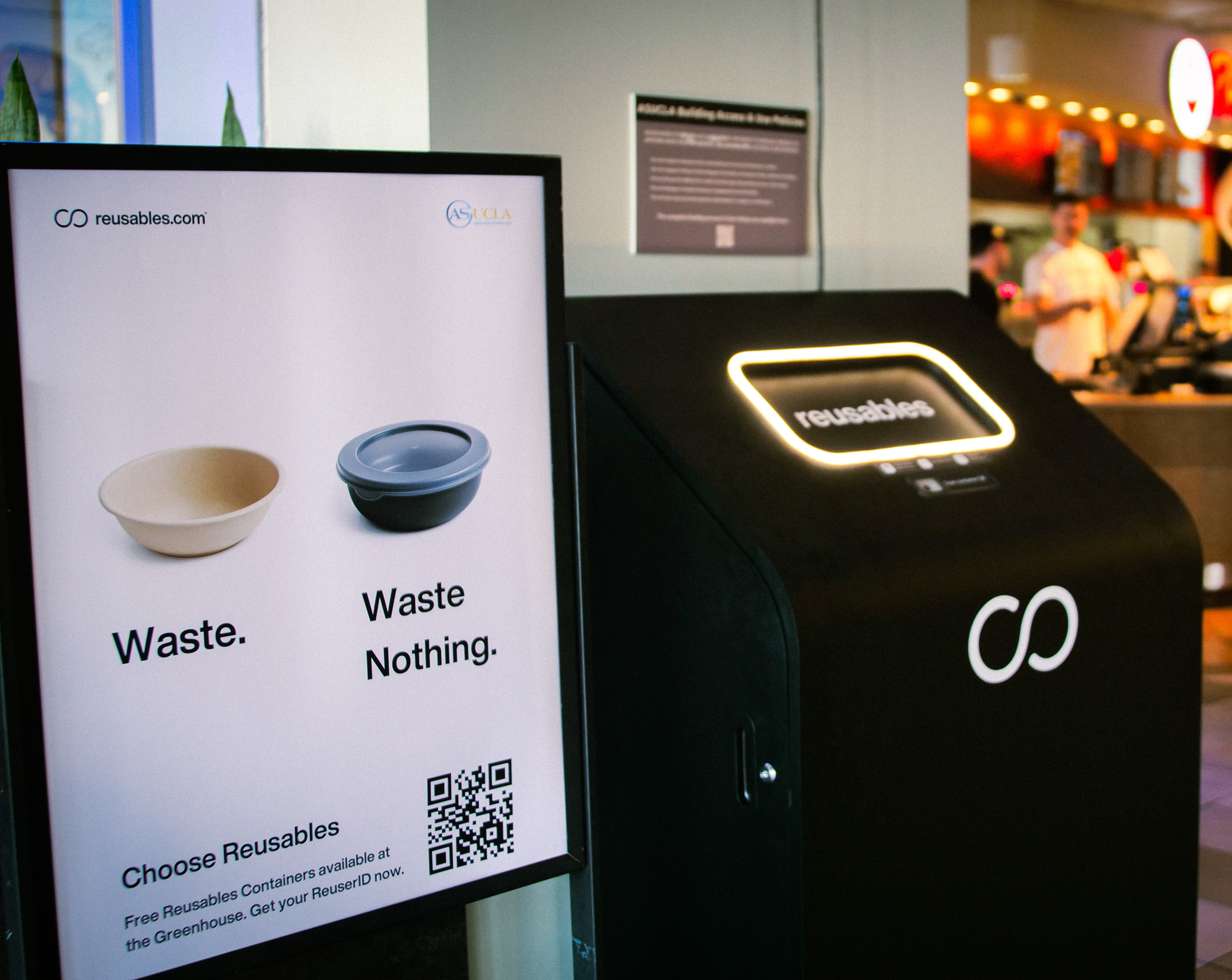
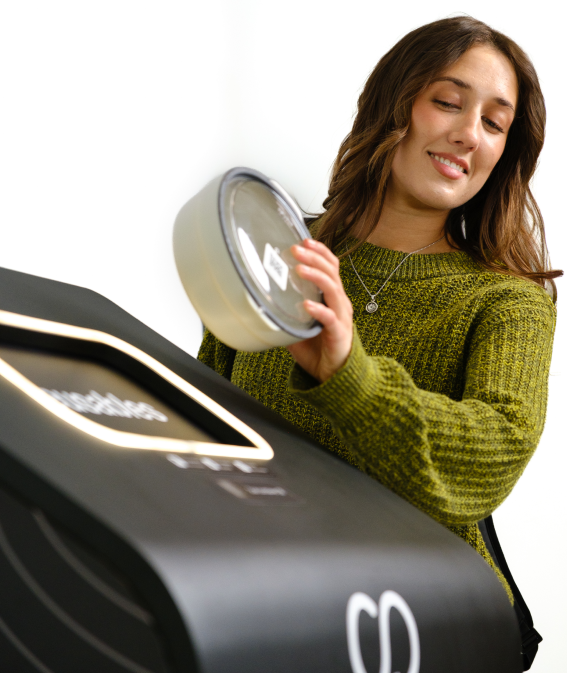
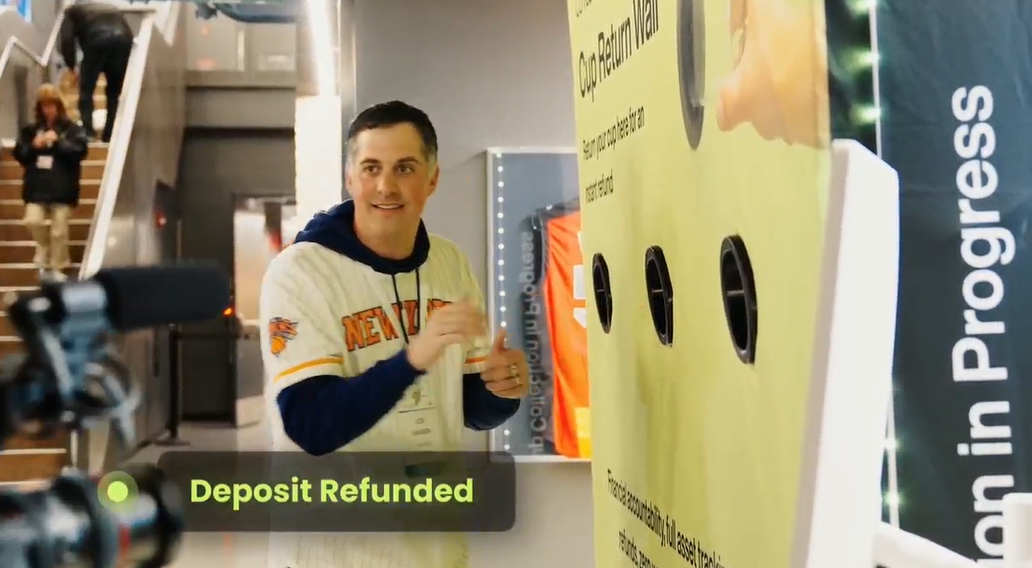
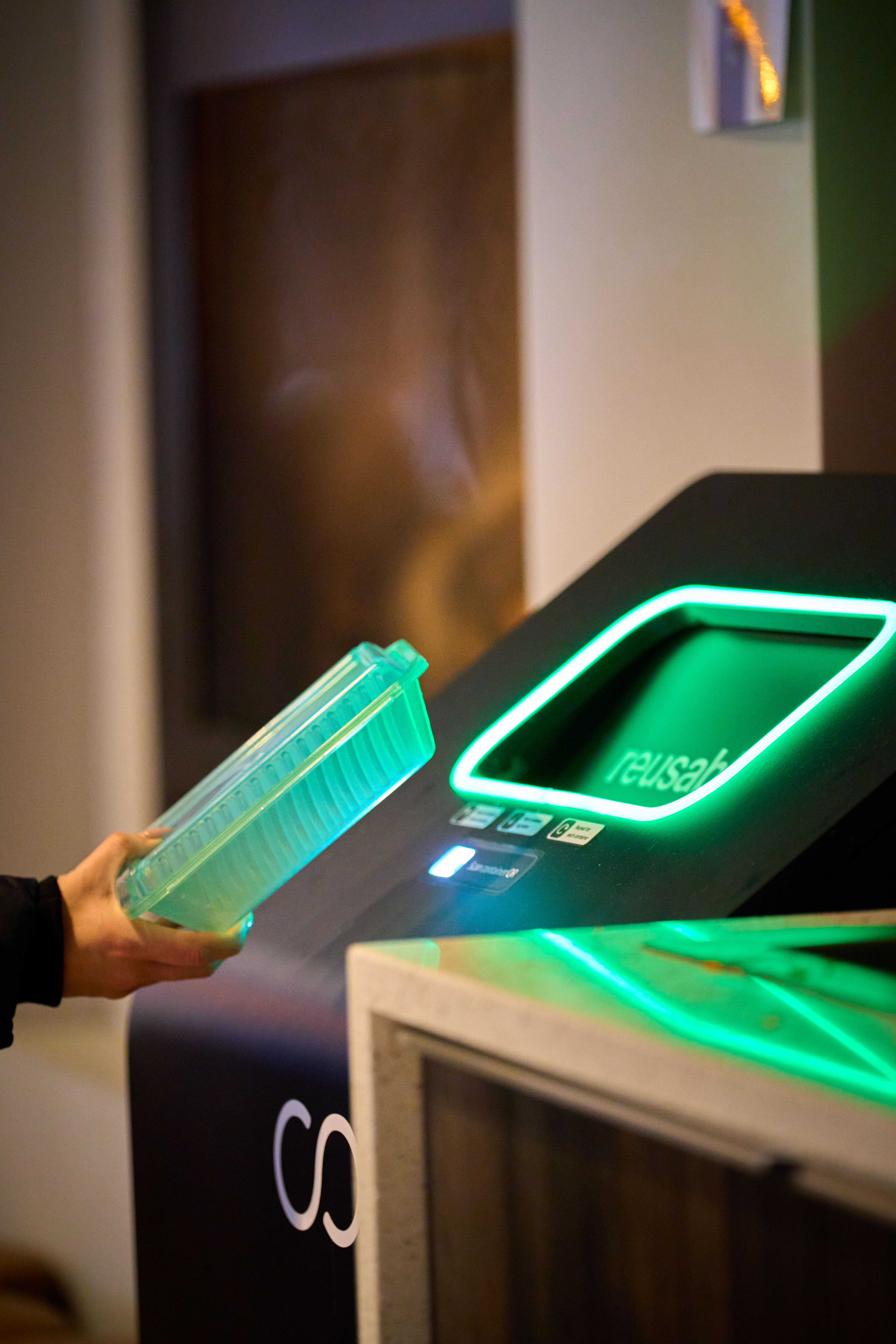
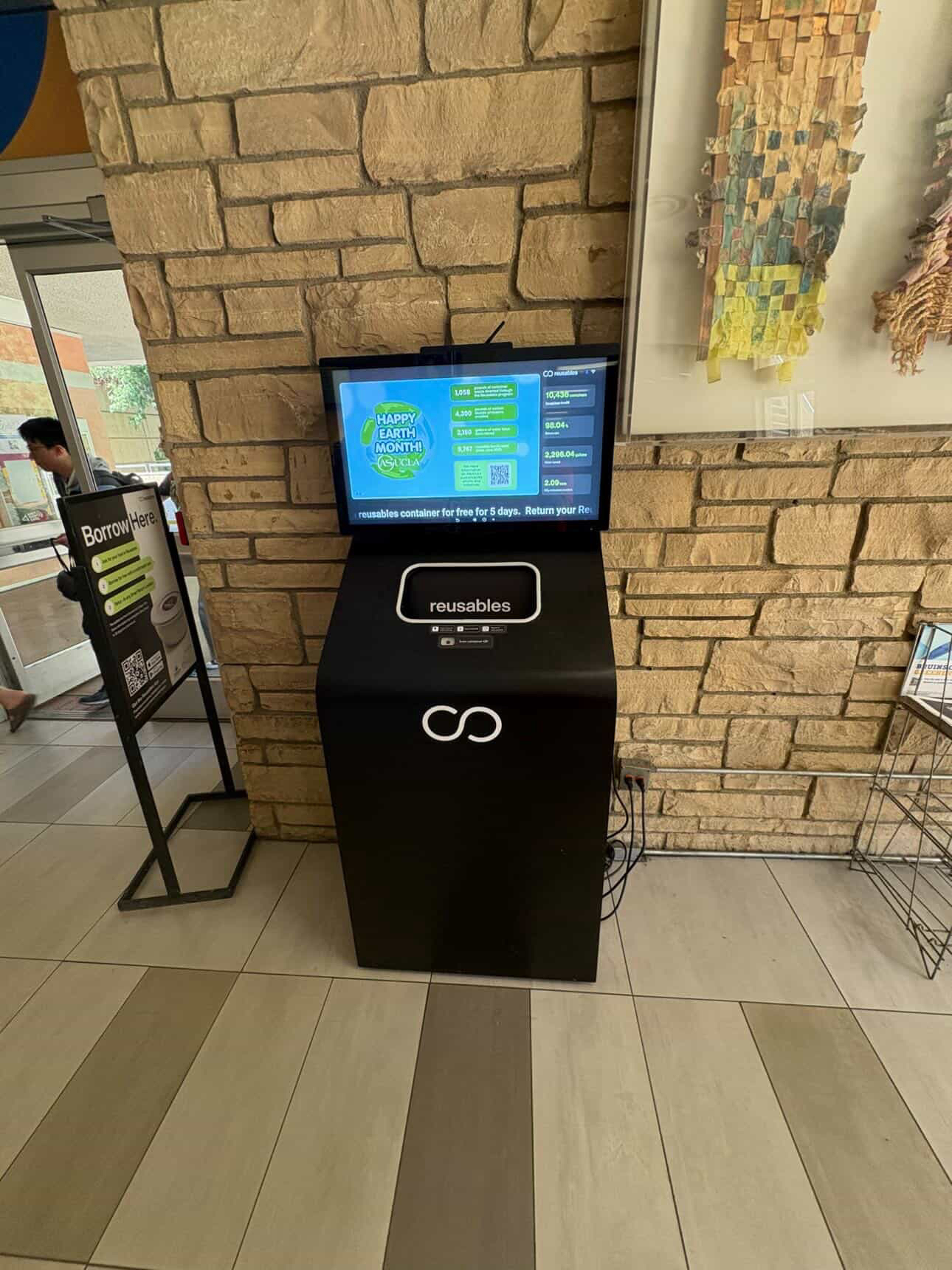
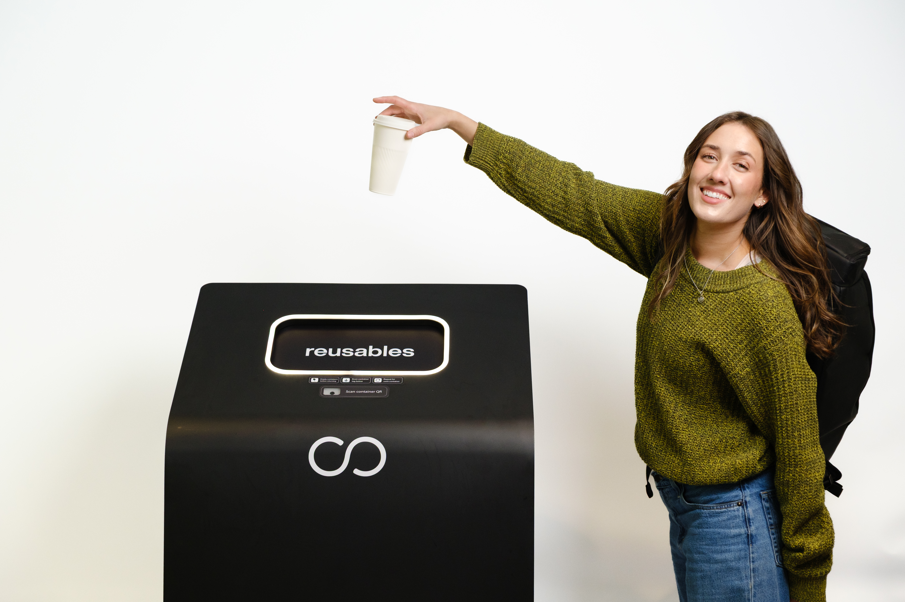
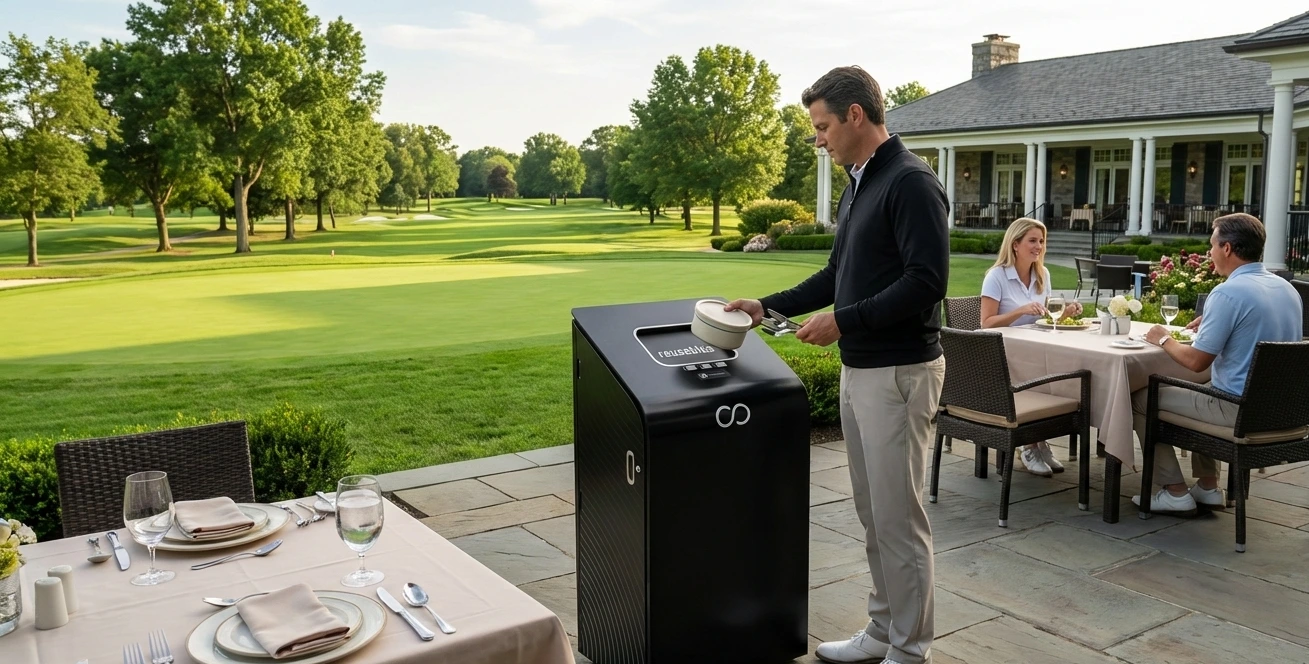
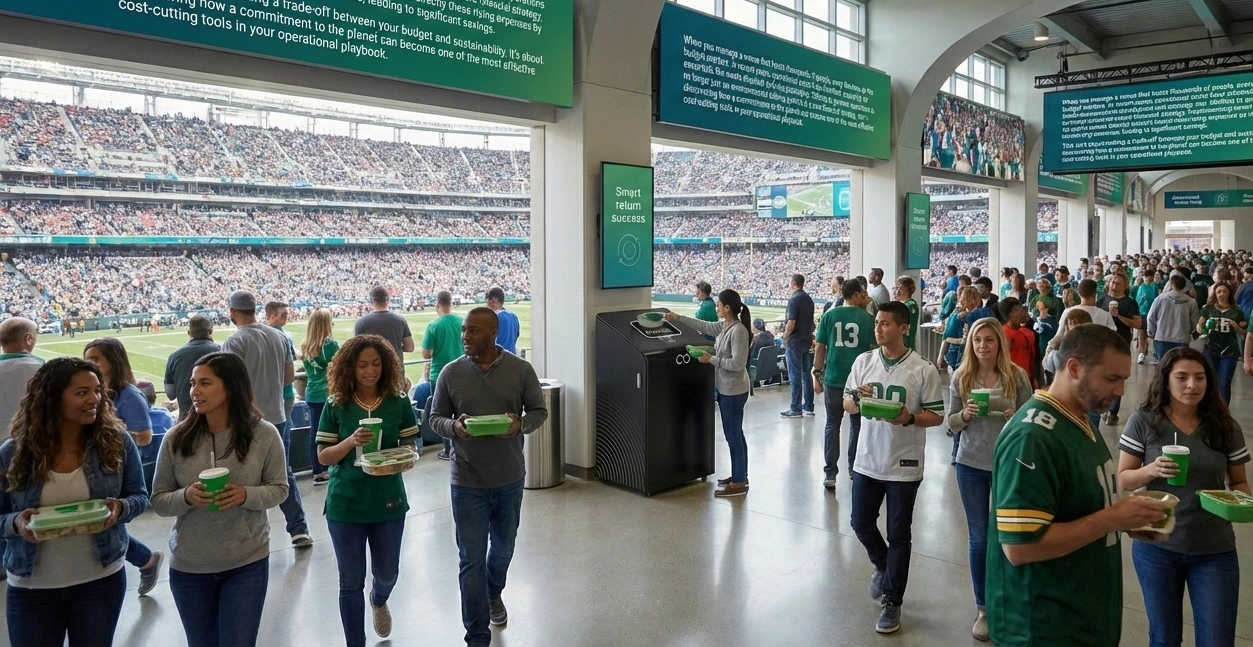
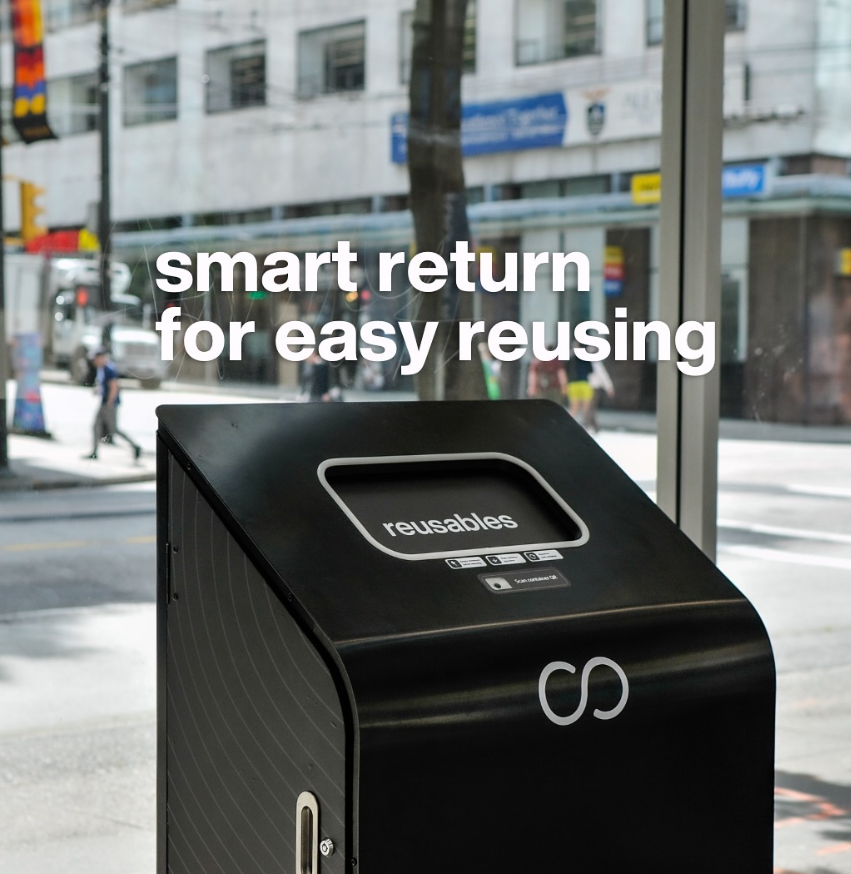
3. Return. When finished, the diner drops the container into a smart return bin located throughout the food court or campus. The bin automatically identifies the container and credits the return to the diner's account, all without any staff involvement.
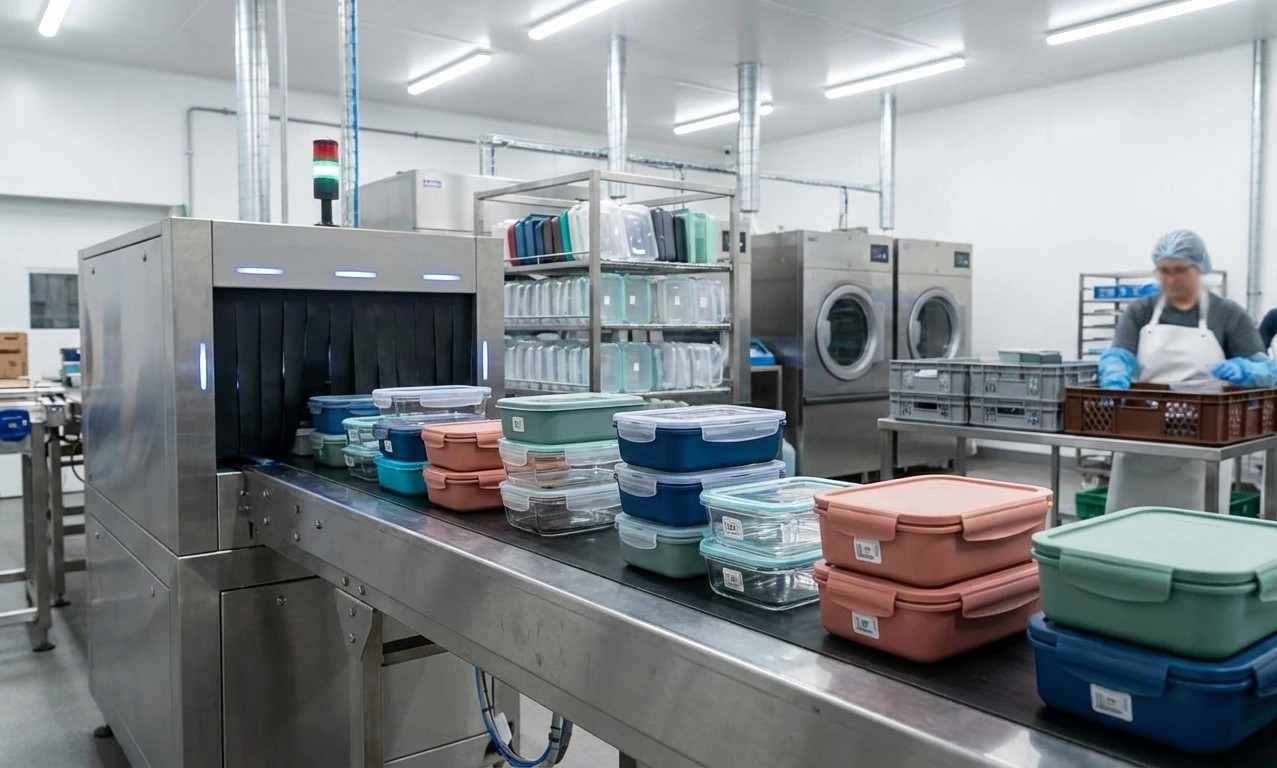
4. Clean and recirculate. Returned containers go through commercial dishwashing and re-enter circulation. The entire process is tracked digitally, giving operators full visibility into container inventory and return rates.
This frictionless workflow eliminates the barriers that plagued earlier reuse programs, such as token systems, manual check-in processes, and app fatigue.

Types of Reusable Containers for Food Courts
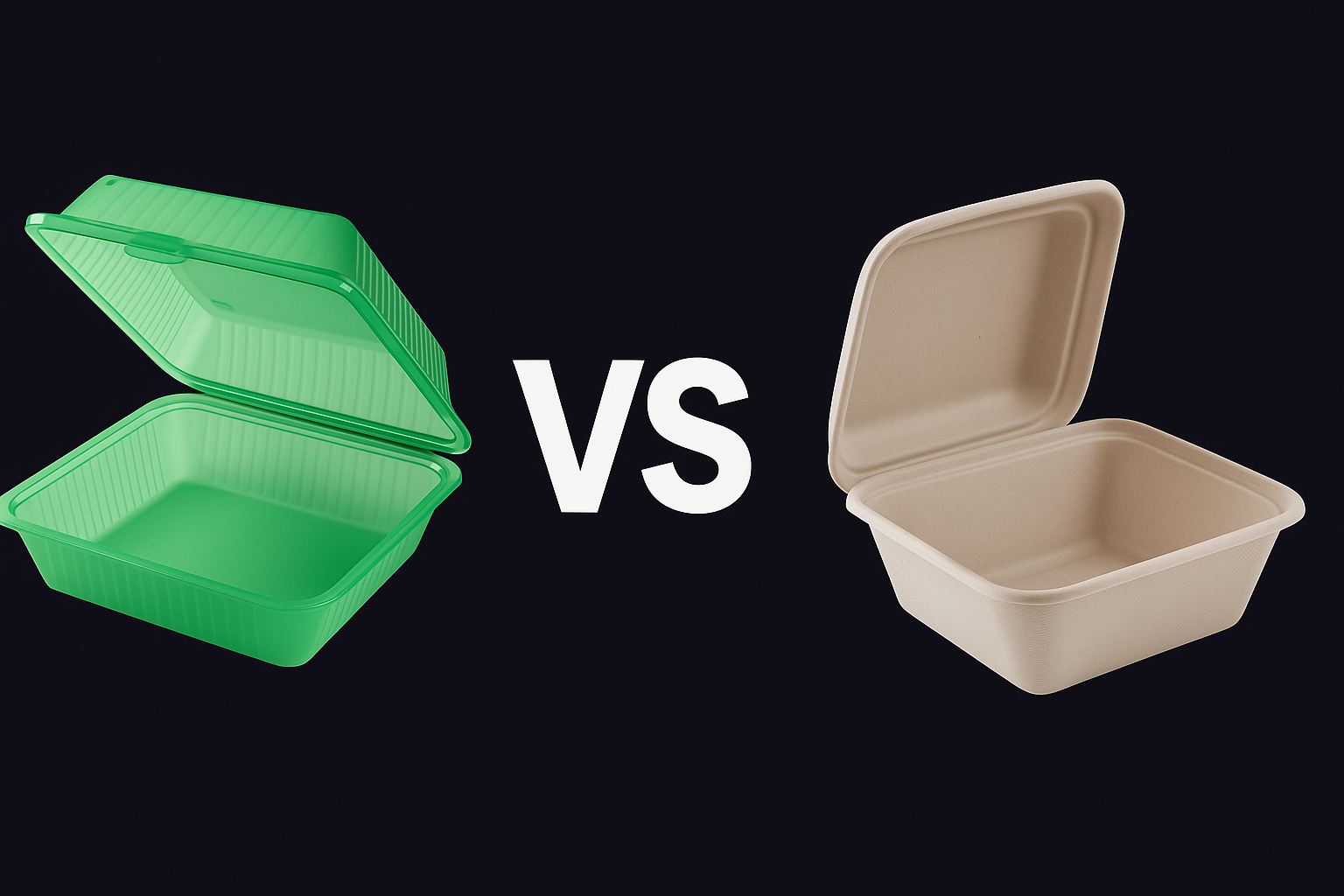
Choosing the right containers depends on your food court's menu mix and operational needs. The two most common material categories are:
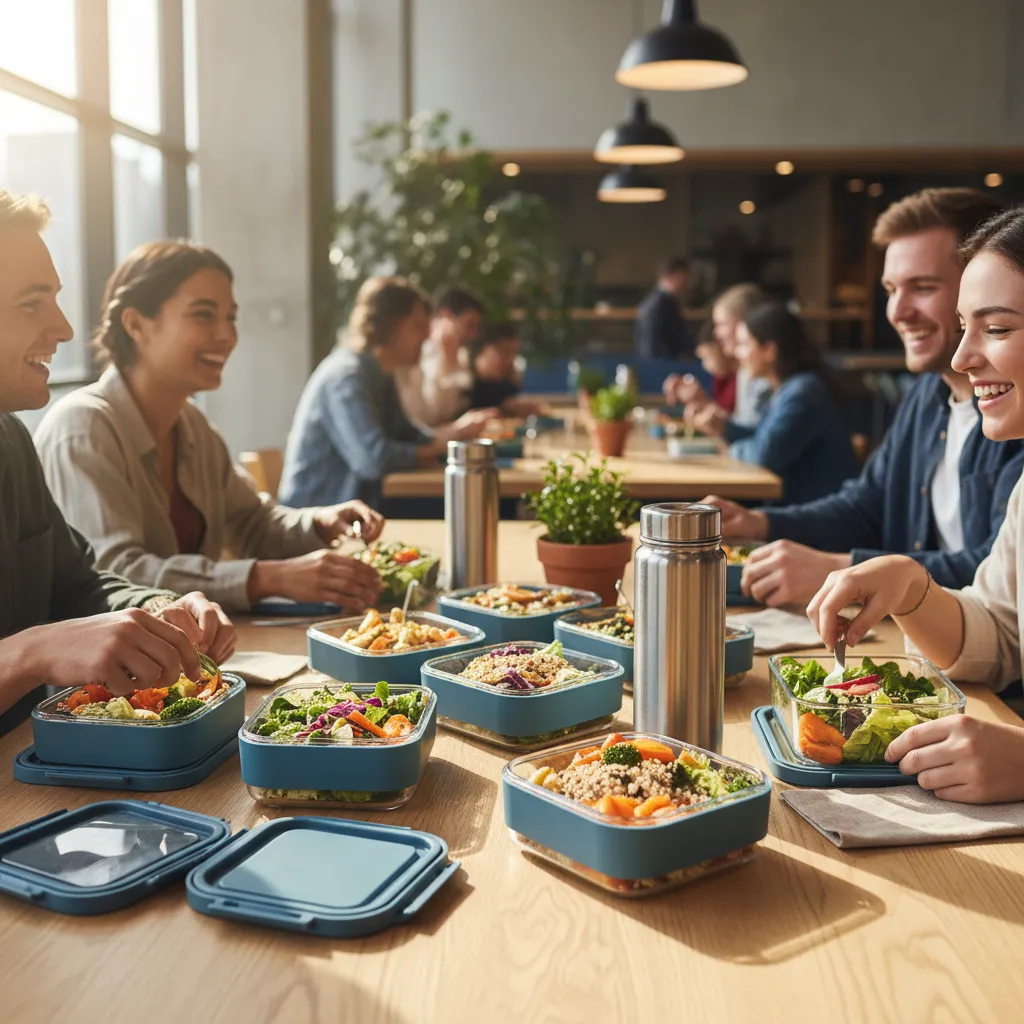
Durable Plastic Containers
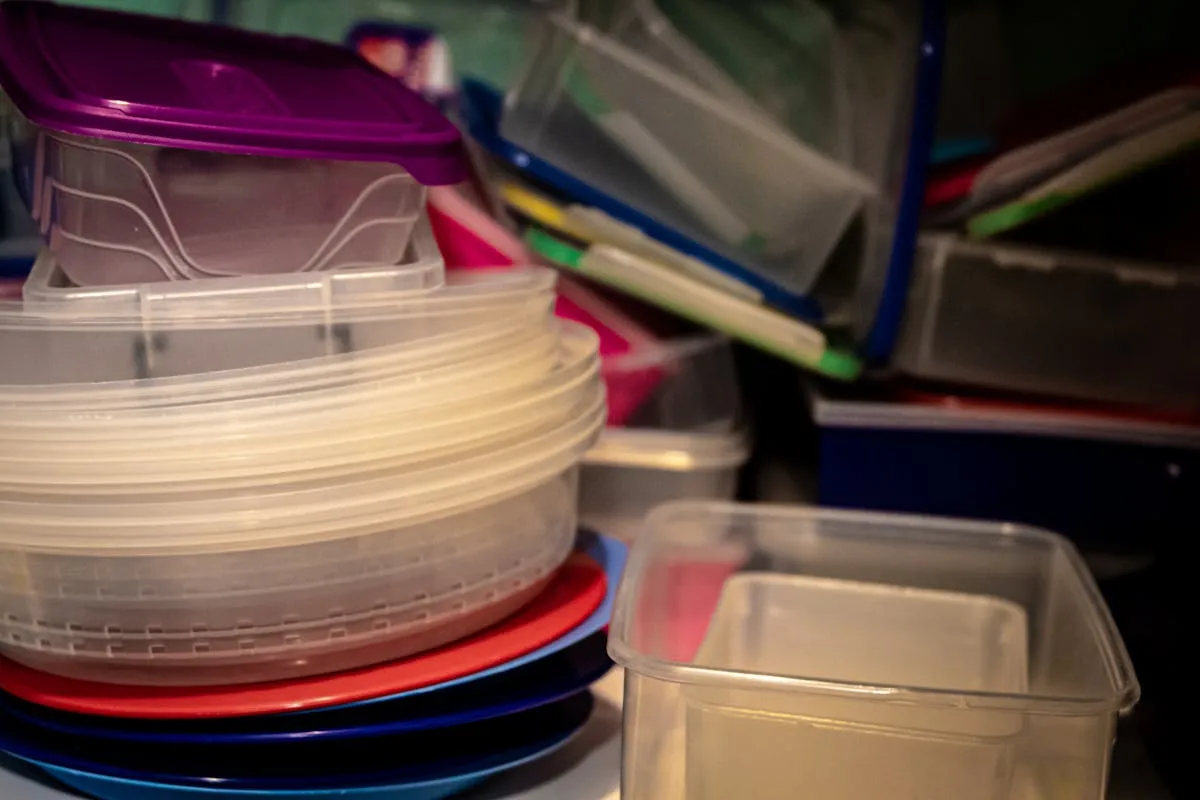
- Lightweight and stackable for easy storage
- Available in multiple sizes for entrees, sides, and salads
- Microwave-safe options available
- Lower per-unit cost than stainless steel
- Designed to withstand hundreds of commercial wash cycles
Stainless Steel Containers
- Extremely durable with a longer lifespan
- Premium look and feel that enhances the dining experience
- Naturally BPA-free and resistant to staining
- Heavier, which can improve perceived food quality
- Ideal for venues that want to project a premium brand image
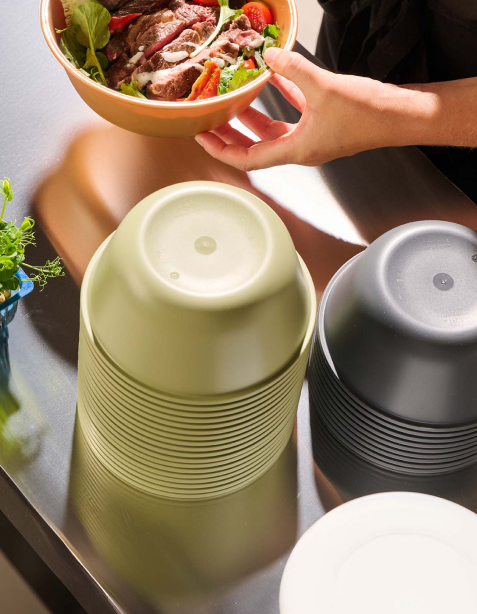
Many food courts use a mix of both materials depending on the vendor and menu. A container-agnostic tracking platform allows operators to manage different container types within a single system.
Key Features to Look for in a Reusable Packaging Platform
Not all reusable packaging solutions are equal. When evaluating platforms for your food court, prioritize these capabilities:
No-app checkout. The biggest barrier to adoption is friction. Systems that require diners to download an app see significantly lower participation rates. Look for platforms that work with existing campus cards or payment methods.
Automated accountability. The platform should handle reminders, holds, and late fees automatically, without staff intervention. This keeps return rates high while eliminating manual administrative burden.
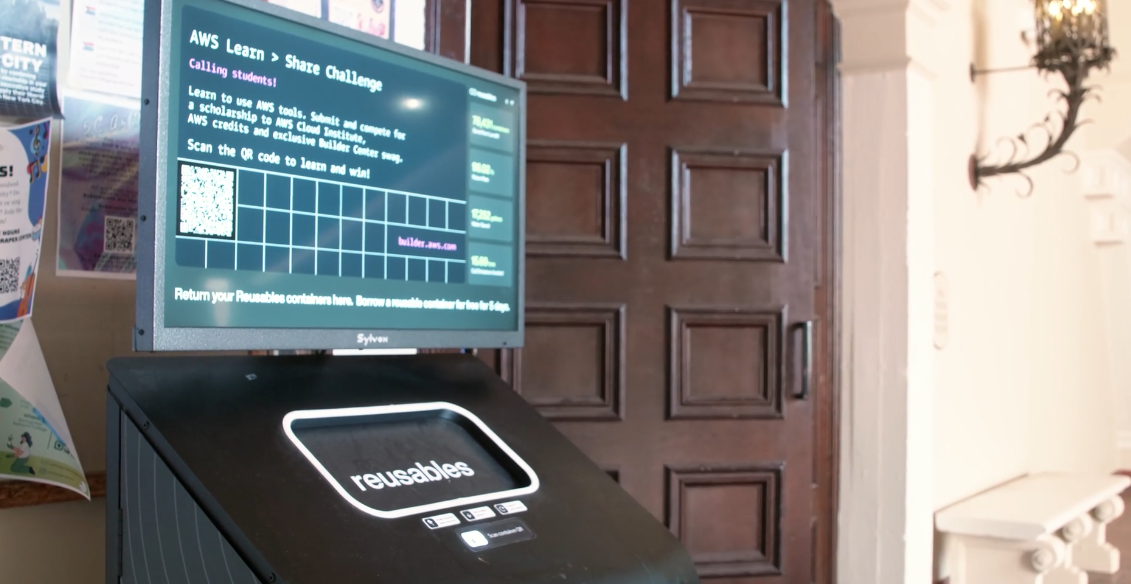
Smart return infrastructure. Automated return bins that identify containers and credit returns without staff scanning are essential for high-volume food courts. These bins should offer real-time fullness alerts so your team knows when to empty them.
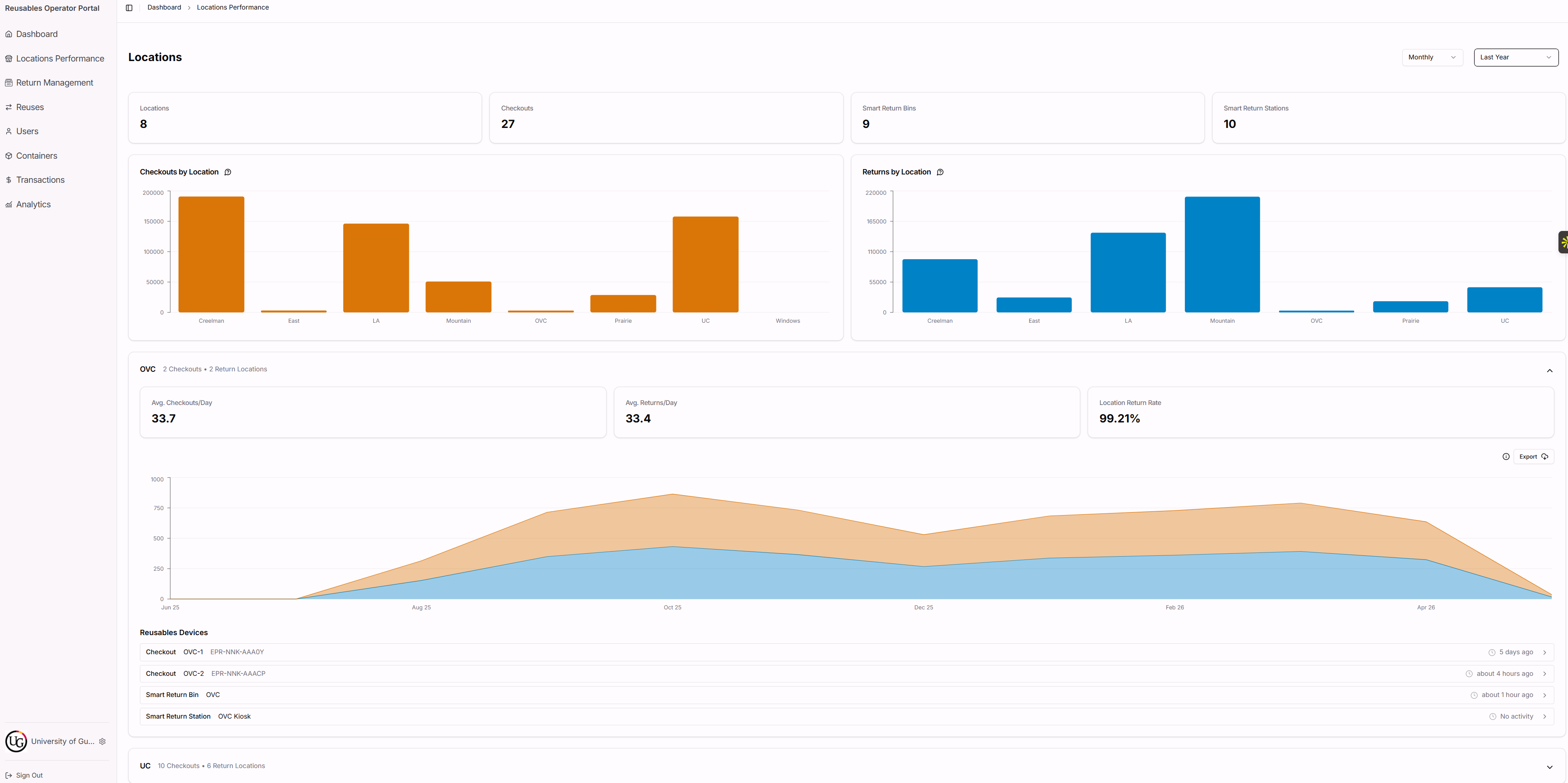
Real-time analytics dashboard. Operators need visibility into return rates, container inventory levels, usage patterns, and environmental impact metrics. This data is crucial for optimizing the program and reporting results to stakeholders.
Payment system integration. For campus food courts, seamless integration with systems like Transact, CBORD, Atrium, or TouchNet is non-negotiable. Diners should be able to use the same card they already carry.
Container-agnostic tracking. Whether you use QR codes, RFID tags, or both, the platform should support your preferred tracking method and work across different container types and materials.
How to Implement a Reusable Packaging Program
Rolling out a reusable packaging program in your food court follows a straightforward process:
Step 1: Conduct a Waste Audit
Before implementing any changes, understand your current waste profile. Track how many disposable containers you purchase monthly, what they cost, and where the most waste is generated. This baseline data will help you set goals and measure ROI.
For a detailed framework, see our guide to food court waste management strategies.
Step 2: Choose Your Containers and Technology Partner
Select containers that match your menu and a technology platform that fits your operational requirements. Prioritize partners that offer turn-key deployment, including hardware, software, containers, and implementation support.
Step 3: Install Return Infrastructure
Place smart return bins in high-traffic areas throughout the food court and surrounding spaces. Common locations include food court exits, building lobbies, and outdoor walkways. The more convenient it is to return a container, the higher your return rate will be.
Step 4: Train Your Staff
While modern systems minimize the staff workload, your team still needs to understand the basics: how the checkout process works, how to handle questions from diners, and how to monitor container inventory. Most turn-key providers include staff training as part of implementation.
Step 5: Launch and Communicate
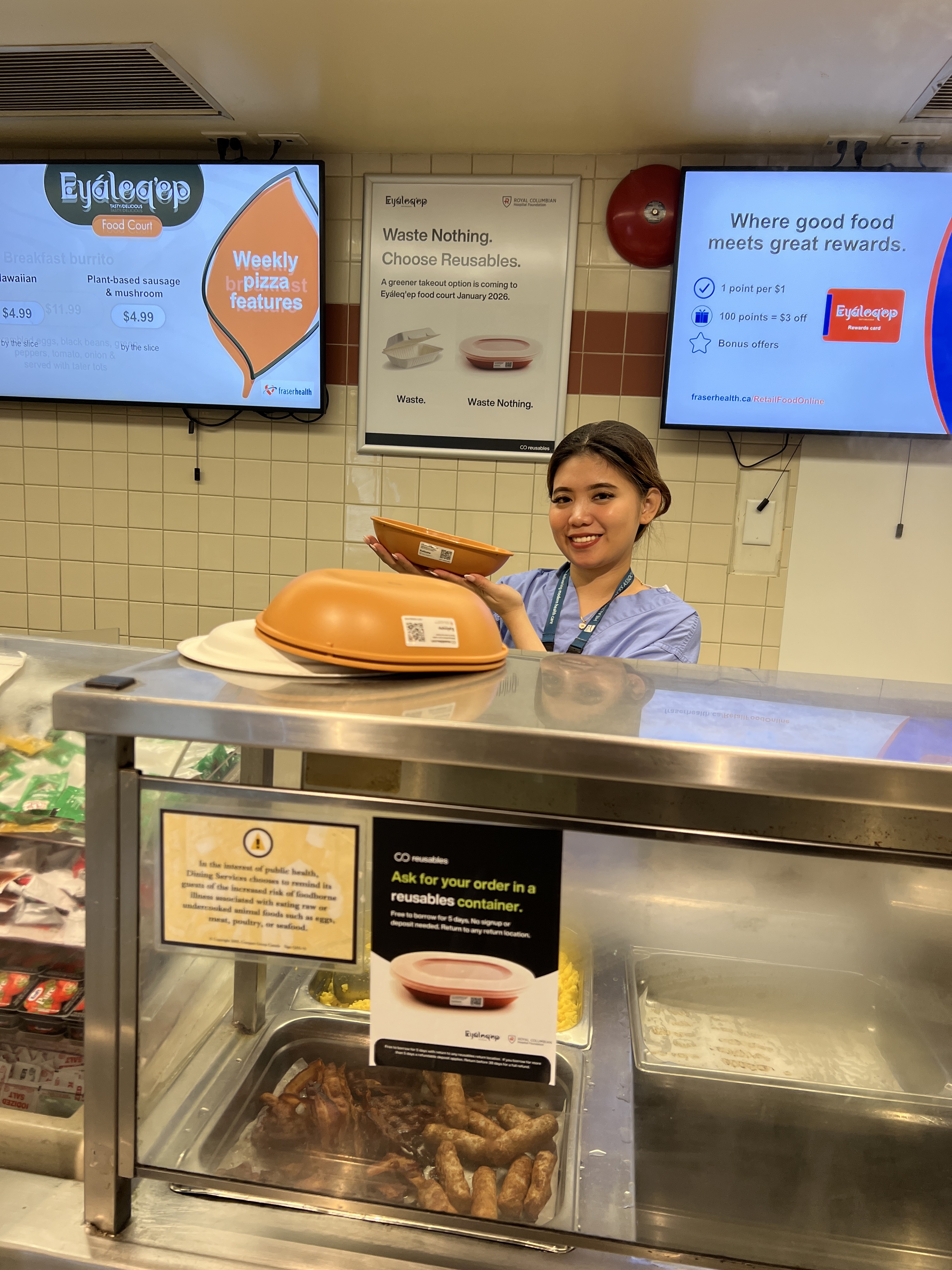
A strong launch campaign drives early adoption. Use signage at food court vendors, digital displays, social media, and email announcements to explain how the program works. Highlight that it is free for diners and takes only seconds to participate.
Step 6: Monitor and Optimize
Use your analytics dashboard to track return rates, identify bottlenecks, and adjust bin placement or messaging as needed. Most programs reach steady-state performance within the first few weeks of operation.
Ready to Eliminate Single-Use Packaging in Your Food Court?
See how Reusables.com's turn-key platform can reduce your packaging costs by 50% or more.
Overcoming Common Concerns
Food court operators often raise similar questions when considering reusable packaging. Here are practical answers to the most common concerns:
"Won't containers get lost or stolen?" Modern tracking systems with automated accountability achieve return rates above 95%. Automated holds and late fees create a natural incentive for timely returns without requiring staff to police the process.
"Will it slow down service?" The checkout process adds only a few seconds, comparable to swiping a payment card. In practice, many operators report no measurable impact on service speed. Learn more about maintaining speed of service with reusable cups.
"What about hygiene?" Reusable containers go through commercial dishwashing at temperatures that exceed food safety standards. This is the same sanitation process used for plates and utensils in any dining facility.
"Is the ROI really there?" Institutions that switch from disposables to reusables typically see packaging cost reductions of 50% or more. Combined with revenue from advertising screens on smart return bins and reduced waste hauling fees, the financial case is strong. For a deeper look at proving ROI, see our guide on how to measure reusable program success.
"What if diners don't participate?" Programs that remove friction, particularly those requiring no app and no deposit, consistently achieve high adoption rates. Gamification features like campus leaderboards and rewards programs further boost participation. Read more about gamification for reusable containers.
"Aren't reusables only better if the return rate is very high?" Yes, and well-designed systems are built around this fact. Life cycle assessments consistently show that after just a small number of uses, a reusable container has a substantially lower carbon footprint than its single-use equivalent — but only when the container is actually returned and reused. This is why automated accountability, smart return infrastructure, and frictionless checkout are core to any effective program, not optional add-ons.

Measuring the Impact of Your Reusable Packaging Program
Tracking the right metrics ensures your program delivers on its promises and provides the data you need for stakeholder reporting.
Return rate. The percentage of containers returned within the expected timeframe. Well-designed programs achieve 95-99% return rates.
Cost savings. Compare your monthly disposable packaging spend before and after implementation. Factor in reduced waste hauling fees and any revenue from advertising screens.
Waste diversion. Calculate the number of single-use containers eliminated and the equivalent weight of waste diverted from landfills.
Participation rate. Track how many unique diners use the system over time. A growing participation rate indicates strong adoption.
Container lifecycle. Monitor how many wash cycles each container completes. Durable containers can last hundreds of cycles, dramatically reducing cost per use compared to disposables.
A real-time analytics dashboard makes it easy to track all of these metrics without manual data collection. For more on this topic, explore our article on what a reusable container usage tracking dashboard provides.
Understanding Your Food Court's Waste Streams
Effective packaging reduction starts with understanding everything your food court discards, not just the containers. A structured waste audit helps you categorize and quantify each stream, revealing where the biggest opportunities for reduction lie. Once you have this baseline, you can set realistic goals and direct resources to the changes that will have the greatest operational and financial impact.
Food waste and scraps
A significant portion of any food court's waste comes from food itself. This includes pre-consumer waste from kitchen prep — vegetable peels, trim, and over-prepped batches — as well as post-consumer waste left on diners' plates. Research from ReFED indicates that nearly 70% of surplus food in foodservice comes from plate waste. Tracking both categories helps identify whether the problem sits in the kitchen or on the serving line, and informs decisions on portion sizing, menu engineering, and composting partnerships.
Packaging and disposable materials
Single-use takeout containers, cups, and utensils are typically the most visible and costly waste stream in a food court. Auditing this stream means counting how many types of disposables your vendors use, what materials they are made from, and what volumes are purchased monthly. This data gives you a concrete baseline for calculating the ROI of a reusable packaging program — and often reveals that the total spend on disposables is substantially higher than operators initially estimate.
Recyclable materials
Beyond packaging, food courts generate a steady flow of recyclable materials: plastic bottles, aluminum cans, cardboard, and glass. Contamination is the most common barrier to effective recycling. Clear, pictorial sorting signage at every bin, combined with back-of-house training on cardboard breakdown and container rinsing, keeps recycling streams clean and reduces hauling costs.
Grease and oil waste
Used cooking oil and grease require specialized handling. Improper disposal — including pouring grease down drains — leads to plumbing blockages and potential regulatory fines. Working with a licensed waste management partner to install dedicated sealed collection containers, with a regular pickup schedule, ensures compliance and creates an opportunity to redirect used oil into biodiesel or other recycled products.
Building Local Partnerships for Long-Term Success
A reusable packaging program addresses one major waste stream. Building broader partnerships extends the impact of your sustainability program and strengthens relationships with your campus community, local suppliers, and municipal services. These partnerships also help tell a more complete sustainability story to institutional leadership and prospective students.
Source from local farms and suppliers
Connecting with local agricultural producers reduces the carbon footprint associated with food transportation and supports the regional economy. Locally sourced, seasonal produce also tends to be fresher, which can improve food quality and reduce spoilage rates. Reaching out to regional food hubs or local farm networks is a practical starting point for incorporating more locally sourced ingredients into vendor menus without requiring a full supply chain overhaul.
Partner with community composting programs
Food scraps are an unavoidable byproduct of high-volume dining. Partnering with a local or municipal composting program diverts organic material from landfill, reduces methane emissions, and can lower waste hauling fees. The key is establishing clear collection points, training staff on proper food scrap separation, and making the process visible enough that diners understand how it works. Where commercial composting infrastructure exists, this is one of the more straightforward waste diversion steps available to campus dining operations.
Engage your campus community
Sustained participation in any sustainability initiative depends on the people using it daily. Regular communication about program performance — return rates, containers diverted, equivalent waste avoided — gives students and staff a tangible sense of impact. Leaderboards, periodic milestones, and direct feedback channels all help maintain engagement beyond the initial launch period. As programs like UCLA's have shown, continuous monitoring and community communication are key to maintaining high return rates over time.
Diversify your menu with plant-based options
Menu design is an underused lever in campus sustainability programs. Plant-forward dishes require significantly less land and water to produce and generate fewer greenhouse gas emissions than meat-heavy menus. This does not require eliminating animal proteins — adding well-designed plant-based options alongside existing menu items meets growing student demand for healthier and more sustainable choices without forcing a complete overhaul of vendor offerings.
Navigating Compliance and Regulatory Requirements
Sustainability mandates are tightening across North America. Many municipalities now restrict single-use plastics outright, and institutional policies increasingly set binding waste diversion targets. A proactive approach to compliance protects your institution from penalties and positions your dining program ahead of requirements rather than scrambling to meet them at the last minute.
Know your local waste regulations
Local ordinances vary significantly by city and state, covering everything from recycling requirements to composting mandates and grease disposal standards. Reviewing your municipality's current waste management regulations is the first step. Dining directors managing multi-campus operations may face different requirements across locations, making a site-by-site compliance review worth the effort before rolling out a unified program.
Partner with municipal waste services
Local municipal waste services are a practical resource for clarifying disposal requirements and identifying composting or recycling infrastructure that can support your program. Building a working relationship with these services — rather than treating them purely as enforcement bodies — streamlines compliance and can surface cost-saving options, such as shared composting collection or coordinated recycling pickups.
Maintain documentation and records
Compliance depends on documentation as much as practice. Maintaining records of waste audits, hauler manifests, staff training sessions, and program performance data protects your institution during inspections and provides the evidence base for stakeholder reporting. Reusable packaging platforms that offer automated data export and environmental impact reporting make this significantly easier, turning compliance recordkeeping into a byproduct of normal program operation rather than a separate administrative burden.
Prepare for future mandates
The trajectory of single-use plastic regulation is clear. Institutions that implement reusable systems now avoid the cost and disruption of a rushed transition when mandates arrive. A functioning reusable packaging program with demonstrable return rates and waste diversion data is also a stronger position from which to engage with policymakers, accreditation bodies, and institutional leadership on sustainability commitments.
Related Articles
- 7 Food Court Waste Management Strategies That Work
- How Reusable Container Programs Work: A Director's Guide
- The Real Cost of Disposable Containers for Universities
- How Gamification for Reusable Containers Drives Returns
- A Guide to Smart Reusable Container Inventory Management
Ready to Eliminate Single-Use Packaging in Your Food Court?
See how Reusables.com's turn-key platform can reduce your packaging costs by 50% or more.
Frequently Asked Questions
How much does a reusable packaging system cost for a food court?
Costs vary depending on the size of the operation and the number of containers needed. However, most institutions recover their investment within the first year through reduced disposable packaging purchases and lower waste hauling fees. Many providers offer turn-key pricing that bundles hardware, software, and containers.
Can reusable packaging work with multiple food court vendors?
Yes. A centralized reusable packaging platform allows every vendor in the food court to participate in the same system. Diners borrow from any vendor and return to any smart return bin, regardless of where they picked up the container.
What happens if a diner does not return their container?
Automated accountability systems send reminders after a set period. If the container is not returned, a small replacement fee is charged to the diner's account. This approach keeps return rates high without requiring staff intervention.
How are reusable containers cleaned?
Containers are commercially washed at high temperatures that meet or exceed food safety standards. The cleaning process is the same one used for plates, bowls, and silverware in any institutional kitchen.
Do diners need to download an app to participate?
Not with modern reusable packaging platforms. The best systems work with existing campus cards, credit cards, or employee badges. Diners tap to borrow and drop to return with no app required.
How long do reusable food court containers last?
Durable plastic containers typically last 500 or more wash cycles, while stainless steel options can last even longer. This means a single reusable container can replace hundreds of disposable ones over its lifetime.
Other stories you may find interesting
.png)
.avif)


.webp)


Watch the Webinar
Learn How to Eliminate Single-Use Waste
Get instant access to our expert webinar and discover how leading institutions reach 99% return rates through smarter reuse systems.

© Reusables™. All rights reserved.