
Stories

Fraser Health
Fraser Health's Reuse System

August 31, 2026


3.5k
Reuses
.svg)
1.5k
Individuals

100%
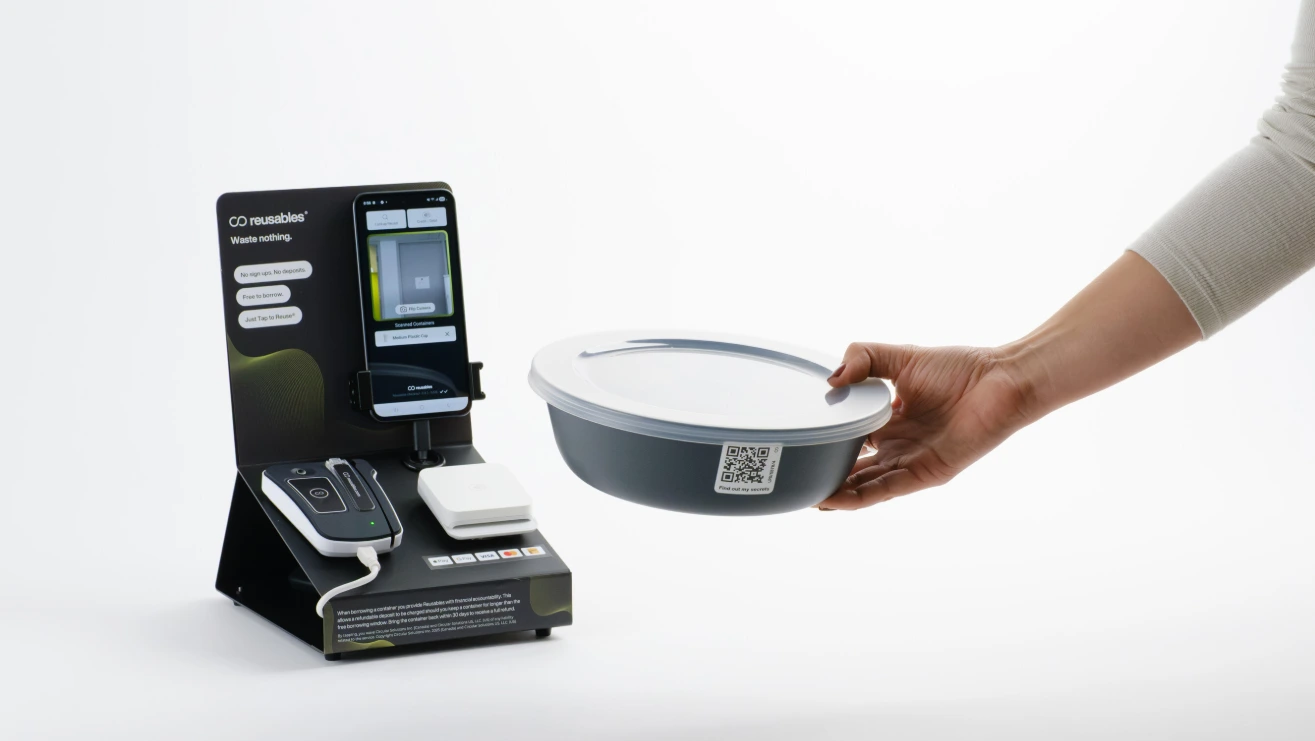
Credit/Debit Checkout. No Sign up, no registration, no charge.
Royal Columbian Hospital is among the oldest hospitals in British Columbia and one of the busiest in the Fraser Health Authority. It is located in New Westminster overlooking the Fraser River. Fraser Health is the largest regional health authority in British Columbia, Canada, providing public medical and support services to over two million people.
Royal Columbian Hospital: Reusables' first hospital cafeteria deployment
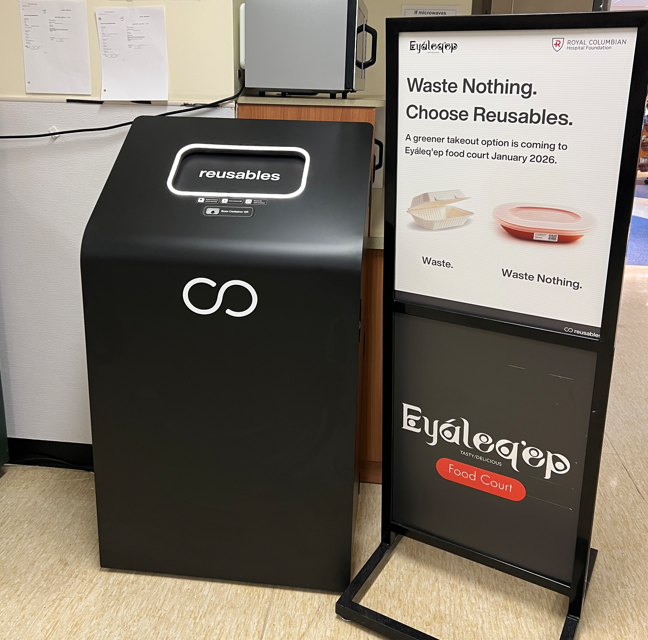
Earlier this year, Reusables launched its first hospital cafeteria program at Royal Columbian Hospital (RCH), part of Fraser Health. The deployment marks a step beyond our work in higher education — extending the reuse model into a healthcare foodservice environment where staff, patients, and visitors all share the same dining space.
The context
Hospital cafeterias serve a fast-moving, mixed customer base. Most foodservice waste at RCH came from single-use takeout containers used by staff grabbing meals between shifts. Reducing that waste required a system that fit the way people actually pay at a hospital — predominantly credit and debit, rather than the student card model we've used across university campuses.
The deployment
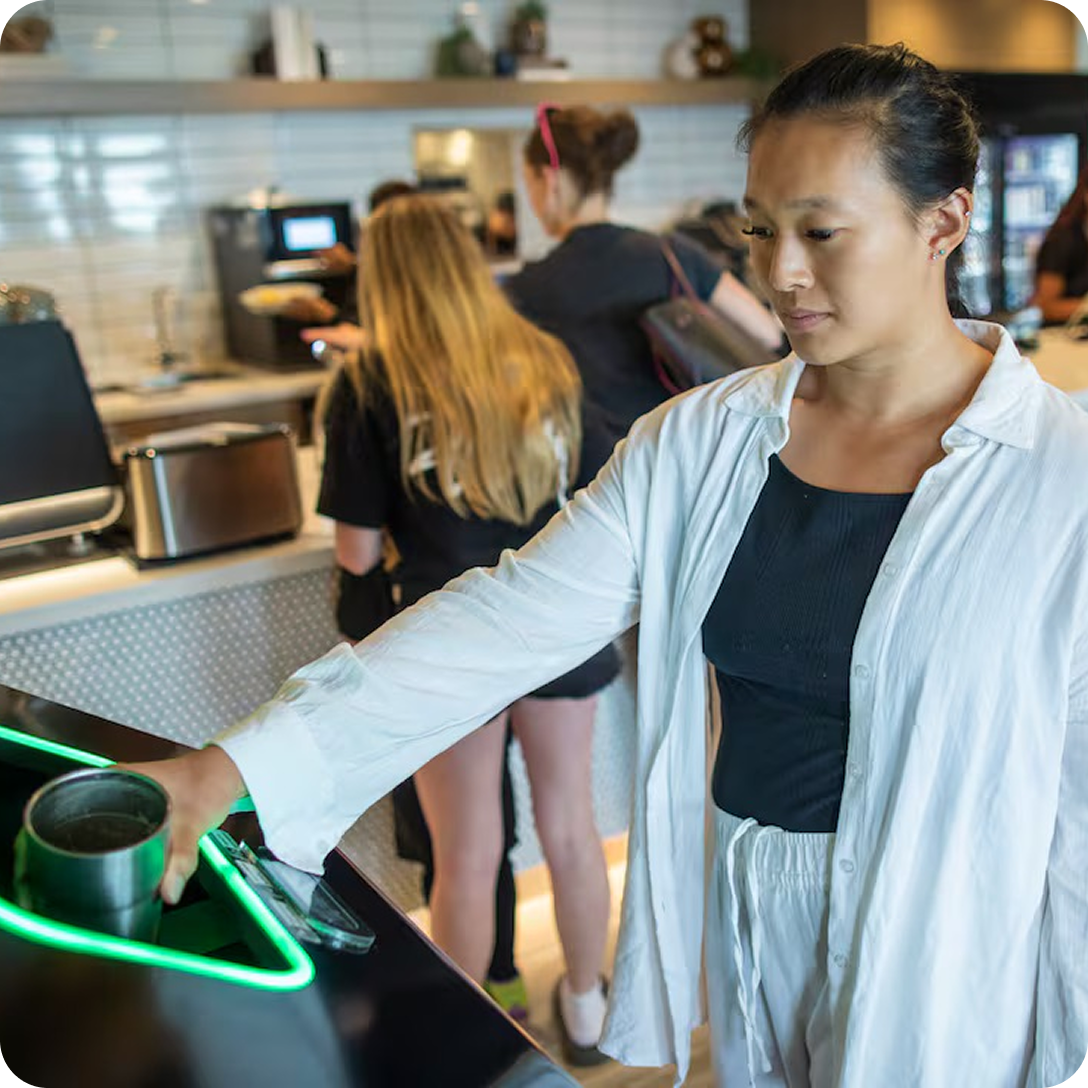
The RCH program runs on two checkout stations and two return bins inside the cafeteria. The checkout flow has been rebuilt to default to credit or debit payment, so customers can pick up a reusable, tap their card, and leave — no separate account, no app download. The system integrates with RCH's existing point-of-sale, so cafeteria staff don't manage a parallel process alongside their regular operations.
The results so far
- 3,500+ reuses logged
- 96%+ return rate
- An average of 6.6 reuses per container in circulation
- Roughly 90% of cafeteria customers opt in when offered a reusable
The 96% return rate is what makes the rest of the numbers possible. Containers that come back keep working — at 6.5 reuses each, every container in the pool is displacing several single-use equivalents, and the inventory keeps cycling without large additions of new stock.
From the cafeteria floor
"I'm excited for the reusable container because it reduces waste, saves money, and keeps the food fresh. It's a small change that helps the environment." — Florence, dining cafeteria, Royal Columbian Hospital
What this means
RCH demonstrates that the reuse model translates outside the university segment when the checkout layer is built around the customer's actual payment behaviour. For institutions evaluating reuse in mixed-traffic foodservice environments — hospitals, corporate campuses, transit hubs. A credit/debit-first checkout removes a friction point that previously kept the model tied to closed-loop card systems.
Other stories you may find interesting
%20(1).jpg)







© Reusables™. All rights reserved.