
Stories

University of Victoria
University of Victoria Food Services Modernizes Reusable Dining

January 29, 2026


25k
Reuses
.svg)
3k
Individual People

99%
Using Student ONECard
The University of Victoria (UVic) is a leading public research university in British Columbia, known for its commitment to sustainability and innovation.
Background
University of Victoria Food Services (UNFS) has long been committed to reducing waste and advancing campus sustainability initiatives. When The Cove opened in 2022, UNFS introduced a reusable container program using green eco‑boxes to minimize single‑use packaging in residence dining.
The program was well‑received by students and aligned with UVic’s zero‑waste goals. However, as participation grew, operational limitations of the original system began to surface, creating challenges for staff, students, and inventory management.
The Challenge
Despite strong adoption, the original eco‑container program relied on a manual card‑exchange model that became increasingly difficult to manage at scale.
Inventory Shortages During Low‑Traffic Periods
Because the program lacked a defined return timeline,containers were often held by students for extended periods. During exams,academic breaks, and other low‑traffic times, containers were not returned promptly, leading to low inventory levels and, at times, complete shortages.
Return Process Friction
Students were required to return containers at staffed cashier stations. This created friction for those in a hurry or returning containers without purchasing food, making the process less convenient and discouraging consistent participation.
Lack of ONECard Integration
The eco‑card system operated separately from UVic’s ONECard, even though first‑year residence students already relied on ONECard for their meal plans. This extra step at checkout reduced efficiency and created an experience that felt disconnected from the rest of campus dining.
Limited Data Visibility
Finally, the program offered little access to usable data. UNFS had no reliable way to track container circulation, return behaviour, or program performance, making it difficult to demonstrate environmental impact ormeasure progress toward UVic’s zero‑waste goals.
UNFS needed a solution that preserved the sustainability benefits of reusable containers while improving inventory control, return convenience, system integration, and data transparency without adding complexity for staff or students.
The Solution
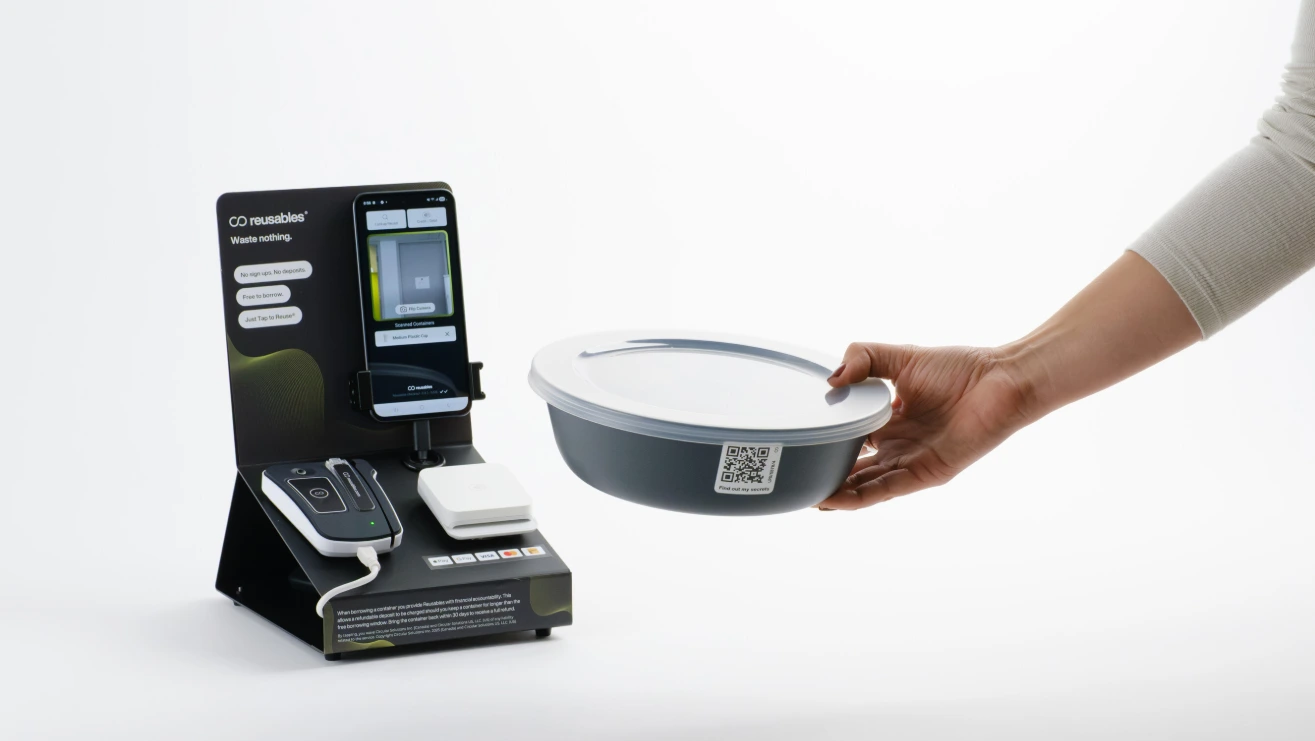
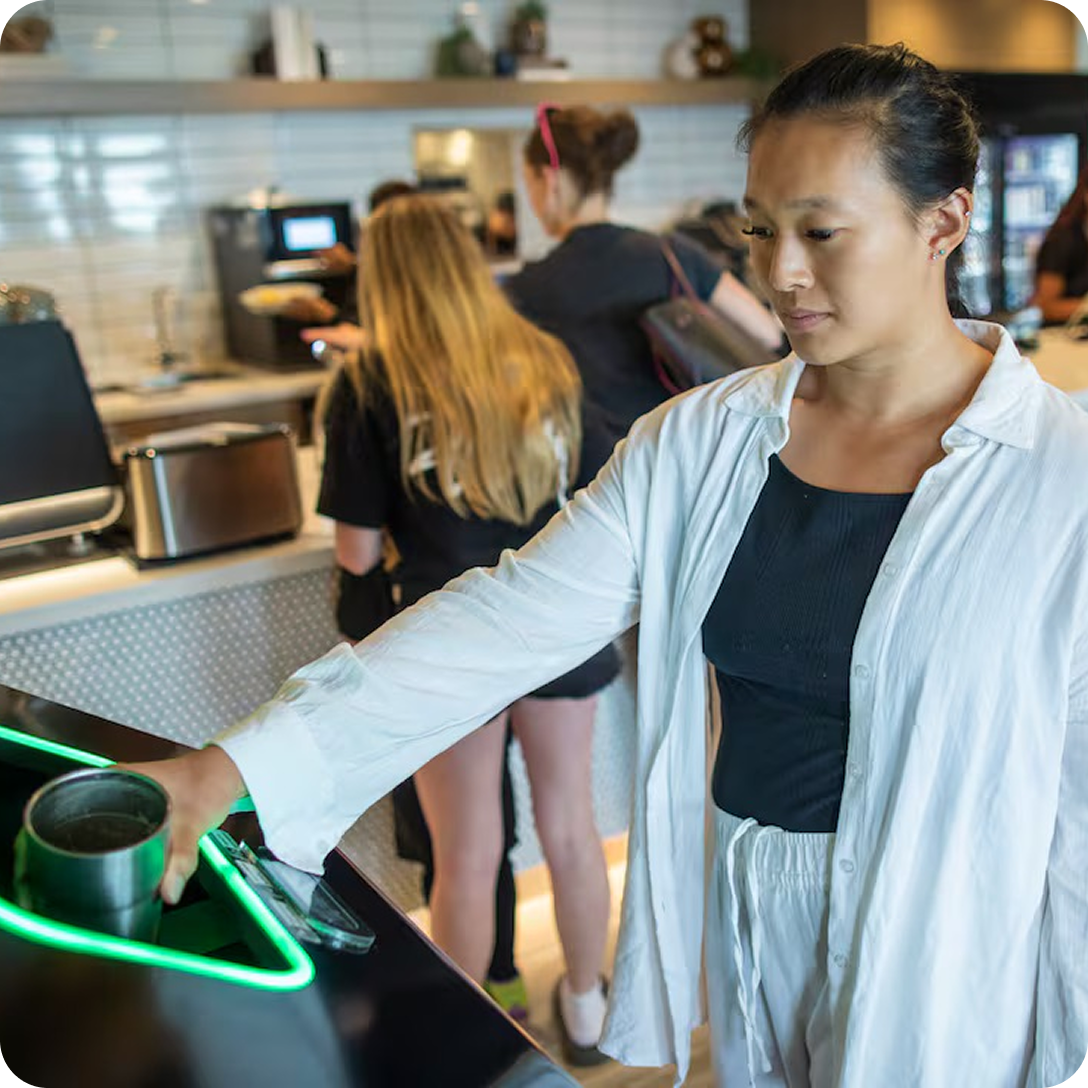
In summer 2024, UNFS partnered with Reusables to modernize its container program by introducing Reusables’ self‑serve checkout and return terminals.
The new system replaced the manual card‑exchange model with a seamless, automated experience:
- Self‑serve - checkout and return terminals reduced reliance on staffed cashier stations
- ONECard - integration allowed students to use the same credential they already rely on for meals
- Defined - return timelines improved container circulation and inventory availability
- Real‑time - data dashboards provided visibility into usage, returns, and program performance
The result was a reusable system that felt intuitive for students, manageable for staff, and measurable for sustainability reporting.
Impact & Results (as of January 2026)
Midway through the 2025/26 academic year, University of Victoria Food Services has seen strong engagement and measurable results from the Reusables program.
- Over 97% container return rate, significantly improving inventory availability
- 25,000+ reuses recorded across the program
- Each container reused an average of 15 times so far this school year
- 3,000+ unique users participating in reusable dining
- 99% of reuses completed using student ONECard, reinforcing a seamless experience
The data also highlights the power of individual behaviour change. One highly engaged participant alone has helped avoid 181 single-use containers in a single semester, demonstrating how repeat participation can drive meaningful waste reduction at scale.
These insights—available through Reusables’ real-time dashboards—enable UNFS to clearly quantify environmental impact while continuously optimizing operations.
Looking Ahead
By modernizing its reusable container program, University of Victoria Food Services strengthened its ability to support sustainability goals at scale. With improved inventory control, seamless ONECard integration, and clearer data visibility, UNFS is better positioned to expand reusable dining and demonstrate measurable progress toward a zero‑waste campus.
Other stories you may find interesting
%20(1).jpg)




© Reusables™. All rights reserved.