





When Your Reuse Partner Becomes Your Biggest Constraint
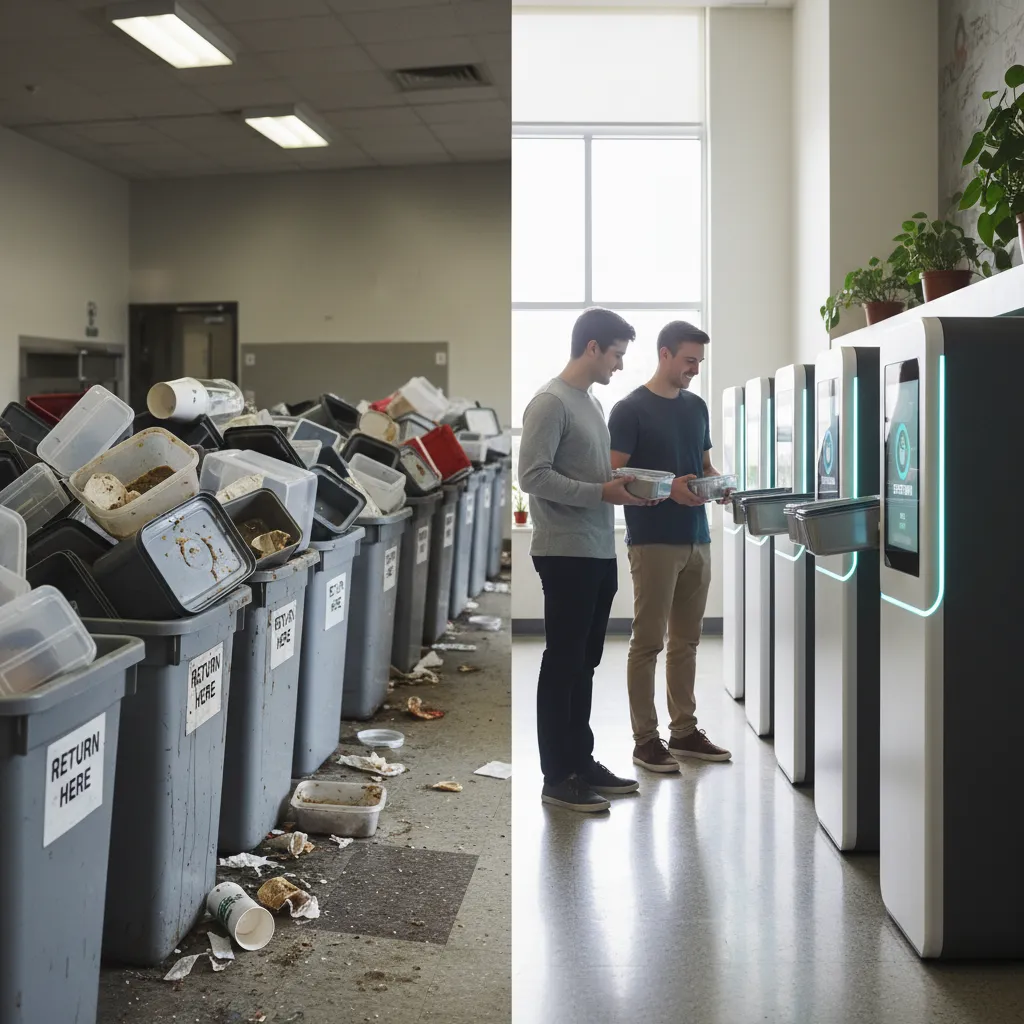
- One container. One supplier. No options. Proprietary systems lock you into a single container line. If you want different sizes, materials, or form factors, you’re stuck waiting for your vendor to build them — or you can’t get them at all.
- Students aren’t using it — and your vendor blames "education." Low adoption isn’t a marketing problem. It’s a friction problem. If the checkout process requires an app download, a separate account, or a deposit workflow, students will skip it. Every single time.
- Return bins that look like trash cans don’t help adoption. If return infrastructure is ugly, confusing, or limited to one location, it signals to students that the program isn’t serious. Design and placement are adoption levers — not afterthoughts.
- No real operator visibility. You’re paying for a reuse platform, but you can’t see real-time data on return rates, container inventory, financial transactions, or program health. You’re running a sustainability program on faith.
- The cost keeps going up — with no way to offset it. Your current vendor charges for containers, platform fees, and support. But there's no revenue mechanism built in. The program is a pure cost center with no path to financial sustainability.
- Washing and storage are your problem now. Many reuse providers drop off containers and leave the washing logistics to you. If your dishwashing capacity is already strained or you don't have storage space for clean/dirty inventory, the system breaks down.
You committed to reuse for the right reasons. But the system you chose created new problems instead of solving the original ones. The fix isn’t abandoning reuse — it’s switching to a system built for how campuses actually operate.
How it works
Everything Your Current System Should Have Been
Container-agnostic: Use our partner containers (deSter, Ozzi, GET, Returnr), your existing inventory from your current vendor, or a mix. No rip-and-replace required.
Tap-to-Reuse™: Students tap any campus card, credit card, debit card, or mobile wallet to borrow. No app. No account. No deposit. Checkout takes less than a second.
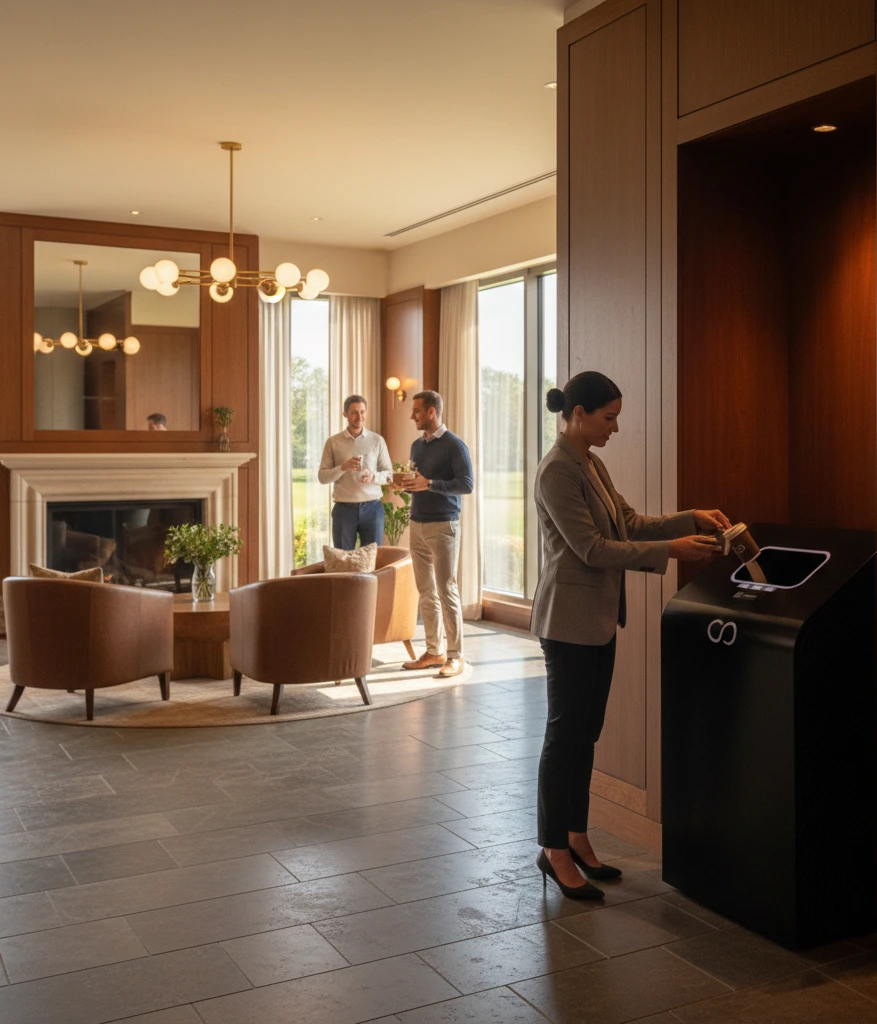
Smart Return Bins: 24/7 tamper-proof return stations placed across campus. Instant refund confirmation. Auto-fullness alerts for your team.
Live Operator Dashboard: Real-time data on every container — who has it, when it was checked out, whether it’s been returned, and what your program’s financials look like.
External Washing Partners: Don’t have the dishwashing capacity? We connect you with professional washing facilities nearby.

It’s now saving between 8,000 and 10,000 units of paper cups, plastic lids and paper takeout containers per month. The initial cost of the system paid for itself within about two months.
Caitlin Lundy
Director of Sales & Communications, Hollyburn Country Club
Your Reuse Program Should Generate Revenue — Not Just Cost Money
Smart Media™ turns Smart Return Bins into digital advertising screens. Brands pay to reach sustainability-minded students at the moment of reuse, generating approximately $5,000 per screen per year. Combined with contract-locked pricing that won’t creep up on renewal, Reusables flips the cost narrative: your reuse program becomes financially sustainable, not just environmentally sustainable.














FAQs
Can we use our existing containers from our current vendor?
Yes. Reusables is container-agnostic. We can retrofit your current containers with RFID/QR tracking labels and connect them to our system. You're not forced to throw away working inventory to switch. Over time, you can phase in new containers from our partner network as replacements are needed.
How is Tap-to-Reuse different from an app-based system?
Tap-to-Reuse™ requires zero downloads, zero account creation, and zero onboarding. Students tap any payment method or campus card and walk away with a container. App-based systems require students to find the app, download it, create an account, and learn a workflow before their first use — which is why adoption rates are low.
What makes your return rate higher than other systems?
Three things: (1) Smart Return Bins are placed across campus for 24/7 access, so returning is always convenient. (2) Automated financial accountability — students are charged if they don't return, and refunded the moment they do. (3) No friction at checkout means more people participate, and more participants means more returns.
What does contract-locked pricing mean?
Your pricing is fixed for the duration of your contract. No annual increases, no surprise fees, no renegotiation games. You know exactly what the program costs from day one through year three (or whatever term you choose).

© Reusables™. All rights reserved.