






The Painful Reality of Running Reuse In-House
- Containers disappear — and you have no idea where they go. Without container-level tracking, your inventory shrinks every semester. You’re reordering containers to replace the ones that never came back, with no data on why.
- Return rates are low because returning is inconvenient. If students have to walk across campus, find a specific bin, or remember to bring containers to a single drop-off point, they won’t. Friction kills return rates — every time.
- Your team is spending hours managing what should be automatic. Counting containers, chasing unreturned inventory, reconciling spreadsheets, troubleshooting complaints. In-house reuse programs create a full-time job that nobody budgeted for.
- No student card integration means half your diners can’t participate. If your system requires a specific credential or sign-up process, you’re excluding students paying with credit cards, debit cards, or dining dollars through other systems.
- The containers themselves are becoming a problem. Low-quality containers crack, stain, and look worn after a few washes. Students notice — and they stop wanting to use them. Container quality directly drives adoption rates.
- You've already invested — and switching feels risky. You've bought containers, trained staff, and told the campus you're doing reuse. Walking away from that investment to start over with a new system feels hard to justify — even when the current one isn't working.
Running reuse in-house means solving logistics, tracking, quality control, and student adoption simultaneously — without the technology, infrastructure, or support to do it well. The ambition is right. The system needs to catch up.
How it works
Keep Your Containers. Upgrade Everything Else.
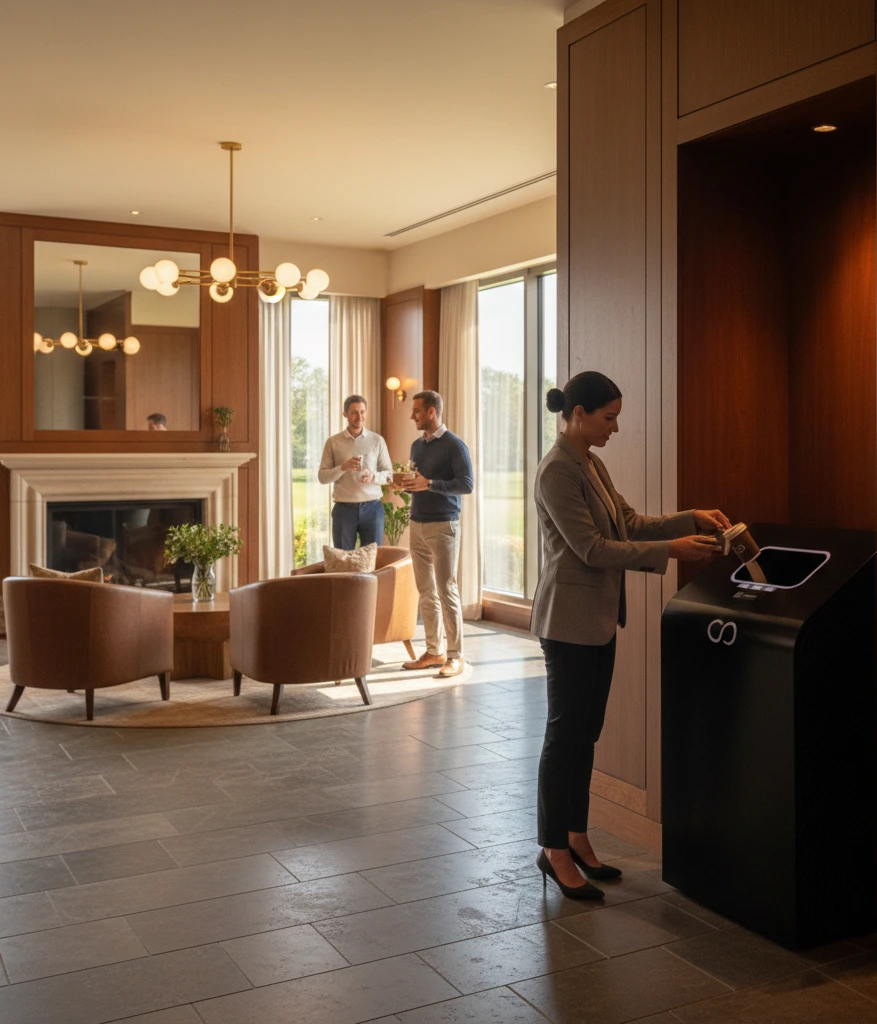
Students tap their campus card, credit card, or debit card to borrow. Smart Return Bins are placed across campus for 24/7 returns. Late fees are automatic. Refunds are instant. No app required.
Your operator dashboard shows you exactly what’s happening in real time: which containers are out, who has them, what your return rates look like, and where the gaps are. No more guessing. No more manual counts.

Reusables made it all so easy to get started. Being green is super important here. It’s just how the students move.
Cary Miller
Dining Manager, UCLA
Built to Work With What You Already Have
Reusables integrates with containers from deSter, Ozzi, GET, Returnr - and your existing inventory. We retrofit containers with tracking labels so they connect to the platform. Your investment is protected, and your containers get the tracking and accountability layer they were missing.
If your containers are nearing end of life, our partner containers are built to last 200+ wash cycles and are designed to look premium — because students are more likely to use and return containers they actually want to hold.














FAQs
Can we really keep using our existing containers?
Yes. Reusables is container-agnostic. We apply RFID or QR tracking labels to your current containers so they work with our checkout and return system. You can also mix — run your existing containers alongside new partner containers as you phase in replacements over time.
What happens to containers that don't come back?
The system automatically charges the borrower's payment method after a configurable grace period (typically 5-10 days). If the container comes back later — even weeks later — the charge is refunded. This automated accountability is what drives our 99.5% return rate.
Do students need to sign up or download an app?
No. Tap-to-Reuse™ works with campus cards (Transact, CBORD, TouchNet, Atrium), credit cards, debit cards, and mobile wallets. Students tap to borrow, drop off to return. An optional app adds reuse tracking and reminders, but the core experience requires nothing.
How is this different from what we're doing now?
The core difference is automated accountability and tracking. In-house programs rely on honor systems and manual processes. Reusables tracks every container from checkout to return, handles charges and refunds automatically, and gives you data on every aspect of the program — so you can manage by exception instead of by spreadsheet.

© Reusables™. All rights reserved.